The journey of a frog's life is a testament to nature's remarkable transformations. This process, known as metamorphosis, sees these amphibians evolve from humble frogspawn into fully formed adults. The common frog, a familiar sight in garden ponds, embarks on an annual cycle that is both ancient and vital for the continuation of its species. Reproduction in frogs is a complex and often fascinating affair, involving intricate mating rituals, diverse fertilization methods, and a life cycle that can vary significantly between species.
The Genesis: Frogspawn and Fertilization
The genesis of a new frog generation begins with frogspawn, typically appearing in ponds during early spring as the weather warms and daylight lengthens. These are not merely eggs but the earliest developmental stage of young frogs, known as tadpoles. Each egg, a tiny black dot, is encased in a jelly-like substance. This casing serves a dual purpose: it keeps the eggs moist and binds them together, offering protection to the developing tadpoles within. The jelly also helps to anchor the spawn, often found just below the surface of shallow, still water, frequently nestled amongst dense vegetation for added security.
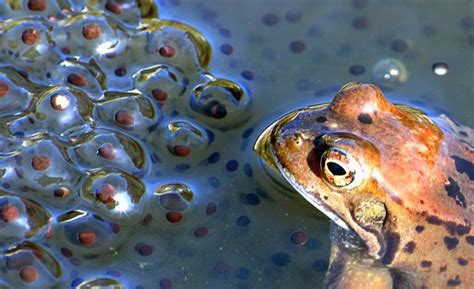
When mating commences, the process is initiated by the male frog, who attaches himself to a female. This embrace, known as amplexus, can last for up to 24 hours. During this time, the female releases her eggs, and the male fertilizes them by spraying them with sperm. The males' ability to attract females is crucial, and this is often achieved through distinct vocalizations. For instance, American Toads emit a high-pitched trill, while Spring Peepers are named for their characteristic "peeping" sounds. These calls serve to draw females to their location.
The fertilization itself can occur in two primary ways: externally or internally. The vast majority of frog species employ external fertilization, where eggs and sperm are released into the water simultaneously. However, a small number of species have evolved internal fertilization. In these cases, the male deposits sperm within the female's reproductive tract.
Amplexus: The Embrace of Reproduction
Amplexus is a defining characteristic of frog mating. The male frog grips the female tightly, often around her waist or chest, using specialized structures to maintain his hold. In many species, males possess a soft swelling on the inner finger of each front foot, known as the nuptial pad. This pad provides enhanced grip, allowing the male to cling securely to the female, even amidst the chaos of breeding frenzies. The male uses his rear legs to fend off rival males, ensuring he remains coupled with his chosen mate.
This intense embrace is not without its challenges, and male frogs are known to sometimes make mistakes in mate selection, especially in environments where breeding opportunities are brief. Driven by the imperative to reproduce, males may latch onto anything that approximates the size, shape, and color of a female. Stories abound of males mistakenly amplexing salamanders, dead mice, or even human hands. In such instances, the male may remain attached for an extended period, patiently waiting for eggs to be laid, which, of course, never happens.
To mitigate these errors, many male frog species have developed a "release call." This is a vocalization, often a series of chirps or gentle vibrations, emitted when a male is grasped by another male. This call signals to the aggressor that it has made a mistake. Female frogs, however, do not typically issue release calls, nor do inanimate objects or other species.
The Life Cycle: A Journey of Transformation
The frog life cycle is a profound example of metamorphosis, typically involving three or four distinct stages: egg, tadpole, froglet, and adult frog.
The Egg Stage: From Spawn to Emergence
As mentioned, the process begins with frogspawn. The eggs, initially dark, soon absorb water, transforming into the familiar clear jelly with black centers. The jelly provides essential protection, but it is not impervious to environmental hazards. During cold snaps, frost can kill spawn at or just below the surface, turning it white.
After approximately one to three weeks, the tadpole emerges from the egg. Initially, the tadpole sustains itself on the yolk sac from its egg. However, this food source is quickly depleted, and the newly hatched tadpoles must begin to forage for external food within a few days.
The Tadpole Stage: Aquatic Life and Development
Tadpoles are entirely aquatic creatures, characterized by their legless bodies and prominent tails. Their early diet consists of algae and other organic matter. As they grow and develop, a significant transformation begins. Over the next 14 weeks, the tadpole undergoes a remarkable metamorphosis. Hind legs begin to sprout, followed by the development of forelegs. Simultaneously, their tails gradually shrink and are reabsorbed into the body. Gills, which allow them to breathe underwater, become covered by skin, and lungs develop, enabling them to breathe air.
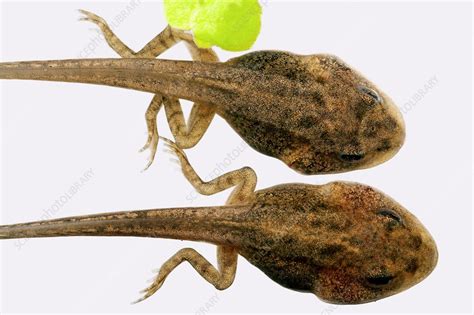
Remarkably, tadpoles possess an astonishing ability to influence the timing of their metamorphosis. In environments perceived as dangerous or resource-scarce, they can accelerate their transformation, developing into froglets more quickly. This adaptability is crucial for survival.
The Froglet Stage: A Transition to Land
Once the tadpole has developed functional lungs and its body has sufficiently transformed, it becomes a froglet. At this stage, they begin to explore the terrestrial environment, though they typically remain close to their breeding ponds. Their diet expands to include larger prey such as insects, slugs, and snails.
The Adult Frog: Maturity and Reproduction
Frogs can take up to four years to reach full maturity. An adult frog can measure up to 13 centimeters in length and exhibits a wide range of colors, from greens and browns to reds and yellows. Key distinguishing features include smooth skin, a dark "mask" behind the eyes, and long, banded hind legs adapted for jumping.
Once mature, adult frogs will return to their birthplace, often the same pond where they themselves hatched, to repeat the reproductive cycle. This innate homing instinct ensures the continuation of their species.
Variations and Anomalies in Frog Reproduction
While the described life cycle is common, nature often presents fascinating variations.
Live Birth in Some Species
Although the vast majority of frogs lay eggs, a handful of species that practice internal fertilization give live birth to fully formed froglets. This occurs when the fertilized eggs develop entirely within the female's body until they hatch. A notable example is the species L. vivipara, though this is a rare phenomenon among anurans.
The Surinam Toad's Unique Method
The Surinam toad (Pipa pipa) exhibits one of the most unusual reproductive strategies. After amplexus and fertilization, the male pushes the eggs onto the female's back. These eggs then become embedded in her skin, and a protective layer of skin grows over them. The eggs develop attached to the mother's back until they are ready to hatch, at which point the fully formed toadlets emerge.
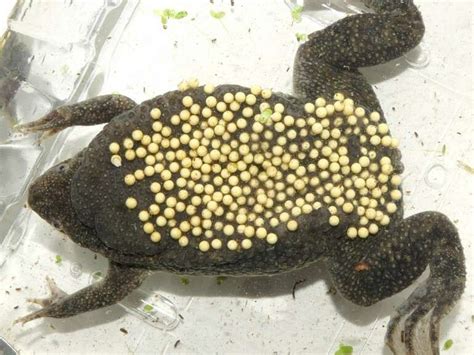
The Extinct Platypus Frog's Remarkable Strategy
Tragically, the platypus frogs (genus Rheobatrachus) of Queensland, Australia, are now extinct. These unique amphibians employed an extraordinary reproductive method: after fertilization, the female would swallow her eggs. The eggs would then secrete a protective mucus to prevent digestion. Upon hatching into tadpoles, the mother would regurgitate them.
Bypassing the Tadpole Stage
Some frog species, particularly those with internal fertilization or those that lay eggs on land, bypass the free-swimming tadpole stage entirely. In these cases, the eggs develop internally within the female, or they hatch directly into miniature frogs on land. The Coqui frog (Eleutherodactylus coqui) is an example of a species that lays its eggs on land, skipping the aquatic tadpole phase.
Conservation Implications
The presence of frogs and their intricate reproductive cycles are indicators of a healthy ecosystem. Adding a pond to a garden, for instance, can provide a vital habitat for frogs, toads, insects, and newts, while also serving as a food source for other wildlife. Understanding how frogs procreate is not just a matter of biological curiosity but also a crucial aspect of amphibian conservation efforts. The delicate balance of their life cycle, from the earliest stages of frogspawn to the complex mating rituals, is susceptible to environmental changes, making their continued existence a measure of our planet's well-being.