Adobe Photoshop CS6 represents a significant evolutionary leap for the industry-standard image editing software, particularly for its Mac users. Building upon the foundational strengths of its predecessors, CS6 introduces a host of new tools, performance enhancements, and workflow improvements designed to empower photographers, artists, graphic designers, and video specialists. This comprehensive exploration delves into the features that make Photoshop CS6 a compelling upgrade, examining both the broad strategic vision of Adobe's Creative Suite and the granular details that impact daily creative processes.
The Evolving Creative Suite Strategy
At the core of Adobe’s Creative Suite strategy is the unity, integration, and simultaneous release of its major design applications. Photoshop CS (version 8) was presented as a broad and deep upgrade to the company’s anchor image editor. Despite its low-key presentation with an interface that remained largely similar to version 7’s, it introduced amazing new tools for Photoshop’s traditional users. These new features, subtly sprinkled throughout the program, dramatically enhance users’ capabilities and control over their images. Photographers, artists, graphic designers, Web designers, and video specialists have seen significant improvements in their images and in the imaging process, all without a burdensome learning curve.
The release of Photoshop CS6 further solidifies this integrated approach. While the beta offered a “sneak preview” of new tools and performance enhancements, the final release, available for purchase, continued to refine this philosophy. The beta itself was a testament to Adobe's commitment to user feedback, allowing for early access and testing of features like background save, easy iris blur and tilt shift tools, and even a simple video editing tool that leverages many existing Photoshop tools and shortcuts.
Revamping the Workflow: From File Browser to Layer Comps
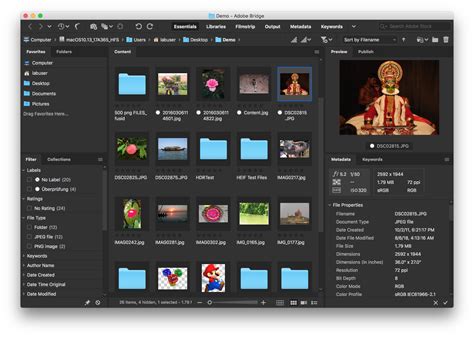
One of the most noticeable areas of improvement in earlier versions, and a trend continued into CS6, is the enhancement of core workflow tools. In version 7, Photoshop’s File Browser was an innovative central repository for images, but it was essentially a mere palette. The new File Browser evolved into a self-contained image-management system with swift, flexible controls and its own menus. It allowed users to preview, search, sort, and flag images. The ability to edit metadata and keywords for a single image or across multiple images, and to create metadata templates for single-click application to groups of images, represented a significant step forward. Users could also adjust the size of thumbnails and previews, and drag and drop images around the window in a light-box fashion, streamlining the initial stages of any project.
The Histogram palette also received a revelation of improvements. It now displays tonal and color information for an image, a layer, or a selection, and shows channels in color with a dynamic view of how filters, levels, curves, and other adjustments will affect tonal range and bit depth. When making certain adjustments, the old histogram appears in gray behind the current histogram, providing a clear visual comparison of the impact of changes. While the histogram appears to function in real time, it actually uses the image cache to produce comparative views. A click on the Cached Data Warning icon or the Uncached Refresh button displays the real update of all pixels in the image, ensuring accuracy.
Much-needed new interpolation controls, such as Bicubic Smoother for upsampling and Bicubic Sharper for downsampling, improve the detail of resampled images, a critical factor for photographers and designers working with varying image resolutions.
For designers, the new Layer Comp palette offers a simple yet sophisticated solution for presenting different design versions to clients within a single file. A separate palette combines the layers of each presentation, allowing users to view them or export them to a Web gallery or a PDF presentation. The PDF Presentation utility, complete with professional transitions, provides a program- and platform-agnostic way to showcase work. The Layers palette itself underwent a metamorphosis, allowing for nested layer sets up to five layers deep, offering greater organizational control for complex projects.
Mastering Image Quality and Color
Photoshop CS6's commitment to image fidelity is evident in several key areas. The software's enhanced support for 16-bit images is a boon for editing and color-correction tasks involving layers, brushes, text, effect filters, shapes, and drawing and painting tools. This feature is particularly beneficial for video-oriented users due to its superior color palette preservation. Furthermore, Photoshop raised the image-size limit, accommodating much larger files with a new large-image file format, PSB, though this format is not backward compatible with earlier versions.
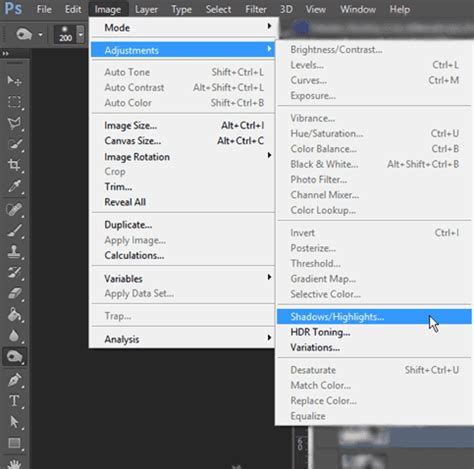
The miraculous Shadow/Highlight command, found inconspicuously in the Adjustments menu, provides multifaceted controls to improve contrast while preserving midtone balance, effectively acting as a cure-all for underexposed or overexposed images. Its default settings can often achieve better results than hours of tinkering with masks and curves. The Match Color command, another valuable addition, offers an intuitive method for achieving consistent color across photos shot under different lighting conditions or for creating artistic effects by blending colors and textures between images.
The introduction of a new spectrum of modifiable photo-filter adjustments addresses a long-standing need. This package includes versions of warming and cooling filters, and users can create their own filters with the color picker or adjust filter density, offering greater creative flexibility.
Tucked inside the Blur submenu, the new Lens Blur command simulates genuine optical blurring, providing a natural-looking way to alter depth of field directly on an image or within an alpha channel. This feature is crucial for photographers seeking to emulate the bokeh effects of specific lenses.
Advanced Tools for Photographers and Raw Shooters
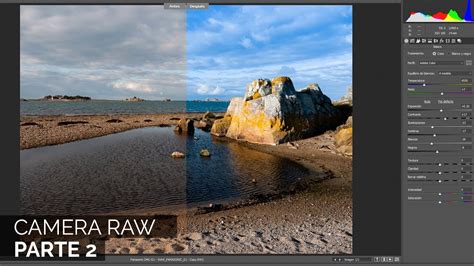
A significant development for photographers is the integration of Camera Raw directly into Photoshop CS6. Previously a plug-in, this feature provides direct access to digital negatives-a camera’s proprietary raw image format-for a wide spectrum of shooters. The Camera Raw feature supports numerous camera brands, and users can manipulate and adjust settings such as color calibration, chromatic aberration, and vignetting across multiple images within the File Browser. Camera Raw is not for everyone, but it offers unparalleled control to those who need it, especially professional photographers who can now apply custom Camera Raw settings to selected images before batch processing.
Version 7 of Camera Raw, bundled with CS6, represents a major overhaul. Adobe completely re-wrote the processing engine, bringing it in line with the advancements found in Lightroom 4. This resulted in better overall image quality, with noticeable improvements in highlight recovery and dynamic range. The sliders themselves were normalized, and key adjustments like Fill Light, Brightness, and Recovery were replaced with new Shadows, Blacks, Whites, and Highlights sliders. This provides a more nuanced approach to controlling different parts of the tonal range. The Clarity slider also became more aggressive, adding a noticeable contrast bump with even small adjustments.
The Selection Brush also saw important changes, with more parameters becoming paintable, including white balance. This simplifies correcting white balance in mixed lighting situations, allowing users to brush different white balances into foreground and background elements independently.
Photoshop CS6 also introduced a much-improved Crop tool. Alongside the traditional click-and-drag method, users can now drag crop boundaries from the edge of the image. The cropped portion is zoomed and panned to remain centered, mirroring the user-friendly approach of Lightroom's crop tool. Straighten, constrain crop options, and the ability to save crop parameters as presets enhance efficiency. A new crop with perspective correction feature automatically corrects perspective while cropping.
Content-Aware Technologies and Optical Corrections
Adobe’s groundbreaking Content-Aware Fill technology, introduced in Photoshop CS5, received further refinement. In CS6, this technology was integrated into a special Move tool. Users can select and move an object, and Photoshop automatically fills the vacated area. While similar results could be achieved in CS5, the Content-Aware Move tool streamlines the process. Enhanced options for the Patch tool also provide more precise patching capabilities, with both Patch and Content-Aware Move offering refinements for quality.

For users working with wide-angle or fisheye lenses, the new Adaptive Wide Angle Correction feature is a significant asset. This tool excels at correcting optical distortion, allowing users to define areas that should be straight or simple polygons, and Photoshop warps the image to render these lines straight without introducing new distortions. While this feature may require a heavy crop and isn't used daily, it's invaluable for correcting specific types of lens aberrations.
Enhancements in Blur and Selection
While photographers often strive to avoid blur, it serves as a powerful tool for focusing attention. Photoshop CS6’s new Blur Gallery simulates lens-blurring effects with greater fidelity than previous filters. The Iris Blur allows for precise control over shallow depth-of-field effects by manipulating an oval shape. The Tilt-shift option mimics the extreme depth-of-field effects of tilt-shift lenses, creating miniature-like effects. Field blur simply blurs the current selection. The key improvement across these filters is the more realistic rendering of highlights and overall luminance, closely matching the characteristics of optical blur.
The Color Range command now includes a Skin Tones option with face detection, aimed at simplifying the automatic selection of skin tones, which can be useful for tasks like blurring backgrounds. However, as with most selection tools, manual clean-up may still be required.
Video Editing and Performance Boosts
Video editing has become an increasingly common part of a photographer's workflow. Photoshop CS6's Timeline palette was dramatically revamped to offer a full-featured video editing environment. Users can easily add clips in multiple video formats, trim them, rearrange them, and add transitions. The significant advantage here is the ability to leverage familiar Photoshop tools and effects for video tracks, making it easy to alter and adjust video content. Text layers for titles and vector tools for overlay artwork can be seamlessly integrated. While playback may not always be at full frame rate, it's sufficient for assessing effects.
Basics of Photoshop CS6 Video editing
The software also boasts significant under-the-hood improvements, including a new graphics engine that results in noticeable performance boosts. The Liquify brush, for instance, now feels completely real-time, eliminating previous lag. A long-awaited feature, background saving, allows users to continue working while a document is being saved, preventing modal dialog interruptions and improving overall efficiency. Background saving also includes options to prevent accidental data loss in the event of a crash.
Interface and System Considerations
Photoshop CS6's interface underwent a dramatic re-casting in gray, with dark backgrounds and redesigned widgets, creating a feel similar to Lightroom and a neutral environment well-suited for color correction. While this change may require an adjustment period for some users, Adobe provided preferences to choose from several shades of gray, though a return to a completely non-gray interface was not an option. Bridge CS6 also adopted the gray treatment, but its interface remained largely the same, with continued limitations in thumbnail generation and scrolling speed.
For Mac users, Photoshop CS6 requires Mac OS X v10.6.8 or v10.7. The software necessitates activation and may integrate with Adobe or third-party online services, which have age restrictions and require agreement to additional terms of use. The purchase of Photoshop CS6 typically involved a perpetual license, granting users the right to continue using the product indefinitely.
The Verdict on CS6
Adobe Photoshop CS6 is a solid update packed with well-engineered technology. While not all additions are “everyday” tools, features like Content-Aware Move and Adaptive Wide Angle Correction can be lifesavers. The choice to upgrade often depends on individual workflow needs. For retouchers who heavily rely on the Liquify tool, the boosted performance alone may justify the upgrade. Web designers will find the new type features, ported from InDesign, a significant convenience. Raw shooters benefit immensely from the latest Camera Raw, with its improved conversion engine and enhanced controls, which can be essential for new camera models. For those frustrated with their current editing solutions or with simple video editing needs, Photoshop CS6 offers a compelling alternative, especially for its strengths in photo manipulation and adjustment. The integration of video editing capabilities, alongside substantial performance gains and refined core tools, solidified Photoshop CS6's position as a powerhouse in the creative software landscape.