Eels, with their serpentine bodies and elusive nature, have long captivated human curiosity. From their remarkable electrical capabilities to their intricate life cycles, these fish present a unique set of biological puzzles. While much has been uncovered about their existence, the process of how eels procreate has historically been shrouded in mystery, leading to centuries of speculation and scientific endeavor. This article delves into the fascinating world of eel reproduction, exploring the challenges in understanding it, the scientific breakthroughs, and the current knowledge surrounding how these creatures bring forth new generations.
The Electric Eel: A Misunderstood "Eel"
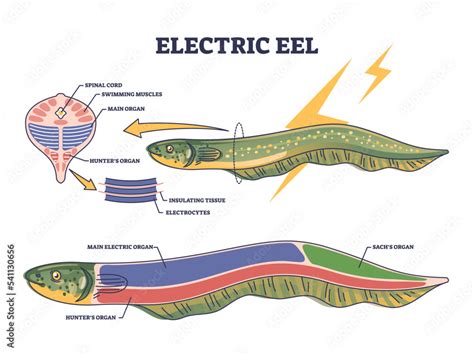
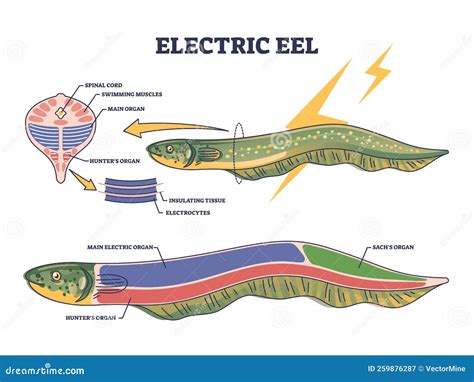
Before delving into the reproductive habits of true eels, it's crucial to address a common misconception. The electric eel, often featured for its astonishing ability to generate powerful electric shocks, is not a true eel. Despite its name and appearance, it belongs to a different order of fish. Electric eels are long, cylindrical fish with flattened heads, capable of delivering shocks of up to 650 volts. Their amazing ability stems from specialized organs called electrocytes, modified muscle cells that act like tiny batteries. These organs, comprising the main organ, Hunter's organ, and Sach's organ, allow the electric eel to stun prey and deter predators. The main and part of the Hunter's organ produce strong shocks, while the Sach's organ and the other half of the Hunter's organ generate weak electrical impulses for electrolocation. These fascinating creatures inhabit the freshwaters of the Amazon and Orinoco rivers in South America, navigating the murky waters with their electrolocation abilities due to poor eyesight. They also possess the remarkable capability to leap out of the water, using their chin to create a more potent electrical circuit with a predator. While not inherently aggressive, their electric discharge can be powerful enough to cause significant harm.
True Eels: Defining the Anguilliformes
The term "eel" can be confusing, as it encompasses a diverse group of fish. True eels, belonging to the order Anguilliformes, are characterized by their slender, elongated bodies and the absence of pelvic fins, which are twin appendages often found on the underbellies of other fish. While many eels are saltwater dwellers, 19 species, known as "freshwater eels" or "Anguillids," spend a significant portion of their lives in freshwater environments. These freshwater eels undertake extraordinary migrations, a journey that has long been a central mystery in their reproductive cycle.
A Historical Quest for Understanding Eel Reproduction
For centuries, the reproductive habits of eels remained an enigma. Unlike many other fish that lay eggs in readily observable locations, eels seemed to disappear, leading to speculative theories. For a long time, the theory of spontaneous spawning was widely believed. However, in the late 18th century, anatomist Carolus Mondini conducted detailed studies of European eel reproductive organs, initiating a race to understand their reproductive biology. Even renowned figures like Sigmund Freud, as part of his early university studies in the late 19th century, delved into this mystery, dissecting eels in Trieste in search of gonads. Despite their efforts, the reproductive organs were not readily apparent in the specimens they examined, leading to the persistent myth that eels lacked them.
The Unveiling of the Eel Life Cycle
The key to understanding eel reproduction lay in recognizing their complex life cycle and the distinct stages they undergo. Scientists discovered that eels do not become sexually mature until much later in their lives, and their reproductive organs develop only shortly before their final migration. This delayed maturation was a crucial piece of information that had been missing for a long time.
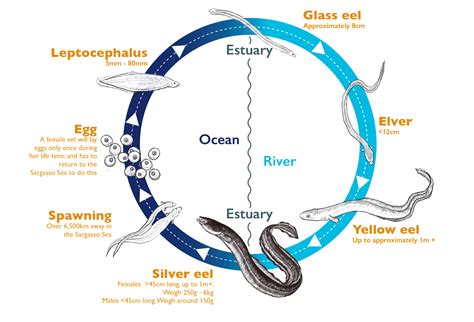
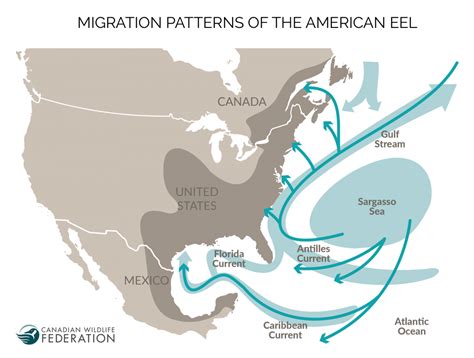
The life cycle of a freshwater eel is a testament to nature's intricate design, involving several metamorphoses that were once mistaken for separate species. The journey begins with the leptocephalus larva. These newborn larvae are transparent and have leaf-shaped bodies, appearing broad and flattened in profile. They are oceangoing animals, drifting through ocean currents, such as the Gulf Stream, for extended periods.
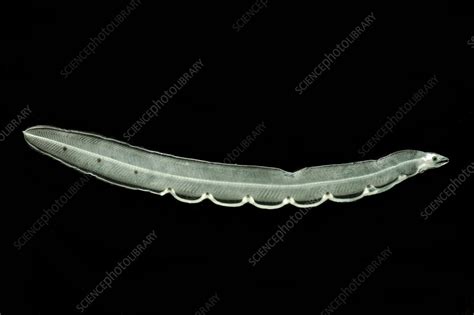
After their oceanic drift, which can span thousands of miles, the leptocephali metamorphose into glass eels. This stage is characterized by their transparent, glass-like bodies, hence the name. Glass eels are typically around two to three inches long and resemble miniature versions of adult eels. They are actively seeking freshwater environments to settle in and begin their freshwater phase. This "ghost stage," as it's sometimes called, offers a degree of camouflage, protecting them from predators during the most vulnerable part of their migration.
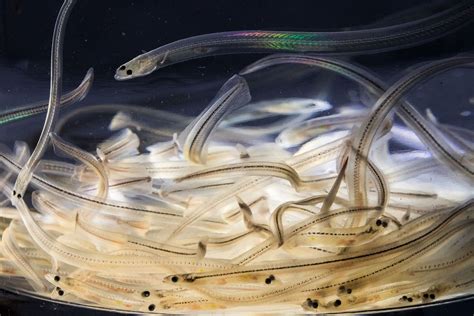
Upon reaching freshwater, glass eels transform into elvers. At this stage, they begin to develop body pigment, often taking on a darker hue. Elvers are essentially juvenile eels, a little over four inches long, and represent the next step in their development.
The eels then evolve into yellow eels, the immature adult stage that most people would recognize. This is the stage where freshwater eels spend the majority of their lives, growing larger and maturing in rivers, lakes, and coastal seas. Eels living in freshwater environments tend to live longer and grow bigger.
Finally, when ready to reproduce, yellow eels undergo a remarkable transformation into silver eels. This transition, akin to puberty, can take decades, with some sources suggesting 20 to 30 years. The change involves developing a silver belly and a darker dorsal area, signaling their readiness for the final, epic journey. Their health also declines during this transition, with bones becoming decalcified, a process some compare to menopause in humans.
The Great Migration and the Spawning Grounds
The most remarkable feat in the eel's life cycle is its migration. Eels reproduce at the very end of their lives and do not survive past the spawning stage. When they are ready to reproduce, eels embark on a one-way migration, often spanning thousands of miles across oceans, to specific spawning grounds.
For both American and European eels, the Sargasso Sea, a large, landmass-less region in the central Atlantic Ocean, is believed to be the primary spawning area. This vast area of the ocean is named after the Sargassum genus of drifting seaweed. The Danish professor Johannes Schmidt led a series of expeditions in the early 20th century into the Mediterranean Sea and the North Atlantic to investigate the mysterious life cycle and spawning locations of eels, proposing the Sargasso Sea as the breeding ground.
Similarly, freshwater eels in the Pacific Ocean, such as the Japanese eel, are thought to breed in their own designated areas, with a suspected site west of the Mariana Islands. Conger eels, found in the Indo-Pacific oceans, also have their spawning grounds, though even less is known about their reproductive habits than anguillid eels.
External Fertilization: The Mechanism of Eel Reproduction
The mystery of how eels reproduce has been solved through scientific observation and research, including studies on eels in captivity and satellite tagging of migratory eels. The prevailing understanding is that eels reproduce through external fertilization.
When eels reach their spawning grounds, the females release millions of eggs into the water column. Shortly after, males expel clouds of sperm into the same water column. These sperm then fertilize the eggs, a process that occurs externally. This method of reproduction, where eggs and sperm are released into the water to mix, is a common strategy among many aquatic species.
Sargasso Sea: A Floating Landless Wonder - Watch to Believe!
The fertilized eggs eventually rise to the surface of the ocean, where they hatch into the transparent, leaf-shaped leptocephalus larvae. These larvae then begin their long drift, carried by ocean currents, initiating the cycle anew.
The Decline of Eel Populations and Conservation Concerns
Tragically, many eel populations, particularly the European eel (Anguilla anguilla), are facing severe threats. The European eel is now classified as critically endangered, with numbers plummeting dramatically in recent years. The number of glass eels arriving at European coasts has dropped by more than 95 percent in recent decades.
Several factors contribute to this alarming decline:
- Pollution: Contamination of rivers and oceans can harm eels at all life stages.
- Dams and Barriers: Obstructions in rivers, such as dams and hydropower plants, impede the upstream migration of glass eels and elvers, as well as the downstream migration of silver eels.
- Overfishing and Illegal Fishing: While once eaten in abundance, unsustainable fishing practices have taken a toll on eel populations.
- Climate Change: Alterations in ocean currents and water temperatures can impact larval drift and migration routes.
- Habitat Loss: Degradation of freshwater and coastal habitats reduces the available space for eels to grow and mature.
The decline of eels has significant ecological consequences. Eels play a vital role in aquatic ecosystems. They act as scavengers, consuming dead animals, which helps keep riverine environments clean. They also help maintain the balance of river life by preying on various invertebrates and small fish, and in turn, serve as a food source for birds and larger fish. Protecting eels is therefore crucial for maintaining healthy riverine and coastal ecosystems for all wildlife and future generations.
Navigating the Unknown: Ongoing Research and Future Prospects
Despite significant advancements in understanding eel reproduction, many aspects remain subjects of ongoing research. The exact navigational mechanisms that allow eels to undertake their epic migrations across thousands of miles, without any apparent guidance, are still not fully understood. Scientists theorize they may use the Earth's magnetic field, akin to an internal compass, a feat that humans struggle to replicate without modern technology.
Furthermore, while reproduction in captivity has been observed, it doesn't occur as frequently or successfully as it naturally would. This raises questions about the specific environmental cues and conditions required for successful breeding, which may be difficult to replicate outside of their natural spawning grounds.
The future of eels hinges on concerted conservation efforts. Researchers are actively involved in tracking eels with satellite tags to better understand their migration patterns and identify critical habitats. International collaborations aim to address the complex challenges of pollution, habitat restoration, and sustainable fishing practices. The hope is that by unraveling the remaining mysteries of their existence and implementing effective conservation strategies, these fascinating creatures can be saved from the brink of extinction and continue their remarkable life cycle for generations to come.