Collagen, a name derived from the Greek word "kolla" meaning glue, aptly describes its fundamental role as the body's primary adhesive, holding tissues together and providing essential structural support. It is the most abundant protein in mammals, constituting a remarkable 25% to 35% of the body's total protein content. This fibrous protein is the cornerstone of connective tissues, forming the extracellular matrix that underpins skin, tendons, ligaments, bones, cartilage, and even the lining of organs and blood vessels. Its inherent rigidity and resistance to stretching make it the ideal matrix for these diverse structures. While there are approximately 28 known types of collagen, each with specialized functions, types I through IV are the most prevalent, with type I alone accounting for over 90% of the collagen in the human body. The intricate process of collagen synthesis is a testament to biological engineering, involving a complex interplay of intracellular and extracellular events.
The Building Blocks of Strength: Amino Acids and the Triple Helix
At its core, collagen is a protein molecule, and like all proteins, it is constructed from amino acids. The specific amino acid sequence of collagen is highly conserved and characteristically features glycine, proline, and hydroxyproline. The primary sequence often follows a repeating pattern of glycine-proline-X or glycine-X-hydroxyproline, where X can be any of the other 17 amino acids. A crucial element of this sequence is that every third amino acid is glycine. Being the smallest amino acid with no side chain, glycine is indispensable for the formation of collagen's unique structure. Its minimal steric hindrance allows the collagen chains to pack tightly together.
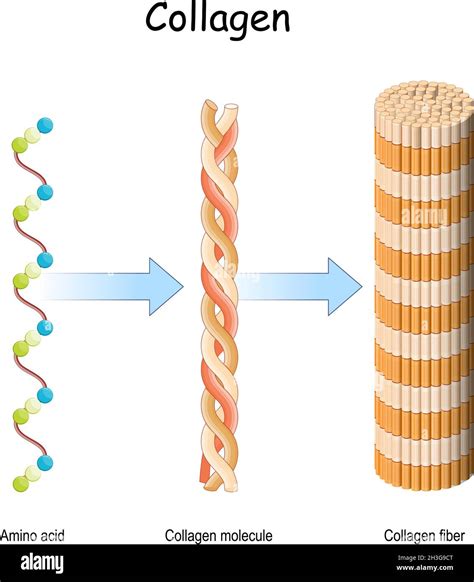
Collagen is not a single chain but rather composed of three individual polypeptide chains, known as alpha chains. These three chains then wind around each other in a tightly coiled, left-handed helix, forming a right-handed triple helix structure. This super-helix, stabilized by numerous hydrogen bonds, grants collagen its characteristic strength and resistance to mechanical stress. Hydroxyproline, a derivative of proline, plays a particularly vital role in stabilizing this triple helix through stereoelectronic effects, though its concentration can vary depending on an animal's body temperature. The precise arrangement of these amino acids, particularly glycine's placement at the interior of the helix, is critical for maintaining the structural integrity of the collagen molecule.
The Cellular Symphony of Synthesis: From Gene to Fibril
The synthesis of collagen is a sophisticated process that begins within specialized cells called fibroblasts, which are abundant in connective tissues. This intricate pathway involves both intracellular events within the fibroblast and extracellular modifications.
The journey commences with the transcription of messenger RNA (mRNA) from genes that code for specific alpha peptides. This mRNA then travels from the cell nucleus to the cytoplasm, where it binds to ribosomal subunits and is translated into a pre-pro-polypeptide chain. This nascent peptide is directed to the endoplasmic reticulum (ER) for post-translational processing.
Within the ER, several critical modifications occur to transform the pre-pro-polypeptide into pro-collagen. The signal peptide at the N-terminal end, which guided the polypeptide to the ER, is removed. Crucially, lysine and proline residues undergo hydroxylation, a process catalyzed by hydroxylase enzymes. This enzymatic step requires vitamin C (ascorbic acid) as a cofactor, highlighting the vitamin's essential role in collagen synthesis. The addition of hydroxyl groups creates hydroxyproline and hydroxylysine. Following hydroxylation, selected hydroxyl groups on lysine residues are glycosylated, with galactose and glucose molecules being attached.
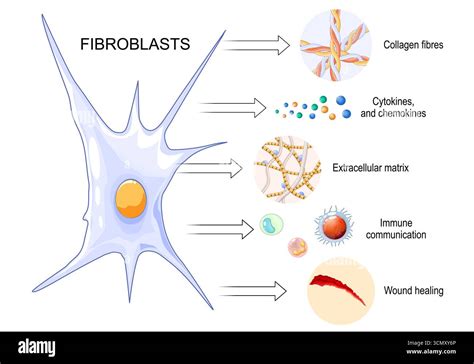
Once these three modified pro-alpha chains are hydroxylated and glycosylated, they assemble by twisting into a triple helix, a process often described as a zipper-like folding. This forms a molecule of pro-collagen.
The pro-collagen molecule is then secreted from the cell into the extracellular space. Here, further modifications take place to convert pro-collagen into tropocollagen, the basic building block of collagen fibrils. Membrane-bound enzymes, known as collagen peptidases, cleave the unwound ends of the pro-collagen molecule, yielding tropocollagen. Defects in this extracellular processing step can lead to various collagenopathies, such as Ehlers-Danlos syndrome.
Finally, tropocollagen molecules self-assemble in the extracellular space. Lysyl oxidase, a copper-dependent enzyme, acts on lysine and hydroxylysine residues, converting them into aldehyde groups. These aldehyde groups then form covalent bonds between adjacent tropocollagen molecules, a process known as cross-linking. This cross-linking is vital for creating stable collagen fibrils and larger collagen aggregates, providing the connective tissues with their remarkable tensile strength. These fibrils are further organized and bundled with the assistance of other proteins and molecules to form the diverse structures found in various tissues.
Collagen's Diverse Roles and the Consequences of Errors
Collagen's structural prowess is not limited to a single function; its various types are strategically deployed throughout the body to fulfill specific needs.
- Type I Collagen: The most abundant type, making up 90% of the body's collagen. It is densely packed and provides structural integrity to skin, bones, tendons, and ligaments.
- Type II Collagen: Found in elastic cartilage, it is crucial for joint support and cushioning.
- Type III Collagen: Primarily located in muscles, arteries, and internal organs, contributing to their structural framework and elasticity.
- Type IV Collagen: Forms a meshwork in the layers of the skin, playing a role in filtration.
- Type V Collagen: Found in the cornea of the eyes, some skin layers, hair, and placental tissue.
The precise assembly and function of collagen are tightly regulated. However, errors in this intricate process, whether due to genetic mutations or nutritional deficiencies, can lead to a spectrum of disorders.
Collagen Protein: The 5 Types + Their Functions | Dr. Josh Axe
Genetic Predispositions and Collagenopathies
Genetic mutations can profoundly impact collagen synthesis, leading to inherited connective tissue disorders.
- Osteogenesis Imperfecta (OI): This group of genetic disorders primarily affects Type I collagen. Mutations, often in the COL1A1 or COL1A2 genes, lead to the substitution of glycine with larger amino acids, disrupting the triple helix structure. This results in bones that are weak and prone to fractures, with severity ranging from mild to lethal. There are at least 8 types of OI, with Type I being the mildest and Type II the most severe. Diagnosis is typically clinical, though genetic testing can confirm mutations. Treatment is supportive, focusing on fracture prevention.
- Ehlers-Danlos Syndrome (EDS): A group of inherited connective tissue disorders affecting approximately 1 in 5000 individuals globally. EDS encompasses at least 13 subtypes, each caused by different genetic mutations affecting various collagen types (e.g., COL1A1, COL1A2, COL3A1, COL5A1). These mutations can impair extracellular peptide cleavage and alter collagen fibril cross-linking and aggregation, leading to compromised fiber stability and function. Symptoms vary widely, from mild joint hypermobility to life-threatening vascular complications. Diagnosis is clinical, often supported by DNA and collagen mutation studies. Treatment is supportive, as there is no cure.
Nutritional Deficiencies and Their Impact
Beyond genetic factors, nutritional status plays a critical role in collagen metabolism.
- Scurvy: A deficiency in vitamin C (ascorbic acid) is a direct impediment to collagen synthesis. Without sufficient vitamin C, the hydroxylase enzymes cannot effectively hydroxylate proline and lysine residues. This impairment leads to the production of unstable collagen molecules. Scurvy, though rare in developed nations, can affect individuals with inadequate nutritional intake, such as infants, the elderly, and alcoholics. Symptoms include fatigue, weakness, poor wound healing, anemia, and gum disease. A characteristic skin manifestation is perifollicular hemorrhage, where hair follicles become plugged with keratin, appearing as bruise-like spots. Fragile, corkscrew-shaped hairs can also be observed. Diagnosis is clinical, often confirmed by low ascorbic acid levels in the blood.
The Collagen Market and Supplementation: Promise and Pitfalls
The growing interest in collagen has fueled a burgeoning supplement market, projected to reach billions of dollars in the coming years. Collagen supplements, often in the form of hydrolyzed collagen or collagen peptides, are marketed for their purported benefits in enhancing skin appearance, hair and nail health, and joint function.
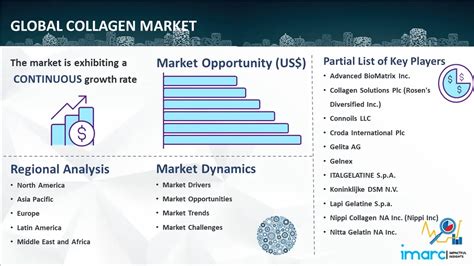
These supplements are typically derived from animal sources such as bovine, marine (fish), porcine, and poultry. While plants do not naturally contain collagen, the term "vegan collagen" often refers to products that support the body's own collagen production through essential nutrients.
Understanding Collagen Supplements
Collagen supplements are essentially broken-down forms of collagen, making them more digestible and absorbable. Collagen peptides, or hydrolyzed collagen, are small pieces of collagen protein that are more easily absorbed through the gastrointestinal tract.
Many collagen supplements also include synergistic ingredients to enhance their efficacy. Vitamin C is frequently added, not only for its role in collagen synthesis but also for its antioxidant properties, protecting cells from free radical damage. Other antioxidants, like astaxanthin, may also be included to support skin rejuvenation.
Clinical Evidence and Considerations
Research into the effectiveness of collagen supplements has yielded some promising, albeit often preliminary, results. Studies have suggested that specific bioactive collagen peptides may reduce wrinkles, improve skin elasticity, and increase procollagen production. For instance, bovine collagen peptides have been shown to reduce wrinkles by 20% and improve skin elasticity. Fish-source collagen peptides have demonstrated similar benefits for skin aging, while chicken sternal cartilage extract (a source of Type II collagen) has been linked to reduced skin dryness and increased collagen in the skin, alongside joint support. Porcine collagen peptides have also shown promise in reducing UV-induced age spots and supporting joint health.
However, it is crucial to approach these findings with a critical eye. Many studies are funded by the supplement industry, introducing potential conflicts of interest. Furthermore, the Food and Drug Administration (FDA) does not regulate dietary supplements in the same rigorous manner as pharmaceuticals. This means that manufacturers are not required to prove the safety or efficacy of their products before they reach the market, and there can be concerns about contamination with heavy metals, bacteria, or pesticides. A recent analysis found detectable levels of arsenic, lead, and cadmium in a significant percentage of collagen supplements.
The scientific consensus is evolving, but a key point of discussion is whether ingesting collagen directly translates to increased collagen levels in the body. The prevailing view is that when collagen is consumed, it is broken down into its constituent amino acids in the digestive system. These amino acids are then used by the body as building blocks for all proteins, not exclusively for collagen synthesis. While some argue that a surplus of specific amino acids like glycine and proline from collagen supplements can aid fibroblasts in producing more collagen, others contend that individuals with a balanced diet are unlikely to be deficient in these amino acids.
A more widely accepted theory suggests that the increase in collagen peptides in the bloodstream acts as signaling molecules (ligands) that stimulate fibroblasts to increase collagen production systemically. This "triggering effect" is thought to be the primary mechanism behind the observed benefits of collagen supplementation.
Natural Collagen Sources and Dietary Support
While supplements are popular, collagen is naturally found in animal-based foods. Tough cuts of meat with connective tissue, such as pot roast or brisket, are rich in collagen. Fish skin and bones are also good sources. Bone broth, made by simmering animal bones, is often promoted for its collagen content. The process involves simmering bones in water, sometimes with a bit of vinegar to help extract collagen and minerals. Gelatin, a form of collagen, is produced by boiling animal bones, cartilage, and skin.
However, relying solely on dietary collagen for targeted benefits can be challenging. The body breaks down these proteins into amino acids, which are then distributed where needed most. Therefore, while a diet rich in protein, vitamin C, zinc, and copper can support the body's natural collagen production, direct translation of dietary collagen into increased collagen levels is not definitively established. Foods rich in the necessary amino acidsâproline, glycine, and hydroxyprolineâinclude mushrooms, cabbage, asparagus, peanuts, fish, egg whites, red meat, turkey, and chicken.
Conclusion: A Structural Marvel with Evolving Understanding
Collagen, the body's most abundant protein, is a structural marvel essential for the integrity and function of numerous tissues. Its synthesis is a complex dance of molecular events, from gene transcription to extracellular cross-linking. While genetic mutations and nutritional deficiencies can disrupt this process, leading to serious health conditions, ongoing research into collagen supplementation offers potential avenues for supporting skin and joint health. However, consumers should approach the burgeoning collagen market with informed caution, recognizing the limitations of current research and the regulatory landscape of dietary supplements. Understanding the intricate journey of collagen, from its amino acid building blocks to its vital structural roles, provides a deeper appreciation for this fundamental protein and the science surrounding its production and potential supplementation.