London's electronic music prodigy, James Blake, at the tender age of 21, has already carved out a distinct and evolving sonic landscape. His third release, the CMYK EP, stands as a testament to his rapidly maturing artistry, showcasing a signature style that is both instantly recognizable and constantly pushing boundaries. Blake's music is characterized by progressions of thick soul and jazz chords, a direct result of years dedicated to piano mastery. These are then artfully combined with pitched-down and mangled vocals, often his own, and mid-tempo beats that artfully balance resonant synthesized sub-bass with the organic warmth of handclaps, snaps, and other humanizing sound elements. Yet, with each release - from the "Air & Lack Thereof" / "Sparing the Horses" single to the The Bells Sketch EP and now CMYK - Blake manages to imbue his work with a sense of unique identity, as if each project operates under its own set of private rules and conceptual frameworks. He is simultaneously defining his thematic core and exploring its variations.

While Blake is not entirely without peers, his collaborators and associates, such as Untold and Mount Kimbie (both artists for whom he has produced remixes), tend to be recognized more for the established boundaries they dismantle than for the new ones they reinforce. This positions Blake, who appears to possess a mind brimming with uncategorizable ideas, in an advantageous position to pursue any creative impulse that strikes him. The BBC DJ Gilles Peterson recently featured Blake as a guest on his show, where the young producer discussed his aspirations for a vocal-and-piano EP and revealed how a live performance by Joanna Newsom had profoundly opened his creative horizons. Such artistic exploration and openness to diverse influences would be surprising from many other contemporary electronic producers, but for James Blake, it feels like a natural progression.
The Palette of the Past: Sampling and Subversion
The sonic foundation of CMYK is largely built upon samples, predominantly drawn from the rich tapestry of 90s R&B. In some instances, these samples are immediately apparent, almost to the point where one might express concern about potential legal ramifications for James Blake. In other moments, however, he manipulates and transforms these source materials to the point of near-unrecognizability. As revealed in a Rising interview the previous month, the vocal textures of artists like Brandy and R. Kelly are woven into the fabric of the EP, though their presence is often a subtle, almost hidden detail.
The EP's title track, "CMYK," is a prime example of this sampling technique, drawing inspiration from both Kelis's iconic "Caught Out There" and Aaliyah's groundbreaking "Are You That Somebody?" - songs that themselves helped define their respective eras by sounding distinctly ahead of their time. This choice is canny for a multitude of reasons, but to be brief: Blake reimagines two archetypal R&B narratives - the spurned woman and the secret lover - as a dynamic interplay, a modern homage to enduring emotional themes. For listeners familiar with the original tracks, "CMYK" also serves as an exercise in reawakening cultural memory. Both "Caught Out There" and "Are You That Somebody?" fall into a peculiar temporal space: over a decade old, yet not yet old enough to be comfortably categorized as retro. Blake isn't merely reminding us of forgotten tunes or introducing us to the unknown; he is breathing new life into songs that likely reside at the periphery of our collective consciousness. Furthermore, this selection acts as a statement of artistic allegiance. While Blake, under his Harmonimix moniker, has previously worked with Lil Wayne's vocals, his current focus appears less on contemporary American hip-hop and R&B and more on exploring the innovative sonic territories pioneered by Timbaland and The Neptunes at the close of the 1990s.
The Art of Integration: Balance and Juxtaposition
What truly elevates "CMYK," however, is not the mere presence of its samples, but the masterful way in which Blake integrates them into his own unique sonic architecture. Across the entire EP, there is a remarkable sense of balance. Throwback sounds, such as the soulful vocalizations, are juxtaposed with contemporary elements like filtered synthesizer sweeps. Deeply processed audio, like that achieved through a vocoder, sits comfortably alongside cleaner, more direct sounds. Moments of dissonance and digital noise are strategically placed next to consonant progressions of organ chords. One instant, a track might feel stripped bare and vulnerable; the next, it becomes deliberately obscure and enigmatic. Blake's compositions, typically concise three- and four-minute pieces of electronic pop, seem to transcend conventional notions of space and time. They are not designed for the dance floor; instead, they occupy a space that is both deeply retro and subtly futuristic, a characteristic that firmly places them within the contemporary soundscape. Though crafted on a home computer, Blake's music possesses a polished, almost uncanny quality, sounding akin to the work of an animatronic band.
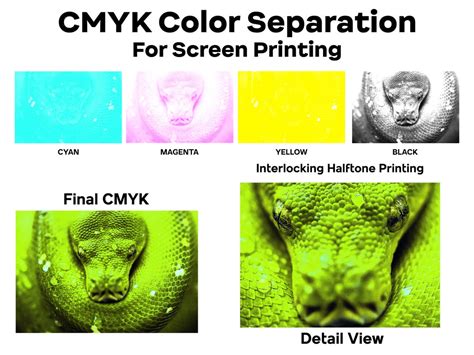
The experience of listening to James Blake's CMYK evokes thoughts of Wong Kar-wai's film 2046. Ostensibly a love story, the film weaves parallel narratives, one set in the 1950s and the other in 2046. While the superficial aesthetics of these two distinct periods differ, there arrives a point where two characters utter the exact same phrase: "Leave with me." However, the context surrounding this utterance is altered, and this change in context fundamentally shifts the meaning. Consequently, communication falters. In both instances within the film, the characters experience a form of misunderstanding, and these miscommunications ultimately lead to heartbreak. James Blake, through his music, operates within these very gaps - these modern fissures in understanding and communication. His approach is characterized by a blend of cleverness and empathy, exploring the nuances of how meaning can be altered by context and perception. The ancient philosophical query, "Do androids dream of electric sheep?" finds a contemporary echo in Blake's sonic explorations. The title "CMYK" itself, referring to the four inks used in color printing - cyan, magenta, yellow, and key (black) - serves as a potent metaphor.
Color Theory Lesson - CMYK vs RGB
Understanding the CMYK Color Model: A Subtractive Approach
The CMYK color model, often referred to as process color or four-color printing, is a subtractive color model fundamentally used in color printing. It is also employed to describe the printing process itself. The "CMYK" designation refers to the four standard inks utilized in this printing method: cyan, magenta, yellow, and key (black). While the specific order of ink application can vary slightly depending on the print house, the press operator, the press manufacturer, and the particular print run, a common sequence follows the order of the abbreviation.
The rationale behind the letter "K" for black is multifaceted. Primarily, it stands for "key," a term crucial in four-color printing. In this process, the printing plates for cyan, magenta, and yellow are meticulously aligned, or "keyed," with the black key plate. This precise registration is essential for achieving accurate color reproduction. Some sources, however, propose an alternative etymology: that "K" is simply the last letter of "black." This choice is attributed to the fact that "B" is already commonly used to denote blue in other color models, such as RGB (Red, Green, Blue).
The CMYK model operates on the principle of subtractive color mixing. It functions by partially or entirely masking colors on a lighter background, which is typically white. The inks applied to the surface reduce the amount of light that would otherwise be reflected back to the viewer. This is why it is termed a "subtractive" model: the inks effectively "subtract" brightness from the white of the substrate. This contrasts sharply with additive color models, such as RGB. In additive models, colors are created by emitting light. White light is the result of combining all primary colored lights (red, green, and blue), while black represents the absence of light. In the CMYK model, the dynamic is reversed. White is the inherent color of the paper or printing substrate itself. Black is achieved through the combination of all the colored inks.
The Mechanics of CMYK: Halftoning and Ink Properties
When the primary CMY inks are combined at their full intensity, they theoretically produce secondary colors: cyan absorbs red light, magenta absorbs green light, and yellow absorbs blue light. Consequently, pairwise combinations of these inks yield red (magenta + yellow), green (cyan + yellow), and blue (cyan + magenta). The theoretical outcome of mixing all three primary inks at full strength is black. However, in practice, the ink formulations are not perfectly pure. This imperfection means that combining cyan, magenta, and yellow inks does not produce a true, deep black. Instead, it results in a dark, muddy brown. This is precisely why the addition of a separate black ink, the "K" component, is necessary to achieve rich, dark tones and true blacks in printed materials.
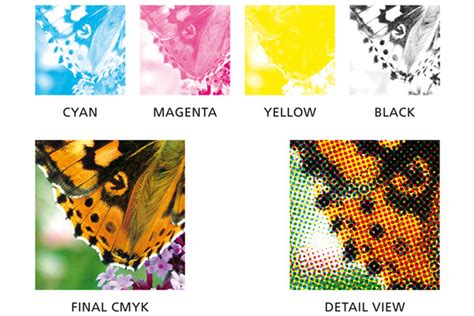
To achieve the perception of continuous tones and a broader spectrum of colors beyond the limitations of solid ink blocks, the printing process employs a technique called halftoning, also known as screening. Halftoning allows printers to simulate intermediate colors and tonal gradations by varying the size and spacing of tiny ink dots. These small dots, when viewed from a normal distance, blend together to create the illusion of smooth transitions and a wider range of colors. The CMYK model is essentially an extension of the CMY model, with the crucial addition of black ink to overcome the limitations of subtractive mixing for achieving neutral tones and deep blacks.
It is important to distinguish CMYK printing from spot color printing. In spot color printing, specific, pre-mixed inks are used to produce fixed, distinct colors. These inks are often used for branding purposes or when precise color matching is critical. Some printing presses are capable of combining both process colors (CMYK) and spot colors within a single print job, offering greater flexibility in design and production.
Device Dependence and Color Management
A critical aspect of understanding CMYK is its device-dependent nature. Both the CMYK color model and the RGB color model are tied to the specific characteristics of the devices that produce or display them. This means there is no universal, one-size-fits-all formula for converting colors between CMYK and RGB, or even between different CMYK printing processes. The precise appearance of a color specified in CMYK values can vary significantly depending on the printer, the ink used, the paper stock, and the printing conditions.
To address this variability and ensure accurate color reproduction across different devices and workflows, color management systems are employed. These systems typically utilize International Color Consortium (ICC) profiles. An ICC profile is a set of data that characterizes the color capabilities of a device, such as a monitor, scanner, or printer. By using ICC profiles, color management systems can accurately map colors between devices, ensuring that what is seen on screen is a faithful representation of what will be printed, or vice versa. Without proper color management, designers and printers risk encountering discrepancies between the intended colors and the final printed output, leading to frustration and potentially costly reprints. The effective use of CMYK, therefore, involves not only understanding the subtractive color principles but also embracing the tools and practices of color management to achieve predictable and desired results.