Adobe Lightroom, a cornerstone for photographers seeking sophisticated image editing and organization, offers enhanced capabilities through its premium subscription tiers. These memberships are designed to provide users with an expanded suite of tools, increased cloud storage, and seamless integration across devices, catering to a wide spectrum of photographic workflows, from mobile-first editing to comprehensive desktop management. Understanding the nuances of these premium offerings is key to maximizing the utility of Lightroom for both amateur enthusiasts and seasoned professionals.
The Two Pillars of Lightroom Premium: Classic and Cloud
Adobe has structured its premium memberships to align with its distinct Lightroom product lines: Premium Classic Membership and Premium Cloud Membership. The Premium Classic Membership is intrinsically linked to the purchase of "Adobe Lightroom Classic - The Missing FAQ," a resource for users deeply invested in the desktop-centric workflow of Lightroom Classic. This membership provides access to specialized information and potentially extended support for this powerful, locally-managed application.
Conversely, the Premium Cloud Membership is initiated with the acquisition of "Adobe Lightroom - Edit on the Go." This book focuses on the cloud-centric Lightroom ecosystem, encompassing its mobile, desktop, and web applications. This membership is tailored for photographers who prioritize flexibility and accessibility, leveraging cloud synchronization for their image libraries. The purchase of either of these foundational books includes a complimentary year of the corresponding Premium Membership. Subsequent years can be secured for $20.95/£14.95 per membership, with a reduced renewal rate of $13.94/£9.95 if renewed before the expiry date. The expiry date is extended upon renewal, removing the pressure of last-minute renewals. Many photographers, recognizing the distinct strengths of both Lightroom Classic and its cloud-based counterpart, opt to maintain both memberships to ensure they always possess the most current information and features at their disposal. Users can conveniently check their active Premium Memberships and their expiry dates, or reactivate expired memberships, by navigating to "My Account > Memberships."
The Mobile Revolution: Lightroom Mobile Premium Benefits
For photographers who have embraced mobile-first workflows, the premium subscription for Adobe Lightroom Mobile, often bundled within broader Creative Cloud photography plans, offers a transformative experience. Initially, the free version of Lightroom Mobile provides functionalities comparable to native photo apps from Apple and Google, which are already quite capable. However, for those serious about cataloging and advanced photo editing on the go, subscribing to "Photoshop Lightroom Mobile with Premium Features" is a crucial step. This premium tier unlocks a host of essential tools and services that significantly elevate the mobile editing experience.
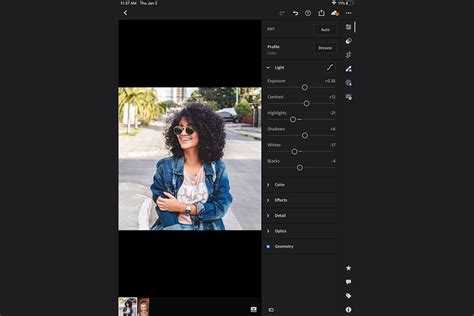
The core appeal of Lightroom Mobile premium lies in its powerful, non-destructive editing capabilities. This means that every adjustment made to a photograph can be undone, modified, or reverted at any point, even after the application has been closed and reopened. This flexibility is paramount for experimentation and fine-tuning images without fear of permanent alteration. A standout feature is the support for selective adjustments, allowing users to apply enhancements to specific portions of a photograph. This is particularly invaluable for portraiture, landscape detail work, and product photography, where precise control over localized edits is critical. The convenience of using these selective adjustments with an Apple Pencil on an iPad further enhances the precision and creative control available to users.
Furthermore, the premium subscription grants access to an array of advanced editing tools. The Healing Brush and Clone Stamp tools are indispensable for retouching, allowing for the seamless removal of blemishes, dust spots, or unwanted objects. Adobe has also introduced a generative removal brush, which, while consuming credits, offers remarkable capabilities for removing small to medium-sized objects with impressive accuracy. Perspective correction is another significant benefit, enabling users to fix distorted lines and angles in their images, a common issue when shooting tall buildings or at close proximity to subjects. The Upright modes and geometry slider tools within the Geometry panel are specifically designed to address these perspective issues.
The premium subscription also includes hundreds of Premium Presets, offering a curated collection of professional-grade looks, such as cinematic or portrait styles, that can instantly transform the mood and aesthetic of an image. Additionally, the subscription provides access to advanced masking features. Since 2021, masks can be automatically generated by Lightroom to detect the sky or the main subject, and users can also create masks based on color or luminance ranges. This significantly streamlines the process of making targeted adjustments.
Seamless Synchronization and Cloud Integration
A fundamental advantage of the premium Lightroom subscription, particularly the cloud-centric plans, is the seamless synchronization of photos and edits across all devices. Whether you are using Lightroom on an iPhone, iPad, the web version, or a desktop computer, your library and all modifications are kept up-to-date automatically. This ensures that you can start editing a photo on your mobile device and then seamlessly continue working on it on your desktop, or vice versa, without any manual file transfers. The Lightroom Web Edition, accessible from any computer with an internet connection, further enhances this accessibility, allowing users to manage and even edit their photos from virtually anywhere.
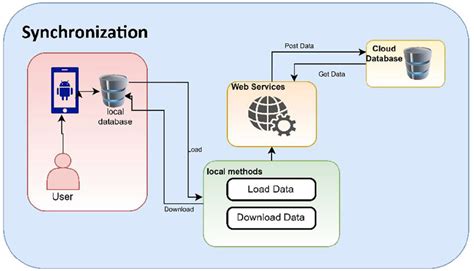
The cloud ecosystem also facilitates easy sharing. Users can create web albums directly from Lightroom Mobile to share their work with friends, clients, or collaborators. This streamlined sharing process bypasses the need for external platforms for initial client previews or portfolio showcases.
Storage and Value Proposition: A Comparative Look
The value of a premium Lightroom subscription becomes even more apparent when considering storage and the evolving pricing models. While a free version of Lightroom Mobile exists, it offers limited functionality, often mirroring the capabilities of native phone camera apps. To unlock the full potential, a subscription to "Photoshop Lightroom Mobile with Premium Features" is necessary, typically priced around $49.99 for a one-year prepaid subscription via mobile app stores.
However, users often encounter storage limitations. The free version, and even some initial premium tiers, may cap at 100 GB of cloud storage. Reaching this limit, which can happen with approximately 15,000 pictures, necessitates an upgrade. Crucially, direct storage upgrades are not available through Apple or Google app stores. To obtain more storage space within the Adobe Creative Cloud, users must subscribe to an Adobe Lightroom or Photography Plan directly from Adobe's online store. This often means forfeiting any remaining subscription period in the app stores, as there are no refunds.

Subscribing directly through Adobe's website offers a more integrated and often more cost-effective solution, especially for those who require substantial storage. For instance, the Lightroom mobile-only plan for desktop and mobile with 1 TB of cloud storage is available for $11.99 per month. A more comprehensive option, the Photography Plan, which includes Lightroom CC for desktop and mobile, and Photoshop CC for desktop and iPad, along with 1 TB of storage, costs $19.99 per month.
When compared to the older model of purchasing perpetual licenses and paying for significant software updates, the subscription model presents a compelling financial advantage. For example, the total cost of ownership for Lightroom under an older pricing model could have reached $967 over three years. In contrast, the current Lightroom photography plan at $11.99 per month amounts to $431.64 over three years ($11.99 x 36 months). Even the more inclusive plan with Lightroom and Photoshop at $19.99 per month totals $719.64 over the same period. This demonstrates a significant cost saving with the subscription model, especially considering the continuous updates and feature enhancements provided.
Navigating the Lightroom Ecosystem: Mobile, Web, and Desktop Clients
Adobe's Lightroom offerings extend beyond just the mobile app, encompassing a range of desktop and web applications that work in concert. Lightroom Mobile and Lightroom Web are primarily cloud-based, with limited local caching capabilities, making them ideal for on-the-go editing and quick access.
The desktop application "Lightroom" (formerly Lightroom CC), represented by the "Lr" icon on Mac, functions similarly to its mobile and web counterparts but operates as a local client. It offers a menu-driven interface more akin to traditional desktop software. While it relies on cloud storage, it provides more manageable replication capabilities than the mobile and web versions.
In contrast, "Lightroom Classic" (represented by the "LrC" icon) is the successor to the standalone Lightroom 6 application. It is a "fat-client" application that stores all libraries, or catalogs, locally on a user's Windows or macOS machine, utilizing directly attached or network-attached drives for extensive storage. Lightroom Classic can sync its local libraries with the Creative Cloud, but this is a partial, asynchronous replication that requires user management.
Organizing in Lightroom with Scott Kelby | #BHDoF
The coexistence of these versions can lead to multiple instances of the same album existing on a PC or Mac - one in Lightroom's local cache, one in its local replica, and one within a Lightroom Classic library. While all versions preserve the original uploaded image and store edits as metadata instructions, the cloud-based versions primarily operate on "smart-previews" at a reduced resolution (up to 2640 points on the longest edge) unless a full-size version is explicitly downloaded. Edits performed on these smart-previews are still non-destructive.
For photographers needing extensive local storage and advanced cataloging features, Lightroom Classic remains the powerhouse. However, for those who prioritize cloud-based workflows, accessibility across devices, and a more streamlined editing experience, Lightroom Mobile, Lightroom Web, and the desktop "Lightroom" client offer a cohesive and powerful solution. Upgrading from a mobile-only subscription to a full Adobe Lightroom or Photography Plan directly from Adobe's store seamlessly integrates these desktop applications, providing access to two laptop/desktop versions of Lightroom in addition to the mobile and web apps, along with significantly increased cloud storage.
The Ideal Use Case and Evolving Plans
The ultimate benefit of an Adobe Lightroom or Photography Plan is realized by photographers who need to manage vast quantities of images across multiple local libraries (catalogs) within their home or office IT infrastructure, while simultaneously requiring the ability to work with a subset of their images while traveling. This involves adding or editing pictures from a smartphone, tablet, or laptop, with all changes reflected across their entire ecosystem.
Even for those who do not wish to manage multiple local photo libraries, relying primarily on Lightroom Mobile and the desktop "Lightroom" client offers a robust and well-integrated workflow. Lightroom Classic can then be utilized occasionally for specific plug-in requirements or for creating photo albums.
It is important to note that Adobe's subscription plans, which bundle various products and services, are subject to change. The content and pricing of these subscriptions have evolved frequently in recent years. While the information presented here is accurate at the time of writing, users are advised to check Adobe's official website for the most current subscription details and offerings, as they may differ in the future. The flexibility and continuous development inherent in the subscription model ensure that Adobe Lightroom remains a leading solution for photographers of all levels.
tags: #adobe #lightroom #premium #subscription