The question of whether vampires can reproduce has long been a source of fascination, weaving through ancient folklore and modern fictional narratives. While the popular image of the vampire often conjures an eternal, unchanging being, the concept of procreation introduces a complex layer to their existence. This exploration delves into the origins of vampire lore, the biological implications of vampirism, and how various fictional universes have grappled with the seemingly paradoxical idea of a creature of the night bringing new life into the world.
Echoes of the Undead: Vampire Folklore and the Birth of the Dhampir
The notion of creatures resembling vampires and their ability to sire or bear offspring can be traced back to ancient myths and legends. In Balkan folklore, a specific figure emerges: the Dhampir. These beings are described as the offspring of one human and one vampire parent, originating from this rich tapestry of oral traditions. T. P. Vukanović, in his essay "The Vampire," featured within Jan L. Perkowski's 1976 work "Vampires of the Slavs" and originally published in the Journal of the Gypsy Lore Society in 1959, discusses the origins of vampire folklore, with timelines extending back to the early 1700s. The exact genesis of these myths is difficult to pinpoint, as oral traditions were undoubtedly transcribed long before their formal publication in fictional works. This research paper, published in 1959, predates many modern fictional interpretations of vampires by decades, highlighting the deep roots of these beliefs.
The existence of Dhampirs, half-human and half-vampire, inherently suggests a form of reproduction. In many of these older tales, the creation of a Dhampir is often attributed to the union of a male vampire and a mortal female. This concept, deeply embedded in folklore, challenges the idea of vampires as entirely sterile beings, hinting at a capacity for interaction with the mortal realm that extends beyond mere predation. The very existence of a hybrid species implies a biological, or at least supernatural, mechanism for propagation, even if it deviates from conventional human reproduction.
The Biological Paradox: Undead, Unchanging, and Potentially Fertile?
The modern understanding of vampires, particularly as popularized by contemporary fiction, often presents them as undead beings. This state raises significant questions about their biological functions, including reproductive capabilities. If a vampire is truly "undead," meaning their bodily processes have ceased and have been unnaturally reanimated, then the biological machinery for reproduction would logically be defunct. The concept of "undead" implies a suspension of natural life cycles, including cell regeneration and hormonal regulation, both crucial for fertility.
However, the notion of "undead" itself can be interpreted in various ways. Some interpretations suggest that while vampires are not alive in the conventional sense, their bodies are sustained by an external life force, such as blood. This sustenance might, in some fictional frameworks, be sufficient to maintain essential bodily functions, including those related to reproduction. If their systems are sustained to a degree that allows for the maintenance of circulatory, respiratory, and other vital functions, it raises the possibility that reproductive systems could also remain functional, albeit in an altered state.
The crucial element here is the degree of "life" or "animation" retained by the undead body. In the context of "The Elder Scrolls" lore, for instance, discussions arise about whether vampires, particularly in certain stages of their transformation, possess enough vitality to produce sperm. This suggests a spectrum of vampiric existence, where some may retain a degree of biological functionality that allows for procreation, at least under specific circumstances or within certain fictional rulesets. The idea that they are not entirely "dead" but rather "undead" opens up a broader classification of supernatural beings, where characteristics can vary significantly.
Fictional Explorations: Breaking Dawn and Beyond
Contemporary fiction has extensively explored the complexities of vampire reproduction, often introducing unique biological rules to accommodate narrative demands. Stephanie Meyer's "Twilight" saga, particularly in the novel "Breaking Dawn," presents a compelling case study. In this series, it is established that vampire males can impregnate human females. This revelation directly challenges the traditional notion of vampires as sterile.
However, the female vampire's reproductive capacity is addressed with a different set of rules. Meyer explains that vampire bodies are unchanging and immutable. This immutability means that a female vampire will never ovulate, and without ovulation, natural pregnancy is impossible. This biological constraint is further underscored by the fact that female vampires do not experience menstrual cycles. The narrative also implies that male vampires, despite their undead status, can still produce viable sperm. This is supported by the fact that Carlisle and Esme Cullen, despite their long existence and desire for a child, never had one. Furthermore, the character of Rosalie Hale's deep longing for a child and her inability to have one serves as a significant plot point, reinforcing the idea that female vampires in this universe are infertile.
Vampire Biology Explained | The Science of Vampirism
The explanation for this disparity often revolves around the fundamental nature of their transformation. While male vampires might retain the capacity for sperm production, female vampires' bodies are depicted as having undergone a more profound cessation of reproductive functions, making them incapable of carrying a child. The immutability of their bodies, a core tenet of the "Twilight" vampires, prevents any biological processes that would allow for pregnancy. Meyer herself has commented on this, emphasizing that their bodies are fixed, preventing ovulation and thus pregnancy. She also alluded to preserving a "tiny bit of surprise" in the final book, suggesting that the mechanics of vampire reproduction, especially the male capacity, were intentionally crafted to serve the narrative, even if they stretched the established biological rules.
The Implication of Pregnancy in a Vampiric World
The possibility of pregnancy in a world where vampirism exists also raises questions about the fetus's fate and the nature of the transformation. If a pregnant woman is turned into a vampire, the outcome would depend on how the vampiric infection affects the placenta. Some pathogens can cross the placenta and affect the fetus, while others cannot. If the entity responsible for the vampiric infection can cross the placenta, it's plausible that the fetus would be sustained by this infection, much like the mother. In such a scenario, the fetus might develop into a vampire as well, although its birth and survival would still be uncertain.
However, if the infection does not cross the placenta, a non-breathing, undead mother would likely be unable to sustain a still-human fetus. The biological support systems of a living human are complex and require continuous oxygenation and nutrient supply, which a vampire, by definition, would not provide in the same way. This scenario suggests that a human fetus carried by an undead mother might not survive, leading to a miscarriage or stillbirth, unless the vampiric transformation itself somehow provides the necessary life support. The very fluid that allows vampires to move and react, described as flammable, might play a role in sustaining bodily functions, but its capacity to support a developing fetus is highly speculative.
The Elder Scrolls Lore: A Different Take on Vampire Procreation
The lore of "The Elder Scrolls" video game series offers a distinct perspective on vampire reproduction, particularly within discussions surrounding characters like the "Gray Prince" and the vampire Serana. In this universe, the concept of vampires being sterile is questioned. It is noted that Dhampirs exist, and they can only occur when a male vampire mates with a non-vampire female. This aligns with some aspects of older folklore, suggesting a continued capacity for male vampires to sire offspring with mortals.
Furthermore, the lore introduces the idea of different "kinds" of undead, implying that not all undead beings function under the same immutable rules. The case of Harkon, who made a pact with Molag Bal to become a pure-blood vampire along with his family, is presented. The "Gray Prince" was "somehow" born normally from a vampire and a mortal, prompting speculation about the circumstances of his birth. This suggests that while pure-blood vampires might have different characteristics, the possibility of a vampire-mortal union resulting in a child, perhaps a Dhampir, remains open.
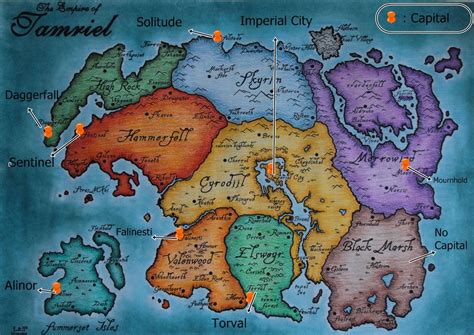
The argument is also made that some vampires, particularly in their early stages of transformation or specific bloodlines like the "Cyrondil vampires" in "Immortal Blood," may retain enough biological "aliveness" when they feed to produce sperm. This implies that their bodies are not entirely shut down but rather exist in a state where their systems, including reproductive ones, can be temporarily activated or sustained through the consumption of blood. If drinking blood provides the necessary nutrients to sustain their systems, it logically follows that they could potentially resume life-like functions, which could include breeding. This interpretation moves away from the absolute cessation of biological activity and embraces a more nuanced understanding of vampiric existence within the game's narrative. The question of Serana's birth from a vampire father and whether she was born a vampire or transformed later also adds layers to this discussion, suggesting that the process of becoming a vampire and its implications for offspring are multifaceted.
Conclusion: A Shifting Mythos
The question of whether vampires can reproduce remains a fluid one, deeply dependent on the specific lore and narrative being examined. From the ancient whispers of Balkan folklore giving rise to the Dhampir, to the immutable bodies of "Twilight" vampires, and the nuanced "undead" classifications in "The Elder Scrolls," each interpretation offers a unique perspective. While folklore suggests a historical acceptance of vampire procreation, modern fiction often grapples with the biological paradoxes, creating intricate rules to explain how these immortal beings might continue their lineage, or why they are fundamentally incapable of doing so. The enduring fascination with this topic underscores humanity's persistent curiosity about the boundaries of life, death, and the potential for existence beyond conventional understanding.