The landscape of web imaging has been significantly reshaped by the introduction of the WebP format, a sophisticated raster graphics file format developed by Google. Conceived as a modern successor to established formats like JPEG, PNG, and GIF, WebP aims to enhance web performance through superior compression while retaining visual fidelity and introducing advanced features. A key aspect of its utility, and a point of frequent inquiry, is its capability for transparency.
The Genesis and Evolution of WebP
Google officially announced the WebP format in September 2010, marking a significant step towards optimizing web content delivery. The format's foundation is built upon block prediction, a method where image blocks are predicted based on adjacent blocks, contributing to efficient compression. This process involves four primary modes of block prediction: horizontal, vertical, DC (a single color prediction), and TrueMotion. Data that is mispredicted or not predicted at all is then compressed using a discrete cosine transform or a Walsh-Hadamard transform within 4x4 pixel sub-blocks, employing fixed-point arithmetic to prevent rounding errors. The reference implementation of WebP includes converter software, such as the command-line program cwebp for Linux, and a decoding library, which is also used for WebM.
The initial release of the stable supporting library for WebP occurred in April 2018. However, the format's capabilities were expanded significantly on October 3, 2011, with the addition of an "Extended File Format." This enhancement allowed for broader support, including animation, ICC profiles, XMP and Exif metadata, and tiling. Tiling, in particular, enables the compositing of very large images from a maximum of 16,384 × 16,384 tiles, a feature that addresses the limitations of handling extremely high-resolution imagery on the web.
The adoption of WebP has seen varied but generally increasing support across major platforms and browsers. While Apple initially introduced WebP support in early beta versions of macOS Sierra and iOS 10 in July 2016, this support was later removed in the final General Release (GM) seed versions of both operating systems released in September 2016. Despite this, Google actively promotes WebP, with Google Chrome and all Chromium-based browsers offering native support. Microsoft Edge, since its Chromium-based versions released after January 2020, also includes native WebP support.
WebP's Compression Prowess and Transparency
WebP supports both lossy and lossless image compression. The lossy compression, based on the VP8 video codec, achieves remarkable file size reductions by discarding some non-essential image data. This is particularly effective for photographic images where subtle details might not be perceived by the human eye. Conversely, the lossless compression, a separate and more recent algorithm developed by Google software engineer Jyrki Alakuijala, is unrelated to VP8. It employs advanced techniques such as dedicated entropy codes for different color channels, exploiting the spatial locality of backward reference distances, and a color cache of recently used colors to achieve compression without any loss of image data.
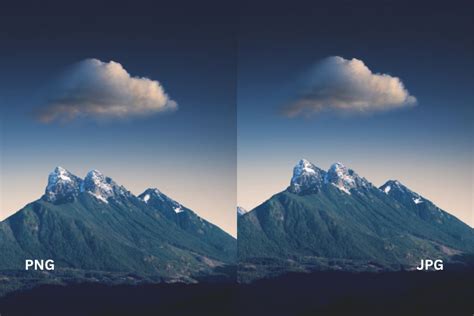
The format's advanced compression methods mean that WebP files can take considerably more time to create compared to other web image formats. However, the resulting benefits in terms of file size and loading speed often outweigh this initial overhead.
Handling Transparency with WebP
One of the most significant advantages of WebP, especially when compared to JPEG, is its support for alpha compositing, commonly referred to as transparency. This capability is crucial for web design, allowing images to be seamlessly integrated into backgrounds of varying colors or patterns. Unlike JPEG, which does not support transparency, WebP can preserve transparent areas, much like PNG.
The WebP format supports 24-bit color depth with transparency, a feature that Google has proposed for animated images as an alternative to the widely used GIF format. This allows for richer colors and smoother animations compared to GIF's limited 256-color palette. Furthermore, WebP offers the ability to combine frames with both lossy and lossless compression within the same animation, providing greater flexibility and optimization opportunities. The support for seeking to specific frames in animated WebP images also enhances their utility for interactive web experiences.
It's important to note that the lossy compression mode of WebP, like the VP8 codec it is based on, traditionally supports only the 8-bit YUV 4:2:0 color format. This can potentially lead to color loss in images with very fine contrast elements, such as pixel art or certain types of computer graphics, and may result in ghosting in anaglyph images. However, the lossless mode of WebP, with its advanced color handling, is well-suited for graphics requiring precise color representation and transparency.
Software and Browser Support
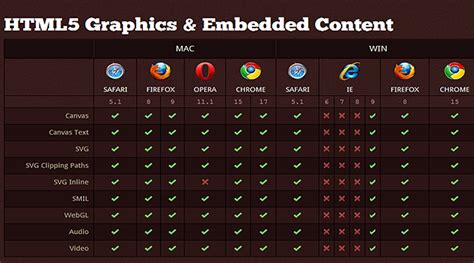
The widespread adoption of WebP has been driven by its inclusion in major browsers and its support by various software applications. Beyond Chrome and Chromium-based browsers, Firefox added native WebP support in version 65, released in early 2019. Opera, another popular browser, also supports the format.
Many content management systems (CMS), while not always supporting WebP natively or by default, offer extensions that facilitate automated conversion from other image formats to WebP and ensure that WebP images are delivered to compatible browsers. This makes it easier for website administrators to leverage the benefits of WebP without extensive manual intervention.
Numerous image editing and viewing applications have integrated WebP support over the years. This includes Adobe Photoshop, which can handle WebP files through plugins or native support in newer versions, as well as GIMP, Affinity Photo, Pixelmator, and Krita. Graphics conversion tools like ImageMagick and XnView also provide support. For developers, libraries like libwebp are available, enabling integration into custom applications.
The WebP container, based on the RIFF (Resource Interchange File Format) container, is designed to be extensible. This means that the container itself allows for features beyond the basic encoding of a single image as a VP8 key frame, paving the way for future enhancements and expanded functionality.
Security Considerations and Future Outlook
While WebP offers significant advantages, it has not been without its challenges. In September 2023, two critical vulnerabilities relating to WebP images were discovered by Apple Security Engineering and Architecture (SEAR) and the Citizen Lab. These vulnerabilities, particularly CVE-2023-4863, which was actively exploited, posed a high risk (CVSS 8.8) and could lead to out-of-bounds write conditions, potentially resulting in denial of service (DoS) or even remote code execution (RCE) in applications utilizing the affected libwebp library. The widespread use of libwebp across numerous applications, from web browsers to mobile apps, presented a significant challenge for patching and mitigation due to the rigorous testing requirements.
Threats Vulnerabilities and Exploits
In response to the evolving needs of digital imaging, Google began developing a second version of WebP in June 2021. This ongoing development reflects the company's commitment to improving the format's efficiency, feature set, and security.
The landscape of image formats continues to evolve, with emerging contenders like JPEG XL aiming to provide even greater optimization for responsive web environments and smoother transitions from legacy JPEG formats. Similarly, FLIF (Free Lossless Image Format), though discontinued, was a lossless format that claimed superior compression ratios compared to PNG, lossless WebP, lossless BPG, and lossless JPEG2000 when it was introduced in 2015.
Despite these developments, WebP's established support, continuous improvement, and the inherent advantages it offers in terms of file size and transparency ensure its continued relevance and widespread use on the modern web. Its design, with a focus on efficiency and versatility, positions it as a vital tool for web developers and designers aiming to deliver fast-loading, visually rich online experiences. The ability to handle transparency effectively, combined with robust compression capabilities, makes WebP a compelling choice for a wide array of web graphics.
tags: #can #webp #be #transparent