The digital landscape has witnessed a peculiar and pervasive trend: the widespread proliferation of photoshopped and deepfaked images featuring the likeness of conservative media influencer Charlie Kirk. This phenomenon, dubbed "Kirkification," has seen Kirk's face superimposed onto a vast array of recognizable internet memes and viral clips, creating a morbidly ironic form of digital resurrection. The meme culture's embrace of transgression and the collective internet's tendency to mythologize public figures, especially in the wake of a notable death, have coalesced to propel this trend into the mainstream.
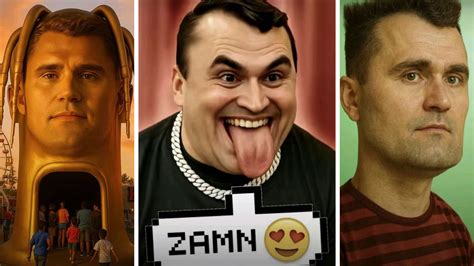
The origins of this meme can be traced back to September 23rd, a mere two weeks after Kirk's passing, when a user on X (formerly Twitter) ingeniously swapped Kirk's face with that of streamer iShowSpeed in a clip where Speed was struggling to contain his laughter. While this initial instance garnered attention, the trend truly exploded in late October, with countless variations flooding social media platforms. The underlying reason for this surge is deeply rooted in the very nature of internet culture. Meme culture frequently thrives on pushing boundaries and subverting expectations. Nothing, it seems, spreads with greater velocity than a joke that traverses societal norms, particularly when it involves a figure whose death has been extensively discussed and, in some circles, mythologized. History shows us that the internet readily engages in the memeification of profound or tragic events, from the assassination of JFK and 9/11 to the murder of George Floyd. This propensity has now manifested as a full-blown meme format centered around Charlie Kirk.
The Mechanics of "Kirkification": Visual Absurdity Meets AI Realism
The essence of "Kirkification" lies in its ability to tap into the internet's enduring fascination with exaggeration and the uncanny. From heavily distorted "deep-fried" memes to face-warping filters, online humor often resides in the liminal space between recognition and outright absurdity. Charlie Kirk face-swap memes masterfully inhabit this niche. By transplanting a widely recognized public figure's visage into incongruous and often chaotic scenarios, creators achieve an instant comedic impact.
This meme format leverages several key elements that contribute to its virality:
- Instant Recognizability: Charlie Kirk's facial features are highly distinctive and readily identifiable across the internet, even by individuals who may not closely follow political discourse.
- Political and Cultural Contrast: Placing Kirk's face, associated with a specific conservative ideology, into unrelated or even opposing contexts creates an immediate juxtaposition that is ripe for satire.
- Visual Absurdity: The humor is largely self-contained within the visual. The sheer incongruity of the image requires no extensive captions or background context to be understood, making it universally accessible.
Unlike traditional political satire that might rely on lengthy explanations or nuanced commentary, a "kirkified" image delivers its punchline instantaneously. There is no preamble, no setup, and no drawn-out punchline; it is pure, unadulterated visual irony.
The term "to kirkify" has emerged to describe the process of using AI face-swapping technology to replace a subject's face with Charlie Kirk's likeness, primarily for satirical or meme-related purposes. This trend shares similarities with earlier internet phenomena such as "yassification," "Gigachad edits," and "NPC face swaps." However, "Kirkification" distinguishes itself by its potent blend of AI-driven realism, established meme culture, and the direct parody of a prominent public figure. The resultant images possess a quality that is simultaneously polished and inherently ridiculous, a duality that fuels their rapid dissemination across the web.
The Anatomy of a Meme: Why Charlie Kirk Face Swaps Resonate
Several converging factors explain the explosive popularity of Charlie Kirk face-swap content. The inherent nature of meme culture, combined with the specific characteristics of the subject and the tools available, has created a perfect storm for this trend.
1. High Meme Recognition
Charlie Kirk's face is a digital commodity. His frequent appearances in media and online discussions have made his features instantly recognizable to a vast online audience. This recognition is the foundational pillar of the meme's success. When a user encounters a "kirkified" image, the immediate identification of the face triggers the comedic recognition of the juxtaposition. This is crucial because, in the fast-paced world of online content consumption, attention spans are short, and immediate comprehension is key to engagement. Even those who are not politically engaged or do not follow conservative media closely are likely to recognize Kirk, thus broadening the meme's appeal beyond a niche political audience.
2. Visual Humor Over Textual Reliance
The efficacy of face-swap memes, including those featuring Kirk, lies in their inherent visual nature. They operate effectively without the need for lengthy captions or explanatory text. This characteristic makes them exceptionally well-suited for various online formats:
- Short-form Video: As seen in the initial iShowSpeed example, face swaps can be seamlessly integrated into short video clips, a dominant content format on platforms like TikTok, Instagram Reels, and YouTube Shorts.
- Reaction Images: "Kirkified" images can serve as potent reaction images, conveying a specific emotion or sentiment through visual irony that might otherwise require a more elaborate textual response.
- Cross-Platform Sharing: The self-contained visual humor facilitates effortless sharing across different social media platforms. A meme that requires no translation or complex understanding can travel much further and faster.
This reliance on visual humor bypasses the need for users to invest time in reading and understanding textual context. The joke is presented, and the viewer's brain instantly processes the absurdity. This efficiency is a significant driver of virality in an environment where content is constantly vying for attention.
3. The Democratization of Meme Creation: AI as the Enabler
The creation of sophisticated memes, especially those involving image manipulation, was once the domain of individuals with advanced graphic design skills. However, the advent of accessible AI tools has dramatically lowered the barrier to entry. For the "Kirkification" trend, specialized tools have emerged that streamline the process of creating these memes.
One such example is Kirkify AI, a browser-based application explicitly designed around this meme format. The workflow is remarkably simple, requiring no advanced technical expertise:
- Upload an Image: Users can select any image they possess or have the rights to use. This can range from popular meme templates and screenshots to personal photos or reaction images. The flexibility in source material allows for a wide variety of meme creations.
- Apply the Face Swap: The AI algorithm then takes over, seamlessly replacing the original face in the uploaded image with a likeness of Charlie Kirk. Crucially, these tools are designed to maintain natural-looking lighting and proportions, ensuring that the resulting image is convincing enough to sell the joke. The AI's ability to adapt to different lighting conditions and facial angles is key to the meme's polished yet absurd appearance.
- Generate & Export: Within a matter of seconds, the AI generates the "kirkified" meme, ready for immediate posting, sharing, or further remixing.
This ease of use means that a vast number of individuals can participate in the trend, contributing to its widespread proliferation. The democratization of meme creation empowers everyday users to become content creators, leading to a much larger volume and diversity of "kirkified" content than would be possible with traditional editing methods.

A History of Mockery: The "Toilet Paper USA" Precedent
The current wave of "Kirkification" did not emerge in a vacuum. For years, Charlie Kirk has been a prominent figure on the internet's satirical radar, particularly within communities dedicated to mocking conservative figures and organizations. The subreddit r/ToiletPaperUSA stands as a prime example of this long-standing critique. This online space has historically been dedicated to parodying Turning Point USA and its founder, Charlie Kirk.
A recurring theme on r/ToiletPaperUSA has been the persistent photoshopping of Kirk's face. This often involved exaggerating his features, such as making his face appear larger or smaller in relation to his head, or altering the proportions of his eyes, nose, and mouth. These edits, while perhaps less technologically sophisticated than current AI-driven methods, served a similar purpose: to visually satirize and diminish the perceived authority or seriousness of Kirk.
The sheer volume and consistency of these manipulations led to a peculiar phenomenon for regular visitors of the subreddit. As one observer noted, the constant exposure to these altered images made it increasingly difficult to recall or even ascertain the "normal" size and proportions of Charlie Kirk's actual face. This blurring of reality and parody highlights how sustained digital mockery can alter perceptions of a public figure.
This difficulty in discerning the authentic from the manipulated even inspired the creation of interactive content. A quiz was developed, distributed within online communities, that challenged users to identify whether Charlie Kirk's face in various images was presented in its normal size, shrunken, or enlarged. The extreme difficulty of this quiz, with participants often scoring poorly, underscores the profound impact that persistent visual manipulation can have on one's perception. The "Kirkification" trend, therefore, can be seen as a technologically advanced evolution of a long-standing internet practice of visually satirizing and deconstructing the image of Charlie Kirk.
Beyond the Meme: The Deeper Implications of "Kirkification"
The "Kirkification" phenomenon, while seemingly lighthearted and driven by internet humor, offers a potent case study in how digital culture, artificial intelligence, and public perception intersect. The proliferation of these memes extends beyond simple satire, touching upon complex issues of legacy, misinformation, and the very nature of digital identity.
Collapsing Context and Distorting Legacy
One of the most significant implications of the widespread "Kirkification" of images is its potential to collapse the context surrounding Charlie Kirk's death and legacy. As his likeness is continuously superimposed onto unrelated and often absurd scenarios, the original context of his public persona and the events of his life and death can become diluted. This process turns his actual face into a malleable digital asset, primarily serving as a vehicle for jokes rather than a symbol of his original political messaging.
For critics and even apolitical observers, the act of "Kirkifying" someoneâgrafting his face onto another individualâhas become a method of online mockery. However, the sheer volume and pervasiveness of these memes, according to some analyses, have had a larger effect: they have begun to erode the political power of Kirk's legacy. By transforming his image into a universally recognizable meme, the intent, seriousness, and political weight associated with his original platform may be diminished in certain online spheres.
When questioned about the potential impact of these memes on public perception of Kirk or his legacy, a spokesperson for Turning Point USA offered a succinct response: "No." This indicates a potential underestimation by conservative organizations of the destabilizing power of pervasive internet culture. In specific digital corners, the meme version of Kirk has achieved total saturation, potentially overshadowing the real individual for those immersed in these online communities.
The "Poisoned" AI Hypothesis
A particularly bizarre turn in the "Kirkification" narrative involves the hypothesis that certain AI image generation tools have become "poisoned" by the sheer volume of "Kirkify" requests. The theory posits that these AI models, having been trained on an overwhelming number of images featuring Kirk's face in various meme contexts, may now inadvertently reproduce his likeness in responses to unrelated prompts. In essence, the AI, according to this idea, has been so saturated with Kirk memes that it struggles to generate non-Kirk images without incorporating his features.
This phenomenon, if true, would represent a novel form of AI "hallucination" or unintended bias, driven by the specific patterns of internet usage. The idea that AI could be collectively "trained" by meme culture to the point of distorting its output is a fascinating, albeit speculative, prospect. It suggests a feedback loop where internet trends directly influence the generative capabilities of AI.
However, this hypothesis has been met with skepticism from some AI researchers. They argue that it is based on a fundamental misunderstanding of how these large language models and image generators are trained and operate. While AI models do exhibit emergent behaviors and can be influenced by training data, the concept of "poisoning" an AI in this specific, meme-driven manner is often disputed. Researchers like Justin Bennington suggest that the training data for most image models is vast and diverse, and even a viral meme trend like "Kirkification" would likely represent only a small fraction of the overall dataset. Furthermore, Bennington points out that if such a bias were a significant issue, it could theoretically be addressed by training a classifier specifically to detect and mitigate the presence of Kirk's face.
Despite the technical debate, the very existence of this "poisoned AI" theory highlights the profound and often unpredictable ways in which AI can interact with and be shaped by digital culture. It underscores how the collective actions of internet users, amplified by AI technology, can create new forms of meaning and distortion.
A Precedent in Digital Satire
The "Kirkification" trend is not an isolated incident but rather the latest iteration of a long-standing internet practice: the satirical manipulation of prominent figures' images. Before Charlie Kirk became the subject of AI-driven face swaps, other individuals and events have been subjected to similar memeification processes.
The Groypers and Shrinking Kirk: During his lifetime, Charlie Kirk was involved in a public feud with the "groypers," a far-right group known for its anti-immigration, misogynistic, and antisemitic online presence. Ironically, some of Kirk's opponents, including those within online left-leaning communities, also engaged in persistent mockery. A notable meme that gained traction while Kirk was alive involved progressively shrinking his facial featuresâeyes, nose, and mouthârelative to the size of his head. This visual gag served to diminish his perceived importance and authority through persistent, albeit crude, digital alteration.
The Conservative Response to Death: Following Kirk's death, many within the conservative movement rallied to protect and valorize his legacy. This led to instances where individuals who were perceived as disrespectful of Kirk's memory online faced repercussions, including firings. This reaction underscores the sensitivity surrounding the image of public figures after their passing and the digital battleground that emerges to control their narrative.
Persistent Mockery from Left and Right: Despite the conservative efforts to solidify Kirk's legacy, those who had long criticized him, both on the left and the far right, continued their mockery. This persistence demonstrates how deeply entrenched certain criticisms can become within online subcultures, often transcending ideological divides when it comes to satirizing a shared target.
Ryan Broderick, an expert in internet culture and author of the newsletter "Garbage Day," observed a significant surge in activity from groypers posting Kirk memes shortly after his death. This suggests that these groups were instrumental in driving the initial memeification of Kirk, leveraging his passing as an opportunity for continued online engagement and disruption.
The Evolution from Sincerity to Nihilistic Absurdism
The period following Kirk's death saw an initial wave of tributes and expressions of remembrance, often characterized by sincerity. However, this phase was relatively short-lived in the fast-paced digital world. By November, the "Kirk memes" had truly begun to proliferate. His face was being mashed up with virtually any recognizable pop culture figure, demonstrating the boundless creativity and often dark humor of meme creators.
Simultaneously, an AI-generated song titled "We Are Charlie Kirk," originally intended as a sincere tribute to his legacy, became a frequent target for remixes. It was repurposed as background music for many of the emerging memes, transforming its original earnest intent into a soundtrack for digital absurdity. This shift from sincerity to a more nihilistic and absurd form of humor is not surprising to anyone who has spent time online. The internet has a well-documented tendency to process tragedy through the lens of farce, a process that accelerates over time. The evolution of 9/11 jokes over the past quarter-century serves as a stark historical precedent for this phenomenon.
Kirk as a Symbol of "Old-School" Conservatism
Charlie Kirk was deeply associated with a more traditional brand of American conservatism, one that emphasized grassroots efforts and in-person voter persuasion. According to Aidan Walker, a researcher and content creator specializing in internet culture, Kirk represented "an old conservative personâs idea of what a young person should be like." This perception, combined with his substantial social media presence during his life and his adherence to more conventional political ideologies, made him a visible target for internet-savvy individuals, often referred to as "edgelords," across the political spectrum. This dynamic has continued even after his death.
Reclaiming and Destabilizing Image
The act of posting a "Kirk meme" quickly evolved into a signal of an individual's internet-native, anti-institutional streak. As Aidan Walker explains, "The internet wanted to take control of his image." The "Kirkification" memes were seized upon by users as a tool to destabilize any carefully constructed image that conservatives sought to present. The pervasive nature of these memes has, in the eyes of many, rendered it impossible for Kirk's image to be viewed with complete seriousness by a significant portion of the online population.
AI Hallucinations and the "Kirkification" Debate
The phenomenon took an even stranger turn with the emergence of AI-generated videos. One such video, depicting an influencer "meeting Santa," was perceived by some to make the influencer bear a resemblance to Charlie Kirk. This led to widespread speculation on social media that AI systems were beginning to "hallucinate" Kirk's image, a phenomenon some attributed to the overwhelming prevalence of "Kirkification" content.
As Ryan Broderick noted, "We do know AI poisoning is real. There are trends in how LLMs generate stuff. The use of em-dashes, for example. Itâs happened before, and the [Kirk generating] just adds to the meme." This perspective suggests that the AI's output is influenced by patterns learned from its training data, and the sheer volume of Kirk-related content could indeed be skewing its results.
However, the notion of AI "poisoning" in this context is a subject of ongoing debate. Justin Bennington, an AI researcher and founder of Somewhere Systems, a media and engineering consultancy, argues that much of the discourse surrounding AI image generators is mired in disinformation. He posits that "Kirkification" is likely no more prevalent in the training sets of image models than any other viral meme. Bennington emphasizes that the internal workings of these AI tools are complex and often opaque, making it difficult to definitively prove or disprove such theories. He also suggests that if AI bias were a significant problem, developers could implement measures, such as training specific classifiers, to detect and mitigate the presence of particular individuals' likenesses.
Bennington further contends that intentionally "poisoning" most image models is not feasible, even if it were a goal. Moreover, some of the images cited as evidence of AI "hallucinating" Kirk's likeness may not strongly resemble him to an untrained eye, suggesting that it is the human observers, already saturated with "Kirkified" content, who are projecting his image onto other visuals.
Regardless of whether AI systems are genuinely "poisoned" by Kirk memes, the very existence of this debate underscores the destabilizing effects that AI can have on how political meaning is shaped and disseminated. The ability of memes and AI to distort and redefine the image of public figures has implications that reach far beyond the confines of online humor, impacting political discourse and public perception in profound ways. The "Kirkification" trend serves as a tangible, albeit unusual, example of this evolving digital landscape.