Adobe Lightroom stands as a titan in the world of photo editing, offering a comprehensive suite of tools for both amateur enthusiasts and seasoned professionals. While its capabilities are undeniable, the question of how to access this powerful software, particularly for free, often arises. This article delves into the legal avenues for obtaining Lightroom without immediate cost, explores the significant perils associated with pirated versions, and investigates alternative software that can rival its functionality.
The Allure of Free: Navigating Legal Access to Lightroom
For those eager to explore Lightroom's advanced features without an upfront financial commitment, Adobe provides several legitimate pathways. The most straightforward is the Adobe Lightroom Free Trial, a generous offer that grants full access to the software's capabilities for a period of seven days. This is a terrific opportunity to test the capabilities of the software with no limitation within the stipulated time. The trial version is not a stripped-down or limited edition; it is the full version of the program, packed with the same photo editing functions as the latest Lightroom version. This trial is available for both macOS and Windows operating systems, ensuring broad accessibility.
Beyond the trial, Adobe offers a free version of Lightroom, distinct from the trial in that it is not time-limited. This free version, while not offering the full spectrum of features found in the paid subscription, still provides a robust set of tools for basic to intermediate photo enhancement. It's important to note that while the free version can be used without a subscription or Creative Cloud membership, its cloud storage capabilities are limited, and synchronization with other devices will not be available. However, all other features, tools, and image editing functions are preserved. This free version is perfect for those who are new to photo editing or who only need basic tools.
For students, teachers, and individuals engaged in educational activities, Adobe extends a significant discount of up to 60% on Creative Cloud subscriptions. This makes the full, professional version of Lightroom considerably more accessible to those in the academic sphere.
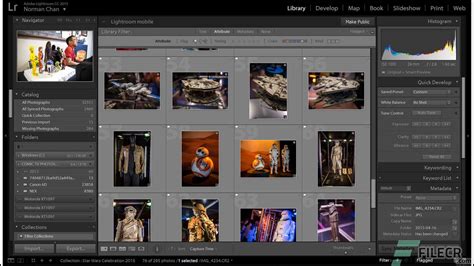
It is crucial to understand that accessing any Adobe product, including Lightroom, now requires a Creative Cloud membership. There is no way to obtain Lightroom for free without registering in Creative Cloud. Adobe has structured its offerings into various subscription plans, catering to individuals, entrepreneurs, photographers, and institutions. These plans can be tailored to include Lightroom alone or a bundle of Adobe applications.
Exploring Lightroom's Latest Innovations
Adobe consistently enhances its software, and Lightroom has recently seen exciting updates, including powerful new AI-driven features. Generative Remove, powered by Firefly technology, goes beyond simple object removal. With just a single touch, you can remove anything from your images, and the tool intelligently recreates the background with incredible precision. This means even complex patterns, like paisley on a shirt or waves in water, can be seamlessly reintegrated, leaving no trace of the removed object. The user experience with this tool is exemplified by a testimonial: "I got the perfect dog photo at the park, except for this random trash can. Thankfully, I used Lightroom to just swipe it away. Now, the background looks neat and natural, like the can was never there. The app blended the grass and shadows perfectly."
Another significant addition is Lens Blur. This feature allows users to add a professional-looking blur to any photo with just a click. You can blur any part of your image with a single tap, choosing from seven new presets designed for portraits, landscapes, and urban scenes. Furthermore, you can create and save your own custom presets for future use.
The integration of AI-powered Masking and Adaptive Presets further streamlines the photo editing process, making it faster and more intuitive. These tools can automatically select and mask subjects, skies, or backgrounds, allowing for targeted adjustments.
The Shadow of Piracy: Unveiling the Dangers of Illegitimate Software
While the allure of obtaining expensive software for free through piracy might seem tempting, the hidden dangers far outweigh any perceived short-term savings. Using pirated versions of computer programs, including Lightroom, can lead to a host of serious and often overlooked problems.
Legal Repercussions and Lack of Support
Firstly, the use of pirated software is punishable by law. Respecting copyrights is not merely a suggestion; it is a legal obligation. Failure to do so can result in significant penalties, forcing individuals to respect intellectual property rights through legal means. Beyond legal ramifications, users of pirated software are entirely deprived of customer support. If errors arise when working with such software, there is no recourse for assistance. This is particularly detrimental for photographers who rely on Lightroom as a primary tool for their livelihood, as any software malfunction can directly impact their income.
Absence of Updates and Security Vulnerabilities
A significant advantage of purchasing legitimate software is instant access to the latest updates. Manufacturers regularly release updates to fix bugs, improve performance, and introduce new features. With a pirated copy of Lightroom, you are denied these crucial updates. Attempting to access official updates or integrate with the official system can actually lead to significant penalties.
Perhaps the most insidious danger lies in the computer crash that can result from using pirated software. Packages containing pirated copies are frequently bundled with viruses, adware, or other malicious software. These threats can compromise your accounts, block internet access, control your browser, or, worst of all, inflict deep-seated damage on your computer's hardware and operating system. This can lead to data loss, system instability, and the need for costly repairs.

Exploring the Landscape of Lightroom Alternatives
For users seeking powerful photo editing capabilities without the subscription model or who find Lightroom's cost prohibitive, a variety of excellent alternatives exist. These range from completely free, open-source options to feature-rich software available with a one-off purchase.
Free and Open-Source Solutions
Several programs offer robust photo editing functionalities without any cost. RawTherapee is a prime example, excelling in the editing of RAW files (as well as TIFF and JPG). It provides a professional set of tools for adjusting parameters like white balance, brightness, and creating new color solutions. Users can save their settings as presets for future use and apply them to individual images or batches.
Chasys Draw IES is another user-friendly free alternative. It allows for photo editing and file conversion with ease. Beyond editing, it can be used for capturing images and recording videos directly on your computer. It also supports native file formats of other popular programs like Adobe Photoshop, Affinity Photo, GIMP, and Krita, making it highly compatible. The entire package is designed for efficient use of multi-core processors and touch/pen input devices.
LightZone is a program that requires account creation on its official page for download. It primarily works with RAW formats and offers additional filters, color tonality adjustments, and control over shadows and highlights. A notable feature is its vector tool, which aids significantly in image editing.
IrfanView is a long-standing program, developed over two decades ago, offering convenient functionality and conversion tools. It can serve as a free photo storage solution, allowing users to add, edit, and tag an unlimited number of photos, as well as manage existing file libraries.
OM Workspace is a free option specifically for owners of Olympus or OM System cameras. It requires a camera serial number for download and includes a basic develop panel with advanced features like AI noise reduction. While it can be a bit sluggish and doesn't support external presets or LUTs directly, it offers great rating and cataloging capabilities for its target audience.
One-Off Payment Alternatives for Enhanced Features
For those willing to invest a one-time fee for perpetual software ownership, several compelling options are available:
Luminar Neo offers a lifetime license for around £99. While past versions were known to be processor-intensive, recent updates have streamlined performance. Luminar Neo is lauded for its user-friendliness, allowing users to quickly get started and offering a rich feature set for its price. It supports LUTs as presets and boasts AI features, some of which are genuinely useful, with the "Glow" feature for mist enhancement being a notable example. It can be used as a plugin for Lightroom, enhancing its versatility.
ON1 Photo RAW is frequently cited as a top-tier alternative, often considered a strong competitor to Lightroom. It is an American company that provides extensive tools and tutorials for new users. The interface is modern, snappy, and feels lighter on system resources compared to some other options. ON1 Photo RAW includes Photoshop-style features like AI-generated canvas expansion, making it a potential all-in-one solution for some users. It allows for the addition of LUTs as presets, which are organized very neatly. The software also offers an Orton Effect glow and numerous other logical and intuitive features. A generous 30-day trial with all features unlocked is available.
Capture One PRO, while historically offering free express versions for certain camera brands, has largely shifted to a subscription model. However, a one-off payment option still exists, though its standard price of £299 can be quite high unless found on offer. Capture One Pro supports all camera RAW files and includes professional tools for studio work, such as "snap to eye" mode for tethered shooting. While powerful, its pricing and specific niche features might make it a less universally appealing option solely for photo editing compared to others.
This Is The BEST WAY To Use Presets In ON1 Photo RAW 2025 - (2 Click Editing!)
Maximizing Your Lightroom Experience
Regardless of whether you opt for a paid subscription, a free version, or an alternative, certain practices can significantly enhance your photo editing workflow within Lightroom or similar software.
- Create thematic collections: Group your photos into different categories like "Wedding," "City," or "Portraits" using collections and folders for better organization.
- Memorize keyboard shortcuts: This is a fundamental way to speed up repetitive tasks and navigate the software more efficiently.
- Take advantage of presets: Integrated Adobe Lightroom free presets and additional options found online can dramatically alter your photos in a single click, saving time and providing consistent looks.
- Experiment with the HSL panel: The Hue, Saturation, and Luminance (HSL) panel offers granular control over the colors in your photos, allowing for precise adjustments.
- Use the Healing Brush tool: This instrument is invaluable for removing spots, blemishes, or distracting objects from images, ensuring a clean final product.
- Try AI-powered masking: Utilize the software's ability to automatically select and mask subjects, skies, or backgrounds for targeted editing.
- Create and save your own presets: Once you develop a workflow or a specific look you enjoy, save it as a preset for consistent application across multiple images.
- Experiment with lens corrections: Correcting lens distortions can significantly improve the fidelity of your photographs.
- Pay attention to the Tone Curve: The Tone Curve provides more detailed control over contrast and tonal range than basic sliders, allowing for sophisticated image adjustments.
- Opt for non-destructive editing: Whether using a paid or free Adobe Lightroom version, ensure your source photo files remain intact. Most modern editing software operates non-destructively, allowing you to revert changes at any time.
- Use virtual copies: Make Virtual Copies of your photos to experiment with different edits without altering the original file or creating duplicate physical files.
By understanding the legal avenues for accessing powerful editing tools, recognizing the severe risks of piracy, and exploring the diverse landscape of available software, photographers can make informed decisions to enhance their creative workflow. Whether leveraging the latest AI features in Lightroom or discovering the strengths of an alternative, the goal remains to transform ordinary images into extraordinary visual narratives.