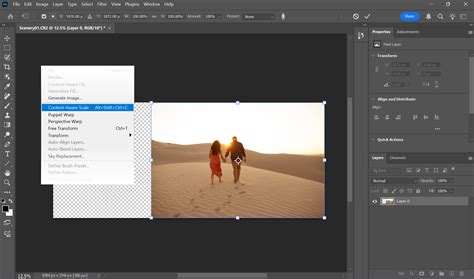
Adobe Photoshop's introduction of Content-Aware Scaling (CAS) in its CS4 release on October 15th, 2008, marked a significant advancement in image manipulation. At its core, CAS employs an algorithm designed to identify and preserve the most crucial elements within an image while intelligently resizing it. This sophisticated process works by detecting "paths of least importance," effectively allowing the software to stretch or compress an image without disproportionately distorting its key subjects. While initially conceived as a powerful tool for designers and photographers, the very nature of this algorithmic manipulation, particularly its occasional eccentricities, soon paved the way for a unique and highly amusing internet meme.
The genesis of the Content-Aware Scale meme can be traced back to February 28th, 2012. On the Something Awful forums, a user named Grei Skuring initiated a thread, expressing his discovery of novel ways to playfully alter images. This sparked a wave of experimentation among other users. Shortly thereafter, another forum member, Radock, uploaded an animated GIF showcasing the peculiar effects of content-aware scaling. This animated demonstration, which exaggerated the stretching and warping of an image, quickly captured the attention of the community, demonstrating the tool's potential for comedic outcomes.
The burgeoning interest in CAS as a source of humor was further amplified when Everdraed, an established user on the same forum, contributed a content-aware scaled GIF featuring the distinctive features of actor Steve Buscemi. The uncanny and often unsettling distortions applied to Buscemi's face proved to be a particularly resonant example of the meme's absurd potential, solidifying its presence in online culture.
The meme's proliferation accelerated with the involvement of animator Neil Cicierega. On February 12th, 2013, Cicierega published an instructional guide coupled with an Adobe Photoshop script specifically designed for creating animated GIFs using Content-Aware Scaling. This resource democratized the meme-creation process, providing a more accessible pathway for users to replicate and innovate upon the existing humorous examples.
The momentum continued to build. On August 19th of the same year, a member of the Penny Arcade Forums, identified as Butters, posted several Content-Aware Scaling animations within a thread dedicated to animated GIFs. This further exposed the meme to a wider audience. By October 2nd, Imgur user strontium contributed a gallery of animated GIFs created with CAS, showcasing a diverse range of applications and further popularizing the visual gag.
The core appeal of the Content-Aware Scale meme lies in its ability to produce unexpected and often bizarre visual transformations. When the algorithm encounters areas of an image it deems less important, it can stretch or compress them in ways that lead to surreal and comical distortions. This can manifest as elongated limbs, distorted faces, or an overall warping of the image's perspective that defies logical visual representation. The humor is derived from the juxtaposition of a sophisticated image-editing tool producing results that are inherently imperfect and often absurd.

The underlying technology, Content-Aware Scaling, operates on principles similar to "seam carving," a technique in image processing that allows for intelligent resizing by removing or duplicating seams of pixels that have low importance. Content-Aware Scaling builds upon this by more actively analyzing the image content to retain critical features while manipulating the less significant areas. This allows for resizing images and videos while preserving the most critical parts of the content.
The flexibility of this technology is precisely what makes it such a fertile ground for meme creation. Users can choose between seam carving and content-aware scaling, depending on their specific needs and preferences. Whether the goal is to subtly resize a photo or dramatically warp a video for comedic effect, the tools provide the necessary control.
A key aspect of the meme's virality is the ability to fine-tune the extent of the distortion. Advanced controls, such as those offered by dedicated meme maker applications, allow users to adjust the "threshold" of the content-aware scale filter. This means that a user can choose to exaggerate the distortion for maximum comedic impact or opt for a more subtle, yet still amusing, touch. This level of customization empowers individuals to tailor their memes precisely to their desired level of humor.
The Content-Aware Scale Meme Maker, for instance, is highlighted as a tool that provides users with complete freedom over these advanced controls. It emphasizes the ability to retarget images and craft side-splitting memes with an easy-to-use interface. Such applications recognize that humor is subjective, and therefore, giving users granular control over the algorithmic output is paramount.
The meme's reach extends beyond static images to encompass video content as well. The technology can be applied to videos, transforming ordinary footage into sidesplitting clips that have the potential to go viral. Whether the intent is to create short skits, reaction videos, or simply to have fun with friends, these tools offer endless possibilities for comedic expression. The ability to manipulate video frames with content-aware scaling opens up a new dimension of humorous visual gags, where movement and action can be subjected to the same bizarre distortions as still images.
9 Secrets to Better Looking Animated GIFs with Small File Sizes
What truly sets apart the effective meme creation tools, and by extension the meme phenomenon, is a user-friendly interface and intuitive design. Prioritizing simplicity without sacrificing functionality ensures that even novice users can quickly grasp the concepts and begin creating. From selecting images and videos to applying effects and sharing the final product, each step is streamlined for maximum enjoyment and ease of use. This accessibility is crucial for the widespread adoption and continued creation of memes.
The process of creating a meme using such tools often follows a straightforward workflow. This typically involves selecting a template or uploading an image or video from a device or a URL. Users can then add customizations, which might include text boxes that can be moved and resized by dragging them around. Enabling drag-and-drop functionality for these elements, and tapping outside the canvas to hide outlines, enhances the user experience. The inclusion of text formatting options, such as bold and italic, and access to a vast library of free fonts, further allows for creative expression. Additional elements like sunglasses, speech bubbles, and other graphical assets can be added to enhance the meme's narrative or comedic impact. The use of keyboard shortcuts, such as CMD/CTRL + C/V for quick creation of elements, further speeds up the process.
Ultimately, the "Generate Meme" button is the gateway to sharing and saving the creation. Users can choose how to share their meme, whether through social apps, via their phone, by sharing a link, or by downloading it directly to their device. This seamless sharing capability is vital for the viral spread of any meme.
The Meme Generator, in essence, is presented as a flexible tool for many purposes, and yes, it is designed to be funny. The inherent absurdity of content-aware scaling, when pushed to its limits, provides a rich source of humor that resonates with a broad online audience. It transforms a sophisticated technical tool into a playful instrument for digital expression, demonstrating how even the most advanced algorithms can be harnessed for the simple, yet profound, purpose of making people laugh. The meme's enduring popularity is a testament to the internet's capacity to find humor in the unexpected, even within the intricate workings of image-editing software.
The evolution of the Content-Aware Scale meme highlights a fascinating intersection of technology, creativity, and internet culture. What began as a technical feature in Photoshop has been repurposed and reinterpreted by users to generate a distinct form of digital humor. This process of appropriation and adaptation is a hallmark of meme culture, where tools and concepts are recontextualized to create new meanings and shared experiences. The ability of CAS to produce unpredictable and often bizarre results makes it an ideal candidate for this kind of cultural remixing.
The meme's impact can be seen in the way it has influenced online communication. The visual language of distorted images and exaggerated features has become instantly recognizable to those familiar with the meme. This shared understanding fosters a sense of community and in-group knowledge, a common characteristic of successful internet memes. The visual gags are often self-referential, playing on the very nature of the tool used to create them.
Furthermore, the accessibility of meme creation tools has played a significant role. Platforms that simplify the process of applying CAS and other editing techniques allow a wider audience to participate in the creation and dissemination of these memes. This democratization of content creation ensures that the meme can evolve and adapt, with new variations and interpretations constantly emerging.
The underlying algorithms, while complex, are often abstracted away in the meme-making process. Users are less concerned with the technical intricacies of seam carving or path detection and more focused on the visual output and its comedic potential. This focus on the end result, rather than the technical means, is typical of how many internet phenomena gain traction. The tool is a means to an end: the creation of shareable, humorous content.
The "Content Aware Scale Meme Maker" concept, as described, encapsulates the user-centric approach to meme creation. It suggests a dedicated application that streamlines the process, offering intuitive controls and a user-friendly interface. Such tools are essential for translating the potential of technologies like CAS into accessible forms of entertainment. The emphasis on "The Fastest Meme Generator on the Planet" points to the rapid-fire nature of internet trends, where speed and ease of sharing are paramount.
The ability to move and resize text boxes, customize fonts, and add graphical elements like speech bubbles are all features that contribute to the meme's narrative potential. These tools allow users to imbue the distorted images with specific jokes or commentary, transforming a purely visual gag into a more complete comedic statement. The addition of elements like sunglasses or speech bubbles can further anthropomorphize the distorted subjects, making the humor more relatable.
The Content-Aware Scale meme, therefore, is more than just a visual quirk; it represents a cultural phenomenon that has emerged from the interplay between advanced technology and human creativity. It showcases how even the most sophisticated software can be subverted and repurposed for lighthearted amusement, demonstrating the power of the internet to find humor in the most unexpected places. The ongoing evolution of such memes suggests that as image and video manipulation technologies continue to advance, so too will the creative and often hilarious ways in which they are used to entertain and connect us online.