CorelDRAW stands as a prominent vector graphics editor, developed and marketed by the Corel Corporation. More than just a single application, it forms the cornerstone of the Corel graphics suite, which encompasses other powerful tools such as the bitmap-image editor Corel Photo-Paint, alongside a variety of other graphics-related programs. This comprehensive suite is designed to function as a versatile digital painting platform, a robust desktop publishing solution, and is extensively utilized for production art across numerous industries, including signmaking, vinyl and laser cutting and engraving, and print-on-demand services. The genesis of CorelDRAW can be traced back to 1987, when Corel engineers Michel Bouillan and Pat Beirne embarked on the ambitious project to develop a vector-based illustration program. Their vision was to bundle this innovative software with their existing desktop publishing systems, a goal that culminated in the initial release of CorelDRAW in 1989.
From Inception to Windows Dominance
The early iterations of CorelDRAW, specifically versions 1.x and 2.x, were developed to operate within the Windows 2.x and 3.0 environments. However, it was with the release of Windows 3.1 by Microsoft that CorelDRAW 3.0 truly began to establish its presence and capabilities. This period saw the introduction of several groundbreaking tools that would become hallmarks of vector graphics manipulation. Among these were the Envelope tool, designed for distorting text or objects using a primary shape; the Blend tool, enabling the morphing of shapes; the Extrusion tool, which simulated perspective and volume in objects; and the Perspective tool, used to distort objects along the X and Y axes.
The Corel graphics suite expanded significantly with each release, aiming to provide a holistic solution for graphic designers and production artists. Early suites included Corel Photo-Paint ASP for bitmap editing, CorelSHOW for creating on-screen presentations, CorelCHART for generating graphic charts, Mosaic for image management, and CorelTRACE for the crucial task of vectorizing bitmaps. Later iterations continued this trend of expansion and refinement. For instance, a subsequent suite featured Photo-Paint for bitmap editing, CorelSHOW for presentations, CorelCHART for charts, CorelMOVE for animation, along with Mosaic and CorelTRACE.
Key Milestones in CorelDRAW Development
The evolution of CorelDRAW is marked by a series of significant feature introductions and platform expansions. CorelDRAW 3.0 represented a substantial leap, and it was the last version specifically designed for Windows 3.x. The subsequent release, CorelDRAW 4, was notable as the first version engineered for 32-bit Windows, and it also saw its debut on the Macintosh platform. This version introduced a host of new and enhanced features, including a customizable interface, and powerful new tools like the Polygon, Spiral, Knife, and Eraser tools.
The interface and user experience continued to be a focus. CorelDRAW 5 brought forth a context-sensitive Property bar, an improved Print Preview with Zoom and Pan options, and the Scrapbook feature for easy drag-and-drop management of graphic objects. The ability to publish directly to HTML was also introduced, alongside Draft and Enhanced display options. Interactive Fill and Blend tools, Transparency tools, and the Natural Pen tool further enhanced creative possibilities. A Find & Replace wizard, and the Convert Vector to Bitmap option within Draw, alongside a comprehensive suite of text checking tools (Spell checker, Thesaurus, and Grammar checker), demonstrated a commitment to workflow efficiency.
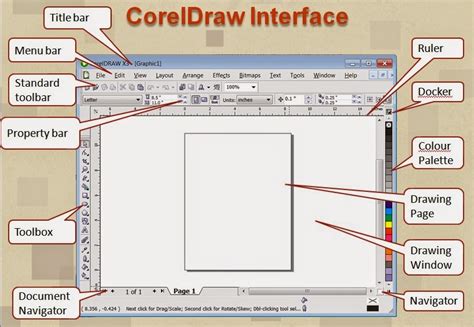
CorelDRAW 6 continued this trajectory with features like Digger selection, Docker windows for streamlined tool access, and interactive Distortion, 3D, Envelope, and other advanced tools. The Realistic Dropshadow tool offered more sophisticated shadow effects, while interactive color mixing and a color palette editor provided greater control over color. The introduction of guidelines as objects and custom-sized pages added flexibility, and duotone support enhanced print capabilities.
Suite Expansions and Workflow Enhancements
The CorelDRAW suite consistently evolved to incorporate cutting-edge technologies and user-requested features. CorelDRAW 7 saw the introduction of the Mesh fill tool, enabling complex color gradients and fills, and the Artistic Media tool, which offered a range of creative brush strokes. Publish to PDF features became a standard, alongside embedded ICC color profiles for accurate color management, multiple on-screen color palettes for convenience, and support for Microsoft Visual Basic for Applications 6 (VBA) for scripting and automation. This version's suite also included Canto Cumulus LE, a valuable piece of software for media management.
CorelDRAW 8 pushed the boundaries further with Corel R.A.V.E. for vector animation, Perfect Shapes for precise geometric construction, and Web graphics tools for creating interactive web elements like buttons. A Page sorter provided better document organization, and multilingual document support and a navigator window improved usability for a global audience.
CorelDRAW 9 introduced significant usability improvements, including the Double-click Crop tool, which was a pioneering feature allowing users to crop both groups of vectors and bitmap images simultaneously. The Smart fill tool simplified the process of creating fills from enclosed areas, and the Chamfer/Fillet/Scallop/Emboss tool offered advanced edge manipulation. The Image Adjustment Lab provided a centralized location for photo retouching. A notable change in this version was the inclusion of OpenType versions of popular font families from the Linotype foundry, such as Helvetica, Frutiger, Futura, and Garamond #3, totaling 32 fonts, replacing the previous Bitstream counterparts.
Towards Modern Workflows and Cross-Platform Compatibility
With CorelDRAW X3, the focus shifted towards enhancing professional workflows. The suite included features aimed at improving efficiency and output quality. CorelDRAW X4 brought forth a host of refinements, including a new Font List selection filtering system, with Corel Font Manager replacing the older Bitstream Font Navigator. This version also introduced the ability to hide objects and groups independently of layers, and the capability to copy and paste portions of curve segments, significantly speeding up editing tasks. Adjacent node selection, an improved Knife tool, a photo retouching Healing tool, an enhanced perspective correction tool, and improved (Gaussian) feathering on drop shadows were also key additions. Automated camera effects like bokeh and sepia, along with startup and feature tours and enhanced Hints, aimed to improve user onboarding and productivity. For large format and commercial print applications, the Border and Grommet and Canvas Prep and Stretch tools were introduced. High-resolution displays became officially supported with new scalable icons and UI elements, ensuring a crisp and clear interface on modern monitors.
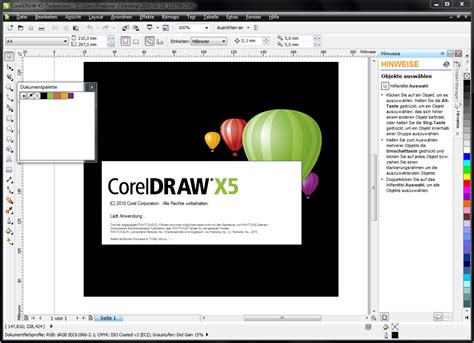
CorelDRAW X5 continued this emphasis on efficiency and modern design needs. It featured 64-bit and multi-core processor native support, significantly boosting performance on contemporary hardware. Support for 64-bit Adobe Photoshop plugins expanded integration possibilities. More tools were added for importing and exporting from Adobe Creative Suite and Publisher, facilitating smoother workflows for users collaborating with or migrating from other design environments. Object properties, styles, and color styling were consolidated into dedicated docking toolbars (Dockers), providing a more organized and accessible control panel. A new Unicode OpenType-based text engine modernized text handling, offering full international language support while retaining the legacy text mode for backward compatibility. Dynamic alignment guides simplified object placement without the need for static guidelines. The CorelConnect content organizer allowed for in-app access to online sources like Flickr for image and clip art assets, streamlining the asset acquisition process. New tools for pushing, pulling, smearing, and manipulating vector objects offered more organic and fluid design possibilities. New default workspaces tailored for illustrators, beginners, and other user roles, along with new training videos, aimed to enhance user experience and learning. The introduction of tabbed documents that could be broken out of the main window facilitated easier multi-screen workflows. Additionally, a few more retouching and fill tools, along with additional color harmony and QR code generating tools, were incorporated.
CorelDRAW X7 introduced a significant shift in its licensing model, offering 30-day and 365-day rental (subscription) options as an alternative to the traditional perpetual license purchase. This provided users with greater flexibility in how they acquired and used the software.
CorelDRAW X8 continued to build upon the foundation of its predecessors, focusing on collaboration and enhanced editing capabilities. It included a suite of collaboration tools, such as Copy editing, a Comments Docker, Annotation tools, and Cloud client sharing, fostering teamwork and project management. Non-destructive photo editing and filters were expanded, combining photo editing features with presets for quicker adjustments. New templates and more multiple-format exports streamlined the final output process.
The subsequent releases, such as CorelDRAW Graphics Suite 2018, 2019, 2020, and 2021, have continued to refine these features, with a strong emphasis on performance, user experience, and expanded compatibility. For instance, CorelDRAW Graphics Suite 2019 marked the return of CorelDRAW to the Mac platform after a nearly 20-year absence, including support for macOS Mojave's Dark Mode and Touch Bar. CorelDRAW Graphics Suite 2021 introduced new curve-editing tools, updated Pantone support, and significant bug fixes and stability enhancements. The Advanced PDF Printing feature, improvements to the Paintbrush tool, and overall stability and security enhancements have been consistent themes in recent updates.
Platform Versatility and File Format Evolution
CorelDRAW's journey has been characterized by its adaptability across various operating systems. Originally developed for Microsoft Windows 2.1, it later saw versions for Windows 3.1x, CTOS, OS/2, and Power Macintosh. Hewlett-Packard even announced a version of CorelDRAW for its HP 9000 Series workstations running HP-UX. With the release of Corel Linux, CorelDRAW 9 was made available with package support for both Debian and Red Hat-based Linux distributions. Although version 11 was released for Mac OS X in 2001, support for both Linux and Mac platforms was subsequently discontinued. However, as of recent years, CorelDRAW Graphics Suite has re-established cross-platform compatibility, supporting Windows 10, Windows 11, and macOS, including a new release optimized for Apple silicon. Furthermore, a related web app and iPad app offer collaboration and markup functionalities online, extending the reach of the CorelDRAW ecosystem.
The evolution of the CorelDRAW file format, CDR, is also a significant aspect of its support information. In its initial versions, the CDR file format was a proprietary format primarily used for vector graphic drawings, identifiable by the first two bytes of the file being "WL". Starting with CorelDRAW 3, the file format transitioned to a Resource Interchange File Format (RIFF) envelope, recognizable by the first four bytes being "RIFF" and "CDR*vrsn" in bytes 9 to 15 (with the asterisk being a blank in early versions). Beginning with CorelDRAW 4, the file format incorporated the version number of the writing program in hexadecimal. From version X4 (14) onwards, the CDR file became a ZIP-compressed directory containing various files, including XML files and the RIFF-structured riffdata.cdr. The signature in versions X4 and X5 included "CDREvrsn" and "CDRFvrsn" respectively, while CorelDRAW X6 used "CDRGfver".
Open Source Contributions and Interoperability
The proprietary nature of the CDR format presented challenges for interoperability with other software. However, the open-source community has played a crucial role in improving support for CorelDRAW files. In December 2006, the sK1 open-source project team began reverse-engineering the CDR format. Their efforts led to the presentation of the first working snapshot of a CDR importer at the Libre Graphics Meeting in 2007. The sK1 project further developed the UniConvertor, a command-line tool that supports conversion from CorelDRAW versions 7 to X4 (CDR/CDT/CCX/CDRX/CMX) to other formats. In 2012, a joint LibreOffice/re-lab team implemented libcdr, a library specifically designed for reading CDR files from version 7 to X3 and CMX files. This library offers extensive support for shapes and their properties, including color management and spot colors, with basic text support. The library provides a built-in converter to SVG, and a converter to OpenDocument is available through the writerperfect package. This ongoing development by the open-source community has significantly enhanced the ability of various applications to import and work with CorelDRAW files, fostering greater interoperability in the graphic design landscape.
CorelDRAW has also seen integration and comparison with other industry-standard software. For instance, Microsoft Visio 2002 had import capabilities for CorelDraw files. While support for certain CorelDRAW file formats in Microsoft Office 2003 Service Pack 3 was initially blocked, this was later addressed. The ongoing efforts in developing libraries like libcdr and tools like UniConvertor underscore the continuous drive towards broader compatibility and accessibility for CorelDRAW's file formats.
The journey of CorelDRAW from its inception as a vector illustration program bundled with desktop publishing systems to its current status as a comprehensive graphics suite supporting multiple platforms and integrating with modern workflows is a testament to its enduring relevance and continuous innovation. The wealth of features, platform adaptability, and the growing support from the open-source community ensure that CorelDRAW remains a vital tool for designers and production artists worldwide.