In the ever-evolving digital landscape, image formats play a crucial role in how we display, share, and store visual content. While WebP has emerged as a modern, efficient format developed by Google, its widespread compatibility can sometimes be a limitation. This is where the need to convert WebP to JPG arises, a process that ensures your images can be viewed and utilized across a broader range of devices and platforms. This guide delves into the intricacies of converting WebP to JPG, exploring the advantages of each format, the practical steps involved in conversion, and the underlying technologies that make these transformations possible.
Understanding WebP: The Modern Image Format
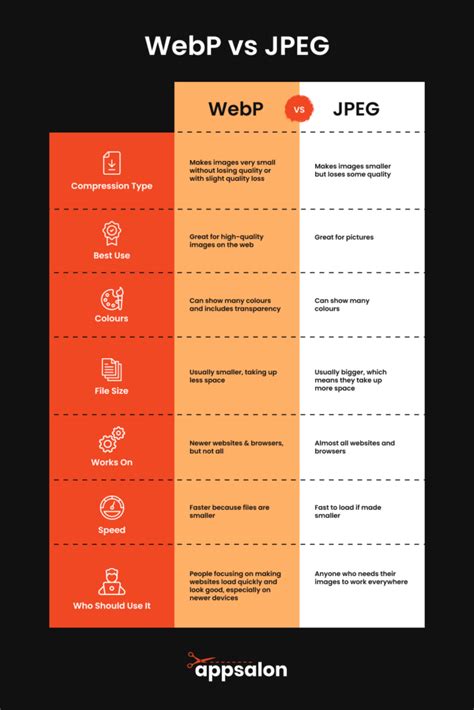
WebP, pronounced "weppy," is a contemporary image file format introduced by Google. Its primary objective is to facilitate faster and more convenient online image handling. WebP supports both lossy and lossless compression techniques, offering a significant advantage in terms of file size reduction compared to older formats. Typically, WebP images are approximately 25-35% smaller than equivalent JPEG images while maintaining the same visual quality. This efficiency makes it an attractive option for web developers aiming to optimize website loading times and reduce bandwidth consumption. The format's ability to handle both types of compression means it can be used for a wide array of photographic and graphic images, offering flexibility in its application.
Key Features of WebP:
- Lossy and Lossless Compression: WebP can compress images using either lossy or lossless methods, providing flexibility for different use cases.
- Smaller File Sizes: Achieves superior compression ratios compared to JPEG, leading to smaller file sizes without significant loss of visual fidelity.
- Transparency Support: Unlike JPG, WebP supports transparency, allowing for images with see-through backgrounds.
- Animation: WebP also supports animation, similar to GIF, but with better compression.
The Enduring Popularity of JPG (JPEG)
JPEG, also known as JPG, stands as one of the most ubiquitous graphic formats in existence. Its widespread adoption is largely due to its long history, robust support across virtually all devices and software, and its effective compression algorithms. JPEG is particularly dominant in digital photography and is the standard for image archiving and communication over the internet. The JPEG algorithm is capable of compressing images using both lossy and lossless techniques. While lossless compression in JPEG is less common and often results in larger files, its lossy compression is highly effective. This lossy technique can significantly reduce image size by discarding some image data, a process that is often imperceptible to the human eye, thus striking a balance between file size and image quality.
Advantages of JPG:
- Universal Compatibility: JPGs are supported by virtually every device, browser, and image editing software.
- Well-Established: It's a mature format with decades of development and refinement.
- Lossy Compression Efficiency: Offers good compression for photographic images, making them suitable for web and storage.
- Adjustable Quality: The level of compression, and therefore file size and quality, can be adjusted.
Why Convert WebP to JPG?
Despite the advantages of WebP, there are compelling reasons why users might need to convert WebP files to JPG. The primary driver is compatibility. While WebP is gaining traction, it is not yet universally supported. Older devices, specific software applications, or certain online platforms may not be able to display WebP images correctly. Converting to JPG ensures that your images can be accessed and viewed by the widest possible audience without technical hurdles.
Another crucial aspect is transparency. WebP supports transparency, which is a valuable feature for graphic design. However, JPG does not inherently support transparency. When converting a WebP image with a transparent background to JPG, you will need to choose a background color to replace the transparent areas. This is a necessary step to accommodate the limitations of the JPG format.
Furthermore, while WebP offers excellent compression, sometimes the specific requirements of a project or platform might necessitate the use of JPG. For instance, some content management systems or legacy systems might be configured to only accept JPG or PNG files.
The Conversion Process: Making the Switch
Converting WebP to JPG is a straightforward process, and numerous online tools and software applications are available to facilitate this. The core principle involves decoding the WebP image data and then re-encoding it into the JPG format.
Using Online Converters:
Online file conversion services are perhaps the most accessible method for converting WebP to JPG. These platforms eliminate the need for installing any software and can be accessed from any device with an internet connection. A typical online conversion process involves the following steps:
- Upload Your WebP File: Navigate to the conversion website and locate the upload area. You can usually click a button like "Choose File" or simply drag and drop your WebP image directly into the designated zone.
- Select Output Format: Choose "JPG" or "JPEG" as your desired output format. Many converters also allow you to convert in the other direction, from JPG to WebP.
- Adjust Settings (Optional): For JPG conversion, you often have the option to select the quality of the output image. This is crucial for balancing file size and visual fidelity. You can minimize potential quality loss by setting the JPG quality slider to a higher value, typically between 90-100.
- Start Conversion: Click the "Convert" or "Start" button. The online service will process your file.
- Download Your JPG File: Once the conversion is complete, you will be provided with a link to download your newly created JPG image. Some services might also offer to save individual JPG frames if your WebP was an animation, or download them as a ZIP archive.
Examples of popular online conversion tools include:
- CloudConvert
- Online-Convert.com
- Zamzar
These services are designed to be user-friendly and efficient, offering a quick solution for occasional conversions.
Using Desktop Software:
For users who require more control, batch conversion capabilities, or work with images offline, desktop software offers a robust alternative. Many image editing programs and dedicated conversion tools can handle WebP to JPG conversion.
- Image Editing Software: Programs like Adobe Photoshop, GIMP (a free and open-source alternative), and Affinity Photo can open WebP files and save them as JPGs. This method provides the highest level of control over image quality, color profiles, and other advanced settings.
- Dedicated Conversion Software: There are also specialized desktop applications designed specifically for file conversion. These often offer batch processing, allowing you to convert multiple WebP files to JPG simultaneously, saving considerable time.
The Underlying Technology: Compression and Encoding
The ability to convert between WebP and JPG relies on sophisticated algorithms for image compression and encoding.
WebP Compression:
Google developed WebP with advanced compression techniques in mind.
- Lossy Compression: For lossy compression, WebP uses predictive coding based on the VP8 video codec. It predicts the content of a block based on its neighboring blocks and then encodes only the differences. This significantly reduces the amount of data needed to represent the image.
- Lossless Compression: WebP's lossless compression utilizes techniques like color transform, entropy coding, and spatial prediction to represent image data efficiently without discarding any information.
JPG Compression:
JPEG compression is based on the Discrete Cosine Transform (DCT).
- Lossy Compression: The DCT converts image blocks into frequency components. High-frequency components, which contribute to fine details and are less perceptible to the human eye, are quantized more aggressively (their values are rounded or simplified), leading to data reduction. The degree of quantization directly impacts the file size and quality.
- Lossless Compression (less common): While primarily known for lossy compression, JPEG also supports a lossless mode, though it's not as efficient as modern lossless formats like PNG or WebP's lossless mode.
The conversion process essentially involves the decoder of the WebP format reading the image data and then passing it to the encoder of the JPG format for re-compression.
Considerations for Optimal Conversion
When converting WebP to JPG, especially when aiming for the best balance between file size and visual fidelity, several factors come into play:
Quality Settings:
As mentioned, JPG quality is a critical setting. A higher quality setting (e.g., 90-100) means less compression and a larger file size, but with minimal loss of detail. A lower quality setting (e.g., 50-70) results in a smaller file size but can introduce noticeable artifacts, such as blockiness or blurriness, particularly in areas with smooth gradients or sharp edges.
Transparency Handling:
Since JPG does not support transparency, you must decide how to handle transparent areas in your WebP image. Online converters and image editing software will typically prompt you to select a solid background color. Common choices include white, black, or a specific brand color. If you fail to specify a background color, the converter might default to black or white, which may not be ideal for your image.
File Size vs. Visual Fidelity:
The core trade-off in converting to JPG is often between achieving the smallest possible file size and preserving the highest visual quality. WebP is inherently better at this balance due to its more advanced compression algorithms. When converting to JPG, you are essentially accepting a potentially larger file size for the same visual quality compared to the original WebP, or you are accepting some visual degradation to achieve a smaller JPG file.
Advanced Tools and Integrations
For developers and businesses requiring automated or integrated conversion solutions, APIs (Application Programming Interfaces) are available. Services like CloudConvert offer APIs that allow custom integrations with your applications. This enables you to programmatically convert files, manage workflows, and incorporate conversion capabilities directly into your software or website. Such solutions are particularly useful for high-volume customers who can benefit from huge discounts and streamlined integration processes. CloudConvert, for instance, is ISO 27001 certified, assuring users of its commitment to data security and privacy, meaning your files are handled with the utmost care and you will never have access to your files.
Step-by-Step: Batch Convert Images with reaConverter (Fast & Easy)
Conclusion
The conversion of WebP to JPG is a practical necessity in many digital scenarios. While WebP offers superior compression and modern features, the universal compatibility of JPG ensures that your images can be shared and displayed without limitations. Understanding the characteristics of both formats, utilizing readily available online tools or desktop software, and carefully considering quality settings and transparency handling will enable you to successfully convert your WebP images to JPG, ensuring your visual content reaches its intended audience effectively. Whether you are a casual user needing to share a photo or a developer integrating conversion into an application, the process is accessible and manageable.