For centuries, the topic of flatulence has been relegated to the realm of adolescent humor and social awkwardness. Yet, beneath the surface of this often-dismissed bodily function lies a complex biological process, increasingly recognized by science as a vital indicator of our internal health. Recent advancements, particularly the development of "Smart Underwear," are ushering in a new era of objective measurement, allowing researchers to delve into the previously opaque world of gut microbial metabolism and its profound implications for human well-being. This exploration is not merely about understanding the frequency or odor of farts, but about deciphering the intricate language of our gut microbiome, a language that can hold clues to a wide range of health conditions, from digestive disorders to systemic diseases.
The Challenge of Objective Measurement in Gas Analysis
Physicians have long grappled with the challenge of objectively quantifying intestinal gas. As gastroenterologist Michael Levitt noted in 2000, "It is virtually impossible for the physician to objectively document the existence of excessive gas using currently available tests." Traditional methods have relied heavily on patient self-reporting, a system inherently prone to inaccuracies. Missed events, imperfect memory, and the impossibility of logging gas production during sleep all contribute to a skewed perception of normal gas expulsion. Furthermore, visceral sensitivity varies significantly among individuals; two people might produce similar amounts of flatus yet experience and report it very differently. This subjective variability has historically hampered scientific rigor in an area critical to understanding gut health.
Smart Underwear: A Technological Leap in Flatulence Measurement
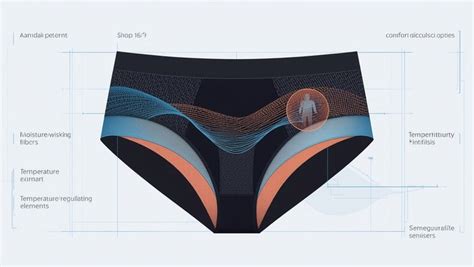
To overcome these limitations, a groundbreaking solution has emerged from the laboratories at the University of Maryland. Led by Brantley Hall, an assistant professor in the Department of Cell Biology and Molecular Genetics, researchers have developed "Smart Underwear," the first wearable device specifically engineered to measure human flatulence. This innovative technology utilizes discreet electrochemical sensors embedded within a prototype that snaps onto any underwear. The device operates around the clock, meticulously tracking intestinal gas production.
The core innovation lies in its ability to measure hydrogen in flatus. Hydrogen is a direct byproduct of gut microbial fermentation of dietary substrates. By continuously monitoring hydrogen levels, Smart Underwear provides a real-time readout of when and how actively the gut microbiome is at work. "Think of it like a continuous glucose monitor, but for intestinal gas," explains Hall, the study’s senior author. This analogy highlights the device's potential to offer continuous, objective data, akin to how continuous glucose monitors provide crucial insights for diabetes management.
Revisiting Assumptions: The True Frequency of Flatulence
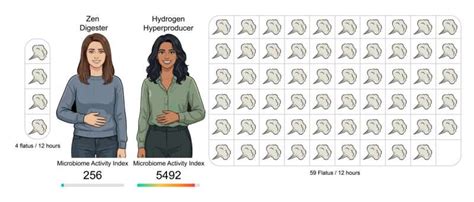
A pivotal study, published in Biosensors and Bioelectronics: X and led by UMD assistant research scientist Santiago Botasini, utilized this Smart Underwear prototype to investigate long-standing assumptions about human flatulence. The findings were striking: healthy adults produced flatus an average of 32 times per day. This figure is roughly double the 14 (±6) daily events commonly cited in older medical literature. The study also revealed an extraordinary degree of individual variation, with daily totals ranging from as few as four to as many as 59 flatus events. This wide spectrum underscores the difficulty of establishing a single "normal" range based on subjective reporting alone.
The discrepancy between older estimates and the new findings can be attributed to the limitations of previous research methodologies. As mentioned, self-reporting is unreliable. Older studies also often relied on invasive techniques or conducted in very small, controlled settings, which may not reflect real-world conditions. The Smart Underwear, by contrast, allows for unobtrusive, continuous monitoring in an individual's natural environment, capturing data that would otherwise be missed, particularly during sleep.
The Human Flatus Atlas: Mapping the Normal Range
The absence of established baseline data for flatulence has been a significant hurdle for diagnosing and treating related conditions. "We don't actually know what normal flatus production looks like," states Hall. "Without that baseline, it's hard to know when someone's gas production is truly excessive." To address this critical knowledge gap, the Hall Lab is launching the Human Flatus Atlas.
This ambitious project aims to create a comprehensive map of typical flatulence patterns by employing the Smart Underwear technology. Hundreds of participants across the United States will be able to enroll remotely, receiving devices to wear day and night for the duration of the study. The collected data will be used to objectively measure flatulence patterns and correlate them with participants' diets and gut microbiome composition.
The Human Flatus Atlas initiative is designed to identify distinct profiles of gut microbial activity related to gas production. These categories include:
- Zen Digesters: Individuals who consume high-fiber diets (25-38 grams of fiber daily) but experience minimal flatus. These individuals may hold crucial clues to understanding how the microbiome adapts to high-fiber diets, potentially offering insights into efficient nutrient processing and gas management.
- Hydrogen Hyperproducers: People who experience significantly higher than average gas production. Studying these individuals could illuminate the specific microbial activities or dietary factors that drive excessive gas formation.
- Normal People: Those who fall within the typical range of gas production, serving as a crucial control group for comparison.
By collecting stool samples from participants in the Zen Digester and Hydrogen Hyperproducers categories, researchers aim to investigate the specific microbial drivers behind these different gas production profiles. "We've learned a tremendous amount about which microbes live in the gut, but less about what they're actually doing at any given moment," Hall emphasizes. The Human Flatus Atlas is poised to establish objective baselines for gut microbial fermentation, laying essential groundwork for evaluating the impact of dietary, probiotic, or prebiotic interventions on microbiome activity.
Beyond Hydrogen: The Broader Significance of Intestinal Gases
While hydrogen is a key marker, flatus is a complex mixture of gases, primarily consisting of nitrogen, carbon dioxide, and hydrogen. Some individuals' flatus also contains methane. The composition of these gases, and particularly trace elements like hydrogen sulfide, can offer profound insights into gut health. Hydrogen sulfide, for instance, has been identified as a signaling molecule with roles in immune cell response, blood vessel function, and overall gut and liver health. This indicates that intestinal gases are not merely waste products but active participants in physiological processes.
The study of intestinal gases has a long and sometimes unusual history. During World War II, Cambridge scientists conducted experiments to determine the feasibility of feeding the British population on a largely vegetarian diet in case of food shortages. Volunteers consumed minimal meat and eggs, relying heavily on bulky vegetables and bread. While they avoided nutrient deficiencies, they experienced a significant increase in both fecal production and, notably, "remarkable" flatulence, a phenomenon that researchers at the time were not equipped to quantify. This historical anecdote highlights how diet directly influences gas production and suggests that increased gas can be a natural consequence of a high-fiber diet.
Innovative Approaches to Gas Analysis
The limitations of breath analysis, which can only indirectly reflect gut activity and lacks spatial information about gas origin, have spurred the development of more direct methods. One such approach, pioneered by a team at the University of Barcelona, involves a rectal catheter equipped with a special plug to prevent atmospheric contamination and a collection bag. While invasive, this method, coupled with gas chromatography, allows for precise measurement of the primary gases in flatus. Researchers successfully differentiated gas samples from participants who consumed high-flatulence diets (e.g., bananas and white beans) versus low-flatulence diets (e.g., orange juice and a sandwich), demonstrating the potential of this technique for research.
Another significant advancement comes from Atmo Biosciences in Australia, with their development of the "Atmo capsule." This swallowable capsule, roughly half the size of an AA battery, travels through the digestive tract over a couple of days. It can detect hydrogen, carbon dioxide, and assess oxygen levels, while a temperature sensor indicates when it has passed through the system. Crucially, the capsule transmits its findings telemetrically to an external receiver, providing data on gas presence and location within the gut. This capability is particularly valuable for understanding conditions like Irritable Bowel Syndrome (IBS), where the location of fermentation might play a key role. The Atmo capsule has already shown promise in demonstrating how dietary changes can alter the location of fermentation within the colon.
Bloating | The GutDr Explains (3D Gut Animation)
The Olfactory Clues: Odor and Gut Health
The odor of flatulence, often the most socially noticeable aspect, also provides clues about gut health. The varying composition of gases, including hydrogen sulfide, contributes to the distinct smells. A study conducted at the Minneapolis Veterans Affairs Medical Center in 1998 explored methods for neutralizing fart odor. By feeding participants pinto beans to stimulate flatulence and then analyzing the gas, researchers identified activated charcoal and zinc acetate as effective odor neutralizers. While commercial anti-fart underwear exists, the study suggested that these findings could lead to improved future devices. Interestingly, this study also involved a blind smell test where judges uniformly rated women's farts as worse than men's, a subjective observation that highlights the complex and often biased perceptions surrounding flatulence.
The Future of Gut Health Research: From Acoustics to Apps
The scientific exploration of flatulence extends to even more unconventional avenues. Researchers at the Georgia Institute of Technology have presented on the potential of analyzing toilet acoustics-the sounds of urination, defecation, and flatulence-as a diagnostic tool. An artificial toilet sound generator, nicknamed the "Synthetic Human Acoustic Reproduction Testing machine," has been developed to demonstrate how these sounds might indicate diseases. This line of research could, in the future, enable the monitoring of toilet activity in public restrooms to detect the spread of diarrheal diseases, offering a novel, non-invasive approach to public health surveillance.
The journey from the historical dismissal of flatulence to its current recognition as a critical area of scientific inquiry underscores a fundamental shift in our understanding of the human body. The development of technologies like Smart Underwear and the Atmo capsule signifies a move towards objective, data-driven insights into the complex workings of the gut microbiome. As scientists continue to "eavesdrop on the conversations going on within this ecosystem," the seemingly trivial act of passing gas is emerging as a powerful diagnostic and research tool, promising to unlock new avenues for treating a wide array of debilitating health conditions.
Addressing Functional Gut Disorders: Evidence-Based Approaches
For individuals suffering from functional gut disorders, such as acid reflux, indigestion, irritable bowel syndrome, or inflammatory bowel disease-conditions affecting over 40% of people worldwide-the burgeoning field of gut gas research offers a beacon of hope. However, experts caution against self-treatment with unverified fad diets or supplements. Claire Ainsworth, a science journalist who has extensively reported on the topic, advises seeking "good evidence-led treatment from a physician." While the research is still in its early stages, the ongoing development of sophisticated measurement tools and a deeper understanding of the gut microbiome's role in gas production are paving the way for more effective and targeted interventions. The humble fart, once a source of embarrassment, is rapidly transforming into a vital window into our health, revealing the intricate symphony of microbial life within us.
tags: #farts #and #procreation