The reproductive lives of ducks, waterfowl in general, are far more complex and varied than many might initially assume. While the fundamental goal of forming pair bonds for the purpose of reproduction is shared with many other animal species, the specific mating systems employed by waterfowl exhibit a remarkable diversity. This diversity extends to their anatomical specializations, which have evolved in fascinating and often surprising ways, deeply intertwined with their mating behaviors.
Diverse Mating Systems in Waterfowl
Waterfowl mating systems can be broadly categorized into three main types: monogamy, seasonal monogamy, and polygamy. The prevalence and characteristics of each system are closely linked to the species' life history traits and ecological niche.
Long-Term Monogamy: The Realm of Geese and Swans
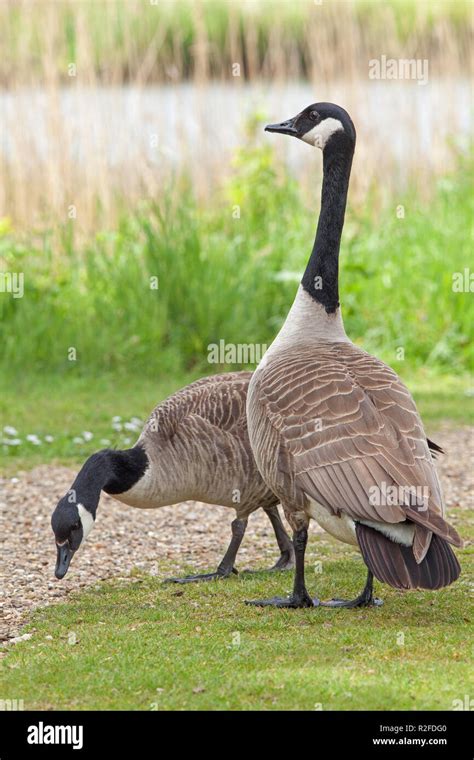
Long-term monogamous bonds, often referred to as pairing for life, are characteristic of geese and swans. Approximately 44 percent of all waterfowl species, exclusively geese and swans, engage in this mating system. These birds typically do not form pair bonds until they reach at least two years of age, with many solidifying their partnerships in their third or fourth year of life. Consequently, geese usually delay nesting and egg-laying until their second year or later, and swans often wait until their fourth year to begin laying. In these monogamous relationships, the male plays a crucial role in raising the young. This includes vigilant protection of the female during incubation and the demanding period of brood rearing. Should one member of a monogamous pair perish, the surviving partner will eventually seek a new mate. However, this process can disrupt or entirely prevent breeding for that particular year. The phenomenon of "divorce," where pairs voluntarily separate, has also been observed among geese.
Seasonal Monogamy: The Duck's Approach
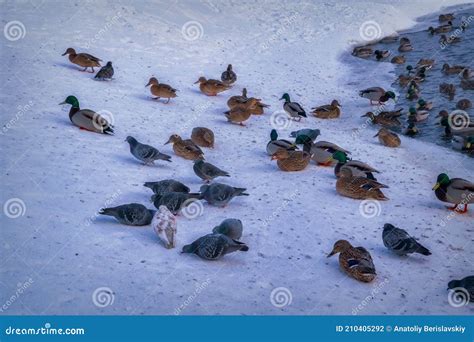
In contrast to geese and swans, ducks generally do not form long-term pair bonds. Instead, they engage in what is known as seasonal monogamy, forming new bonds each breeding season. This system accounts for about 49 percent of all waterfowl species. Within this framework, pairs typically form on the wintering grounds during the birds' first year of life. These bonds, however, are maintained only through the egg-laying period. Each winter, individuals must find a new mate and establish a fresh bond for the upcoming breeding season. Males participating in seasonal monogamy do not typically assist in raising the young. Their role is primarily territorial defense around their mated females, aimed at preventing other males from accessing their chosen partner. If a male dies during the spring migration north, the female will swiftly find a new mate for that season, ensuring that nesting is not delayed.
An intriguing variation of seasonal monogamy is observed in some cavity-nesting ducks and sea ducks. These species may not form pair bonds until their second year of life. Research has indicated that some goldeneye pairs exhibit a remarkable tendency to reunite each year on their wintering grounds and subsequently return to their previous breeding territories. This ability to re-establish bonds is facilitated by strong philopatry - a behavior where individuals return to the exact same breeding or wintering sites year after year. This philopatric behavior allows pairs to locate each other reliably. As with other seasonally monogamous species, males in these groups do not participate in raising the young but do actively defend their mates.
Polygamy: A Less Common Strategy
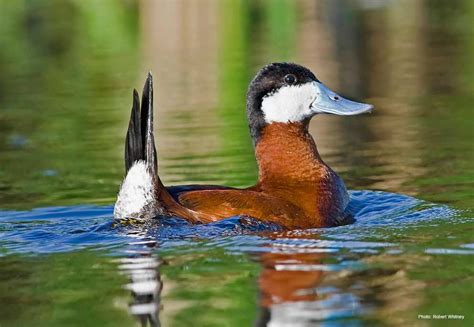
Polygamy, a mating system involving multiple partners, is uncommon among waterfowl, occurring in only about 7 percent of species. Examples include the ruddy duck, the musk duck (found in Australia), the comb duck (native to South America, Africa, and southern Asia), and the maccoa duck (found in Africa). These species are all classified as stiff-tail ducks, with the exception of the magpie goose from Australia. In polygamous systems, pair bonds are either weak or entirely absent. Instead, males establish and defend mating territories, which serve to attract multiple females. For instance, male musk ducks are known to establish and defend breeding territories along shorelines, employing elaborate courtship displays to entice females into their domains. Females visit these territories, and the males will then mate with several of them. In North America, the ruddy duck is notable for occasionally exhibiting polygamy, although they also form seasonally monogamous pair bonds.
The Evolutionary Enigma of Mating System Diversity
The question of why such differences in mating systems exist among waterfowl is a complex one, often likened to the "chicken or the egg" dilemma. While numerous theories attempt to explain the evolutionary pressures that have shaped these diverse systems, definitively pinpointing the exact evolutionary factors remains a challenge for researchers. However, several species-specific characteristics are consistently associated with the different mating systems. For example, traits typical of geese and swans are often linked to long-term monogamy. Conversely, seasonal pair bonds tend to be more prevalent in species with smaller body sizes, higher annual mortality rates, and greater annual productivity, particularly those that breed in seasonal, highly productive environments.
The Striking Anatomy of Duck Reproduction
Beyond their varied mating systems, waterfowl, particularly ducks, possess remarkably specialized and often aggressive reproductive anatomy, a subject that has garnered significant scientific attention.
The Drake's Corkscrew Penis
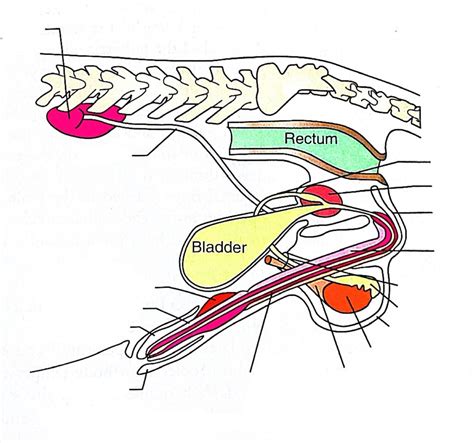
Duck mating sessions are frequently characterized by intense aggression. A striking divergence from the norm in avian reproduction is the presence of a penis in male ducks, or drakes. Unlike in most bird species (97 percent of which lack a penis), the drake's penis is typically housed inside-out within a sac. During copulation, this organ is rapidly everted from the sac and can reach an impressive length of approximately 20 centimeters. The drake's penis is not only long but also uniquely designed with a corkscrew shape, featuring ridges and backward-pointing spines. The eversion process is incredibly swift, taking approximately one-third of a second.
The Female Duck's Labyrinthine Vagina
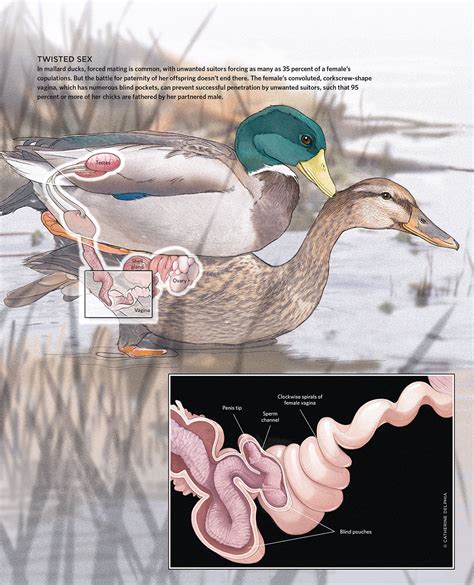
Complementing the male's specialized anatomy are the equally unique and complex reproductive organs of female ducks. Research, notably by Dr. Patricia Brennan and her colleagues, has shed light on the intricate nature of their vaginal tracts. While most female birds possess a relatively simple tubular oviduct, female ducks have a vagina that spirals internally and contains a series of spirals, dead-end pockets, and crevices. This complex structure has been a subject of intense scientific interest, prompting comparisons to an evolutionary "arms race" between male and female reproductive anatomy.
The "Arms Race" of Duck Genitalia
The co-evolutionary nature of duck reproductive anatomy is a prime example of sexual conflict. The complexity of both male and female genitalia is thought to be a direct result of the high incidence of forced copulation observed in many duck species, particularly mallards. Studies have demonstrated a strong correlation between the incidence of forced copulation and the intricate structures of their sexual organs.
Dr. Brennan's research, in collaboration with Richard O. Prum, a Yale Professor of Ecology and Evolutionary Biology, has explored this correlation. Their findings suggest that the shape of the female duck's vaginal tract is specifically adapted to counteract the male's corkscrew-shaped phallus. In essence, female ducks possess anti-corkscrew-shaped vaginal tracts, making them difficult for males to penetrate.
To test this hypothesis, experiments were conducted using synthetic duck vaginas. Three synthetic tracts were created: two simple tube-like structures resembling those of most birds, and one that accurately replicated the complex, spiraled structure of a common female duck's vagina. The results were telling: while most male ducks could easily penetrate the two simple synthetic vaginas, a significant number struggled to penetrate the third, complex, anti-spiral synthetic vagina. This indicates that only the fittest males, possessing the largest and most effectively corkscrewed phalluses, could successfully overcome the female's anatomical defenses. This evolutionary arms race ensures that only the most capable males can achieve successful fertilization, thereby influencing the reproductive success within the species.
The Explosive Sex Life of the Duck
Observations in Domesticated Ducks
Observations of domesticated mallard-derived ducks offer practical insights into duck mating behaviors. While these domesticated ducks may form individual preferences, they do not adhere to strict monogamy, engaging in regular trysts with various flock members. Female-female mating is also observed, though it does not result in fertilized eggs.
Domesticated ducks, much like their wild counterparts, do not mate year-round. Their sexual cycle is often indicated by their plumage, with males typically developing vibrant nuptial plumage in the fall to attract females for the subsequent spring breeding season. However, the mating window for domesticated ducks is generally longer than that of wild mallards, and they tend to mate less prolifically or cease mating altogether by mid-winter. Mating activity also pauses during the molting period.
Typical courtship behaviors in ducks involve head-bobbing, where one duck will approach another and engage in rhythmic up-and-down head movements. This is often followed by the female elongating her neck and flattening her back, signaling readiness for mating. The male then mounts the female, grasping her neck for stability before initiating copulation, often accompanied by vocalizations. These vocalizations can include a descending "urh-urh-urh" sound from the female and a whistle-grunt from the male, which can sound like a cross between a donkey and a bullfrog. After mating, the male may circle the female rapidly, a behavior that can be followed by the retraction of his penis back into its body sac. The penis, often mistaken for an internal organ due to its appearance, can take some time to retract fully. It is also worth noting that the back of a duck's neck is a sexually sensitive area, and petting this region may be misinterpreted by the duck as romantic affection.
The sexual drive of drakes can remain high even into older age, with some individuals maintaining a high libido for a decade or more. This often necessitates separating males from females for significant portions of the year to prevent over-mating and excessive chasing.