Fish, representing the most specious and diverse group of vertebrates on Earth, exhibit an astonishing array of reproductive strategies. This incredible variety, spanning from the seemingly mundane to the exceptionally peculiar, reflects millions of years of evolution driven by the fundamental imperative: to reproduce and pass on genes. While mammalian reproduction, with its internal fertilization and live birth, is more commonly understood, the piscine world presents a bewildering assortment of methods that ensure the continuation of countless species. Understanding these processes is not only crucial for ecological balance but also for advancements in aquaculture, where the goal is to foster successful breeding of farmed fish.
The journey of fish reproduction is intricately linked to their endocrine system, a complex network involving the brain, pituitary gland, and reproductive organs, or gonads. Signals are constantly sent between these components to regulate and encourage the reproductive process. In aquaculture, a common challenge is ensuring that captive fish produce eggs or sperm properly, underscoring the importance of understanding these hormonal communications. The Zohar Lab at IMET, for instance, actively studies these relationships to enhance offspring production in farmed fish, aiming to reduce reliance on wild fish populations as a food source.
The Spectrum of Fertilization: External and Internal Processes
The vast majority of bony fishes, belonging to the superclass Osteichthyes, are oviparous, meaning they lay eggs. These species typically engage in external fertilization, a process where eggs and sperm are released into the water. Females produce a large number of small eggs, which are often scattered in the open water, settle on the bottom, or are deposited among plants. Males release sperm in a milky white substance known as milt. This external fertilization, while efficient in terms of gamete production, results in a high mortality rate for the eggs due to environmental factors and predation. Pelagic fishes, for example, release their eggs into the vast expanse of the open water, while shore and freshwater species may deposit them on the substratum or within vegetation.
In contrast, many cartilaginous fish, including certain sharks and rays (class Chondrichthyes), and a select few bony fishes, practice internal fertilization. In these species, males possess specialized structures for sperm transfer. Sharks and rays, for instance, have modified fins called claspers, with males typically using one clasper during copulation. This intimate act often requires males to maintain physical contact with females, and given sharks' lack of hands, they use their teeth for grip, making the process appear quite vigorous. Nurse sharks, for example, have been observed wrestling and copulating in shallow waters.
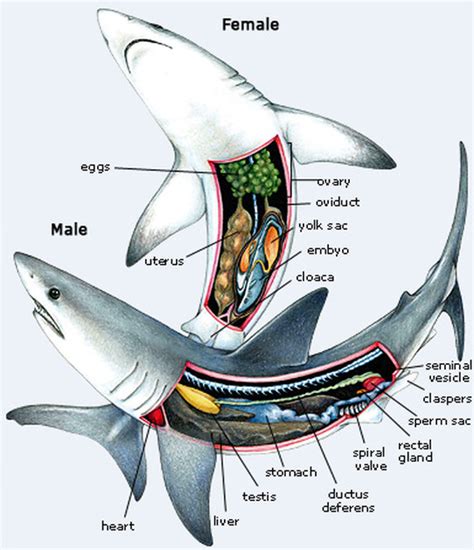
Following internal fertilization, the reproductive strategies diverge further. Some females lay fertilized eggs, while others retain them within their bodies, giving birth to live young.
From Eggs to Live Young: Viviparity and Ovoviviparity
The development of embryos after fertilization can take several forms. In ovoviviparous species, such as some sharks, the fertilized eggs develop inside the mother's body, but the developing embryo is nourished solely by the egg yolk. The female then gives birth to live young that are already hatched from their eggs.
Viviparous species take this a step further, with the developing embryo receiving nourishment directly from the female body, often through a placental-like connection. This is seen in viviparous sharks, which develop a placental connection to their young and provide additional nourishment during development. Consequently, young in both ovoviviparous and viviparous species are often born at a larger size and in smaller numbers compared to egg-laying species. This reproductive method offers a significant survival advantage by reducing the vulnerability of the young to predators from an earlier stage.
Beyond the Binary: Hermaphroditism and Parthenogenesis
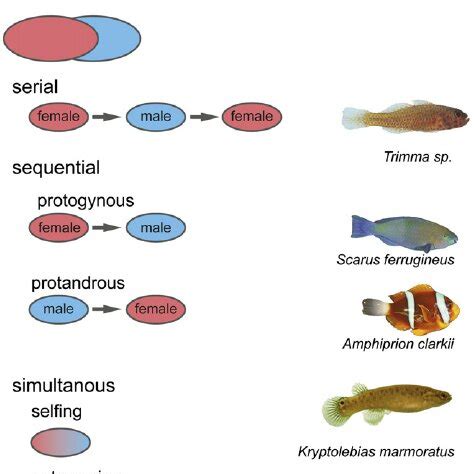
Fish reproduction is further complicated by the existence of hermaphroditism, a reproductive strategy where an individual possesses both male and female reproductive organs, either simultaneously or sequentially. This can be a significant advantage in environments where finding a mate is difficult, such as in the deep ocean.
Hermaphroditism can occur in two main forms:
Sequential Hermaphroditism: In this scenario, an individual is born as one sex and later transitions to the other.
- Protogyny: Fish are born female and later switch to become male. This is evolutionarily favored when male reproductive output increases more significantly with size than female output, and when females select larger males.
- Protandry: Fish are born male and later develop into females. This strategy is often linked to body size and the energetic costs of egg production; larger females can produce more eggs. While intuitively appealing from a fecundity perspective, protandry appears to be less common than protogyny in fish.
Synchronous Hermaphroditism: Some fish species can produce both eggs and sperm simultaneously. However, even in these cases, self-fertilization is rare. Instead, individuals often alternate between male and female roles during spawning with a mate, a strategy that is particularly advantageous when mates are scarce.
In rarer instances, some live-bearing species can reproduce parthenogenetically. This is a form of virgin birth where eggs develop into young females without fertilization by sperm. Parthenogenesis has been observed in captive bonnethead, blacktip, and zebra sharks in the absence of males.
Shark Reproduction | SHARK ACADEMY
Behavioral Adaptations for Survival
Beyond the physiological and anatomical aspects of reproduction, fish exhibit a wide range of behavioral adaptations to enhance the survival of their offspring. These can include:
- Parental Care: Some species engage in behaviors such as building nests to protect eggs or actively guarding their eggs and young from predators. Cichlid species, like freshwater angelfish, are often nest-builders.
- Mouth Brooding: A fascinating form of parental care where a parent, typically the female, carries fertilized eggs and newly hatched fry in its mouth until they are sufficiently developed to fend for themselves. Cardinalfish are known for this behavior.
- Migration: Certain species undertake long migrations to environments that offer optimal conditions for spawning and the survival of their offspring. Sockeye salmon, for example, migrate to freshwater streams with lakes to spawn, with the young spending years in freshwater before heading to the ocean. Their navigation is thought to involve the unique scent of their home stream and possibly celestial cues.
- Spawning Aggregations: Many species, such as snappers and groupers, congregate in large groups to spawn. This synchronized release of gametes increases the chances of fertilization and ensures that a large number of embryos are produced simultaneously, potentially overwhelming predators. Fishery managers often protect these aggregations during spawning seasons.
The Life Cycle of a Fish: From Larva to Adult
Regardless of the reproductive strategy, fish eggs typically hatch into larvae. These larval forms often differ significantly from the adult appearance of the species. A striking feature of newly hatched fish larvae is the presence of a yolk sac, which provides essential nourishment for initial development. The larva swims, attached to this yolk sac, gradually undergoing metamorphosis to transform into the adult form. However, even after metamorphosis, the young fish must mature before it is capable of reproducing itself.
The age at which a fish becomes reproductively mature, known as the age of maturity, is a critical parameter. This is usually determined by the female's readiness to reproduce. Once mature, fish typically remain reproductively capable for the remainder of their lives, although some species, like salmon, are semelparous, spawning only once before they die.
Trade-offs in Reproduction: Fecundity and Survival
Reproduction involves significant energetic costs, particularly in the development of gametes, especially eggs. This leads to inherent trade-offs in reproductive strategies:
- Fecundity vs. Egg Size: Producing a larger number of smaller eggs is energetically less costly, allowing for higher fecundity. However, smaller eggs hatch into smaller larvae, which are more vulnerable to mortality. Conversely, producing fewer, larger eggs means higher individual investment per egg, but the resulting larvae are larger and potentially more resilient.
- Semelparity vs. Iteroparity: Semelparous species, like salmon, invest heavily in a single reproductive event, often at the cost of their own lives. This strategy is often associated with shorter lifespans, where reproducing at least once is paramount. Iteroparous species, which reproduce multiple times, balance energy allocation between reproduction and growth, allowing for a longer reproductive lifespan.
Environmental Triggers for Reproduction
In both wild and captive environments, reproduction is often triggered by specific environmental cues. Seasonal changes, water conditions, the amount of daylight, and the availability of suitable food sources play crucial roles. For instance, the onset of the wet season in tropical regions can lead to increased nutrient runoff into rivers, creating ideal conditions with abundant food and plants for fish to breed.
In temperate and cold-water species like goldfish and koi, changes in day length associated with the seasons can influence reproductive cycles. While less critical in tropical regions near the equator where daylight hours are relatively constant, these photoperiod shifts are significant in higher latitudes.
In aquarium and pond settings, replicating these natural conditions is vital for successful breeding. This includes providing proper nutrition, substrate, cover, temperature, pH, and appropriate lighting. Identifying the sex of fish can also be a prerequisite for breeding, with males of some species being larger and more brightly colored than females.
The Extreme: Deep-Sea Anglerfish and Intrauterine Cannibalism
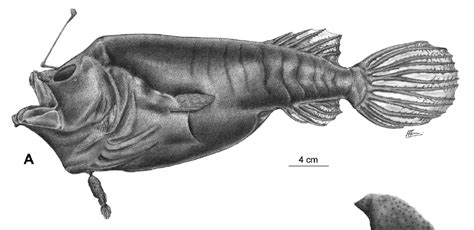
The diversity of fish reproduction extends to some truly remarkable and even extreme examples. In the deep sea, for instance, certain anglerfish species exhibit extreme sexual dimorphism. In Ceratias holboelli, females are vastly larger than males. Upon hatching, males seek out females using pheromones. Lacking teeth and a functional digestive system, the male latches onto a female with specialized denticular bones. Over time, the male's tissues fuse with the female's, and he essentially becomes a parasitic appendage, receiving nourishment from her and providing sperm in return.
Intrauterine cannibalism is another astonishing phenomenon observed in some sharks. In sand tiger sharks, embryophagy occurs, where developing embryos consume their siblings within the womb. A related practice, oophagy, involves embryos feeding on a supply of unfertilized or unhatched eggs within the mother. This "egg-eating" is common in lamnid sharks, including the porbeagle, salmon shark, mako, and great white shark.
Aquaculture and the Future of Fish Reproduction
The challenges and successes in understanding fish reproduction are directly applicable to aquaculture. By deciphering the intricate hormonal signals that govern reproduction, scientists can develop methods to encourage egg and sperm production in captive fish. This is essential for establishing sustainable aquaculture practices that reduce pressure on wild fish stocks and ensure a consistent food source for a growing global population. The continuous research into the endocrine system and its interplay with the brain and gonads is paving the way for more efficient and reliable fish farming.