Adobe Photoshop offers a versatile array of measurement units, empowering users to define custom dimensions for their digital creations. Whether you're designing for print or web, understanding and utilizing these units is fundamental to achieving precise results. The available units include Pixels, Inches, Centimeters, Millimeters, Points, and Picas, each serving distinct purposes in the design workflow.
Understanding Digital Measurement Units
At the core of digital imaging lies the Pixel (px). This is the smallest controllable element of a picture or a graphic displayed on a digital device. Pixels are the building blocks that, when combined, form images, text, videos, and artworks. The density of pixels in an image is often described by its resolution, measured in Dots Per Inch (DPI) or Pixels Per Inch (PPI). For context, 1 pixel is equivalent to approximately 0.352777778 millimeters. When considering a larger scale, 100 pixels can equate to about 1.0416666666666667 inches at a standard 96 DPI.
Inches (in) and their Metric Equivalents
The Inch (in), a traditional unit of length in the imperial and US customary systems, is defined as one-twelfth of a foot. In the metric system, an inch is precisely equal to 2.54 centimeters. When converting to millimeters, an inch corresponds to 25.4 millimeters, typically at a resolution of 60 DPI.
Centimeters (cm): The Metric Standard
The Centimeter (cm) is a metric unit of length, representing one-hundredth of a meter. It's a widely used unit for physical measurements. In the context of digital design and at a resolution of 72 DPI, 1 centimeter is approximately equal to 28 pixels.
Millimeters (mm): Precision for Print and Detail
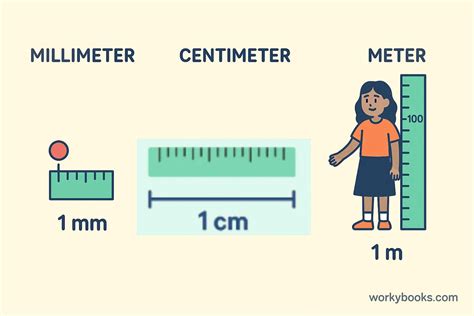
The Millimeter (mm) is another metric unit, defined as one-thousandth of a meter. This unit is invaluable for precise measurements, particularly in print design where even small discrepancies can be noticeable. When converting millimeters to pixels, 1 millimeter is approximately 3.779528 pixels. This conversion factor is crucial for ensuring that designs intended for physical output maintain their intended dimensions.
Points (pt) and Picas (pc): Typography and Layout
The Point (pt) is a smaller unit of measurement frequently used to define font sizes, leading (the vertical space between lines of text), and other elements within page layout. It is equivalent to 1/72 of an inch or approximately 0.353 millimeters. In terms of pixels, at 96 DPI, a point converts to roughly 1.3333333333333333 pixels. Points are a cornerstone of typographical design, ensuring consistency in text appearance across different media.
The Pica (pc) is a unit less than 1/6 of an inch and 1/72 of a foot. It is commonly employed to define fixed horizontal widths and column dimensions, especially in publications like newspapers, journals, advertisements, magazines, and newsletters. Understanding the relationship between picas and inches is essential for layout artists working with traditional print media specifications.
Practical Measurement Techniques in Photoshop
Photoshop provides several intuitive tools and panels to facilitate accurate measurements. The most fundamental of these involve the rulers and guides.
Utilizing Rulers and Guides for Sizing
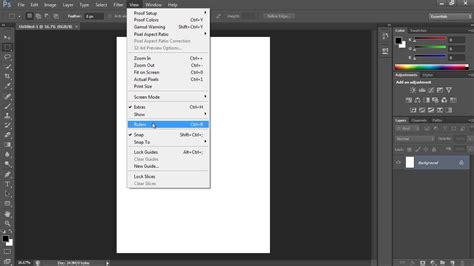
By default, Photoshop may not display rulers. To enable them, navigate to the "View" menu in the main toolbar and select "Rulers." Once visible, the rulers along the top and left edges of your document provide a visual reference for the image's dimensions.
To change the measurement unit displayed on the rulers, simply right-click directly on a ruler. A contextual menu will appear, allowing you to select your preferred unit from the available options (Pixels, Inches, Centimeters, Millimeters, Points, Picas).
While rulers offer a general sense of scale, for more specific measurements, measurement guides are invaluable. You can create horizontal guides by clicking and holding on the top ruler and dragging the resulting line onto your image. Similarly, vertical guides are created by dragging from the left ruler. Placing these guides strategically allows you to define specific starting and ending points for your measurements.
Leveraging the Ruler Tool for Precision
Beyond visual guides, the dedicated Ruler Tool offers enhanced measurement capabilities. To access it, you might need to locate it within the Eyedropper tool group in the toolbar.
The Ruler Tool can be used to measure distances and angles. By clicking and dragging along a line in your image, such as a horizon or a structural element, you can define an angle. Photoshop can then use this information to automatically straighten layers if needed, by clicking the "Straighten Layer" button in the Options bar. This feature is particularly useful for correcting skewed photographs or artwork.
Furthermore, the Ruler Tool can be employed to make measurements using custom measurement scales. These custom measurements can be recorded in the Measurement panel or exported to a file. This capability extends Photoshop's utility beyond simple visual aids, enabling more quantitative analysis of image elements.
How to Measure in Photoshop With the Ruler Tool #tutorial #photoshop
The Measurement Panel: A Powerful Data Hub
The Measurement panel is a dedicated workspace within Photoshop that records detailed information about your selections and measurements. When you use various measurement tools, the data points you select are logged in this panel.
The Measurement panel can record several types of data:
- Shape Factor: This is calculated using the formula 4π × (Area ÷ Perimeter²). A value of 1.0 indicates a perfect circle, while values closer to 0.0 suggest more elongated or irregular shapes.
- Brightness Values: This records the brightness of the selected area. The range of values depends on the image's bit depth: 0-255 for 8-bit images, 0-32,768 for 16-bit images, and 0.0-10 for 32-bit images.
- Histogram Data: This records histogram data for each color channel (e.g., RGB, CMYK). This detailed data can be exported as CSV files when saving the Measurement Log.
- Sum of Pixel Values: This logs the total sum of all pixel values within the selected area.
- Measurement ID: Each measurement recorded in the panel is assigned a unique identifier (e.g., Measurement 1, Measurement 2).
- Perimeter: This records the length of the boundary of the selected area.
The ability to record and export this detailed measurement data makes Photoshop a powerful tool not just for design, but also for analysis and documentation.
Customizing Measurement Units and Preferences
The flexibility to choose your preferred measurement units extends to various Photoshop panels and tools.
Setting Units in the Info Panel
While changing the ruler units is straightforward, sometimes users find that the ruler measurements still appear in a different unit (often pixels) in the Options bar above the file. A common solution for this discrepancy, and a crucial step for ensuring accurate millimeter measurements, is to check the Info panel.
To display the Info panel, go to "Window" > "Info." This panel provides real-time information about the cursor's position, color values, and crucially, the dimensions of selections and measurements. Within the Info panel's preferences or settings (often accessible by clicking the panel's flyout menu), you can explicitly set the units for Width, Height, and Area to millimeters. This ensures that as you make selections or use measurement tools, the recorded values in the Info panel are displayed in your desired unit, even if the rulers' primary display differs.
The "Use Measurement Scale" Option
For advanced users who might be working with specific scale requirements, Photoshop offers a "Use Measurement Scale" option. This setting, often found in the Ruler Tool's options or the Measurement panel's preferences, allows you to define a custom scale factor. For instance, if you're working on a blueprint that uses a specific scale (e.g., 1:100), you can input this scale into Photoshop. When you then measure an element using the Ruler Tool or the Measurement panel, Photoshop will automatically convert the on-screen pixels into the real-world dimensions according to your defined scale. Toggling this option on or off can help synchronize measurements between different parts of the Photoshop interface, including the rulers and the Info panel.
Advanced Measurement Considerations and Photoshop Trivia
Photoshop's measurement capabilities have evolved over time. A noteworthy update in Photoshop CC (version 14.1) significantly increased the limit for the number of measurements that could be stored. Previously capped at 700, this limit was expanded to an impressive 10,000 measurements. This enhancement allows for much more extensive data logging and analysis within a single Photoshop document, catering to complex projects and detailed workflows.
The Note Tool: Annotating with Purpose
While not directly a measurement tool, the Note Tool is a valuable companion for documenting measurements or design decisions. It's a dedicated feature for adding annotations to an image without cluttering the Layers panel with additional type layers. By selecting the Note Tool and clicking on the image area, you can add a "marker" for a note. This is distinct from using a regular type layer, keeping your layer stack cleaner and more organized.
The Count Tool: Batch Measurement
The Count Tool, often grouped with the Ruler and other measurement tools, allows for quick counting of objects. When selected, clicking in the image area adds a numbered marker. This can be useful for inventorying elements, marking points of interest, or even performing simple batch measurements of discrete items within an image.
By mastering these various measurement tools and panels, Photoshop users can achieve a high degree of precision and control over their digital creations, ensuring that designs meet exact specifications, whether for digital display or physical printing. The ability to switch between units like pixels, inches, centimeters, and millimeters, coupled with the detailed data provided by the Measurement panel, makes Photoshop an indispensable tool for a wide range of creative and technical professionals.