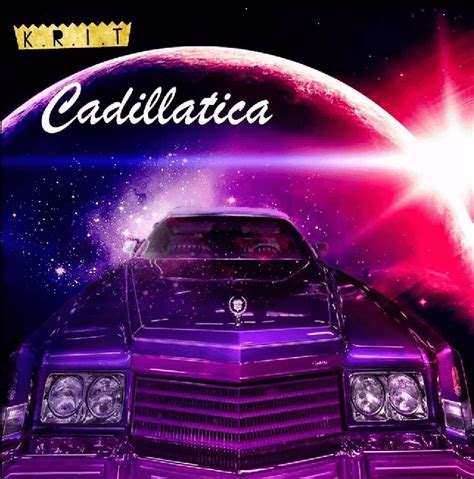
Big K.R.I.T. has been diligently building momentum for his sophomore Def Jam album, Cadillactica, a project that was slated for release later in the year. The tracks he had been releasing leading up to it demonstrated a clear shift in his approach, indicating he was in no mood to tolerate detractors this time around. His debut album, Live From The Underground, released in 2012, presented a well-crafted amalgamation of soul-infused Southern beats and memorable, circular hooks. However, K.R.I.T. found himself facing criticism for what some perceived as an over-reliance on similar production techniques across his projects. As a respected and beloved figure within the underground hip-hop scene, known for his lyrical prowess, the Mississippi MC was experiencing his first taste of mainstream scrutiny.
This landscape shifted dramatically with Kendrick Lamar's impactful verse on Big Sean's "Control." In this track, Lamar extended a challenge for hip-hop supremacy, explicitly naming several contemporaries, including Big K.R.I.T. Suddenly, K.R.I.T. was thrust back into the spotlight, not as a challenger, but as one of the rappers Kendrick Lamar had "murdered" on his verse. The humble lyricist took this perceived slight to heart, a sentiment that became undeniably clear to listeners upon their first spin of "Mt. Olympus," the inaugural single from Cadillactica, which dropped in April.
Produced by K.R.I.T. himself, "Mt. Olympus" is a direct salvo aimed at critics and those who had commented on his perceived vulnerability following the "Control" verse. The track reasserted his claim to the throne with an unyielding intensity, showcasing a lyrical fire that replaced his typically generous demeanor. The song's hook powerfully encapsulates this sentiment: "Now they wanna hear a country nigga rap / Five albums in, I swear a country nigga snap / Thought they wanted trap, thought they wanted bass / Thought they wanted molly, thought they wanted drank / Fuck them niggas / Now they wanna hear a country nigga rap / Five albums in, I swear a country nigga snap / Thought they wanted gold, thought they wanted shine / Thought they wanted radio, bitch make up your mind." This defiant declaration underscored his readiness to embrace his identity and silence the noise of external expectations.
The Genesis of "Mt. Olympus": A Response to Scrutiny
In a conversation with XXL, Big K.R.I.T. elaborated on the motivations behind "Mt. Olympus." He explained that while there was a degree of aggression in the track, it stemmed more from a place of feeling consistently underestimated. "For me, it was more about-as far as the anger aspect-there is a little bit of aggression there, as far as me being always humble and always wanting everybody to win," he stated. "There was a point where, after the 'Control' verse, there was a lot of positivity but also a lot of negativity thrown my way, too. I took all of it, as I do, and I put it into my music."
K.R.I.T. prides himself on channeling his personal experiences and emotions into his art. "Mt. Olympus" was his way of unequivocally stating, "I'm a lyricist, and again, don't sleep on me in this music game." The aggression in the song was also fueled by a sense of having to repeatedly prove his worth. He reflected on his extensive catalog, including mixtapes that could have easily been full-length albums, and the sheer effort involved in producing and writing all his music. "It wasn't an easy feat, but it's a part of my story at the same time," he noted. The song served to highlight overlooked aspects of his journey and challenge the notion of how he, as a musician, should operate. "Mt. Olympus" was positioned as the initial salvo, signaling that Cadillactica would represent the next significant chapter in his evolving career.
Deconstructing the Lyrical Assault: Verse One
The first verse of "Mt. Olympus" immediately sets a confrontational tone, directly addressing the aftermath of Kendrick Lamar's "Control" verse and the ensuing speculation. K.R.I.T. dismisses the notion that he was personally attacked, stating, "Maybe you hit it / Aw man, I'm more concerned why niggas been textin' my cell, callin' my phone / Ask me about this Kendrick shit, that he ain't even really even diss me on." He further expresses his disdain for manufactured drama, equating it to fiction: "I ain't drawn to all that propaganda, rap shit 'bout as real as Santa."
K.R.I.T. then confronts the sudden reappraisal of his lyrical abilities: "Now I'm lyrical all of a sudden? / Well last year they claim they ain't understand me." He asserts his dominance over his peers, proclaiming, "I'm buryin' niggas, and pissin' on they graves." He criticizes artists who adopt the personas of others, questioning the authenticity of their accolades: "Another nigga, other nigga name on your chain / And they call me a slave?" This leads to a powerful declaration of his unique position: "Niggas scared of that country boy, Lord forbid I catch a body."
The verse takes aim at industry phoniness and superficiality. K.R.I.T. criticizes those who mimic successful artists without genuine talent, describing them as "borrowed" verses and "swagger-jackin'." He highlights the perceived lack of innovation in mainstream rap, suggesting that many artists merely "recycle all of they lingo" and deliberately distort their words. The line, "You actually fooled these people into thinkin' / That your music was innovative," serves as a direct indictment of artists who have achieved success through imitation rather than originality.
K.R.I.T. questions the arbitrary nature of hip-hop accolades, referencing the idea of being crowned "King of Hip-Hop" and suggesting that true greatness transcends such titles, even implying that legends like Andre 3000 might not be recognized by such systems. He concludes the verse with an emphatic rejection of his detractors: "So fuck these haters and fuck these hoes / Damn right I still mean that."
The "Control" Verse and the Competitive Spirit
When asked about his feelings regarding the "Control" verse, K.R.I.T. reiterated his understanding of hip-hop's inherent competitiveness. "Hip-hop has always been competitive, and it's always been that way," he observed. His perspective was that while he and his peers might be friends, the pursuit of being the best is a fundamental aspect of the genre. "So my mentality with that verse was, alright, we friends, we cool, but at the end of the day, everybody wants to be the best and the greatest at what they do."
He emphasized his commitment to delivering his best performance on every track, stating, "I would hope any and everybody are giving their all on these songs, because I'm gonna get in the studio and I'm gonna do my best to never get murdered on a record." This sentiment is directly conveyed in "Mt. Olympus," where his objective is clear: to consistently produce his best work and continually prove his capabilities.
Big K.R.I.T - "Somedayz" (Dir. John Colombo)
Unpacking the Intensity: Verse Two
The second verse of "Mt. Olympus" continues the aggressive and self-assured narrative, directly addressing the song's structure and K.R.I.T.'s multifaceted talents. He dismisses potential criticisms of the hook's simplicity: "Hope the hook wasn't too simple / Either way nigga, I wrote it." He then emphatically declares his comprehensive skill set: "Yes, I made the beat, yes, I mixed the track / I am far from whack, you a one-trick pony." This directly challenges artists who rely solely on one aspect of music creation, contrasting it with his own holistic approach.
K.R.I.T. asserts his individuality and his role in defining the art form: "I don't fall in line, I define what's rhyme / Fuck what you was thinkin', bloggers they can quote it." He reiterates his dominance, stating, "Lotta rappers buried underneath my house / They know what I'm 'bout, you ain't even know it." He criticizes the superficiality and perceived fakery in the industry: "Overdosed on hocus-pocus, jibber-jabber."
His self-proclaimed status as the "King of every castle" is juxtaposed with the industry's practices: "how you signin' rappers? / All these labels must be givin' out a raffle / Wranglin' like cattle, keep a nigga shackled / Leavin' people baffled, tap dance nigga." He calls out artists who mislead their fans, suggesting they might as well engage in performative acts for fleeting validation: "Misleadin' all of your rap fans, nigga / Might as well just do a lap dance, nigga / Sap ass nigga / Do whatever for some dap ass nigga."
K.R.I.T. then shifts to a more philosophical stance, advocating for authenticity and personal well-being over industry pressures. He declares his lack of interest in the superficial aspects of the game: "I ain't got time to watch out for children, stay out my kitchen / The shit that I'm cookin' ain't meant for your kind." He expresses a desire to protect himself from the negative influences of the industry, stating, "Crackin' and bashin' the shit out your spine."
He reaffirms his regal persona with humility and strength: "King with a crown, humble and tall." He draws a parallel between tyrannical rulers and those who suppress their true selves, stating, "Tyrants never keep quiet, they'd rather be violent / So I'm beheading them all." This metaphorical act of decapitation signifies his intention to dismantle oppressive forces within the industry.
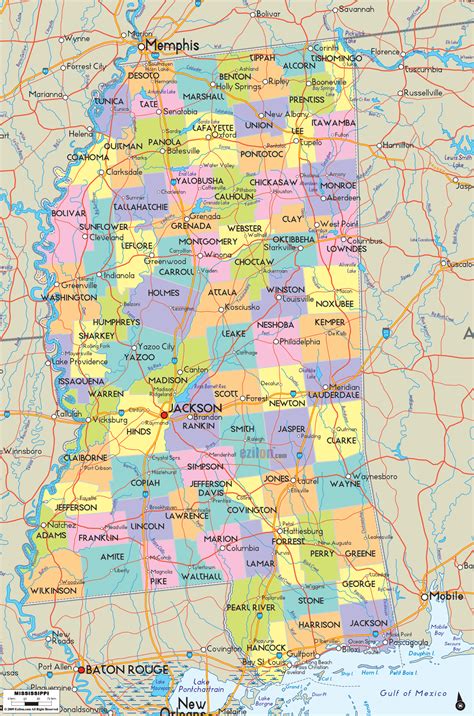
K.R.I.T. then asserts his dominance over the hip-hop landscape: "The lay of the land, I'm settin' fire to buildings and bridges." He uses a unique metric for success, emphasizing his connection to his roots: "You ain't sell out a show until you sell out one in Mississippi." This line highlights his commitment to his home state and his ability to resonate with audiences beyond the typical metropolitan hubs.
The verse culminates in a profound statement about the potential conflict between artistic integrity and commercial demands: "What’s good for hip-hop may not be good for my soul / So I keep flexin', wreckin', for the people that respect it / Check it, fuck a 'Control'." This declaration encapsulates his personal philosophy, prioritizing his spiritual and artistic well-being over the fleeting trends and pressures of the mainstream music industry.
"What's Good for Hip-Hop Might Not Be Good for My Soul"
This particular line resonated deeply with listeners and prompted further discussion. K.R.I.T. explained that it addressed the immense pressure associated with maintaining a successful career in music. "Because [with] the pressure of what we do, as far as a career, sometimes it can boil over further than just a pen and a pad; it can boil over into your personal life and how you initially go about every day," he elaborated. The relentless pursuit of the next hit or the next project can lead artists to neglect their personal and spiritual well-being.
K.R.I.T.'s intention with this line was to articulate his commitment to self-preservation and a reminder of his core motivations. "So for me, just trying to remove myself from some of the negativity, or remind myself of why I made music in the first place, and why I love making music-which is also to help people-that's what that one bar stated." While he appreciates the competitive nature of hip-hop and battle rapping, he recognizes the importance of stepping back and remembering the impact his music has on his listeners. "There's a lot of people that listen to my music just so that they can get from Point A to Point B. Feel better about whatever they're going through in their life, and I gotta remember that when I'm writing these songs."
Cadillactica: A New Frontier
With Cadillactica on the horizon, Big K.R.I.T. was preparing to unveil a new chapter in his artistic journey. He described the album as being close to completion, using the metaphor of "getting this planet all landscaped and ready so that people can take it a real tour around these parts." This imagery suggests an immersive and meticulously crafted sonic world for listeners to explore.
While K.R.I.T. has a history of collaborating with Southern legends like Bun B and Big Boi, his work with Lil Boosie as a producer for either Boosie's upcoming double album or Cadillactica itself highlighted his evolving role in the studio. K.R.I.T. expressed immense respect for Boosie, stating, "Oh man, it was amazing to be in the studio with the OG, man, and to be able to just be a producer-not even as a rapper or artist-but just to be making the music, and being able to vibe with him and how his work ethic is, knocking song after song after song out." He found inspiration in Boosie's journey and dedication to his craft, describing the experience as a significant milestone and a chance to "chop it up with him and hear about everything that he's gone through as far as his grind and putting out music and the underground and proving himself."
The Musical Tapestry of Big K.R.I.T.
Born Justin Scott on August 26, 1986, in Meridian, Mississippi, Big K.R.I.T. (an acronym for King Remembered In Time) began his musical journey in 2005. His early career was marked by a signing to Def Jam Recordings in 2010, orchestrated by Sha Money XL. His breakthrough came with the single "Country Shit" in September of that year, particularly its remix featuring Ludacris and Bun B. The following year, he made his first appearance on the Billboard Hot 100 with a guest spot on T.I.'s "I'm Flexin'."
Both of his first two studio albums, Live from the Underground (2012) and Cadillactica (2014), achieved considerable success, debuting at number five on the Billboard 200 chart. After parting ways with Def Jam, K.R.I.T. established his own record label, Multi Alumni, in 2017, under which he released subsequent albums: 4eva Is a Mighty Long Time (2017), K.R.I.T. Iz Here (2019), and Digital Roses Don't Die (2022).
Prior to his official albums, K.R.I.T. released several influential mixtapes, including Hood Fame and The Last King. His contributions were also featured on Currensy's Pilot Talk and Wiz Khalifa's Kush & Orange Juice. A pivotal release was the entirely self-produced mixtape Return of 4Eva in March 2011, which garnered significant critical acclaim, with publications like HipHopDX and Slant Magazine praising its conceptual depth and labeling it as a potential contender for the best rap album of the year. Critics lauded his production skills alongside his lyrical and vocal delivery, identifying him as a potential successor to Southern rap icons like UGK, Scarface, and Outkast.
The journey towards his debut studio album, Live from the Underground, was announced in July 2011. He embarked on The Smoker's Club Tour in late 2011 with Currensy and Method Man. Following the release of Live from the Underground in June 2012, which topped the Hip Hop, R&B, and Rap Charts, K.R.I.T. headlined the "Live from the Underground" tour. He also confirmed plans for a collaborative album titled Country Cousins with Yelawolf.
In January 2013, K.R.I.T. announced his mixtape King Remembered In Time, with Mike WiLL Made It slated to produce tracks for both the mixtape and his upcoming album. This marked a shift from his previous self-produced works, indicating a willingness to collaborate with other producers. The first single from this mixtape, "Shine On," featuring Bun B and produced by K.R.I.T. himself, was released in February 2013. He also collaborated with producers like 9th Wonder. King Remembered In Time was released in April 2013.
By August 2013, K.R.I.T. revealed that Chad Hugo of The Neptunes, DJ Dahi, and Terrace Martin would contribute to the production of his second studio album, Cadillactica, which he officially announced in September 2013. He also mentioned that Jim Jonsin, Rico Love, and DJ Toomp would be involved in the production alongside himself. The first single from Cadillactica, "Mt. Olympus," was released on April 28, 2014.
K.R.I.T.'s musical foundation was built through formal training, starting with the cello in elementary and junior high school, which provided him with a strong understanding of music theory. His foray into producing began out of necessity: "At the time, I was young and I didn't have no job. It wasn't like I could really afford to pay for beats. At the same time, there was this program that came out for PlayStation, MTV Music Generator, where you could make your own beats." This early experimentation laid the groundwork for his self-sufficient approach to music creation.
The rapper is also recognized in Birmingham, Alabama, as a favored artist of the current Birmingham Mayor, Randall Woodfin, highlighting his impact beyond the music industry.
The journey to "Mt. Olympus" and the subsequent release of Cadillactica represented Big K.R.I.T.'s determined ascent. He was carving out his own space in hip-hop, not by conforming to expectations, but by embracing his identity, honing his lyrical skills, and asserting his artistic vision. The track served as a powerful declaration of his resilience and his unwavering commitment to his craft, proving that the "country boy" was indeed ready to claim his rightful place on the Mount Olympus of hip-hop.