The creation of compelling fantasy concept art often involves a sophisticated blend of traditional artistic sensibilities and cutting-edge digital tools. This article delves into a workflow that marries 2D art techniques with 3D elements, employing Photoshop, Blender, and 3DCoat to construct atmospheric and believable environments. The process, exemplified by the creation of an image titled "Storm Peaks," highlights how photogrammetry and meticulous compositing can bring imagined worlds to life, grounded in the reality of natural forms.
The Genesis of an Idea: From Brief to Inspiration
Every creative endeavor begins with a concept, a spark that ignites the artistic process. This initial stage, often referred to as the "brief," can originate from a client's request or the artist's own imaginative exploration. For the "Storm Peaks" piece, the artist envisioned a dramatic mountain environment bathed in striking lighting, featuring the evocative presence of Gothic ruins. This vision was partly a tribute to the legendary John Howe, an artist whose work masterfully captures the essence of Middle-earth, a testament to the enduring power of iconic fantasy art.
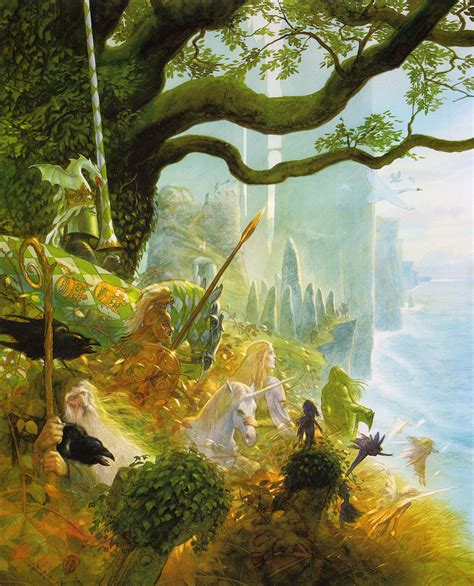
While specific artists can inspire, the ultimate wellspring of creativity for many is nature itself. The artist's aesthetic is deeply rooted in a profound appreciation for the natural world, seeking to transcribe its inherent beauty through the manipulation of depth of field and the thoughtful selection of photographic lenses. This inclination towards a natural-history style imbues the final image with a heightened sense of believability. The challenges encountered in this workflow are frequently more technical than inspirational, demanding a deep understanding of digital tools and their capabilities.
The initial phase of any project involves thorough research, gathering visual references and elements that resonate with the overarching theme. The artist's personal style is characterized by a commitment to realism and a photographic quality. A key element in achieving this is the skillful manipulation of depth and the nuanced application of natural light to depict environments convincingly.
Laying the Foundation: Reference, Sketching, and Composition
The journey from concept to completion typically commences with the selection of a foundational photographic reference. For "Storm Peaks," a mountain photograph was chosen to establish the desired lighting, angle, and overall composition, providing a robust starting point. This initial reference serves as a visual anchor, guiding the subsequent stages of development.
With a clear understanding of the compositional and lighting possibilities, the artist moves to the crucial phase of initial sketching. This involves importing the chosen references into Photoshop and meticulously painting over them to translate the nascent idea into a tangible sketch. This iterative process allows for the exploration of various compositional arrangements and lighting scenarios before committing to a more time-intensive execution.
The deliberate tilt of the perspective in the sketch was not entirely accidental but rather a conscious choice to create a strong sense of depth, inducing an almost vertiginous feeling. When collaborating with clients, this initial sketch is invariably the first deliverable, serving as a critical checkpoint to ensure alignment and to gauge the project's direction. Approval of this sketch signifies the green light to embark on the creation of the final image.
Bridging Worlds: The Synergy of 2D and 3D
Following the approval of the sketch, a pivotal decision arises: whether the final image will be rendered primarily in 2D or 3D. In this specific instance, the complexity of the architectural elements, particularly the ruins, presented a significant challenge for a purely 2D approach. The strong perspective inherent in the sketch made drawing these structures with accurate detail and foreshortening exceedingly difficult. Consequently, a hybrid approach was adopted: 3D modeling for the ruins and 2D techniques for the remaining environmental elements. This decision was further reinforced by the availability of suitable photographic references, enabling the extensive use of "photobashing" - a technique that seamlessly integrates photographic elements into a digital painting.
To begin, the photographic references were meticulously modified to align with the initial compositional sketch. This involved adjusting perspective, color, and lighting to ensure a cohesive integration with the envisioned scene.
Constructing the Ruins: 3D Modeling and Texturing
The construction of the ruins commenced with the creation of a modular set of 3D assets within a 3D modeling software. This approach, often referred to as "kitbashing," involves building a library of distinct ruin components that can be assembled and rearranged to form varied architectural structures. The initial geometry was kept simple, focusing on fundamental shapes.
Texturing these geometric forms was then undertaken in 3DCoat, a specialized software that excels at projecting and painting photographic textures directly onto 3D models. For this project, personal reference images of cathedrals were utilized. These photos were projected onto the 3D geometry, allowing for a rapid and realistic application of surface detail. A close examination of the rendered ruins reveals a deliberate inclusion of grime and imperfections, contributing to their aged and authentic appearance.
Recreating the Landscape: Photogrammetry and Camera Matching
A significant challenge emerged during the 3D scene assembly: accurately matching the camera angle and perspective of the 3D ruins to the initial sketch. The absence of flat ground in the 3D mountain environment made it difficult to determine the precise placement of the ruins and to judge the correct focal length for the virtual camera.
To overcome this obstacle, the artist recognized the necessity of creating corresponding 3D geometry for the mountains themselves. This would provide a tangible surface upon which to position the ruins, preventing the scene from feeling empty or disconnected.
The solution involved utilizing Google Maps to capture numerous screenshots of a specific mountain range in the Alps, viewed from its 3D perspective. These screenshots were then processed through photogrammetry software. This advanced technique analyzes multiple images of an object or environment to reconstruct its three-dimensional geometry, effectively creating a digital replica of the mountain landscape.
Once the mountain geometry was generated, the critical task of creating and positioning a virtual camera within this 3D environment began. This camera had to be precisely aligned in terms of position, angle, and perspective to match the initial concept sketch. This meticulous camera matching is essential for ensuring that the 2D and 3D elements of the final composition integrate seamlessly.
Refining the Scene: Depth, Focus, and Lighting
As the scene began to take shape, it became apparent that certain areas, particularly the ruins, lacked sufficient depth and readability. To address this, the artist focused on enhancing the sense of dimension within the ruins. In computer-generated imagery (CGI), there's often a tendency towards excessive detail across the entire image. The artist's goal was to counteract this by simplifying the overall image slightly, thereby emphasizing key elements.
A strategic decision was made to subtly blur or reduce the detail in the background elements of the CG render. This technique helps to push the background further away visually, allowing the foreground elements, specifically the ruins, to command more attention and establish a clearer focal point.
With the ruins now convincingly integrated into the landscape, the focus shifted to the crucial aspects of lighting and rendering. This was a pre-meditated step, as the artist had a clear vision of the intended focal point from the outset. The lighting was carefully sculpted to guide the viewer's eye, enhancing the dramatic atmosphere of the scene.
The orientation of the ruins on the right side of the composition was a deliberate design choice, intended to subtly direct the viewer's gaze back towards the primary ruins, reinforcing the central narrative of the image.
The Art of Atmosphere: Depth, Haze, and Color Grading
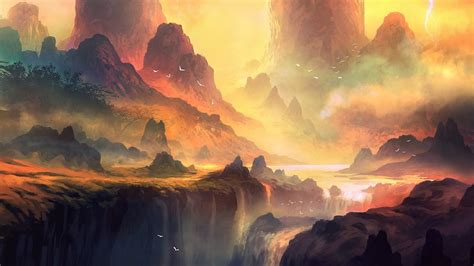
Depth is a fundamental element in creating atmospheric and immersive imagery. The artist commonly employs depth information to introduce atmospheric effects such as haze, or to selectively grade the background elements differently from the foreground. This differential treatment of distinct image planes is instrumental in generating a palpable sense of depth and atmosphere within the scene. This approach draws inspiration from the work of artists like Gaëlle Seguillon, a senior concept artist known for her mastery of digital environments, creatures, and key art, utilizing CGI, photobashing, and digital painting.
A Journey Through Design: From Early Internet to Independent Practice
The artist's journey into the world of digital design is a narrative shaped by the evolution of the internet and a persistent passion for creative expression. As an elder millennial, the formative years were spent navigating the nascent digital landscape of Geocities, MySpace, and Angelfire. This era, characterized by a DIY ethos, fostered an early engagement with design through the creation of fan sites and MySpace templates, utilizing bootlegged versions of Photoshop acquired through platforms like LimeWire, and learning through HTML tutorials. This led to the creation of desktop wallpapers for pop culture message boards during adolescence, a period marked by an intense immersion in online communities and a diligent pursuit of knowledge through tutorial sites, a stark contrast to the more immediate access to information today.
The formal educational path included studies in journalism and design at university. While a brief stint in writing followed, the allure of design proved stronger, leading to a return to the field. A decade of design work in New York ensued, with five years spent at Condé Nast, culminating in a leadership role as the web design team lead for The New Yorker. This experience was a perfect synthesis of journalistic and design principles. In 2023, a significant life change occurred with a move to Berlin to pursue a long-held dream of living in Europe.
The past year has seen a transition into establishing an independent design practice named Tendencies. This venture reflects a desire to explore the possibilities of solo work. The artist's expertise spans web and brand design, alongside illustration, highlighting a passion for building interactive experiences that are both functional and aesthetically pleasing. The independent practice officially commenced in the summer of 2024.
Navigating the Creative Career: Age, Mentorship, and Autonomy
Embarking on a full-time design career at the age of 27 felt opportune, providing a greater emotional maturity that facilitated better processing of feedback. However, it also necessitated a significant degree of ego management, as many mentors and supervisors were younger. The design industry, the artist observes, still grapples with ageism, particularly affecting women and queer individuals, who may be perceived as too young for certain responsibilities or too out of touch due to age. This creates undue pressure on individuals under 30 to meet perceived career milestones and on those over 30 to avoid becoming irrelevant, a notion the artist finds baseless. There is hope that the current generation of designers, having grown up with the internet as an integral part of their creative process, will foster a more inclusive and sustainable view of design as a lifelong career.
The shift to a completely freelance career over the past year brought about a significant change in work environment and schedule. A traditional Monday-to-Friday structure, with some flexibility, has proven most effective. The daily routine typically begins with waking between 7 and 8 AM, often followed by a workout class (yoga or spin). A morning ritual of coffee and breakfast precedes the start of work around 10 AM. A prolonged lunch break around 1 PM allows for personal errands or rest, with work resuming from 3 PM until approximately 7 PM, depending on client calls.
The autonomy of freelance work is liberating, as the conventional 8-hour workday is often ill-suited for creative professionals. Some tasks can be completed in as little as two hours, while periods of intense creative flow can extend to a 12-hour day, albeit an enjoyable one. The primary drawback of freelancing is the inherent isolation, a sentiment shared by many independent creatives. The upcoming year's priority is to find a suitable creative co-working space in Berlin.
Set up a custom Workspace in Photoshop 2022
The Creative Sanctuary: Workspace and Inspiration
The artist's workspace is equipped with a MacBook Pro and an Apple Studio Display, complemented by soft, ambient lighting. A "fancy candle" from brands like Boy Smells or Byredo adds a touch of indulgence. Pinned paintings in progress above the desk serve as a constant source of color inspiration, and the presence of a cat on the lap is an ideal, though not always guaranteed, addition.
Inspiration is drawn from a variety of sources, including online platforms like Are.na and Pinterest, design publications, and archival content. The philosophy of "just looking around," as articulated by Chuck Anderson, is a guiding principle. An influential experience was witnessing Elizabeth Goodspeed's presentation on archival research, which fundamentally shifted the artist's approach to design. The "Casual Archivist" spreadsheet by Goodspeed is a recommended resource for fellow designers.
This archival approach is actively integrated into the artist's practice. A current branding project for a sustainability client in Berlin, Oddkin, exemplifies this. Given the client's Italian roots and focus on sustainable produce sourced from Italy, the artist unearthed a 15th-century Erbario (herb journal) with exquisite illustrations that perfectly captured the desired aesthetic. Recent explorations also include analogue techniques and stop-motion animation. The acquisition of a printer has facilitated a process of printing designs, scanning them, manipulating them digitally, and re-printing, creating layered and textured outcomes.
Essential Tools and Creative Technologies
The Componibili by Kartell is a celebrated piece of furniture, deemed essential for a small workspace. Procreate is lauded as an "incredible" and accessible tool, priced at $12.99 for lifetime use, and has been instrumental in numerous projects.
On a larger scale, the current homepage of The New Yorker represents a significant project. The design team dedicated approximately eighteen months to a strategic overhaul, moving away from a conventional cluttered editorial site to a focused "story of the day" format with an editor-curated homepage that mirrors the magazine's sensibilities. More recently, the artist has been excited to showcase independent creative lead projects from the past year, collaborating with diverse clients ranging from a community theater to a mental health startup and a Brooklyn preschool.
Embracing the Freelance Journey: Confidence, Uncertainty, and the Future of Work
The current professional focus is on cultivating the confidence to navigate the inherent uncertainty of freelancing and business building, alongside the persistent challenge of imposter syndrome. Looking ahead, the aspiration is to scale Tendencies into a fully remote collective of freelance experts who collaborate on projects. However, questions remain about the preferred management model: whether to adopt a traditional employer role or to pursue a collective, worker-owned structure where all members have a vested interest in the business's success. This latter model, championed by studios like Gardener, Village One, and Upstatement, aligns with a commitment to salary transparency and equitable ownership.
The Unfolding Path: Learning, Resilience, and Self-Compassion
The artist offers a profound perspective on the learning process: "Everyone was born knowing nothing. You’re going to suck at new things for a while, and eventually, you’ll be good-but it’s how you deal with the in-between that’s going to determine your success." This sentiment echoes Ira Glass's concept of the "Taste Gap." The advice emphasizes self-kindness and the development of emotional tools such as Internal Family Systems, Cognitive Behavioral Therapy, and meditation to manage the inner critic. Addressing emotional reactivity in the workplace is also crucial, as anxiety is highly contagious. Furthermore, the artist advises against being deterred by overly detailed job descriptions, advocating for a "delusional" pursuit of opportunities, as employers often list an idealized candidate profile, and many skills can be acquired through self-teaching.
Currently, the focus is on the individual design practice, with an ongoing interest in collaborating with studios whose work is admired. For fellow designers seeking advice or connection, the artist's inbox remains open.
Mastering Photoshop: A Toolkit for Creatives
Photoshop, a complex and powerful software, offers a vast array of tools and techniques for artists and designers. Mastering its intricacies can take years, but a solid understanding of its core functionalities unlocks immense creative potential.
To demystify the learning process, a comprehensive collection of video tutorials and written guides has been curated, catering to various skill levels.
Unlocking the Power of Layers and Masks
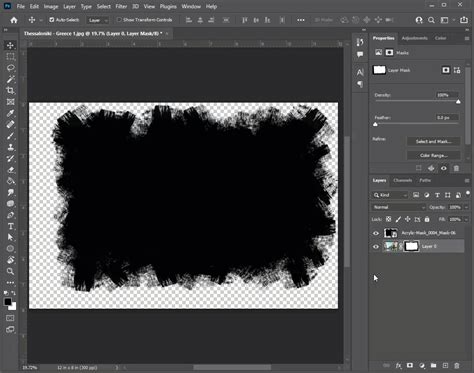
The foundational element of Photoshop's versatility lies in its layer system. While mastering layers can be a challenging endeavor, a strong grasp of this concept provides a robust framework for digital art creation. Layer masks are equally fundamental, enabling artists to streamline their digital art workflow and prevent images from appearing flat.
Essential Manipulation Techniques
Basic cut-out and masking tasks form the bedrock of much design work in Photoshop. The ability to isolate and manipulate elements with precision is a prerequisite for many design projects. The Face-Aware Liquify tool, a sophisticated feature in Photoshop CC, simplifies the process of creating caricatures by intelligently detecting facial features like eyes, mouth, and nose, allowing for intuitive warping and adjustment.
Enhancing and Transforming Images
Animated GIFs can be effectively utilized to enhance the visual appeal of designs. For photographers, the Camera Shake Reduction filter offers a means to salvage the occasional blurry image. A classic technique involves transforming any photograph into an aged, sepia-toned image, adding a vintage aesthetic that goes beyond simple color conversion.
Integrating Traditional and Digital Media
Hand-drawn sketches can be more effectively integrated into digital workflows using specific techniques. Colorizing scanned pencil sketches to eliminate harsh black lines can save artists considerable time and effort, as dark lines can be difficult to paint over while preserving the sketch's essence.
Atmospheric Effects and Color Manipulation
The transformation of a daytime scene into night can be achieved with techniques inspired by cinematic visual effects, such as those seen in Lars von Trier's film "Melancholia." The Burn tool, introduced in Photoshop tutorials, allows for selective darkening of image areas. Similarly, the Dodge tool enables selective lightening, with options to control brush settings, Range, and Exposure.
The Color Replacement Tool provides a method for painting over areas of an image with a new color. The Content-Aware Move Tool offers intelligent ways to move and extend image elements. The Custom Shape Tool expands the library of available shapes for design.
Artistic Transformations and Digital Painting
A classic artistic transformation involves creating an Andy Warhol-style multi-image pop art picture, converting a simple portrait into a vibrant pop art masterpiece. For those interested in digital painting, Photoshop offers a comprehensive guide, where traditional painting principles like composition, color theory, and perspective remain directly applicable to the digital canvas.
Framing and Special Effects
Adding frames and borders to photographs can be achieved through a combination of Photoshop and Lightroom. The tilt-shift effect, a photographic technique that mimics the appearance of miniature models, can be recreated using Photoshop.
Video Editing and Image Repair
Photoshop, while primarily known as a photo editor, also possesses powerful video editing capabilities. For portrait retouching, the Spot Healing Brush is an effective tool for refining skin appearance. The Skin Aware technology in CS6 offers advanced options for skin tone adjustments.
The ability to alter hair color is facilitated by new tools introduced in Photoshop CS6. For those without smartphones, vintage Instagram-like effects can be achieved on photographs within Photoshop. The seamless integration of black and white imagery with select areas of color offers unique stylistic possibilities.
Conveying Mood and Refining Edges
Style frames, which capture the essence of an animation or video in a still image, can be created to convey the mood and aesthetic of motion graphics. The Refine Edge box in Photoshop CC is an invaluable tool for precisely selecting subjects with complex edges, such as frizzy hair or foliage, a task that can be exceptionally time-consuming otherwise.
Traditional Artistry in a Digital Realm
Artists who prefer traditional drawing and inking can leverage Photoshop to enhance their work with color and impact. The process of colorizing scanned hand-drawn sketches is a prime example. The Tilt-shift blur effect in Photoshop CS6, as demonstrated by Ben Secret, offers an innovative approach to saturation, creating miniature-like scenes.
The Curves adjustment layer is a powerful tool for manipulating tonal values, adjusting exposure, and performing automatic color correction. Creative color manipulation, expanding tonal range, and generating classic images with added impact can be achieved in a few simple steps. The Eraser tool can be used to create clean white backgrounds by selectively deleting unwanted areas.
Photography plays a crucial role in design, and Photoshop offers solutions for common photographic challenges. Backgrounds can often detract from an otherwise perfect image, and Photoshop provides tools to address this. Understanding histograms and fixing poorly exposed photos are essential skills for image enhancement. Creating UI elements is a fundamental part of a designer's toolkit.
Emulating Photographic Effects
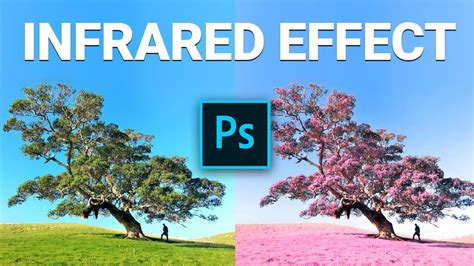
An infrared effect can be simulated in Photoshop, even without specialized equipment, by using images rich in green tones. Fashion photographers historically experimented with developing film in unconventional chemicals to achieve striking color effects, a practice that can be emulated digitally.
Advanced 3D and Text Effects
A specialist tutorial demonstrates how to create the effect of text submerged in water. Photoshop's 3D capabilities, particularly in CS5 and later versions, allow for the creation of complex 3D objects, such as a "Photoshop volcano" or even a chocolate volcano. Photoshop CS6 Extended's 3D tools engine leverages the graphics card for enhanced performance. The nostalgic recreation of childhood collections, like toy cars, can be achieved in 3D. Photoshop also includes an animation function, allowing for the creation of moving graphics.
Compositing and Custom Brushes
Mastering the art of convincing Photoshop composites, where multiple images are seamlessly blended into a single frame, is a highly enjoyable and creative pursuit. Custom brushes can significantly enhance workflow and boost creativity, offering a vast array of possibilities within Photoshop's Natural Brush Media window. When painting digital light on fur, Photoshop's strong light layer styles can be particularly beneficial.
The introduction of vector shape layers in Photoshop CS6 has opened up new avenues for design. Basic images can be merged and combined with vector shapes to create unique editorial illustrations, a process that may sound complex but is achievable with the right techniques.
App Development and Cross-Application Workflows
For those interested in app development, a field experiencing significant growth, Photoshop serves as a complementary tool. Modern artists often employ a multi-application workflow, frequently working outside of Photoshop for certain stages of their projects.
Enhancing Visual Elements
Ditching the default drop shadow and exploring alternative, more sophisticated shadow effects is a common practice among professional designers. Creating a beautiful fairy from a single source image can be achieved through a detailed tutorial. Similarly, an extensive tutorial guides users through the creation of a fantasy landscape using Photoshop CS6. For fans of "The Lord of the Rings" and "The Hobbit," specific tutorials cater to creating themed artwork.
Stylized Portraits and Text Integration
Portraits can be transformed into stylized pop art images, offering an eye-catching visual makeover, especially for subjects against plain backgrounds. Striking designs can be created in minutes by combining text and images using specific Photoshop techniques. Text can be warped to conform to the shape of a portrait, moving beyond the conventional practice of placing text boxes over images.
Mastering Blend Modes
Photoshop's 26 Blend Modes offer a powerful set of tools for combining layers and images to achieve a vast array of effects, providing ample opportunities for creative experimentation.
The Indispensable Role of Photoshop in Photography
Matt Kloskowski addresses the question: "Is Photoshop a bad word?" He argues that for photographers aiming to compete in the contemporary landscape, Photoshop is not merely beneficial but 100% necessary. The digital age has fundamentally altered the standards by which photography is judged, with audiences now expecting a higher level of polish and visual sophistication.
The Primacy of a Good Photograph
While an advocate for Photoshop, Kloskowski emphasizes that the process begins with a strong photograph captured "in-camera." Significant investments in equipment like tripods, lenses, lighting, and camera bodies are made with the expectation of capturing high-quality images from the outset. Attempting to "fix" fundamental issues like lighting on a person or the unique light of a sunrise/sunset in post-production is often impractical or impossible. Photoshop cannot magically sharpen a blurry image. However, Kloskowski firmly believes there is a valid and necessary time to "fix it in Photoshop," reframing "fixing" not as a compromise but as an acceptable and often crucial part of the workflow.
The Misconception of Photoshop as a "Bad Word"
A common misconception, often fueled by a lack of understanding, is that Photoshop is something to be ashamed of. Kloskowski recounts an instance where a photographer, during a live demonstration, emphasized getting things "right in camera" in a tone that implied Photoshop was a lesser alternative. This approach, he argues, can lead to wasted time and resources. In a professional setting, efficiency is paramount. A 20-second fix in Photoshop could have saved 40 minutes of collective time from a photographer, assistant, and models. If a photographer lacks the skills to perform such fixes, hiring a retoucher is a professional necessity.
Jeremy Cowart's quote, "Photoshop has changed the game, and every once in a while, Photoshop is the game," resonates deeply. Photoshop has indeed revolutionized the industry, and the public's awareness of its capabilities means that retouched images are expected. The ability to create a movie poster that appears to have been shot on location with elaborate effects, from a simple studio setup, is a testament to Photoshop's transformative power.
The aversion to Photoshop often stems from a lack of familiarity. Kloskowski observes that individuals who criticize Photoshop typically do not know how to use it. He posits that for contemporary photographers, mastering Photoshop is not optional; it's a professional imperative, whether learned personally or delegated to a skilled retoucher.
The New Generation of Photographers
A new generation of photographers, who grew up with digital cameras and computers, possess an innate understanding of these tools. They are often fast, motivated, and unburdened by the "back in the film days" narratives that can sometimes hinder progress. Kloskowski, who experienced the transition from film, acknowledges that such historical accounts can feel anachronistic.
Professional Adoption and Competitive Advantage
Professional photographers, whether consciously or not, have long understood the importance of post-production. Even in the film era, various processes were applied to images before they were seen by the public, but these were less accessible and less discussed. Today, with tools like Photoshop and Lightroom readily available, techniques that were once exclusive are now accessible to all. Consequently, most photographers, with the exception of some editorial specialists, are either proficient in Photoshop or employ retouchers. Photoshop's pervasive use is a reality, regardless of whether it's openly discussed.
Embracing Photoshop Without Shame
Kloskowski concludes by urging photographers not to be ashamed of using Photoshop. Proficiency in the software, or access to a skilled retoucher, provides a significant competitive advantage. A great image is simply a great image, and its quality is not diminished by the knowledge that Photoshop played a role in its creation. Those who criticize Photoshop's use are often those who lack proficiency themselves. Therefore, when presenting work, a confident affirmation like "Of course!" in response to questions about Photoshop use is appropriate. The artistic post-production process can be as rewarding as the initial act of capturing the photograph.
Navigating the Nuances of Color Management
Color management, while potentially intimidating, is essential for ensuring that images appear consistent and accurate across various devices and media. The process involves understanding how color values are interpreted and ensuring that these interpretations are precise.
The Role of ICC Profiles
Pixels in images are represented by RGB values, but the interpretation of these values-what "255" actually signifies-depends on the context. ICC profiles act as a crucial bridge, ensuring that the color information within a file is accurately described. Common profiles include sRGB, Adobe RGB, and ProPhoto RGB. When a profile is missing ("untagged"), the computer must guess, often leading to unpredictable results.
It is generally advisable to open an image with a preferred color profile and avoid converting it within the working file to prevent quality loss. Conversions are typically necessary only when outputting for web or print, and these should be performed on duplicate copies. Combining images created with different RGB profiles also necessitates conversion, as all layers within a single image must ultimately share the same profile.
Choosing the Right Working Space
Adobe RGB is a recommended and safe choice for a working space, providing a good balance of color accuracy. Crucially, an ICC profile for the monitor or printer is also required to ensure accurate color display and output. This often involves using a profiling device like the X-Rite i1Studio.
Embedded Profiles and Conversion Options
An embedded profile ensures that the image file accurately communicates its color information. Without it, Photoshop "guesses," potentially leading to undesirable outcomes. "Conversion options" dictate how Photoshop handles conversions between profiles. Many utilities, like Lumenzia, offer optimization features that automate these settings.
The setting for untagged images is particularly important. While sRGB is often an ideal default, using a profile that matches your typical workflow (e.g., Adobe RGB) can be beneficial. Avoid setting this to "Monitor RGB" or any custom profile for working files. The CMYK working space setting is relevant primarily for those working extensively in CMYK.
Grayscale and Spot Working Spaces
The grayscale working space is generally not recommended for photography, as RGB mode offers equivalent capabilities for black and white conversion and provides access to more tools and filters. Spot working spaces are rarely used in standard photographic workflows.
Profile Mismatches and Engine Settings
Leaving "Profile Mismatches / Ask When Opening" unchecked is generally advisable. "Missing Profiles / Ask When Opening" should be checked to be alerted when an image lacks an embedded profile. The default engine setting, Adobe (ACE), and the "relative colorimetric" intent are typically the best choices for color conversion. "Use Dither" should be checked to mitigate banding in 8-bit images. "Compensate for Scene-referred Profiles" should remain enabled.
Advanced Color Settings
"Desaturate monitor colors" should be left unchecked, as it deliberately deviates from an accurate profile. "Blend RGB Colors Using Gamma" should also be left unchecked; while a setting of 1 can create more "colorimetrically" correct blends, it can lead to inconsistent results across documents and when sharing files. "Blend Text Colors Using Gamma" should remain checked and set to the default 1.45, as this setting affects text layer edge detail.