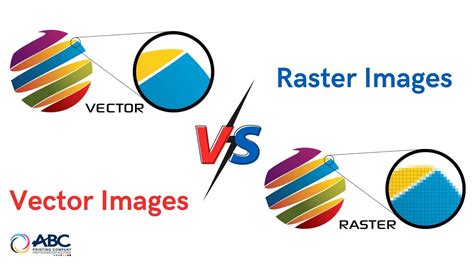
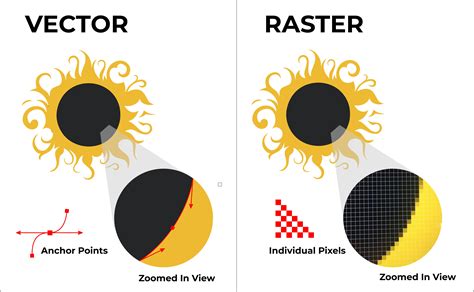
Raster graphics, also known as bitmap images, form the backbone of much of our daily visual experience. These digital images are fundamentally composed of a meticulously arranged rectangular grid of tiny colored squares, each referred to as a pixel. When you encounter product photos, advertisements, web design elements, or any online visual, you are most likely looking at a raster graphic. Their ability to capture and represent an immense spectrum of colors and subtle tonal variations makes them indispensable for a wide array of applications, particularly where detail and realism are paramount.
The very nature of raster graphics, where every individual pixel contributes to the overall image detail, allows for an unparalleled level of intricacy and nuance. This characteristic is especially vital in fields like packaging design, where high-resolution photographs, highly detailed graphics, complex textures, and realistic imagery are essential for creating a compelling product presentation. The visual appeal of packaging is often the deciding factor in a customer's purchase, and raster graphics excel at making products look true to life. They can reproduce the fine textures of fabric, the subtle shine on a bottle, or the gentle color transitions in a sunset-details that are challenging for other image formats to replicate with the same natural fidelity.
High Detail and Lifelike Realism
One of the most significant advantages of using raster graphics lies in their exceptional ability to capture and display intricate details and complex color variations. This makes them the preferred choice for photorealistic product images, digital art, and scanned documents. The richness of color depth and the smooth gradient effects achievable with raster graphics contribute to visuals that are not only detailed but also remarkably lifelike.
In the context of product packaging and marketing materials, this translates into visuals that can make a product stand out on a crowded shelf. Raster graphics can capture the subtle color differences, shading, and minute details necessary to make products appear as appealing as possible. For instance, when showcasing apparel, raster images can convey the exact texture of the fabric; for food items, they can highlight the glistening sheen of ingredients. This level of detail is crucial for building consumer trust and driving sales, as buyers often respond strongly to how a product looks.

Rich Color Depth and Smooth Gradients
Raster graphics support a vast color range, often referred to as "truecolor" when utilizing 24 bits per pixel, allowing for over 16 million possible color states. This extensive color palette enables the creation of smooth, seamless transitions between colors and shades, resulting in lifelike visuals. This capability is particularly important for images that feature gradients, such as skies, sunsets, or complex lighting effects, where abrupt color changes would detract from the realism. The ability to represent subtle graduated tones is a hallmark of raster graphics, making them ideal for displaying continuous-tone images like photographs or shaded drawings.
Broad Software Compatibility and Ease of Editing
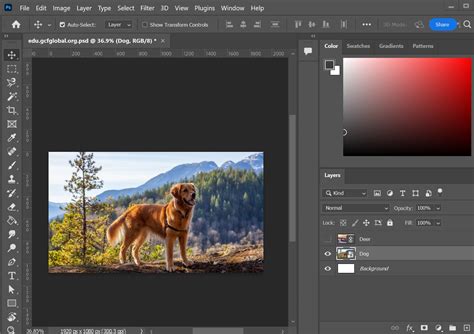
Raster files work seamlessly with a wide variety of popular editing programs, including industry-standard software like Adobe Photoshop, GIMP, and numerous other applications and design tools. This broad compatibility ensures that designers have access to the tools they need to work with raster graphics effectively.
Furthermore, because raster graphics are composed of individual pixels, designers have the granular control to adjust each tiny element of an image without impacting the rest of the composition. This makes photo editing and manipulation significantly easier. If a specific area of an image needs a color correction, a texture adjustment, or a minor alteration, the pixel-based nature of raster graphics allows for precise modifications. This ease of editing is a significant advantage when it comes to refining images to meet specific project requirements or brand guidelines.
Customization and Adaptability for Branding
Raster files offer a high degree of customization and adaptability, which is invaluable for ongoing branding and marketing efforts. Need to tweak a product label for a seasonal promotion, or adjust colors to align with a rebrand? Raster files can be easily edited, allowing designers to update packaging designs without the need to start from scratch. This flexibility saves time and resources, ensuring that branding remains consistent and current across all marketing materials.
This adaptability extends to various marketing collateral. Eye-catching visuals are often the deciding factor between a customer choosing one product over a competitor's. Raster files, with their ability to produce vibrant and detailed imagery, are incredibly versatile for creating marketing materials that capture attention and enhance brand appeal.
Suitability for Printed Packaging and Marketing
High-resolution raster images translate beautifully into print, making them an ideal choice for a wide range of printed packaging materials, including labels, boxes, pouches, and promotional inserts. The detailed nature of raster graphics ensures that intricate designs and photographic elements appear sharp and clear when printed.
For printed packaging, it's crucial to work with high-resolution images from the outset. This typically means ensuring images are at a print-ready resolution, often 300 DPI (dots per inch) or higher, and designing at the actual size the packaging will be printed. Avoiding the stretching of smaller images to fit larger spaces is key to maintaining image quality. When raster graphics are used correctly for print, they produce packaging that is not only visually appealing but also professional and impactful.

Addressing the Challenges of Raster Graphics
While raster graphics offer numerous advantages, it's important to acknowledge their inherent characteristics and potential drawbacks. The primary limitation of raster graphics is their resolution dependency. Unlike vector graphics, which are based on mathematical equations and can be scaled infinitely without loss of quality, raster images are composed of a fixed number of pixels. This means that enlarging a raster image beyond its original resolution will inevitably lead to a loss of sharpness, resulting in a blurry or pixelated appearance.
To mitigate this, the solution is to always work with high-resolution images from the very beginning, especially for projects intended for print or large-scale display. This ensures that there is sufficient pixel data to accommodate potential resizing without compromising image quality.
Another notable disadvantage of raster images is their tendency to have larger file sizes compared to vector graphics. High-resolution raster files, particularly those with a rich color depth and extensive detail, can become quite substantial due to the sheer density of pixels. This can impact storage space and, more critically, loading times for web content.
To manage file size, optimization is key. Files should be optimized for their intended platform. For web images, this means applying lossless compression or exporting in efficient formats like GIF, JPEG, or PNG to strike a balance between quality and speed. For example, PNG is excellent for designs requiring transparency, while high-resolution JPEGs are suitable for certain print jobs where smaller file sizes are a consideration.
Vector vs Raster Data - GIS Explained
Strategic Application: Raster for Detail, Vector for Scalability
Raster and vector graphics both serve distinct purposes, and understanding their respective strengths is crucial for effective design. Raster graphics are the go-to choice for photorealism, intricate textures, and complex color representations. They are perfect for product packaging, marketing materials based on photography, and any design that requires a high degree of visual richness and detail. They excel at capturing the nuanced details that make products look appealing and can reproduce the subtle color differences and shading that define a realistic image.
Conversely, vector graphics are best suited for simple designs that require infinite scalability, such as logos, icons, and illustrations. Because they are defined by mathematical equations rather than pixels, vector graphics can be resized indefinitely without any degradation in quality. This makes them ideal for elements that need to appear consistently crisp across a wide range of applications, from business cards to large billboards.
In many professional design workflows, a hybrid approach is employed to leverage the best of both worlds. Raster images are used for detailed elements like product shots or background textures, while vector graphics are utilized for logos, text, and graphic accents that require scalability and sharp definition. This combination allows designers to create visually rich and versatile assets that meet the demands of various platforms and applications.
The origins of raster graphics can be traced back to television technology, where images are constructed in a manner akin to how pictures are displayed on a television screen. A raster graphic is essentially a collection of tiny, uniformly sized pixels arranged in a two-dimensional grid of columns and rows. Each pixel holds information about its color, contributing to the overall image. The number of bits stored in each pixel determines its color depth, with more bits allowing for a wider spectrum of colors. The resolution, or the total number of pixels in an image, directly influences the level of detail that can be depicted. While detailed images often result in large file sizes, data compression techniques, both lossy (where some data is discarded) and lossless (where no data is lost), can be employed to manage file size. Popular raster file formats include JPEG and GIF (lossy), and BMP and TIFF (lossless), each offering different trade-offs in terms of quality, file size, and features.
As personal computer graphics capabilities advanced through the 1990s, raster graphics became widely adopted. Images captured by optical scanners and digital cameras are inherently raster graphics, as are most images found on the internet. Understanding the distinction between raster and vector graphics, and how their unique properties impact project deliverables, is fundamental to navigating the world of digital art and design with confidence.