In the ever-evolving landscape of the internet, the speed at which web pages load is a critical factor for user engagement and overall experience. Recognizing this, Google embarked on a mission to revolutionize web image formats, aiming to significantly reduce data transfer barriers and accelerate browsing. This endeavor culminated in the development of WebP, a modern raster graphics file format designed to replace established formats like JPEG, PNG, and GIF.
The Birth of WebP: A Response to Web Demands
The genesis of WebP can be traced back to September 2010, when Google announced its new image format. This announcement was the culmination of Google's acquisition of On2 Technologies, a company that had a concept for a new image format tailored specifically for the web. The core objective was to leverage advanced compression technologies to optimize file sizes and, consequently, improve loading times. This was a strategic move by Google, as it aimed to drastically cut down on the data required to display images, thereby making the web more accessible and faster for users worldwide.
The foundational technology behind WebP's lossy compression is rooted in the VP8 video compression standard. WebP builds upon this by employing predictive coding. This technique involves analyzing blocks of pixels and predicting their values based on adjacent blocks. Specifically, each block's values are predicted from the three blocks directly above it and one block to its left, with decoding proceeding in a raster-scan order (left to right, top to bottom). The four primary modes of block prediction are horizontal, vertical, DC (which assumes a single color for the block), and TrueMotion. Any data that is mispredicted or not predicted at all is then compressed using a discrete cosine transform or a Walsh-Hadamard transform within a 4x4 pixel sub-block. To ensure accuracy and avoid rounding errors, these transforms are executed using fixed-point arithmetic.
Expanding Capabilities: Animation, Transparency, and Metadata
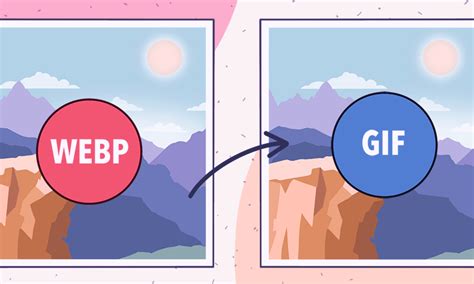
While initially focused on static image compression, the WebP format quickly demonstrated its versatility. A significant advancement came on October 3, 2011, with the introduction of an "Extended File Format." This enhancement allowed WebP to support a wider range of features beyond basic image encoding. Crucially, it enabled support for animation, making WebP a potential alternative to the long-standing GIF format for animated content. This extended format also incorporated support for International Color Consortium (ICC) profiles, Extensible Metadata Platform (XMP), Exchangeable Image File Format (Exif) metadata, and tiling capabilities for compositing very large images from up to 16,384 x 16,384 tiles.
The introduction of animation support was particularly noteworthy. Google proposed using WebP for animated images as a superior alternative to GIF, citing several advantages. These included the ability to use 24-bit color depth with transparency, the flexibility to combine frames with both lossy and lossless compression within the same animation, and the capability to seek to specific frames. Furthermore, animated WebP files could be significantly smaller than equivalent GIF versions, with reported reductions of 35-40%. Existing GIF files could also be converted to WebP, yielding substantial file size reductions.
The evolution continued on November 18, 2011, when the format was further enhanced to include support for a 24-bit alpha channel. This addition positioned WebP as a viable alternative to transparent PNG images, addressing a key limitation of the JPEG format and offering a more efficient option for graphics requiring transparency.
The Technical Underpinnings: Lossless and Lossy Compression
WebP employs two primary compression methodologies: lossless and lossy.
Lossless Compression
The lossless compression algorithm for WebP was developed by Google software engineer Jyrki Alakuijala and is a distinct algorithm unrelated to VP8. This advanced technique utilizes sophisticated methods such as dedicated entropy codes tailored for different color channels, exploitation of the two-dimensional locality of backward reference distances, and a color cache that remembers recently used colors. This approach ensures that no image data is lost during compression, making it ideal for graphics where exact color representation and sharp details are paramount, such as logos, illustrations, and text-heavy images.
Lossy Compression
The lossy compression aspect of WebP, based on VP8, is particularly effective for photographic images. It works by analyzing the image for opportunities to combine similar blocks of pixels. The algorithm slightly shifts the color values of these blocks to match those of their surrounding areas, thereby reducing the amount of data required to describe them. While this process can result in significantly smaller file sizes, it involves the discarding of some non-essential information. The degree of compression can be adjusted, but with increased compression, there's a greater potential for color shifts, which can lead to the image appearing blocky or blurry, especially in areas of subtle gradients or fine detail. This is a trade-off for achieving smaller file sizes, making it most effective for photos where minor imperfections are less noticeable.
It's important to note that the compression settings for WebP do not map directly to those of JPEG. A 50% quality setting in JPEG will not necessarily yield the same visual result as a 50% quality setting in WebP.
Adoption and Implementation: A Growing Ecosystem
Google actively promotes WebP, and its integration into its own products has been a significant driver of adoption. Google Chrome, along with all Chromium-based browsers (such as Microsoft Edge after January 2020, Opera, and Brave), offers native support for WebP. This widespread browser support is crucial for the format's success on the web.
Beyond Google's ecosystem, other major web browsers have also adopted WebP. Mozilla Firefox began supporting WebP with version 65, a move that followed some initial hesitation but ultimately recognized the format's benefits. Apple's inclusion of WebP support in early beta versions of macOS Sierra and iOS 10 in July 2016 was a significant step, although this support was later removed in the final release versions. However, Apple eventually reintroduced WebP support in Safari with the release of iOS 11 Big Sur in November 2020, covering both desktop and mobile versions, and making WebP a truly ubiquitous format across major platforms. As of March 2021, an estimated 93.3% of web browsers support the viewing of WebP images.
The reference implementation of WebP includes converter software, such as the command-line program cwebp for Linux, and a programming library (libwebp) for decoding, mirroring the approach used for WebM. The WebP container, based on the RIFF container format, is designed to accommodate features beyond a single image encoded as a VP8 key frame.
While native support in Content Management Systems (CMS) has been less common, extensions are widely available for popular CMS platforms that automate the conversion of images to WebP and serve them to compatible browsers. This ensures that even websites built on systems without native WebP support can leverage its benefits.
The adoption extends to various software applications. Many modern image editing tools now offer native support for WebP. For instance, Adobe Photoshop added native support in version 23.2, allowing users to save existing images as WebP files directly through the "save as" function. WordPress also integrated native WebP support starting with version 5.8, simplifying its use for web developers. Other software that has introduced WebP support includes GIMP, Krita, Affinity Photo, CorelDRAW Graphics Suite, and numerous viewers and converters, demonstrating a broad industry acceptance.
Ultimate Guide to Images & Formats on the Web
Technical Considerations and Limitations
Despite its advantages, WebP is not without its technical considerations and limitations. The complexity of its compression methods means that WebP files can take significantly longer to create compared to other web image formats.
A notable limitation of lossy WebP, similar to VP8, is its support for only the 8-bit YUV 4:2:0 color format. This can lead to color loss in images with very fine contrast elements, such as in pixel art or certain types of computer graphics, and may introduce ghosting artifacts in anaglyph images.
The maximum dimensions for WebP images are set at 16,383 x 16,383 pixels. While this is a substantial size, it's a defined limit within the format's specifications.
Vulnerabilities and Security Concerns
In September 2023, security researchers discovered two critical vulnerabilities related to WebP images. These vulnerabilities, identified by Apple Security Engineering and Architecture (SEAR) and Citizen Lab, had the potential to affect Google Chrome, Chromium-based browsers, and the libwebp project. One of the vulnerabilities, CVE-2023-4863, was actively exploited and carried a high CVSS risk rating of 8.8. This vulnerability could lead to an out-of-bounds write or overflow condition in applications utilizing the libwebp library when processing a maliciously crafted lossless WebP file. The exploitation of such a file could result in a denial of service (DoS) or, more severely, enable malicious remote code execution (RCE). The widespread use of libwebp packages across a vast array of applications, from web browsers to mobile apps, presented a significant challenge for patching and mitigation efforts due to the demanding testing requirements before release, highlighting the far-reaching implications of these security flaws.
The Future of WebP and Beyond
Google began developing a second version of WebP in June 2021, signaling its ongoing commitment to the format and its potential for further enhancements. The landscape of image formats is dynamic, with competitors and successors emerging. Formats like FLIF (Free Lossless Image Format), which was discontinued but claimed superior compression ratios to lossless WebP, and JPEG XL, which is optimized for responsive web environments and offers features to aid the transition from legacy JPEG, represent ongoing innovation in this space.
WebP represents a significant step forward in optimizing web images for speed and efficiency. Its development, driven by Google's ambition to enhance internet performance, has resulted in a versatile and widely adopted format that offers substantial benefits in terms of file size reduction and faster loading times. While challenges and vulnerabilities have emerged, as is common with any evolving technology, the ongoing development and broad integration of WebP underscore its importance in the modern web.
WebP images are a type of raster file, meaning they are composed of individual pixels. This contrasts with vector graphics, which are based on mathematical equations and paths. Understanding this fundamental difference is key to appreciating how WebP, like JPEG and PNG, renders images on a screen.
The journey of WebP from its inception in 2010 to its current widespread adoption is a testament to its effectiveness and Google's persistent efforts in promoting a faster, more efficient web. As the internet continues to evolve, so too will the technologies that power it, and WebP remains a significant player in this ongoing evolution.