Mermaids, those enchanting beings who inhabit the liminal space between human imagination and the vast, unexplored depths of the ocean, have captivated humanity for millennia. Their allure lies not only in their striking dual nature - the upper half human, the lower half piscine - but also in the profound mystery surrounding their very existence, particularly how they might procreate. Unlike their real-world aquatic counterparts, for whom scientific data provides a framework for understanding reproduction, mermaids exist solely within the realms of myth and legend. This absence of empirical evidence, however, does not preclude us from exploring intriguing possibilities. By delving into the whispers of folklore, drawing insights from the diverse reproductive strategies found in marine biology, and considering the unique physiological challenges posed by their mythical form, we can begin to construct a plausible, albeit speculative, picture of mermaid reproduction.
The very notion of reproductive processes in the animal kingdom, whether terrestrial or aquatic, invariably involves an egg or an egg-analogue at some fundamental stage. This principle holds true even when considering creatures as diverse as reptiles, mammals, and fish, each exhibiting a remarkable array of reproductive adaptations. While generalizations about these classes of animals often oversimplify the intricate reality, they can serve as a starting point for our exploration. For instance, the common perception that most fish and amphibians lay eggs, and that most mammals give birth to live young, is a useful, though not absolute, starting point. It is crucial to acknowledge the exceptions: some fish and reptiles, such as certain shark species and anacondas, exhibit ovoviviparity, where eggs hatch internally before live offspring are "born." Similarly, the platypus, a mammal, defies the norm by laying eggs. This biological variability suggests that attributing a singular reproductive mode to mermaids based on their perceived "fish-like" or "mammal-like" qualities is a flawed approach. Instead, the more pertinent question becomes: which real-world species, in terms of reproductive biology, do mermaids most closely resemble? The answer is not necessarily confined to a strict mammalian or piscine dichotomy; it could encompass a spectrum of adaptations.
The folklore surrounding mermaids, spanning numerous cultures, provides a rich tapestry of early human conceptualizations of these beings and their potential for continuation. These myths, though varied, offer valuable clues.
Whispers of Folklore: Glimpses from Mermaid Myths
Across diverse cultural narratives, mermaid myths offer glimpses into how different societies envisioned these aquatic beings and their potential breeding habits. These stories, passed down through generations, often reflect the prevailing understanding of nature and the human desire to understand the unknown.
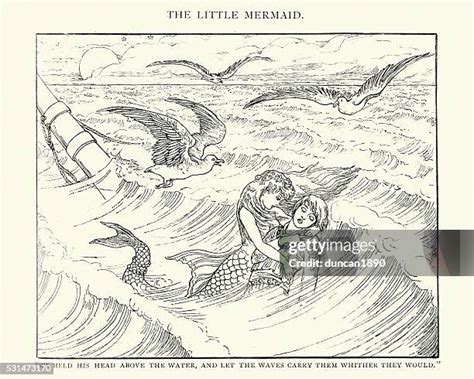
Many European tales depict mermaids as solitary creatures or as members of small, familial groups. In these narratives, it is often implicitly assumed that their offspring are also merfolk, perpetuating their unique existence. The iconic Hans Christian Andersen story "The Little Mermaid" exemplifies this, where the protagonist, despite her deep yearning for a human existence and a soul, remains a mermaid throughout her tale, highlighting the inherent nature of her kind. This perspective suggests a form of reproductive continuity within their own species, where the continuation of the mermaid form is paramount.
In contrast, some Southeast Asian legends introduce a more fluid concept of mermaid existence, suggesting an ability to transform into human form when on land. This duality opens the door to more complex reproductive possibilities, including the potential for interbreeding with humans. The offspring in such tales might be entirely human, fully merfolk, or a fascinating blend of both. This mythological thread delves into the inherent duality of their nature, proposing that their reproductive capabilities might bridge the gap between the terrestrial and the aquatic realms, blurring the lines between species.
Other myths, particularly those surrounding the alluring sirens, focus less on the continuation of lineage and more on the captivating, and often dangerous, seductive nature of mermaids. Their mesmerizing songs are the primary focus, serving to lure sailors to their doom. These tales often do not depict any form of reproduction, suggesting that the emphasis is on their immediate, enchanting influence rather than the long-term perpetuation of their species. This perspective casts mermaids as beings whose existence is perhaps more ephemeral, or whose reproductive strategies are so alien as to be beyond human comprehension or narrative focus.
Echoes of the Ocean: Insights from Marine Biology
While mermaids are undeniably creatures of myth, it is highly probable that their conception was influenced by observations of real-world marine life. Examining the reproductive patterns of marine mammals and other aquatic creatures that possess some mermaid-like characteristics can offer compelling insights into potential biological frameworks for mermaids.
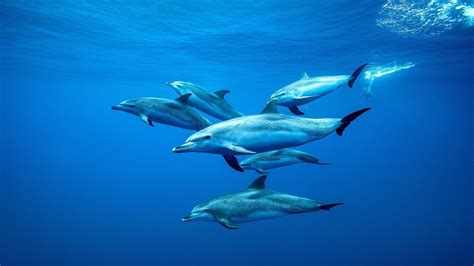
Whales and dolphins, for instance, are highly intelligent marine mammals that give birth to live young underwater and subsequently nurse them. Their complex social structures and sophisticated communication systems could have served as inspiration for the depiction of mermaids living in organized societies, raising families, and engaging in intricate social interactions. Their aquatic birthing process, finely tuned to their environment, provides a tangible model for how mermaids might manage childbirth beneath the waves.
Seals and sea lions, with their semi-aquatic lifestyle, also offer a relevant parallel. These animals spend significant time both in the water and on land, typically giving birth on beaches or rocky outcrops. The amphibious nature of these creatures might have contributed to the idea of mermaid societies that inhabit both underwater cities and utilize specific coastal locations for crucial life events like birthing. This dual existence could explain how mermaids might navigate the challenges of reproduction in their unique environment.
The gentle giants of the sea, dugongs and manatees, with their vaguely humanoid appearance and herbivorous diet, present another intriguing model. These animals typically give birth to a single calf and exhibit strong parental care, nurturing their young with dedication. Their peaceful demeanor and the singular focus on their offspring could have contributed to the image of mermaids as nurturing mothers, deeply connected to their progeny.
Biological Challenges: Bridging the Gap Between Myth and Reality
Even when we allow for the premise of mermaids as a biologically plausible species, several significant hurdles would need to be overcome for successful reproduction. The traditional mermaid form, with its human torso seamlessly merging into a fishtail, presents unique physiological challenges, particularly concerning internal gestation and childbirth.
Giving birth underwater, while seemingly natural for aquatic beings, could pose considerable challenges for creatures possessing lungs, akin to humans. Would mermaids possess specialized adaptations to facilitate underwater delivery, perhaps involving controlled breath-holding or unique physiological mechanisms? Alternatively, would they require a temporary return to a terrestrial or semi-aquatic environment for birthing, seeking out hidden coves, underwater caves, or secluded shorelines?
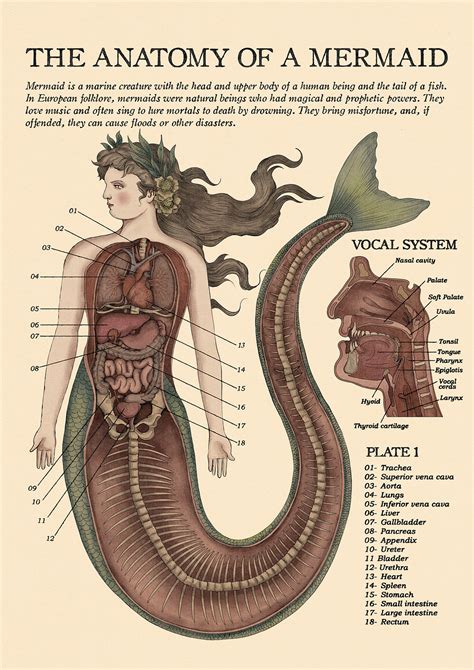
The anatomical structure of a mermaid, with a human upper body and a fish tail, raises questions about the feasibility of internal gestation. The abdominal region would need to accommodate a developing fetus, suggesting significant adaptations in their internal anatomy. This might involve an internal structure akin to a mammalian womb, or perhaps a more externalized form of development, such as a pouch, to support the growing young. The very mechanics of a fishtail, while providing propulsion, might not be conducive to the complex process of childbirth without considerable evolutionary modifications.
Furthermore, the scarcity of mermaid sightings in folklore could imply a naturally small population size. This raises critical questions about their reproductive frequency, the inherent risks of inbreeding within isolated communities, and the overall challenges of ensuring the long-term survival of their species. A species with a low birth rate and a limited gene pool would be particularly vulnerable to environmental changes and other threats.
Modern Interpretations: Expanding the Mythological Canvas
Contemporary storytellers and artists continue to reimagine the myth of the mermaid, pushing the boundaries of traditional narratives and exploring novel possibilities for their reproduction. These modern interpretations often seek to address the biological challenges and introduce fresh perspectives.
The concept of asexual reproduction offers a compelling alternative. Stories might explore parthenogenesis, a form of reproduction where growth and development of embryos occur without fertilization. This would allow mermaid populations to thrive even without the necessity of a partner, potentially explaining how they could maintain a presence in the world with seemingly infrequent encounters.
Exploring Sex and Reproduction | Compilation
Another avenue explored by writers is the idea of symbiotic reproductive relationships. This could involve mermaids partnering with other aquatic creatures, such as dolphins or even specific species of fish, for the purpose of reproduction. Such partnerships could lead to fascinating hybrid offspring, or perhaps rely on the parental care capabilities of the allied species. This introduces a layer of interspecies cooperation and dependency into the mermaid narrative.
In more science-fiction-oriented settings, mermaids might be depicted as having developed advanced technology to overcome their biological limitations. This could include sophisticated underwater birthing chambers, advanced medical interventions, or even the ability to temporarily transform into a fully human form, specifically to facilitate the process of childbirth. These technological solutions offer a way to reconcile their mythical nature with the practicalities of reproduction.
The question of how mermaids reproduce remains an enduring puzzle, an open-ended enigma that fuels the imagination. It is a question intrinsically linked to the very essence of these mythical beings - their capacity to exist at the fascinating intersection of human creativity and the profound mysteries of the natural world. Mermaids, by their very nature, allow us to explore possibilities that transcend the limitations of our known biological reality, inviting us to ponder the infinite potential of life, even in its most fantastical forms.