For years, the realm of professional video editing software, particularly demanding applications like DaVinci Resolve, has been almost exclusively the domain of x86 architecture. These traditional processors from Intel and AMD have long been the undisputed workhorses, powering everything from everyday office PCs to high-end creative workstations. However, a significant shift is underway, heralded by the growing presence of Arm architecture in the Windows ecosystem. The recent availability of DaVinci Resolve for Windows on Arm devices marks a pivotal moment, suggesting that the performance gap between these architectures is rapidly narrowing.
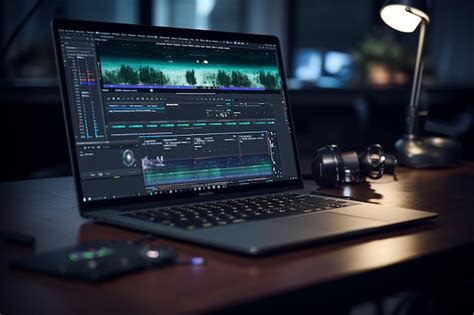
Historically, Windows on Arm has been synonymous with exceptional battery life and enhanced portability, rather than raw computational power for intensive tasks such as video editing. While x86 and x64 applications could previously run on Arm through emulation, this process was often characterized by suboptimal performance and efficiency. The arrival of DaVinci Resolve, a powerful and widely-used video editing suite, on Windows for Arm signifies a real paradigm shift. This development strongly indicates that modern Arm chips, exemplified by Qualcomm's Snapdragon X Elite processors featuring Oryon cores, are now genuinely capable of handling complex, professional-grade workloads.
The Evolving Landscape of Windows on Arm
The journey of Windows on Arm has been one of gradual evolution. While the promise of extended battery life and thin-and-light form factors has always been a strong suit, the software ecosystem needed time to mature. Early forays into bringing high-performance applications to Arm faced challenges, with some software partnerships announced at tech events not fully materializing as initially hoped. For instance, the buzz surrounding certain game titles or the entire Adobe Creative Cloud suite running natively on Arm years ago eventually saw some applications arrive, while others remained elusive.
Despite these past hurdles, the current signs are overwhelmingly promising. The growing availability of Windows 11 Arm64 ISO files, coupled with a burgeoning ecosystem of native Arm64 frameworks and development tools, provides a robust foundation for software optimization. Crucial infrastructure elements such as Visual Studio, .NET, Python, Node.js, LLVM, WiX, and Unity are all either available or actively being developed for the Arm architecture. This comprehensive toolkit is indispensable for developers aiming to build and fine-tune applications specifically for Arm, ensuring they can leverage its unique strengths.
DaVinci Resolve: A Key Indicator of Arm's Potential
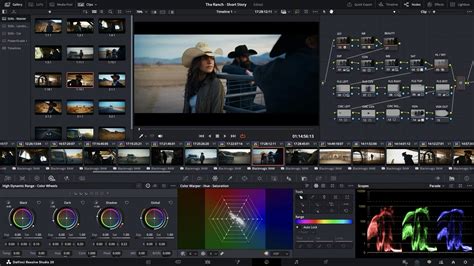
Blackmagic Design's commitment to bringing its feature-rich video editing suite, DaVinci Resolve, to Windows on Arm is a significant endorsement. The application has now exited its beta phase and is available for download in both x86 and Windows on Arm versions. For months, Qualcomm has consistently highlighted DaVinci Resolve as a flagship application that validates the capabilities of its Snapdragon X Elite processor and the broader Windows on Arm ecosystem.
DaVinci Resolve's popularity is further amplified by its accessible pricing model. The full-featured application is available for free, with an optional paid Studio license offering even more advanced features for professionals. Crucially, both the free and Studio versions share the same core functionality, making it a viable option for a wide range of users. While Resolve can handle media files of virtually any resolution, it does impose certain limitations on project mastering and output to Ultra HD or lower resolutions, and typically supports only a single GPU on Windows. This makes the prospect of running it effectively on a portable Arm-based device particularly exciting.
Understanding the Performance Dynamics: x86 vs. Arm
To truly grasp the implications of DaVinci Resolve's move to Windows on Arm, it's helpful to understand the underlying performance characteristics. For years, the industry has operated under the assumption that "close to metal" applications, those that interact directly with hardware, perform best on Arm architectures. This is often attributed to the design principles that have guided Arm's development, particularly in highly constrained environments like mobile devices, where efficiency is paramount.
The end of Moore's Law, a phenomenon discussed in research papers by MIT professors Leiserson and Thompson et al., presents a fundamental challenge to the traditional model of technological advancement. As computer hardware, including CPUs and GPUs, approaches quantum limits, the ability to dramatically increase speed or shrink size diminishes. This trend threatens the decades of productivity and economic growth that have been fueled by relentless hardware innovation.
In this post-Moore's Law era, the focus is increasingly shifting towards software improvements as a primary driver of productivity growth. However, this doesn't mean abandoning modern software runtimes and the developer productivity they offer. The challenge lies in finding a balance - leveraging efficient and lightweight software and hardware infrastructure without reverting to the less productive, compiled-native-code-only approaches of the pre-Java 1990s.
Benchmarking and Architectural Comparisons
Evaluating software stack performance across different architectures is crucial for understanding these shifts. Benchmarks provide valuable insights into how various software runtimes and hardware configurations perform under specific workloads. For instance, research comparing Arm (Graviton2) and x86_64 (Intel) EC2 instances on AWS highlights performance differences across common server-side software stacks, including Docker, Node.js, and WebAssembly.
A key consideration in performance analysis is single-threaded performance, as many web application frameworks operate on a "one thread per request" model. From a user's perspective, web service responsiveness is often dictated by how quickly a single CPU core can execute a task. Benchmarks, such as those from the Computer Languages Benchmarks Game, offer crowd-sourced performance data for a variety of programming languages.
To ensure software safety, security, and cross-platform portability, benchmark tests are often run within containers and virtual machines. Docker, a popular container runtime, is already optimized for performance. However, comparing its performance against other environments, such as the Second State WebAssembly VM (SSVM), reveals significant differences.
The Rise of WebAssembly and Efficiency Gains
When benchmark tests were run within the SSVM, using programs written in Rust and compiled to WebAssembly bytecode, particularly notable performance improvements were observed. SSVM employs Ahead-of-Time (AOT) compilation techniques, which contribute to its efficiency. The results demonstrated that switching from OS-level containers like Docker to application-level VMs like SSVM can lead to substantial performance gains.
One striking observation was the dramatic reduction in "cold start" times. SSVM demonstrated cold starts in milliseconds, a stark contrast to Docker's requirement of 700 milliseconds or more. This is particularly critical for microservices that are invoked only occasionally, where rapid startup is essential for user experience. Furthermore, programs running within SSVM often executed faster than native code, a testament to the effectiveness of its compilation and execution model.
This approach aligns with the Software Performance Engineering solutions proposed by researchers, emphasizing not just the removal of software bloat but also the better utilization of hardware devices by software. The Arm architecture, refined through years of design in highly constrained environments, presents a unique opportunity to run generic software programs with exceptional efficiency.
Comparing x86 and Arm Instances: A Practical Look
To provide a more direct comparison, benchmark tests were repeated on AWS t3.small (x86) and t4g.small (Arm-based Graviton2) instances. The t3.small instance utilizes Intel Xeon Platinum 8000 series processors (x86_64) with a sustained Turbo CPU clock speed of up to 3.1 GHz, offering 2 vCPUs and 2 GB of RAM. In contrast, the t4g.small instance is powered by the AWS Graviton2 CPU (Arm64 or aarch64) running at 2.5 GHz, also with 2 vCPUs but crucially, on 2 physical cores and 2 GB of RAM. The Graviton2 processor's design offers additional performance advantages for multi-threaded applications.
The benchmark results from Intel and Graviton2 instances revealed a mixed picture for Node.js and SSVM performance. While the baseline Linux operating system is generally optimized for ARM CPUs, allowing native binaries to fully leverage Graviton2's capabilities, framework and runtime software higher up the stack, such as Node.js and SSVM, are still in the process of being specifically optimized for Arm. This is largely due to Arm's relatively recent emergence in the server and cloud computing spaces compared to the established x86 architecture.
x86 vs ARM Assembly: Key Differences Explained | Assembly Basics
Cost-Effectiveness and the Future Outlook
Beyond raw speed, cost-effectiveness is a critical factor, especially in cloud computing scenarios. When benchmark results were analyzed in terms of cost-effectiveness, considering both CPU time and hourly rates for different EC2 instance types, the Graviton2 instances consistently offered a better cost-performance ratio across the board. This suggests that for many workloads, Arm-based instances can provide a more economical solution without sacrificing performance.
The transition from x86 to Arm for high-performance computing on Windows is not merely an incremental update; it represents a fundamental shift in the computing landscape. The arrival of major, demanding software like DaVinci Resolve is a clear signal that we are entering a new chapter. For users who prioritize portability and extended battery life but also require the power to perform serious work, the future looks exceptionally bright. The prospect of a lightweight laptop capable of editing 4K video, running complex simulations, or handling other resource-intensive tasks without being constantly tethered to a power outlet is incredibly compelling.
As the Windows on Arm ecosystem continues to mature and software developers further optimize their applications for this architecture, we can anticipate even greater performance gains and broader adoption. The foundational infrastructure is in place, and with key applications like DaVinci Resolve leading the charge, the era of powerful, portable, and efficient computing on Arm-based Windows devices is truly dawning.