The realm of digital art and design is fundamentally built upon the pursuit of "perfect images." In this domain, every pixel is a crucial element, and every minute detail holds significant weight. This very principle forms the crux of an ongoing debate: is there a revolutionary approach to transcend the painstaking process of rigorous editing and achieve instant image reinvention? Within digital art, the concept of "killing pixels" signifies transformation. It encompasses the deliberate act of deleting, masking, retouching, or otherwise altering image data to manifest a new creative vision.
For decades, Adobe Photoshop has stood as the undisputed titan of the design world. It has empowered a vast array of professionals - designers, creatives, photographers, and digital artists alike - to enhance and manipulate images with unparalleled pixel-level precision. Photoshop affords its users complete command over each individual pixel, facilitating the meticulous editing of even the most minute details. This granular control enables artists to construct intricate digital art pieces, sophisticated compositions, and complex graphics through the sophisticated use of layers, masks, and filters. Furthermore, Photoshop's robust support for a wide spectrum of file formats, including PNG, JPG, TIFF, and PSD, ensures its compatibility across numerous platforms and workflows.
However, despite its formidable strengths, the inherent disadvantages of Photoshop cannot be ignored. The application is notoriously complex, presenting a steep learning curve that can demand a significant investment of time to master, particularly for novices. Its primary focus remains on two-dimensional imagery; consequently, the creation or editing of complex three-dimensional models or video content is considerably more limited when compared to specialized software designed for those purposes. In historical contexts, the meticulous adjustment of pixels, one by one, constituted a substantial expenditure of both time and effort in image editing.
The Rise of Artificial Intelligence in Image Creation
In stark contrast to these traditional methods, a new generation of tools has emerged, capable of creating, modifying, and reimagining visuals in ways previously confined to the realm of imagination. Many AI-powered image generation tools are now revolutionizing this process. The benefits offered by AI image generation are profound and far-reaching. It facilitates rapid ideation, allowing creators to transition from initial concept to tangible visualization in a matter of minutes, rather than the hours or days previously required. By extending the boundaries of human creativity, AI can generate novel styles, introduce unexpected variations, and unlock an endless cascade of possibilities that would be exceedingly difficult, if not impossible, to achieve through manual manipulation alone.
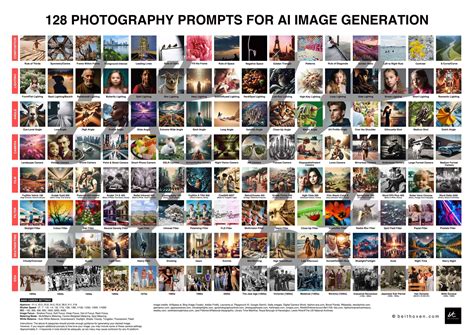
Despite its impressive capabilities, AI image generation is not without its limitations. While it can swiftly produce visually striking results, it often falls short of the granular accuracy and precise control offered by traditional editing software such as Photoshop. Moreover, broader ethical and legal concerns surround the ownership, copyright, and responsible usage of AI-generated imagery. This is largely due to the fact that AI models are trained on extensive datasets that may inadvertently include copyrighted or sensitive material, raising questions about the provenance and rights associated with the generated outputs.
Bridging the Gap: AI and Photoshop in Tandem
The current consensus suggests that AI image generation is not poised to supersede traditional tools like Photoshop, but rather to complement them. The true potential lies in synergizing the distinct strengths of both approaches. AI can be leveraged for accelerated ideation and to serve as a powerful source of inspiration, while Photoshop remains the indispensable tool for refinement, precision editing, and achieving the highest levels of accuracy.
Photoshop: The Enduring Industry Standard
For many years, Adobe Photoshop has been the preeminent choice for traditional photo editing, underpinning a vast spectrum of applications, from marketing visuals to complex creative endeavors. However, the advent of modern AI tools is significantly disrupting this established order. Features powered by generative AI, such as generative fill, generative expand, and text-to-image prompts, now enable users to edit photos with mere clicks, bypassing the steep learning curve traditionally associated with Photoshop.
The question then arises: which option is superior for photo editing - AI or Photoshop? Let's delve into a comparative analysis.
Photoshop has maintained its dominance in photo editing for decades, and for justifiable reasons. As a cornerstone of the Adobe Creative Cloud, it provides designers, photographers, and businesses with an arsenal of potent editing features and grants them absolute control over every aspect of their photos and images.
Key Advantages of Photoshop:
- Pixel-Perfect Precision: Enables professional-grade, highly detailed image editing.
- Extensive Feature Set: Includes robust tools for background removal, graphic creation, and advanced editing techniques.
- Ecosystem Integration: Seamlessly compatible with other Adobe applications and established professional workflows.
Key Disadvantages of Photoshop:
- Steep Learning Curve: Not inherently beginner-friendly, requiring significant time investment to master.
- Time-Consuming for Simple Tasks: Can be inefficient for straightforward edits like background removal or object cleanup.
- Cost: Primarily a paid subscription service, with free access limited to trial periods.
AI Photo Editing: Simplicity Meets Intelligent Results
Contemporary AI photo editors, such as those exemplified by platforms like StarryAI, are democratizing image editing, making it accessible to a much broader audience. Users no longer need to possess intricate knowledge of layers, masks, or complex keyboard shortcuts. The workflow is streamlined and intuitive.
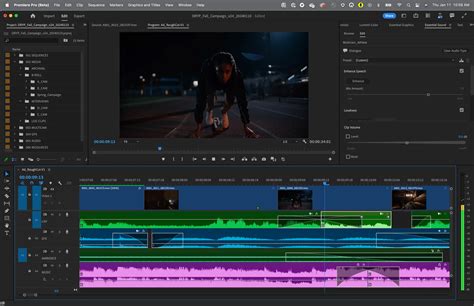
When should you choose each tool?
- Opt for Photoshop if: You require advanced functionalities, demand absolute control over your edits, or are engaged in professional print projects where meticulous detail is paramount.
- Opt for AI Photo Editing if: Your priority is speed, you need to quickly remove backgrounds, or you are generating new images for social media content and other creative projects where rapid iteration is beneficial.
For instance, if the task is to replace a background element, AI can accomplish this almost instantaneously. Conversely, if the objective is to fine-tune shadows and highlights for a high-resolution print project, Photoshop remains the unparalleled tool.
How AI is transforming the creative industries
The Trajectory of Image Editing: A Converging Future
The divergence between the capabilities of Photoshop and AI photo editing is rapidly diminishing. With the integration of generative AI tools, the creation of stunning photos and images can now be achieved in mere seconds. AI platforms like StarryAI are already incorporating features that were once exclusive to Adobe Photoshop, but within a significantly more user-friendly workflow. It is reasonable to anticipate the continuous emergence of novel tools, more sophisticated prompting mechanisms, and enhanced automation, all of which will further solidify AI's position as a transformative force in the field of photo editing.
Embracing AI for Image Editing Today
Platforms like StarryAI offer a streamlined process for leveraging AI in image editing:
- Initiate the Edit Tool: Open the dedicated editing interface.
- Upload Your Image: Select the photo you wish to modify.
- Input a Prompt: Provide a clear textual description of your desired edit (e.g., "remove background" or "replace with a beach scene").
- Generate and Transform: Click the generate button and observe as the AI reimagines your photo according to your instructions.
Whether your goal is to eliminate distracting elements, substitute a new background, or simply to explore the frontiers of creative experimentation, AI tools can deliver professional-level results with remarkable ease and speed.
The ultimate takeaway is that while Photoshop continues to reign as the most powerful traditional photo editor for professionals, the landscape of digital imagery is irrevocably changing. The synergy between AI-driven rapid creation and Photoshop's meticulous control offers a compelling vision for the future of digital art and design, where innovation and precision coalesce to redefine what is possible with pixels.
tags: #artificial #intelligence #vs #photoshop