Big K.R.I.T., born Justin Scott, stands as a testament to artistic integrity and evolution within the hip-hop landscape. While deeply entrenched in Southern rap heritage, he has consistently aimed to chisel his own path, distinct from the polished grill wearers and double-cup sippers that often define the genre. Too smart to be ignorant and too worldly to be preachy, K.R.I.T. embraces the challenge of pleasing fickle fans and promoting the culture of his oft-ignored state, Mississippi. His journey, marked by prolific output and a commitment to artistic growth, showcases a rapper and producer who not only honors his roots but also fearlessly ventures into new sonic territories.
The Genesis of a Southern Sound

Big K.R.I.T.'s musical journey began in Meridian, Mississippi, a state often overlooked in broader cultural narratives. His early influences were deeply rooted in the aggressive instrumentation and lyrical content of Southern rap pioneers, particularly Three 6 Mafia. "I was a hardcore Three 6 Mafia fan too," K.R.I.T. recalls. "Just a lot of the instrumentation and a lot of the content was extremely aggressive, so it was like more of a shock value thing of just how aggressive and how violent you could be on a song." However, as he matured, K.R.I.T. recognized the limitations of such shock value. "I was probably like 13 or 14, man, and you grow out of that pretty fast because you grow to the point where you start playing your records for a lot of people that actually know you, older people, and they know damn well that you ain’t living that kind of lifestyle." This realization marked a pivotal moment, pushing him towards a more authentic and introspective form of expression that reflected his lived experiences rather than sensationalism.
His musical training began in elementary school, where he played the cello and developed a strong understanding of music theory. This classical foundation, combined with his immersion in hip-hop, provided him with a unique toolkit for production. "At the time, I was young and I didn't have no job. It wasn't like I could really afford to pay for beats. At the same time, there was this program that came out for PlayStation, MTV Music Generator, where you could make your own beats," he explained, highlighting his early resourcefulness. This self-taught approach to production laid the groundwork for his signature sound, characterized by soulful samples, intricate beats, and a distinct Southern flavor.
Navigating the Landscape of Mississippi and Southern Rap
Mississippi, often perceived as a place with a rich history but not necessarily a vacation destination, presents a unique backdrop for an artist like Big K.R.I.T. "It goes to what people know as the far as the history is concerned and having some kind of idea that Mississippi is how it used to be, that’s one thing," he noted. Despite the state's lack of major metropolitan centers, K.R.I.T. recognizes the importance of its fan base. "I’m a strong believer in making my rounds in what people call the Chitlin’ circuit to kind of keep that foundation going, because a lot of those fans are going to be fans forever because they support the music 100% regardless of whether you have a hit record or not." This commitment to grassroots engagement underscores his dedication to building and sustaining a loyal following.
The term "country rap" itself carries a complex history within the Black American experience. While "country" can be used pejoratively to denote a lack of sophistication, Black Southerners have reclaimed it to signify an existence rooted in the land, resilience, and the ability to navigate a world that often marginalizes them. Big K.R.I.T. taps into this nuanced understanding, infusing his music with a genuine warmth and authenticity that resonates beyond geographical boundaries. "There’s something about, I don’t know, the weather, the feel, and the warmth. The music and the melody I think too, because a lot of those songs still have an underlying melody like a sing-song kind of vibe and it just feels carefree and genuine," he mused. "I guess it goes to just the whole idea of Southern hospitality. If you could figure out a way to put Southern hospitality on a record. I think that’s why people enjoy those songs so much."

He also addresses the historical marginalization of Southern artists within hip-hop. In his track "Mt. Olympus," K.R.I.T. positions himself as a "Mississippi Prometheus," using the "dirt" of blues and Southern sounds to craft his unique artistry. He critiques the East and West Coast-centric narratives that have often overshadowed Southern contributions, asserting the South's undeniable talent and cultural significance. "The refrain 'now they wanna hear a country nigga rap' recognizes the objectification of southerners and rejects the coonery that southerners are often accused of and called to participate in," observed one analysis of the track. K.R.I.T.'s music becomes a powerful vehicle for reclaiming narratives and asserting pride in his Southern identity.
Artistic Evolution and the "Cadillactica" Concept
Over his career, Big K.R.I.T. has navigated the pressures of the music industry, particularly the pursuit of a "hit single." After producing and rapping across 200 songs in four years, a sub-plot developed around his talent: was he creatively burnt out? Would he make concessions to chase elusive mainstream success? His sophomore album, Cadillactica, released in 2014, silenced these fears. This concept record, built around the idea of a planet created by 808 drums, showcased a reinvigorated K.R.I.T. He expanded his production universe by outsourcing collaborators like DJ Dahi, Raphael Saadiq, and Jim Jonsin, while simultaneously cultivating his introspective lyrics and further dabbling in storytelling, singing, and contemporary flows.
"I would say it’s probably because there’s so much mystery when you’re dealing with space and time. It’s mysterious," K.R.I.T. explained about the album's extraterrestrial theme. "When it comes to my music, I feel like it gives me the opportunity to kind of create on a larger scale. You don’t know what to expect and that’s really what a lot of my projects were about, being able to use obscure instruments, to be able to tie in heaven, the moon and the stars into my content because it’s so broad." The concept allowed him creative freedom, liberating him from traditional thematic constraints. "There weren’t any boundaries. I didn’t have to rap about the street I grew up on in a traditional way and I could make it as creative as I could possibly want to."
The album's conceptual depth allowed for a rich exploration of K.R.I.T.'s evolving artistry. Tracks like "Soul Food" evoked the spirit of Stax Records and Goodie Mob, demonstrating his ability to blend classic Southern soul with his modern hip-hop sensibilities. Cadillactica proved that K.R.I.T. had not yet peaked, reaching past his soul-sampling inspirations "straight toward the soul itself."
Beyond the Music: Social Consciousness and Personal Growth
Big K.R.I.T.'s artistic output is deeply intertwined with his commitment to social consciousness and personal growth. He has been vocal about his experiences with racism and stereotyping, advocating for a proactive approach to combating ignorance. "I would just say life - as far as racism is concerned and being stereotyped and being in a position where someone would call me out on my name or judge me based on my skin tone," he shared. "I’ve dealt with that, so what you don’t want to do is fight that kind of ignorance with ignorance. That’s why I decided to flip that word because anybody can be a 'Naive Individual Glorying Greed and Encouraging Racism.'" This redefinition of his own acronym, K.R.I.T. (King Remembered In Time), speaks to his philosophy of empowerment and resilience.

Following the release of Cadillactica, K.R.I.T. expressed a desire to return home and contribute to his community in Meridian. "Oh yeah, 100% man. The first thing that we’re trying to do is a hardcore Stop The Violence campaign. It’s probably going to really gear up once summer time hits and really just encourage people as far as being aware of the whole gun violence and police brutality and all that." He believes in the power of influential voices to inspire positive change, stating, "Get a lot of rappers that the youth are inspired by to come down and talk, because sometimes when you remove the instrumentals, you remove the 808, the beat and you hear your favorite rapper tell you that you’ve got to do better and stay out of the streets, it kind of speaks volumes."
Education is another cornerstone of his message. "Education is extremely important to me. Just to encourage people that there’s more to life than just being an athlete and a rapper. There’s so many occupations, so many cool things you can do even with music that’s bigger than just being the artist." He emphasizes the vast array of opportunities within the music industry, beyond just performing.
As he approaches a new stage in his life and career, K.R.I.T. is focused on deliberate creation and personal growth. "I’m approaching a different level in my life, a different age. That’s the goal. We’ll still drop content, but really take more time out to create it," he stated. "I’ve dropped so many songs at this point, so now I want to travel, I want to see different things. I want to put it in music because I’ve got to grow not only as a person, but I’ve got to grow in my music too." This mature perspective reflects a desire to evolve artistically and personally, ensuring his music continues to resonate with depth and authenticity.
Collaborations and the Pursuit of Authenticity
Big K.R.I.T.'s career is punctuated by meaningful collaborations that highlight his versatility and his respect for fellow artists. His work with artists like 2 Chainz, Rick Ross, and T.I. demonstrates his ability to navigate different styles while maintaining his core artistic identity. He views these collaborations through the lens of artistic expression: "I always look at it from the perspective that it’s art at the end of the day. Most people paint on the canvas of hip hop what they actually lived, what they grew up in and their surroundings and you draw from those things as inspiration." He values artists who present a balanced perspective, acknowledging both the triumphs and struggles of life. "A lot of these artists that I have worked with are the kind of artists where they don’t just tell one side of the spectrum. They tell all avenues, they tell you about the good times, the bad times, when you’re up and when you’re down."
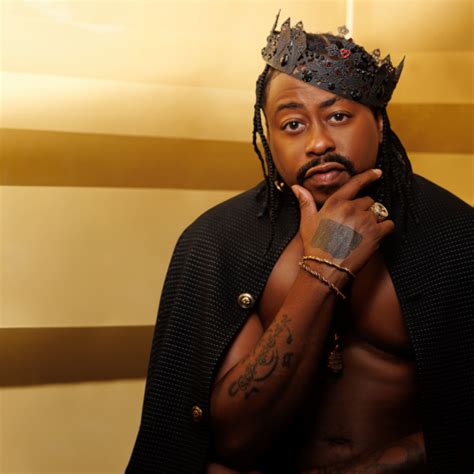
The creation of "Players Ballad" from his Return of 4Eva mixtape exemplifies this collaborative spirit. K.R.I.T. produced and wrote the hook, but ultimately felt his own vocal performance wouldn't serve the song. He reached out to Raheem Devaughn, who delivered a stellar vocal performance that significantly contributed to the song's success and helped blossom K.R.I.T.'s female fan base.
His early collaborations with Big Sant, a fellow artist from Meridian, Mississippi, are also significant. Big Sant, initially perceived by some as K.R.I.T.'s hype man, has a deep musical lineage as the son of blues singer Patrice Moncell. Their shared upbringing in Meridian fostered a strong bond, and K.R.I.T. recognized Sant's talent early on. "I’ve known K.R.I.T. since he was 13," Big Sant stated. "When you come from a small city like Meridian, it’s not hard for brothers and sisters to get together. He already knew I rapped. I found out he was rapping and then we started rapping with each other." This long-standing relationship has resulted in impactful features and a shared artistic vision, with the duo even forming a group called The Alumni, aiming to build their value and create something "epic" together.
The Unwavering Commitment to His Craft
Big K.R.I.T.'s career trajectory is a testament to his dedication to artistic integrity and his refusal to compromise his vision for fleeting trends. From his early days experimenting with production on a PlayStation to crafting conceptual albums like Cadillactica and the deeply personal double LP 4eva Is a Mighty Long Time, he has consistently pushed his own boundaries. His decision to launch his independent label, Multi Alumni, after parting ways with Def Jam, underscores his commitment to creative control and his belief in his artistic direction.
"When I started this album, I didn’t know it was going to be a double," he revealed about 4eva Is a Mighty Long Time. "I started working on it while I was with Def Jam but was paying for it myself. I wanted to invest everything I had in it. That’s how much I believed." This independent spirit, coupled with his willingness to explore diverse musical styles-from gospel-infused tracks like "Keep the Devil Off" to jazz-influenced pieces like "Drinking Sessions"-demonstrates a matured artist who prioritizes genuine expression over industry expectations.
The duality presented in 4eva Is a Mighty Long Time, with one disc as Big K.R.I.T. the rapper and the other as Justin Scott the introspective artist, further illustrates his commitment to authenticity. "Big K.R.I.T. is who I am on stage; Justin Scott is who I am at home," he explained. This honest self-appraisal allows him to connect with his audience on a profound level, offering music that serves as therapy not only for himself but for listeners who resonate with his experiences.
Big K.R.I.T.'s influence extends beyond his own music. He is seen as a successor to Southern rap legends like UGK, Scarface, and Outkast, carrying the torch of Southern hip-hop with a unique blend of lyrical prowess, innovative production, and unwavering authenticity. His journey is a compelling narrative of artistic growth, community engagement, and the enduring power of staying true to oneself in the ever-evolving landscape of music.