The digital art landscape is constantly evolving, and for many artists, the recent shifts in monetization strategies by software developers have prompted a search for viable alternatives to established tools like Clip Studio Paint (CSP). This exploration delves into the features, strengths, and weaknesses of various software options, aiming to guide artists in their decision-making process. Many artists are seeking alternatives due to dissatisfaction with pricing models, echoing sentiments previously directed at Adobe's practices. This has led to a renewed interest in programs like Krita, while some seasoned users are considering returning to older favorites like SAI.
The Genesis of Clip Studio Paint and the Artist's Dilemma
Clip Studio Paint, originally launched in Japan as Comic Studio in 2001 by the graphic software company Celsys, has garnered significant popularity among artists and comic illustrators worldwide. Its evolution into a globally recognized software is for good reason, offering a robust suite of tools tailored for illustration, manga creation, and animation. However, recent monetization decisions have led to user frustration, with many recalling their initial investment, such as a $150 purchase when it was known as Manga Studio, now feeling devalued by subscription models or perceived shifts in value. Celsys's official responses, often emphasizing that replies are for individual customer use, have done little to assuage community concerns. While moderators are fluent in multiple languages and are official CELSYS staff members, they are not software experts and cannot directly answer technical questions. This has amplified the need for artists to seek out and evaluate alternative solutions.
Understanding the Core of Digital Art Software: Features and Functionality
At its heart, digital art software aims to provide artists with the tools to translate their creative visions into digital form. This encompasses a wide range of functionalities, from precise line work and rich textural painting to sophisticated animation and 3D modeling. The ideal software should cater to the diverse needs of different types of artists, whether they are professional artists, designers, illustrators, or hobbyists just starting out.
Clip Studio Paint, for instance, is renowned for its specialized tools that mimic traditional art supplies, such as the Real Pencil and G-Pen, offering a tactile feel to digital creation. It excels in painting and animating, built upon its key features and tools that support these workflows. Its user interface is designed with artists in mind, featuring a predominantly white aesthetic that is simple, customizable, and emphasizes easy access to tools and panels. This straightforward layout is often praised for its intuitiveness, allowing for a more focused and enjoyable drawing process. Saved documents and folders are managed efficiently, and user profiles can be customized, among other personalization options.
Photoshop, on the other hand, is a more complex and feature-rich software. While its interface can be customized, its sheer volume of tools and options can be overwhelming for novices. It is a versatile powerhouse, capable of vector-based illustrations, photo manipulation, compositing, digital painting, animation, and graphic design. Although it handles vector editing, it's not its primary focus, and creating vector-based illustrations by default is not its forte, though it provides adequate functionality for basic vector editing.
Complete KRITA tutorial AND Digital Painting Basics
Brushwork and Textures: The Heart of Digital Painting
The quality and versatility of a digital art program's brush engine are paramount for many artists. Clip Studio Paint boasts numerous brush kinds and extensive customization options, categorizing its brushes into six main groups: Brushes, Dry Media, Painting Brushes, Airbrushes, Effects, and Blenders. This categorization aids in organizing and accessing different brush types efficiently. The software is lauded for its distinctive and lifelike brush strokes, making it a popular choice among digital painters who seek to emulate traditional media.
Krita, another prominent contender, also offers powerful, customizable brush engines that rival those of paid software. Both Krita and Clip Studio Paint provide artists with the capability to tailor brushes to fit their specific working needs and artistic style. However, a key differentiator emerges when considering vector capabilities. Clip Studio Paint offers more robust tools for working with vector layers. Users can easily draw a line with a pen tool, simplify it, and then manipulate control points to alter line width, even achieving line thickness variation. Krita, while capable of vector work, generally offers fewer dedicated vector layer tools compared to CSP, which can be a significant factor for artists who rely heavily on precise, scalable vector art.
Animation Capabilities: Bringing Your Art to Life
For artists venturing into animation, both Clip Studio Paint and Krita offer compelling features. Clip Studio Paint provides a dedicated animation workspace complete with essential tools like onion skinning and timeline-based animation, facilitating the creation of complex animations. The software comes in two main versions: PRO and EX. CSP PRO is suitable for creating GIFs and basic animations, while CSP EX includes more advanced features for longer, more intricate animations. When the animation is complete, users can select various export formats.
Krita also allows for animation creation, making it a viable option for budding animators. The user interface of Krita, while functional, is often found to be less intuitive than Clip Studio Paint by many users. The learning curve can be steeper for those accustomed to more streamlined interfaces.
User Interface and Workflow: Finding Your Creative Flow
The user interface (UI) plays a crucial role in an artist's workflow and overall experience. Clip Studio Paint's UI is characterized by its clean, white interface, tailored for artists with an emphasis on simplicity and customization. Its straightforward layout ensures that tools and panels are easily accessible, contributing to a smooth and efficient workflow. Tutorials for Clip Studio Paint are generally straightforward, and the software aids in organizing saved documents and folders.
Krita's UI, while offering a functional workspace with brushes, colors, and layers readily available, can be perplexing for new users. The abundance of tools on the left-side toolbar can be overwhelming, and features like the "Reference Image Tool," while useful, may require looking up tutorials to fully understand and utilize. Despite this initial complexity, Krita does offer a helpful pop-up menu for quick access to different tools, color selection, and brush size adjustments.
A significant advantage for Clip Studio Paint users is its extensive Materials Library. This library is a treasure trove for artists, offering a vast collection of brushes, 3D models, poses, patterns, and workspaces. Accessing these materials is typically a few clicks away, streamlining the creative process by providing readily available assets.
Pricing Models: Investment in Your Art
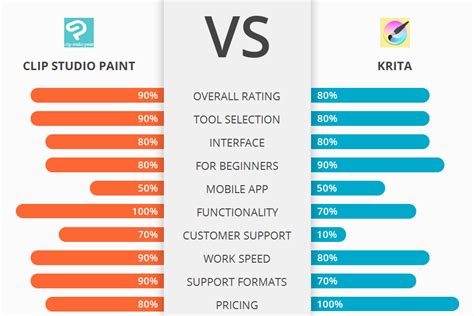
The financial aspect of software is a critical consideration for artists, especially in light of recent industry trends. Krita stands out as a completely free and open-source option, making it an accessible choice for artists of all budget levels. This open-source nature means it is continuously updated and improved by a community of volunteers.
Clip Studio Paint, in contrast, operates on a tiered pricing structure. It offers both subscription-based plans and one-time purchase licenses for desktop devices. The one-time purchase licenses can be a significant upfront investment. For example, Clip Studio Paint Pro Ver. 2.0 might be around $49.99 for a one-time purchase, while the more feature-rich EX version, offering advanced animation and 3D modeling capabilities, could be around $219. While these one-time costs can be substantial, Celsys often holds sales throughout the year, presenting opportunities to acquire the software at a reduced price. Photoshop, on the other hand, is predominantly available through a subscription model, typically with monthly or annual fees, which can accumulate over time.
Exploring the Wider Ecosystem: Other Notable Alternatives
Beyond Krita, a variety of other software options cater to different artistic needs and preferences. These range from free, open-source programs to professional-grade suites.
- GIMP (GNU Image Manipulation Program): A free and open-source raster graphics editor, GIMP has been around since 1996 and is continually updated by volunteers. It's a powerful image editor and painting tool, often considered a strong free alternative to Photoshop.
- Inkscape: For those focusing on vector graphics, Inkscape is a free and open-source vector drawing application available for Windows, macOS, and Linux. It is designed to support illustrators, designers, web designers, and anyone creating vector graphics.
- Krita: As previously discussed, Krita is a powerful free and open-source painting program, particularly favored by digital painters and animators due to its robust brush engine and animation tools.
- Adobe Photoshop: The industry standard for image editing and manipulation, Photoshop offers an unparalleled range of features for graphic design, photo retouching, and digital painting. Its subscription model, however, can be a barrier for some.
- Adobe Illustrator CC: A leading vector graphics editor, Illustrator is the go-to software for creating logos, icons, illustrations, and other scalable vector artwork.
- Affinity Photo: This professional-grade photo editor offers a one-time purchase model, making it a compelling alternative to Photoshop for users seeking advanced editing capabilities without a subscription.
- CorelDRAW Graphics Suite: A comprehensive graphic design studio, CorelDRAW offers a robust set of tools for illustration, layout, photo editing, and typography, appealing to professional designers.
- Corel PaintShop Pro: An all-in-one photo editor with advanced management, editing, and creative tools, designed for photo and design enthusiasts.
- Procreate: Available exclusively on Apple iPads, Procreate is a highly popular and intuitive digital illustration app known for its smooth performance and extensive brush library.
- Canva: While more focused on graphic design for marketing and social media, Canva is a user-friendly online tool that allows for quick creation of visual content using templates and a library of elements.
- Adobe Creative Cloud Express (formerly Adobe Spark): A task-based web and mobile product for creating and sharing rich multimedia content, from social media posts to marketing materials.
- Blender: Primarily a 3D creation suite, Blender is free and open-source, offering powerful tools for modeling, sculpting, animation, and rendering. While not a direct 2D art alternative, its 3D capabilities can be integrated into 2D workflows for backgrounds or character posing.
The Importance of Trial and Community Support
Before committing to any software, especially paid options, it is highly recommended to take advantage of free trials. This hands-on experience allows artists to assess the software's suitability for their specific needs and workflow. Furthermore, investigating the availability of tutorials, documentation, and an active community forum is crucial. A supportive community can provide invaluable assistance when encountering issues or seeking to learn advanced techniques. Clip Studio Paint, despite recent controversies, maintains a robust community and extensive learning resources, a testament to its long-standing presence in the market. Similarly, Krita benefits from a passionate open-source community.
The security of downloaded software is also a paramount concern. Files like Clip Studio Paint have undergone rigorous security scans, confirming their safety with no signs of viruses, malware, or spyware, verified by security partners and technologies like VirusTotal.
Ultimately, the decision of which software to use depends on individual artistic goals, budget, and preferred workflow. Whether one seeks the specialized tools of Clip Studio Paint, the free and open-source power of Krita, or the industry-standard versatility of Photoshop, the digital art world offers a rich tapestry of options to explore. The key is to research, experiment, and find the tools that best empower your creative journey.
tags: #clip #studio #alternative