The printing industry has long relied on the CMYK (Cyan, Magenta, Yellow, Black) color model as its workhorse. For decades, the industry standard was to design in CMYK for linework and convert digital photographs and scans from their native RGB (Red, Green, Blue) channels to CMYK as early as possible, typically at the PDF creation stage before delivery to the printing house. This end-to-end CMYK workflow has been well-suited for traditional lithographic and flexographic printing, where international standards for ink colors ensure consistency across different presses and locations. However, the advent of digital printing technologies has introduced new possibilities and complexities, leading to a re-evaluation of traditional color management practices.
The Rise of Extended Color Gamut (ECG)
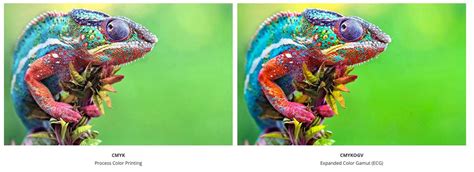
The concept of "extended color gamut" (ECG) has gained significant traction, referring to techniques that utilize more than the standard four process colors. This can involve using five or six process colors, even in litho or flexo, to achieve a broader range of reproducible colors than CMYK alone. In the realm of digital printing, manufacturers are increasingly offering machines with wider gamuts. Konica Minolta, for example, has been selling very pure CMYK toners with very wide gamuts, termed 'high-chroma,' for years through multiple generations of its digital presses. Other digital printer manufacturers are promoting similar capabilities.
For a considerable period, it appeared that digital press makers and users were primarily focused on matching the output of litho inks standardized to ISO 12647/2. This approach made sense for brands managing campaigns with diverse print assets that might be produced across various printing processes, print shops, and even countries. The goal was to ensure a consistent brand appearance regardless of the production environment.
Shifting Towards RGB Workflows in Digital Printing
More recently, there's a compelling argument for retaining color information in its original, widest possible gamut - that from the digital camera or scanner - for as long as possible. The processing into separations should ideally occur at the latest possible stage, within the digital front-end/RIP (Raster Image Processor), which can then fully leverage the available gamut.
John Davies, workflow product group manager at Fujifilm, supports this, stating, "All of our systems that print in an extended gamut require images to be supplied in RGB, and our systems manage the extended gamut printing either in the RIP or DFE. Our Jet Press and Revoria POD systems do use slightly different approaches."
Paul Sherfield, a color expert and founder of The Missing Horse consultancy, notes that "RGB working is nothing new. For photobooks and prints, you can run as RGB and print with the maximum gamut. I’ve done quite a lot of work with customers on that and they can get staggering results." He emphasizes that this approach allows for the reproduction of colors that would typically require additional spot colors in traditional offset printing.
The Advantages of RGB Workflows for Digital Presses
The flexibility of digital presses allows them to use their wider CMYK gamuts to simulate colors that would necessitate special fifth, sixth, or even seventh colors in lithography. This means that a multitude of "spot" colors can be incorporated into a single job without the limitations imposed by the number of color units on a press, and without the need for wash-ups between jobs. While many digital presses now feature fifth and sixth color units for embellishments like metallics or spot gloss, these are generally for a strictly limited choice of special colors that can act as gamut extenders.
Navigating PDF Standards and Color Management
The dominance of Adobe Creative Cloud in the design-to-print workflow has, in some respects, hindered the understanding and adoption of RGB working options. Adobe's software has historically defaulted to assuming 'professional print' always means CMYK, often with the outdated Fogra39 profile for 'Euro prepress' or CMYK plus spot colors. While it's possible to install more modern profiles like Fogra 59, which can take advantage of the wider CMYK gamuts of many current digital printers, this process is not always intuitive.
A significant challenge arises with PDF/X-4 standards, particularly when outputting to a CMYK color space. Maintaining RGB-based images and layouts in PDF generation while preserving spot colors as separate channels, which can then be handled independently by a RIP, is a more advanced approach.
Serendipity Software in Australia has addressed this with its new RGB + Spots Colour Support option for its Blackmagic color management system. This RIP-server solution, originally developed for litho proofing on inkjets, can also manage production on wide-format inkjet devices. Jason March at Serendipity Software explains, "The PDF spot colours are almost always assigned a set of device values based on an assumed CMYK or RGB colour space. What Serendipity brings to the table is that for a known and defined spot colour that’s already in our database, we keep that spot colour separate from the rest of the RGB (or CMYK) process colour data, then merge it with the final print output after the rest of the PDF has been colour managed."
While Serendipity claims this capability is unique, Paul Sherfield suggests that Adobe's widely used APPE (Adobe PDF Print Engine) digital front-end can achieve similar results. He notes that "The Blackmagic stuff can all be done with Fiery RIPs. Fiery can be set to say Fogra 39 or 51 for CMYK, with the spots set to maximum gamut."
How to Get Brighter Prints for Your Print on Demand Products - RGB vs CMYK
The "Chicken and Egg" of RGB Workflows
Malcolm Mackenzie, director of color and automation consultancy Colour Engine, described the situation as a "chicken and egg" scenario where customers may not be aware that RGB workflows are a viable option. "A lot of people are now retouching in RGB, but they still have an antiquated system where they output the document to PDF and convert everything to CMYK." This highlights a gap in awareness and education regarding the potential of modern digital printing workflows.
CMYK+ Features: A Niche or the Future?
Recent research by Keypoint Intelligence indicates a "significant lack of enthusiasm for CMYK+ features in production color digital printers." CMYK+ refers to the ability of a printer to go beyond the four process colors, mimicking the capabilities of offset presses that often feature a fifth or sixth unit for special effects like Pantone colors, metallic inks, neons, or fluorescent colors. In wide-format digital printing, devices frequently support eight or twelve colors.
Systems supporting more than four colors have existed since the 1990s from manufacturers like HP Indigo, Kodak NexPress, and Xeikon. In the last decade, CMYK+ capabilities have expanded to a broader range of digital print devices, most commonly offering a fifth color for effects such as clear coatings, white, and special colors, applied in-line with CMYK.
Despite predictions of double-digit growth for the digital print enhancement market through 2020, it still accounts for less than 2% of the total enhancement market, with traditional methods like offset lithography dominating. Factors like declining costs per page for digital enhancements and their perceived high value were expected to drive growth, but some digital printers have struggled to market and sell these features.
Market Demand and Strategy: The Key to CMYK+ Success
A Keypoint Intelligence study from late 2020 revealed that a primary challenge for print service providers (PSPs) in adopting CMYK+ was a "lack of market demand," cited by nearly half of respondents. This factor far outweighed others, with 58% identifying it as the biggest deterrent. Despite this, PSPs producing print enhancements reported being able to upcharge approximately 23% for these jobs.
The success of CMYK+ often hinges on a PSP's overall business strategy. Companies successfully producing and selling high volumes of CMYK+ output typically adopt a "value-driven" strategy. This involves offering a wide range of products and capabilities, starting with substrate selection and progressing to advanced features like print enhancements. Such strategies focus on expanding product offerings to attract new customers and introduce technology that adds value to existing jobs.
In contrast, a "cost-driven" strategy prioritizes tightly controlled running costs, worker productivity, workflow automation, and high uptime. While it may also start with substrate selection, its scope is often more limited, focusing on economic long runs and improved profit margins on repetitive jobs. If a PSP is not succeeding with CMYK+ techniques, it may indicate a larger strategic issue, questioning whether their focus is truly value-driven or cost-driven.
Industry Innovations and Practical Applications
The printing industry continues to see innovation aimed at improving color reproduction and workflow efficiency. For instance, the company CMYK, an Australian-owned printing firm, has developed a strong relationship with Ricoh, deploying RICOH Pro C9210 digital color printers and a RICOH Pro 8220S high-volume black-and-white printer. New features, such as the ability to print a white base layer followed by full-color overlays, enable more vibrant and opaque results on challenging media. Kegen from CMYK anticipates efficiency gains of 10 to 20 percent with their new Ricoh machines, citing their ability to handle jobs with different paper stocks seamlessly.
The Lycée polyvalent du Dauphiné in France has adopted a PIA3 Plus UV printer with Epson i3200 heads, including white, varnish, and fluo capabilities. This UV CMYK printer allows them to print directly on diverse substrates like leather, vegetable-tanned leather, and technical textiles, replacing previous transfer film methods. The flexibility of this machine enables them to work on materials ranging from leather to metal, opening up significant educational possibilities for their students, including printing QR codes directly onto leather.
The Future of Color in Print
Color remains a critical differentiator in the printing industry. The development and adoption of Extended Color Gamut (ECG) profiles, such as the seven-color standard developed by the Print Properties Committee, aim to further expand color reproduction beyond RGB and CMYK. This standardization is crucial for ensuring consistency and enabling designers to create increasingly vibrant and impactful designs. While the implementation of ECG may involve complexity and cost, its potential to help brands distinguish their products is a significant driver for its adoption. As the industry evolves, the focus is shifting towards workflows that preserve color fidelity from capture to final output, leveraging the capabilities of advanced digital printing technologies to deliver unprecedented visual results. The ongoing quest for better color management and expanded color capabilities underscores the dynamic and innovative nature of the modern printing industry.