DaVinci Resolve is a sophisticated, proprietary application that has become a cornerstone in the realm of non-linear video editing, color correction, color grading, visual effects, and audio post-production. Developed by the Australian company Blackmagic Design, it is available for macOS, Windows, iPadOS, and Linux. The software's genesis traces back to the American company da Vinci Systems, from which it inherited its name and initial release as "da Vinci Resolve." This powerful suite is meticulously structured around task-specific workspaces, known as "pages," each ingeniously designed to streamline a distinct phase of the post-production workflow.
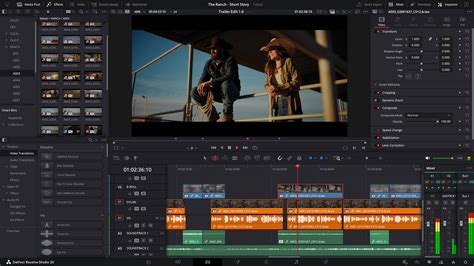
The architecture of DaVinci Resolve is a testament to its comprehensive nature. The Cut and Edit pages are dedicated to video editing, offering intuitive tools for assembly and refinement. For those venturing into the realm of visual effects and motion graphics, the Fusion page provides an extensive toolkit. Colorists find their haven in the Color page, a space optimized for intricate color grading. The Fairlight page is a fully-fledged digital audio workstation, catering to all aspects of audio editing and mixing. Complementing these creative hubs are the Media and Deliver pages, which handle the crucial tasks of media management and final export, respectively. This integrated approach stands in stark contrast to many other software suites where these distinct functions are often parceled out across separate applications, necessitating a complex and disjointed workflow.
Blackmagic Design, historically recognized as a prominent hardware manufacturer, has strategically positioned DaVinci Resolve as a central component within its broader ecosystem of professional peripherals. This integration extends to proprietary hardware designed to enhance user interaction and efficiency, including dedicated editing keyboards, advanced color grading panels, and sophisticated audio consoles. This synergy between software and hardware offers a deeply integrated and tactile experience for creative professionals.
The Genesis and Evolution of DaVinci Resolve
The journey of DaVinci Resolve is marked by significant milestones, each contributing to its current stature. Version 7, released in September 2010, was a pivotal moment. Restyled simply as "DaVinci Resolve," it represented the first release by Blackmagic Design under a new pricing model and was also the inaugural version available for macOS. This marked a strategic shift for Blackmagic Design, making its professional-grade tools more accessible.
The expansion to Linux was a gradual process. The first version of Resolve for standard Linux editions, version 12.5.5, became available in 2017. Crucially, this release also coincided with the introduction of a free version of Resolve for Linux, democratizing access to its powerful features on this platform.

A significant leap forward was announced at NAB 2019 in April, with Blackmagic Design officially unveiling DaVinci Resolve version 16. This iteration introduced a dedicated 'Cut' page, conceived as a streamlined and faster alternative to the traditional 'Edit' page, designed to accelerate the editing process for many common tasks. The Studio edition also saw the introduction of machine learning functionality, aimed at automating repetitive tasks.
The evolution continued with an announcement on October 20, 2022, that DaVinci Resolve would be available on iPadOS for the first time. This move was heralded as a significant step towards true professional editing on a mobile platform, with Blackmagic Design stating that DaVinci Resolve for iPad would leverage the expansive 12.9-inch screen of the iPad Pro and focus on "introducing new innovations in speed." While the iPad application offers editing and color functionalities, it maintains compatibility with DaVinci Resolve 18 project files and supports real-time collaboration via Blackmagic Cloud, extending its powerful capabilities to a portable format.
More recently, DaVinci Resolve 20 was announced on April 4, 2025, promising over 100 new features and advanced AI tools. These include AI IntelliScript, AI Animated Subtitles, AI Multicam SmartSwitch, and AI Audio Assistant, alongside enhanced keyframe editing, voice-over palettes, multi-layer compositing tools, new optical flow vector tools, and significant updates to Magic Mask and depth map functionalities.
Distinguishing Between Free and Studio Editions
A key aspect of DaVinci Resolve's accessibility is its tiered offering. Unlike the free edition, the commercial version, DaVinci Resolve Studio, unlocks advanced capabilities. The Studio version supports resolutions beyond ultra-high-definition (4K), extending up to an astonishing 32K, and handles frame rates exceeding 60 FPS, reaching up to 120 FPS. This distinction ensures that while the free version is incredibly capable for most users, professionals requiring the highest fidelity and performance have a clear upgrade path.
The Fusion Integration: A Paradigm Shift
Since version 15, released in 2018, DaVinci Resolve has integrated a powerful version of the Fusion application. Fusion, also developed by Blackmagic Design, is a specialized tool for compositing and visual effects. Its core functionality is built upon a modular, node-based interface. In this paradigm, each node represents a specific operation or effect, and these nodes are interconnected to build complex visual sequences. This node-based approach is particularly beneficial for visualizing the intricate relationships and data flow between different layers and effects within a Fusion Composition, offering a highly flexible and powerful method for creating sophisticated visual effects.
Master the FUSION Page! (even if you're an Absolute Noob) - DaVinci Resolve
The "Da Vinci" Legacy: More Than Just a Name
The name "DaVinci" itself evokes a sense of artistry, innovation, and a dedication to mastery, qualities that resonate deeply with the software's purpose. Leonardo da Vinci, the Renaissance polymath, was renowned for his groundbreaking work across diverse fields, including art, science, and engineering. This spirit of multifaceted excellence is mirrored in DaVinci Resolve's ambition to be a singular, all-encompassing post-production solution. The software's ability to seamlessly integrate editing, color grading, VFX, and audio post-production under one roof embodies the holistic approach that Leonardo da Vinci himself championed. The name suggests a commitment to precision, creativity, and a deep understanding of form and function, principles that are fundamental to high-level filmmaking and visual storytelling.
Hardware Integration: Enhancing the Workflow
Blackmagic Design's strategy extends beyond software. Recognizing the importance of tactile control and efficiency, the company has developed a range of hardware control surfaces that integrate seamlessly with DaVinci Resolve. These include full control panels that offer users a physical interface with dedicated buttons, knobs, and trackballs for precise manipulation of editing, color grading, and audio parameters. In April 2019, alongside the announcement of version 16, Blackmagic Design also introduced the Editor Keyboard for Resolve. This specialized keyboard is designed to accelerate editing workflows by providing quick access to essential functions and shortcuts, further enhancing the software's efficiency and usability.
DaVinci Resolve 17: A Landmark Release
The release of DaVinci Resolve 17 was heralded as "The biggest update in the history of DaVinci" by CEO Grant Petty. This significant jump from version 16.3 to 17 signaled a major overhaul and the introduction of a vast array of new features and improvements. According to Blackmagic Design, version 17 boasted over 100 new features and 200 enhancements, solidifying its position as a leading post-production platform.
The Color page received substantial upgrades, including new HDR grading tools, redesigned primary controls, and an AI-based Magic Mask. The Fairlight page was enhanced with improved mouse and keyboard edit selection tools, alongside the introduction of Fairlight Audio Core and FlexBus, a next-generation audio engine and busing architecture capable of supporting an impressive 2,000 tracks. For editors, version 17 introduced a metadata slate view with bin dividers, zoomed waveforms for detailed audio trimming, smart reframing capabilities, a unified inspector, and numerous other time-saving tools. Furthermore, compositions created in Fusion could now be directly utilized as effects, titles, or transitions on the Edit and Cut pages, further streamlining the VFX workflow.
Innovations within DaVinci Resolve 17
The HDR grading palette in Resolve 17 provided users with new color wheels featuring custom roll-offs for specific tonal ranges, offering enhanced creative control for nuanced adjustments. These wheels included dedicated exposure and saturation controls for each zone. The mesh-based warping tool allowed for simultaneous adjustment of two color parameters, such as hue and saturation or chroma and luma, by manipulating control points with smooth falloffs, enabling clean and natural-looking image alterations.
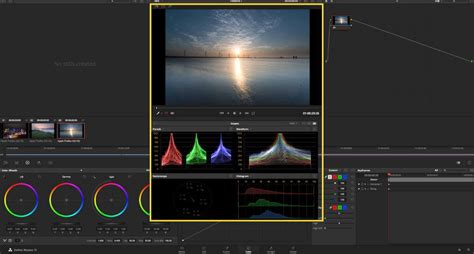
The Magic Mask tool, powered by the DaVinci Neural Engine, revolutionized targeted corrections by automatically creating masks for entire people or specific features like faces and arms with a simple mouse stroke. This significantly simplified the process of isolating elements for precise adjustments.
DaVinci Resolve 17 also introduced DaVinci Wide Gamut and DaVinci Intermediate as timeline color space and gamma settings, establishing a universal internal working color space that surpasses the capabilities of cameras and industry standards like BT.2020, ARRI Wide Gamut, and ACES AP1.
Professional scopes were also enhanced, allowing users to open multiple versions of the same scope, set customizable waveform scales, create 3x3 layouts, and display scopes on a secondary monitor.
On the audio front, Fairlight Audio Core offered a low-latency, next-generation audio engine that intelligently managed workloads across all CPU cores and threads, as well as optional Fairlight Audio Accelerator cards. DaVinci Resolve 17 also introduced offline loudness analysis, allowing users to assess clip loudness before importing, and a new surround sound analyzer for visualizing spatial audio. The integration of Fairlight Audio Core and FlexBus enabled the management of massive projects with thousands of tracks on a single system, eliminating the need for multiple synchronized computers.
For editors, the ability to see larger audio waveforms during trimming, with full-height waveforms appearing upon clicking the audio trim button, facilitated precise audio editing. The Smart Reframe feature allowed users to edit in 16:9 HD or Ultra HD and quickly generate square or vertical versions for social media platforms. New Resolve FX plugins, including 3D, HSL, and luma keyers, enabled direct keying and compositing on the Edit and Cut pages. Timeline management was improved with tools for disabling unused timelines without deletion, and scene cut analysis could be performed on both the Cut and Edit pages, offering an efficient way to re-edit or color grade long clips without original source files.
The decision to make Resolve free, a strategy that began earlier in its development, provided Blackmagic Design with an extraordinary marketing boost. This enabled enthusiasts to download and experiment with professional-grade color grading tools, significantly expanding the user base and driving interest in the field. This strategy impacted the entire industry, prompting other leading Non-Linear Editors (NLEs) to enhance their grading capabilities. Blackmagic Design's commitment to integrating editing and audio post-production, particularly with the acquisition of Fairlight, transformed Resolve into a powerful all-in-one post-production platform, catering not only to colorists but also to sound designers, SFX artists, and editors.
Despite its impressive capabilities, early versions of Resolve faced challenges with speed and stability, largely due to its reliance on GPU processing power. However, Blackmagic Design has consistently addressed these issues through frequent updates, demonstrating a commitment to refining the software's performance and reliability.
The introduction of the DaVinci Resolve Speed Editor, a compact and affordable control surface, further exemplified Blackmagic Design's focus on workflow optimization. This device is designed for rapid editing, allowing users to perform advanced edits, insert clips, and create transitions with remarkable speed and fluidity. The real-time overwrite functionality and automatic transition application made possible by the Speed Editor represent a significant advancement in editing efficiency.
DaVinci Resolve 17 also significantly advanced collaborative editing, with clearer separation of users and roles, and integrated tools for direct communication on the timeline, essential for remote workflows. The Edit page itself received a considerable overhaul, including an FX and transitions window for real-time previews, an improved information side panel for easier access to metadata and effects, and the ability to apply Fusion effect parameters directly on the Edit page.
Proxy media generation was made more flexible, with independent creation in various formats (H.264, H.265, ProRes, or DNxHR) down to 1/16th the original file size, improving system performance and project portability. The "Render in Place" function allowed for rendering portions of the timeline that could then be manipulated without requiring re-rendering, a distinct advantage over cache renders.
The Fairlight page in Resolve 17 saw substantial improvements, including an interface optimized for mouse and keyboard editing, a new transient analysis tool for precise beat and word detection, and the aforementioned FlexBus architecture. This architecture allows for extensive busing and track routing, enabling massive sessions with up to 2,000 tracks in real-time, often facilitated by the Fairlight Audio accelerator card, and supporting simultaneous work by multiple sound editors.
The continuous development, marked by releases like DaVinci Resolve 18 and the upcoming DaVinci Resolve 19 with its AI-driven features, underscores Blackmagic Design's commitment to pushing the boundaries of post-production technology. The software's journey from a specialized color grading tool to a comprehensive, all-in-one post-production suite is a testament to its adaptability, innovation, and its enduring appeal to a wide spectrum of creative professionals.