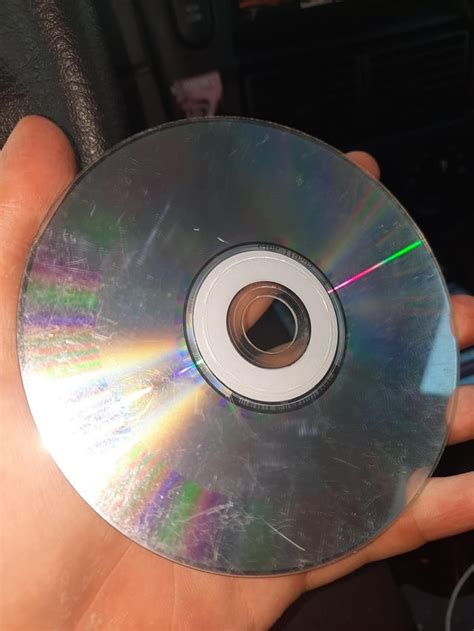
The allure of breathing new life into scratched CDs, DVDs, and Blu-rays is a powerful one, especially in an era where digital media is ubiquitous, yet physical collections still hold significant value. For many, the idea of reclaiming a beloved album or a cherished movie from the clutches of surface damage sparks a desire for practical, often DIY, solutions. While crafty individuals have long repurposed everyday items into decorative objects, the realm of disc repair offers a different kind of restoration, one focused on functionality rather than aesthetics alone. Understanding the extent of damage is the crucial first step. A simple visual inspection, holding the disc up to a light source, can reveal if the scratch is so deep that light can pass through it, potentially indicating irreparable harm.
The Science and Art of Polishing Discs
At the heart of disc repair lies the principle of polishing. Optical media players, unlike their analog predecessors like record players which use a needle or tape players with magnetic heads, rely on a laser to read data. This laser beam is incredibly sensitive to imperfections on the disc's surface. To restore a disc to a playable, ideally "like-new" condition, the protective plastic layer must be polished down to the depth of the deepest scratch. This process effectively removes the damaged layer, bringing the unblemished surface beneath to the same level as the scratch.
The composition of discs varies significantly depending on the format - CDs, DVDs, and Blu-rays all have different material compositions. This variation can influence the effectiveness of different repair methods. However, the general principle remains consistent: polishing aims to create a uniformly smooth surface for the laser to track accurately. Importantly, this polishing process typically removes only a few microns of the disc's depth. This minimal material removal means that, in many cases, a disc can be safely repaired multiple times over its lifespan, provided the damage is not catastrophic.
DIY Approaches: From Automotive Compounds to Toothpaste
For those seeking to mend minor scuffs and scratches at home, several readily available substances have gained popularity. One of the most frequently recommended is automotive-grade rubbing compound, with brands like 3M being a trusted standby for many. These compounds are engineered with a specific grit designed to gently abrade and smooth the disc surface. The key is in the compound's formulation: it starts with a heavier grit that breaks down into progressively finer particles during the polishing action. This gradual refinement ultimately aims to leave a mirror-polished surface, effectively leveling out deeper scratches.
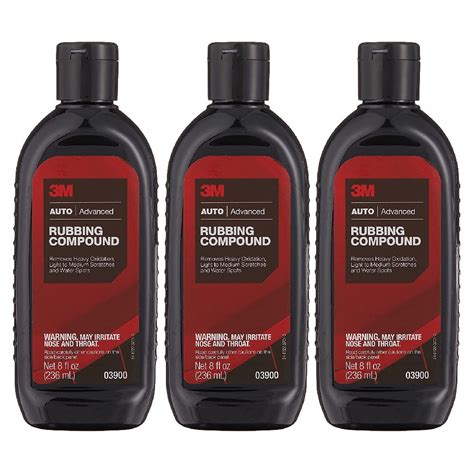
A common piece of advice when using such compounds is to polish in a straight line, moving from the radius of the center to the outside edge of the disc. This method is intended to avoid creating circular scratches, which, in older player models, could indeed disrupt the laser's tracking system. However, it's worth noting that modern tracking systems are considerably more sophisticated than those of the 1990s. While the radius-to-edge method is generally sound, many users find that a gentle circular polishing motion can be equally effective. Ultimately, this aspect often comes down to personal preference and empirical experience, as both approaches aim to achieve a similar outcome.
Another widely adopted DIY solution involves ordinary toothpaste. Toothpaste, much like rubbing compound, contains a gritty substance. This grit is designed to gently polish the enamel of teeth, and the same principle can be applied to discs. The recommendation is to opt for a basic, white, enamel toothpaste - avoiding gels, swirls, and artificial flavors. Brands like Tom's of Maine Natural Toothpaste, with its simple enamel polish, are often cited. A small amount of paste is squeezed onto the disc, and then gently rubbed onto the surface, typically in a straight sweeping motion from the center outwards. For discs with more pronounced scratches, repeating this process multiple times might be necessary. After application and rubbing, the toothpaste is allowed to dry to the touch. Finally, the disc is rinsed under running water, with the dried toothpaste gently rubbed off.
Following either the rubbing compound or toothpaste method, a final step that some enthusiasts swear by is applying a coat of car wax. Natural waxes, such as 100% carnauba wax derived from the surface of palm leaves, are often preferred for this purpose. This extra layer of protection can further enhance the smoothness of the disc and offer a degree of defense against future minor abrasions. After these steps, the disc should ideally be playable. If the initial attempt isn't fully successful, repeating the entire process is often suggested.
Professional Solutions: The Disc Repair Machine
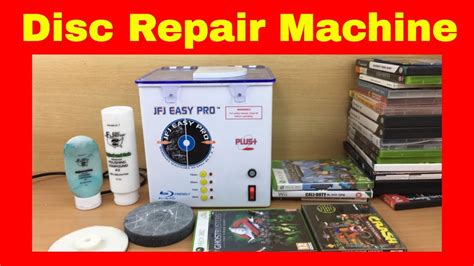
When DIY methods fall short, or for those dealing with a high volume of discs, professional disc repair machines offer a more robust solution. These machines represent a significant investment, with "entry-level" models often starting in the hundreds of pounds or dollars, not including ongoing costs like cleaning fluids. The core technology behind these machines involves a micro-abrasive solution combined with a buffing process to achieve a polished surface.
The effectiveness of these machines is a topic of much discussion among collectors and businesses. The question of whether a resurfaced disc is truly back to "mint" condition is complex. While a machine can remove scratches and make a disc appear flawless to the naked eye, the underlying process involves removing a layer of material. This raises questions about the disc's long-term integrity and how its condition should be graded. Some argue that "mint" implies an untouched, factory-original state, and any form of resurfacing, however expertly done, deviates from this.
The Debate on Professional Refurbishment and Disclosure
The ethical implications of using disc repair machines, particularly for those involved in selling used media, are a significant point of contention. A key question is whether sellers are obligated to disclose that a disc has been professionally cleaned or resurfaced. Some argue for complete transparency, believing that buyers have a right to know the full history of the item they are purchasing. This is particularly relevant in markets where pristine condition commands a premium.
Conversely, others contend that if a disc plays perfectly and looks visually flawless after repair, disclosure might be unnecessary. They draw parallels to other restoration processes, such as the refurbishment of classic cars, where a fully restored vehicle is still considered to be in excellent condition. The argument is that the goal of repair is to restore functionality and appearance, and if achieved, the method used to get there becomes secondary.
However, potential buyers often express a desire for honesty. Complaints have surfaced from individuals who believed they were purchasing an original, untouched item, only to discover later that it had undergone machine resurfacing. Signs like faint swirl marks, or scuffs on the disc's inner ring, can sometimes be tell-tale indicators of professional treatment. This can lead to disputes and a feeling of being misled, especially if the seller has graded the disc as "Mint" or "Near Mint" without qualification.
The reality for many businesses, such as used CD and DVD stores, is that resurfacing is a standard practice. Stores often perform this service on-site, sometimes even in front of customers, who generally seem to accept and even expect it. These discs are often not heavily scratched to begin with; the process is more about maintaining a consistently high standard of presentation.
Evaluating Disc Repair Machines: Key Considerations
For businesses or individuals considering an investment in a disc repair machine, several factors warrant careful consideration.
Cost vs. Volume: Disc repair machines are an investment. Their worth is often tied to the volume of discs processed. If you are dealing with a large inventory of scratched discs, the ability to restore them and increase their resale value can make the investment worthwhile. However, it's important to factor in running costs, such as cleaning fluids and potential maintenance.
Effectiveness and Limitations: While many machines boast high success rates, it's crucial to understand that not all discs can be fully restored. Some damage may be too deep for even professional machines to rectify. Experience suggests that a success rate of around 90% is achievable for moderately damaged discs, but some will inevitably remain unplayable.
Grading and Disclosure Policies: Establishing a clear policy on how resurfaced discs are graded and whether this process will be disclosed is paramount. For sellers, transparency can build trust with customers, even if it means a disc might be graded slightly lower than "Mint." Terms like "VG+" with a note indicating professional refurbishment can be a balanced approach.
Machine Models and Technology: The market offers various levels of disc repair machines, from basic units to highly sophisticated, expensive systems. Researching different models, understanding their repair mechanisms (e.g., types of abrasives, buffing techniques), and reading reviews can help in making an informed decision. Some machines are known to leave subtle visual artifacts, like faint swirl marks, which can be a point of concern for some buyers.
JFJ Easy Pro CD Resurfacing Machine Review - Fix Scratched Discs Professionally
The Software Alternative: Data Recovery First
Before resorting to physical repair methods that alter the disc surface, it's often advisable to explore software-based data recovery solutions. These methods attempt to extract data from the disc without physically interfering with its surface. Specialized software can often read data from sectors that are slightly damaged or difficult to access, effectively bypassing minor imperfections. However, there are instances where the physical damage is too severe for software alone to overcome. In such cases, the physical repair of the disc's surface becomes a necessary precursor to data recovery.
The Future of Disc Restoration
The ongoing relevance of physical media, from vintage CDs to modern Blu-rays and game discs, ensures that the need for effective repair solutions will persist. While digital streaming dominates, the desire for tangible collections, limited editions, and the inherent permanence of physical discs continues to drive demand for restoration services. Whether through sophisticated machinery or ingenious DIY techniques, the ability to repair scratches and extend the life of these media formats remains a valuable skill and a worthwhile endeavor for collectors, businesses, and hobbyists alike. The journey from a scratched disc to a perfectly playable item is a testament to the ingenuity applied in preserving our media collections.