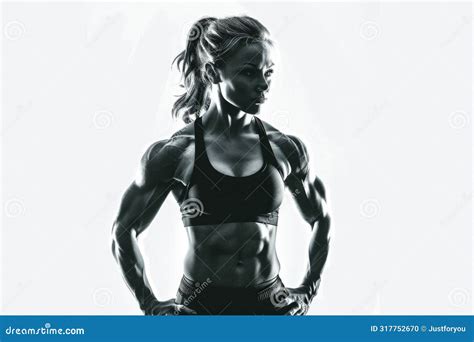
The human form, particularly the female body, has long been a captivating subject in artistic expression. However, the perception and portrayal of the muscular female physique present unique challenges, often requiring a nuanced approach to photography and post-processing. This exploration delves into the intricacies of photographing female bodybuilders, examining the role of artistic vision, the collaborative nature of the photographic process, and the ethical considerations surrounding digital manipulation, specifically through Photoshop techniques.
The Artist's Eye and the Evolving Female Form
The act of creating art, as I was taught, involves altering our perception of reality, encouraging us to see the world with greater depth and from novel perspectives. This principle proves particularly complex when applied to female bodybuilders. While the image of a muscular man is widely accepted, the sculpted, powerful female physique often elicits a different response. My work in this domain is inherently collaborative, relying entirely on the dedication and physical artistry of the female bodybuilders themselves. I can only capture the bodies they present in my studio or on location. Yet, a reciprocal influence is at play. Seeing themselves through my lens frequently alters their self-perception. For many, their understanding of their own bodies is confined to fleeting reflections in a mirror or conventional, illustrative photographs. They may never have truly witnessed their physical achievements in an artistic context, struggling to fully appreciate the magnitude of their accomplishments. Much like women are continuously redefining what constitutes a "new kind of female body," I strive to develop innovative photographic techniques to keep pace with this evolving landscape. The world of bodybuilding has taught me a valuable lesson: what is initially shocking can rapidly become commonplace.
The Pitfalls of Digital Alteration: When "Natural" Becomes Unnatural
A recent experience highlighted a troubling trend. I observed a photographer share a "before and after" image of a woman so drastically altered by Photoshop that she appeared to have undergone extensive surgical procedures to achieve a significantly thinner appearance. The photographer sought feedback from peers on the naturalness and proportionality of her editing. I was astounded by the comments, which lauded the image for its "natural" editing and predicted the woman's delight. This raises a critical question: when does editing cross the line from enhancement to misrepresentation? In portraiture, the focus should be on capturing the subject's essence-their personality, aspirations, fears, and affections. The moment we alter a woman's natural body shape, we inadvertently convey a message that her authentic form is somehow insufficient.
While I do not condemn the use of Photoshop for women's images, as I myself dedicate considerable time to editing, I maintain a firm boundary: I do not transform a woman into someone else. My editing focuses on rectifying minor imperfections that may have been missed during shooting, such as puckering of clothing or undergarments, distracting elements, lens distortions, stray hairs, lighting flaws that accentuate blemishes, and temporary skin imperfections that will naturally heal.
Posing for Perfection: Techniques for Flattering the Female Form
The art of posing is paramount in photography, especially when aiming to flatter and empower the subject. Several techniques can dramatically enhance a woman's appearance in photographs, focusing on creating a visually pleasing and proportionate image.
Shaping and Angling: The Foundation of Flattering Poses
The primary method for achieving a body-flattering shape involves how a woman positions her body and utilizes her limbs. One of the most universally effective techniques is to have the subject lower their front shoulder. This simple adjustment can create a more dynamic and aesthetically pleasing silhouette.
Elongating the Neck and Defining the Jawline
To avoid the appearance of a double chin, a common concern for many women, the neck should be elongated, and the chin subtly brought forward. This technique helps to create a more defined jawline.
The Power of the Eyes: Focusing on the Face
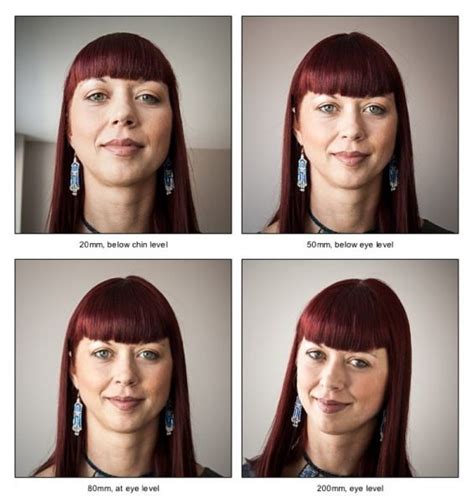
Across the board, women often identify their eyes as their favorite feature. Tightly framed beauty shots that emphasize the eyes are frequently the most cherished images in a portfolio. While shooting from slightly below eye level can work for slender individuals, it is generally less flattering for those who carry more weight. Conversely, shooting from a slightly higher angle can slim the chin and jawline. It is crucial, however, to ensure the subject does not lower her chin too drastically, as this can make the forehead appear disproportionately large. These close-up headshots are best captured with lenses of 85mm or longer, ideally around 200mm on a 70-200mm f/2.8 lens. This allows for tight framing without requiring the photographer to be uncomfortably close to the subject.
Creating Depth and Dimension: The "Push and Pull" Technique
A simple yet effective technique for visually slimming the midsection and hips involves leveraging the principles of perspective. Objects further from the camera appear smaller. By having the subject bring her face closer to the lens and push her hips away, her proportions will appear more balanced, with the focus naturally drawing to her face. It's important to instruct her to slightly lower her chin while keeping her jaw gently pulled towards the camera. Although this posture might feel unnatural, it results in a remarkably flattering presentation of the neck, jawline, midsection, and hips.
Utilizing Surroundings for Strategic Concealment
In family portraits, mothers often hold their children, a natural pose that can be artfully employed to balance the composition. Placing children in front of the mother can de-emphasize certain areas of her body. Combined with the previously mentioned posing techniques, this approach can lead to family photos that mothers truly love. This strategy extends to using the environment itself to strategically conceal parts of the lower body or midsection, thereby redirecting attention to the subject's face.
Balancing Different Body Types
When posing women of varying body sizes together, balance can be achieved by having the smaller-framed woman turn more towards the camera, while the larger woman angles away, perhaps looking over her shoulder. It is important to ensure that a similar amount of each woman's body is visible, even if one is in profile and the other is mostly facing forward. The arms of the smaller-framed woman can also be used to create a sense of visual balance.
Addressing Unnatural Bulges: Smoothing Transitions
A common issue arises when women wear shapewear or belts, which can create unnatural bulges at their tightest points. This is one of the few instances where altering the body shape in post-processing can be justified. Natural body curves are typically smooth, not lumpy. The goal is to even out these distortions, creating a seamless transition rather than an exaggerated slimming effect. Common problem areas include bra straps on the back, waistlines of pants or shapewear, and biceps when an arm is pressed against the body, making it appear larger.
The Necessity of Skin Smoothing
In today's photographic landscape, with its incredibly sharp lenses, images often reveal skin texture in unflattering detail. Sharpening during post-processing can further exacerbate this harshness. Therefore, a strict rule is to avoid removing permanent features. However, any mark on the face that is likely to heal or fade, or redness that will dissipate, can be addressed by using cloning or healing brush tools to expedite the process.
The Art of Light and Shadow: Sculpting with Illumination
Whether working with natural light or artificial flash, understanding how light falls on the subject is crucial. Lighting can be used to sculpt the face and body, while shadows can be employed to create slimming and flattering effects. A key indicator of correct lighting is a subtle shadow beneath the nose. If this shadow is absent, the light source needs to be raised, or the subject's chin needs to be brought down slightly.
Beyond the Surface: Capturing the Subject's True Essence
It is easy to become preoccupied with the physical type of the woman being photographed, overlooking the individual herself. Every woman possesses a unique story, a distinct personality, and a profound love for life that deserves to be discovered. The most compelling photographs are those that reveal who the subject truly is and what makes her beautiful. Her body is merely an extension of her being and should not be the sole focus. The photographer's task is not to create an idealized version of a woman but to capture her best self.
However, oversights can occur. Sometimes, a model might forget to pull her arm away from her body, making it appear larger than it is, or her clothing might wrinkle unexpectedly, or camera distortion might create an out-of-proportion appearance. Proper posing can significantly reduce the need for extensive post-processing. It is essential to remember that the more a subject's image is altered, the more challenging it becomes for her to accept and love her own body. All women are perfect beings in their own right, not because of the extent to which they can be digitally manipulated. Empathy and understanding are vital, especially considering the vulnerability a subject may feel when in a photographer's care.
Advanced Photoshop Techniques: Abstract Lighting and Environmental Integration
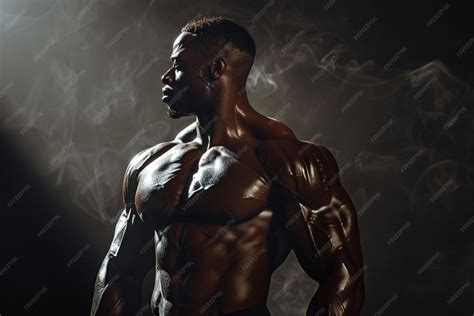
For those seeking to explore more advanced digital artistry, Photoshop offers a vast array of tools for creating compelling visual narratives. One such technique involves integrating a female model into a dark environment and applying abstract lighting effects. These effects can be applied to the main subject or the background, provided they align with the artwork's theme. This process often involves utilizing various textures, brushes, and color adjustments to craft an engaging abstract piece, merging sparkling effects with the model and a complementary background.
The technical steps for such a creation can be intricate, involving layer duplication, adjustments to levels, precise selections using tools like Color Range, and the application of layer masks. Techniques for cutting out subjects, such as using channels or refined edge selections, are fundamental. Blending the model with a new background often requires creating new layers, filling them with color, and refining edges, particularly around hair and clothing.
Abstract Twisted Light Fibers Effect Photoshop Tutorial
The process of shading the model to better integrate her with the background involves using adjustment layers like Curves and Soft Light, with careful brushwork and color selection. Creating atmospheric effects might involve using different blending modes such as Multiply and Soft Light, and applying color gradients.
Further integration can be achieved by creating additional layers for shading and light effects, using clipping masks to ensure these adjustments only affect specific layers. The manipulation of color balance and the application of black and white adjustments can further enhance the mood and realism of the composite image.
The creation of abstract elements in the background often involves working with textures like chiffon or fire images. These elements are then manipulated through selection, erasing, and blending modes to create dynamic and artistic effects. Adjustment layers like Levels, Hue/Saturation, and Color Balance are crucial for refining these elements and ensuring they harmonize with the overall composition.
Special attention is paid to how these abstract elements interact with the model. Creating groups for "woman adjustments" allows for targeted modifications, such as applying color balance or curves to simulate the ambient light from the abstract elements onto the model's form. This can involve using soft brushes to selectively reveal or conceal adjustment layers, thereby creating a more convincing illusion of light interaction.
The process also extends to creating "background splashes" and integrating them seamlessly. This can involve inverting colors, adjusting brightness and contrast, and using hue/saturation to modify the appearance of splash elements. Smoke effects can be further refined with clipping masks and color balance adjustments.
Finally, the creation of abstract circular elements or patterns can be achieved by using shape layers and brush tools, allowing for experimentation with various colors and blending modes to achieve a desired aesthetic. Adding noise can provide a subtle texture, and duplicating the merged layers can serve as a final composite for further refinement or output. The entire process emphasizes iterative refinement, with constant adjustment of layer opacities and masks to achieve the desired artistic outcome.
tags: #female #bodybuilder #photoshop