Fillmore Glen State Park, nestled adjacent to the Village of Moravia in Cayuga County, New York, offers a captivating blend of natural beauty and historical significance. This park is a testament to the power of water to sculpt dramatic landscapes, featuring a series of five major waterfalls and numerous smaller cascades within its long, narrow gorge. Beyond its geological wonders, the park serves as a gateway to understanding the life of the 13th U.S. President, Millard Fillmore, whose childhood home is recreated nearby. As one of the more rustic and naturally preserved gorges in the Finger Lakes region, Fillmore Glen provides an escape into a cool, dense woodland, inviting exploration through its diverse hiking trails and offering a refreshing swimming pond.
Exploring the Waterfalls and Gorge
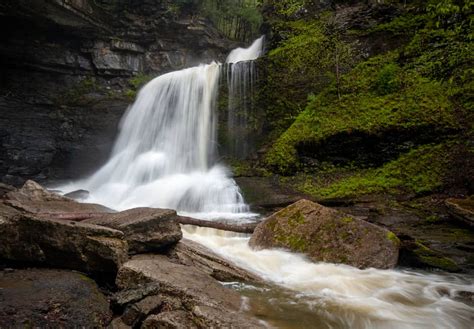
The primary allure of Fillmore Glen State Park lies in its spectacular waterfalls and the intricate gorge that cradles them. The park boasts five significant waterfalls, ranging in height from approximately 5 to 40 feet, presenting a variety of geological formations including cascades, punchbowls, plunges, and chutes. The most accessible of these is Cowshed Falls (also known as Dry Falls), a roughly 30-foot cascade that can be reached with a short, easy walk from a nearby parking area. This waterfall is particularly striking due to its location within a water-carved stone amphitheater, a feature that likely earned it its unique name. Early accounts suggest that cows from surrounding farms would seek refuge in this cool, sheltered area during hot summers before the park was established.
For those seeking a more immersive experience, the Gorge Trail offers a mile-long journey through the heart of the glen, leading to a total of five major waterfalls. While the initial ascent can be a steep 150-foot climb up a wooded hill, the trail transforms into a relatively flat, stone walkway once above the Cowshed area. This path winds alongside the stream, revealing numerous beautiful cascades and unique geological formations with mossy stonework. Steps are strategically placed to allow visitors to gain vantage points above each fall, and wooden bridges facilitate creek crossings. The trail culminates at the upper falls, standing at approximately 40 feet. Near the end of the gorge trail, the path becomes less defined and steeper, eventually ascending to join the South Rim Trail, which provides a route back to the parking area.
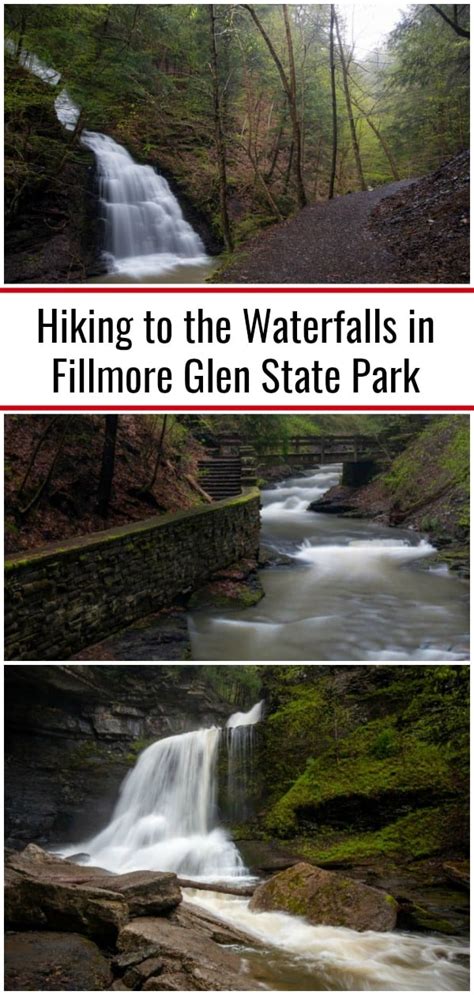
The flow of Dry Creek, the waterway responsible for these natural wonders, is variable and dependent on rainfall. While the park is a year-round destination, the gorge trails are typically closed after November due to winter conditions. However, Cowshed Falls remains accessible throughout the year and, in colder months, transforms into a breathtaking frozen spectacle, drawing visitors who appreciate its icy beauty. The park's location adjacent to the Village of Moravia means that Dry Creek, a tributary of the Owasco Inlet, can be reduced to a mere trickle by summer, a characteristic that influenced its name and that of Cowshed Falls.
Hiking Trails and Recreational Activities
Fillmore Glen State Park offers a network of trails catering to various fitness levels and interests. The Gorge Trail is the park's centerpiece, providing an intimate encounter with the waterfalls and geological features. This trail, about a mile in length one way, is best experienced from late spring to late fall, with its opening contingent on winter damage and spring thaw. The trail's accessibility varies; the initial part leading to Cowshed Falls is paved and easily navigable, while the deeper gorge trail involves steeper climbs and more rugged terrain.
Complementing the Gorge Trail are the North Rim Trail and the South Rim Trail. These trails follow the rim of the gorge, offering elevated perspectives and panoramic views of the waterfalls and the surrounding woodland. These rim trails are generally open year-round, providing opportunities for exploration even when the gorge itself is inaccessible. Hikers can combine these trails with the Gorge Trail to create longer loops, offering diverse hiking experiences.
Hiking the Gorge Trail at Fillmore Glen
Beyond hiking, Fillmore Glen provides a range of recreational opportunities. A dammed stream creates a swimming pond, offering a refreshing escape during the warmer months. Swimming is permitted when a lifeguard is on duty, typically from Memorial Day weekend through Labor Day. The park is also equipped with amenities for a complete outdoor experience, including picnic tables and pavilions, playgrounds, grills, and playing fields, making it an ideal destination for family outings and gatherings.
For those wishing to extend their stay, the park offers 60 campsites and three cabins, with camping season running from mid-May to mid-October. Reservations for campsites are available, allowing visitors to immerse themselves fully in the park's natural beauty.
A Glimpse into History: Millard Fillmore and the Civilian Conservation Corps
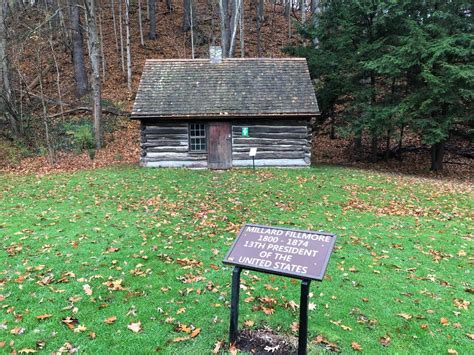
Fillmore Glen State Park is intrinsically linked to the history of the United States through its namesake, Millard Fillmore, the 13th President of the United States. Born in a log cabin just outside of Moravia, New York, on January 7, 1800, Fillmore's early life was marked by poverty and limited formal education. Despite these challenges, he pursued self-education, became a teacher, and eventually studied law, being admitted to the bar in 1823. His political career saw him serve in the House of Representatives and as Vice President under Zachary Taylor, whom he succeeded upon Taylor's death in 1850. His presidency is notably associated with the Compromise of 1850, which included the controversial Fugitive Slave Act. Fillmore was not renominated by his party and retired from politics after his term. He later played a role in the founding of the University at Buffalo and passed away in 1874. A replica of his childhood log cabin is a notable feature within the park, usually open for viewing during peak tourist seasons, offering a tangible connection to his humble beginnings.
The park's infrastructure, including its stone walls, bridges, and staircases, bears the indelible mark of the Civilian Conservation Corps (CCC). From 1934 to 1938, a CCC camp was active at Fillmore Glen, with its crews undertaking significant construction and enhancement projects. This New Deal program, designed to provide employment during the Great Depression, was instrumental in shaping many state parks across the nation. The CCC's skilled labor is evident in the beautiful stone masonry work found throughout Fillmore Glen, echoing the craftsmanship seen in other renowned parks like Watkins Glen and Letchworth.
Location, Directions, and Accessibility
Fillmore Glen State Park is conveniently located at Route 38, approximately one mile south of the Village of Moravia in Cayuga County, New York. It is situated south of Owasco Lake, placing it within the broader scenic Finger Lakes region.
Directions: The park entrance is accessible from NY-31, just south of Moravia. Traveling south from the village, the entrance will be on your left, identifiable as being across from a Dunkin' Donuts. Utilizing GPS coordinates can also aid in navigation: the park entrance is at N 42.70013 / W 76.42000.
Parking: Two substantial parking lots are available just beyond the park entrance and before the swimming area. If one lot is full, visitors can cross a bridge over the creek to access the second lot.
Accessibility: Fillmore Glen State Park strives to be accessible to a wide range of visitors. The west end of the park, including the swimming area, is accessible. However, the gorge trail, due to its natural terrain and steep sections, is not considered handicap accessible.
Pets: Pets are permitted within the park, provided they are kept on a leash and have proof of inoculation. However, they are strictly prohibited from the swimming area and the gorge trail. This policy is in place for the safety of both the pets and other park visitors.
Understanding the Park's Seasons and Best Times to Visit
Fillmore Glen State Park is a destination that offers unique experiences throughout the year. The park itself is open year-round, but specific activities and accessibility vary with the seasons.
Spring and Summer: Late spring and early summer, particularly after periods of heavy rain, are considered the best times to witness the waterfalls at their most powerful and impressive. The lush greenery of the warmer months enhances the beauty of the gorge, and the swimming pond becomes a popular attraction. The park is generally more active during these periods, with camping facilities and the swimming area fully operational.
Autumn: The fall season transforms Fillmore Glen into a vibrant tapestry of color. The hiking trails, especially the Gorge Trail, are particularly stunning amidst the changing foliage, making it an ideal time for photographers and nature enthusiasts. However, as the weather cools, the gorge trails close by November to prepare for winter.
Winter: While the gorge trails are closed, Fillmore Glen remains a winter wonderland. The park's unplowed roads are utilized by snowmobilers and cross-country skiers. Cowshed Falls, in particular, becomes a dramatic frozen sculpture, attracting visitors who appreciate its stark, icy beauty.
Photography Tips for Capturing Fillmore Glen
Fillmore Glen State Park offers numerous photographic opportunities, from the dramatic waterfalls to the historic CCC-built structures and the surrounding natural beauty.
- Cowshed Falls: This lower waterfall is the most accessible for photography. The overhanging rock formation provides a unique framing element. A wide-angle lens is recommended to capture the entirety of the falls and its surroundings.
- Gorge Trail Waterfalls: Photographing the middle and upper falls can be more challenging due to their location on the other side of the gorge and potential obstructions from brush. It is strongly advised against attempting to climb down into the water or onto loose shale for a better shot, as this can be dangerous. Visiting in late autumn, after the leaves have fallen, can improve visibility.
- General Gorge Views: A wide-angle lens is essential for capturing the sheer rock walls and the breadth of the gorge.
- Lighting: Overcast skies are ideal for waterfall photography. Daylight can create uneven shadows through the canopy and lead to sunspots in your images. Overcast conditions provide softer, more even lighting.
- Silky Water Effect: To achieve the popular "silky water" or "cotton-candy" effect in waterfall photos, a Neutral Density (ND) filter is recommended. This filter reduces the amount of light entering the lens, allowing for longer exposure times without overexposing the image, thus creating a smooth, blurred water effect.
Millard Fillmore: A Closer Look at the 13th President
Millard Fillmore's connection to Fillmore Glen State Park stems from his birth near the area. Born in a log cabin in Locke Township (now Summerhill), Cayuga County, New York, in 1800, Fillmore's early life was one of significant hardship. He was the second of nine children, and his family faced considerable poverty, limiting his access to formal education. Despite these challenges, Fillmore was determined to learn. He worked as a farm laborer and learned the wool carding trade before beginning his legal studies at the age of 19. He was admitted to the bar in 1823 and established a law practice in East Aurora, New York.
Fillmore's political journey began with the Anti-Masonic Party before he became a prominent member of the Whig Party. He served multiple terms in the U.S. House of Representatives, where he became known for his fiscal conservatism. In 1848, he was elected Vice President under President Zachary Taylor. Upon Taylor's unexpected death in July 1850, Fillmore ascended to the presidency.
His presidency is often remembered for the Compromise of 1850, a series of legislative measures aimed at diffusing the growing sectional crisis over slavery. Key components of this compromise included the admission of California as a free state, the organization of territories acquired from Mexico with the question of slavery to be decided by popular sovereignty, and the controversial Fugitive Slave Act. Fillmore's support for the Fugitive Slave Act was deeply unpopular in the North and contributed to the Whig Party's decline.
Fillmore was not nominated for re-election by the Whig Party in 1852 and subsequently retired from national politics after completing Taylor's term. After leaving office, he remained involved in civic affairs, notably playing a role in the founding of the University at Buffalo. Millard Fillmore died in Buffalo, New York, on March 8, 1874. His presidency, though brief and marked by significant challenges, represents a pivotal, albeit turbulent, period in American history.
Geological Significance and Regional Context
Fillmore Glen State Park is a prime example of the unique geological processes that have shaped the Finger Lakes region. The park's long, narrow gorge is a result of stream erosion acting upon the layered sedimentary rocks of the Devonian period. Over millennia, Dry Creek has carved through the shale and sandstone, creating the dramatic cliffs, overhangs, and cascading waterfalls that define the landscape. This process is characteristic of many gorges found throughout the Finger Lakes, including more famous destinations like Watkins Glen and Robert H. Treman State Park.
The "rustic" and "closest to its natural state" description of Fillmore Glen, as noted in park literature, suggests a landscape less overtly manicured than some of its neighbors. This allows visitors to experience a more raw and authentic geological setting. The distinct geological characteristics, with their mossy stonework and varied water-carved formations, offer a visual narrative of the erosive power of water over geological time.
The park's location within Cayuga County, part of the broader Finger Lakes system, places it within a region renowned for its natural beauty, agricultural productivity, and historical significance. The presence of Owasco Lake nearby further connects Fillmore Glen to the unique hydrology and topography of this glacial-carved landscape. The botanical diversity of the glen, which prompted early efforts to preserve it as a park, also speaks to the rich ecosystem supported by the gorge's microclimate.
Historical Context of Moravia and Surrounding Areas
The area around Fillmore Glen State Park has a rich history that predates its establishment as a state park. The Village of Moravia, situated nearby, was settled as early as 1789. Early settlers were drawn to the fertile meadowlands of the valley, ideal for cultivating wheat and corn. John Stoyel is recognized as the first permanent settler, arriving in 1891 and establishing the first mill on Mill Creek.
A significant development in the region's history was the invention of the first iron plow with replaceable parts by Jethro Wood, a resident of Moravia, in 1818. This innovation had a profound impact on American agriculture in the mid-19th century and brought considerable prosperity to the town, with his plow factory eventually relocating to a larger facility near Montville Falls. However, a devastating flood in July 1833 caused substantial damage to the village, completely destroying the plow factory.
The town of Moravia was officially established in 1833, carved from the southern portion of the town of Sempronius. Its name is derived from the historical region of Moravia in what is now the Czech Republic, possibly referencing religious leader Jan Hus. The naming of "Dry Creek" for its tendency to become a trickle in summer, and early references to Cowshed Falls as "Dry Falls," further illustrate the region's hydrological characteristics and early settlement perceptions.
The glen itself was recognized for its abundant plant life and botanical diversity, which led to local government initiatives to construct trails and maintain it as a park in the early 1920s. The state's acquisition of the land in 1925 marked the formal establishment of Fillmore Glen State Park, initially named "Glen State Park" before being renamed in honor of Millard Fillmore. The park's history is thus intertwined with both natural preservation efforts and the legacy of a U.S. President.