The cover of a book is its first handshake with a potential reader, a critical visual cue in the crowded marketplace that can significantly influence its success. For authors, especially those navigating the self-publishing landscape, the challenge of creating a professional, eye-catching cover often clashes with limited design skills and budgets. This is where the advent of AI book cover generators steps in, promising to democratize high-quality design and revolutionize the creative process. These tools are no longer a novelty but a powerful component of the modern publishing toolkit, offering a blend of speed, affordability, and accessibility.
The Power of First Impressions: Case Studies in Book Cover Redesign
The impact of a well-designed book cover is not a new phenomenon. History is replete with examples where a strategic cover redesign has propelled books to new heights, reaching wider audiences and solidifying their place in literary history.
Harry Potter and the Philosopher's Stone: From Children's Niche to Global Phenomenon
The initial release of "Harry Potter and the Philosopher's Stone" in 1997 featured a bright, colorful cover depicting Harry at Platform 9¾ with the Hogwarts Express. This design was undoubtedly effective for its intended young audience. However, as the series' popularity exploded, attracting a significant adult readership, the childish aesthetic became a point of contention. Adults often felt hesitant to carry books with covers that overtly signaled a children's book. This disconnect was further exacerbated by the UK's bestseller list structure, which segregated children's literature. Despite its massive sales, "Harry Potter" struggled to appear on general fiction bestseller lists due to its cover's perceived target audience.
Bloomsbury, the publisher, recognized this marketing challenge. In 1998, they implemented a strategic redesign, re-releasing the first book with a more mature, adult-oriented cover. This new design featured a simple, elegant image of a steam train, eschewing the cartoonish elements of the original. The aim was to create a cover that adults could feel comfortable displaying, thereby increasing its visibility on adult bestseller lists. This strategy proved remarkably successful. Bloomsbury continued this approach, updating the covers in the mid-2000s. The series went on to sell over 600 million copies globally, captivating readers of all ages. The adult covers were instrumental in maintaining sales momentum as younger readers matured and in attracting new adult fans. This rebranding effort underscored how a thoughtful cover redesign could significantly alter public perception and broaden a book's appeal without altering its content. Today, "Harry Potter" continues to be marketed with diverse cover styles-children's, adult, and illustrated-each tailored to specific reader demographics, a testament to the enduring power of strategic cover design.
The Alchemist: From Obscurity to Global Bestseller
Paulo Coelho's "The Alchemist," first published in Portuguese in 1988, faced a different but equally challenging initial reception. Its original cover featured a classic painting, Caravaggio's "Narcissus," paired with a simple design. While artistically valid, this cover failed to convey the book's core themes of adventure, spirituality, and self-discovery. The elegant yet ambiguous imagery, coupled with weak marketing efforts, resulted in a mere 900 copies sold, leading the publisher to drop the book. For a debut author like Coelho, the cover lacked the immediate "hook" necessary to capture attention in a busy bookstore environment.
Coelho's determination, however, paved the way for a revival. In 1990, a larger Brazilian publisher reissued "The Alchemist" with a completely new cover. This redesign embraced imagery more aligned with the book's narrative, featuring elements like deserts, pyramids, and a shepherd boy. Warmer color palettes and bold, clear typography enhanced the sense of spiritual adventure. The book's resurgence was further bolstered when Coelho's subsequent novel, "Brida," gained popularity. This provided an opportunity for "The Alchemist" to be re-promoted, with the publisher positioning Coelho as a rising literary figure and adding a tagline that highlighted its inspirational message: "a fable about following your dream." This repositioning appealed to readers of self-help and spiritual literature. The result was phenomenal. With its refreshed visual identity and strong word-of-mouth, "The Alchemist" became a bestseller in Brazil and subsequently achieved international acclaim. This narrative illustrates how a cover that effectively communicates a book's essence and target audience can transform its commercial trajectory.
How a Book Cover Gets Designed
Navigating the Modern Publishing Landscape: The Rise of AI Book Cover Generators
In the fast-paced digital age, where content creation is at an all-time high, a striking book cover is often the sole determinant of whether a reader stops to explore a title further. It's the single opportunity to capture attention in a vast digital ocean of options. This is precisely where AI book cover generators are emerging as transformative tools in 2025, fundamentally altering how authors and publishers approach cover design.
Why Embrace AI for Book Cover Creation?
Traditional book cover design often presents a significant hurdle for authors who may not possess graphic design skills or have the financial resources to hire professional designers. The pressure to balance aesthetic appeal with genre expectations can lead to compromises. AI book cover generators offer a compelling solution by providing:
- Accessibility: These tools are designed with user-friendliness in mind, requiring no prior design experience.
- Speed and Efficiency: The time-consuming process of manual design is drastically reduced, allowing for the creation of covers in minutes rather than days or weeks.
- Cost-Effectiveness: Compared to the substantial fees of professional graphic designers, AI solutions offer a significantly more affordable alternative, often with free or low-cost tiers.
- Iterative Design: AI platforms facilitate rapid iteration, allowing authors to generate multiple concepts and refine them based on immediate feedback, a process that is often prohibitively expensive with human designers.
How Do AI Book Cover Generators Work?
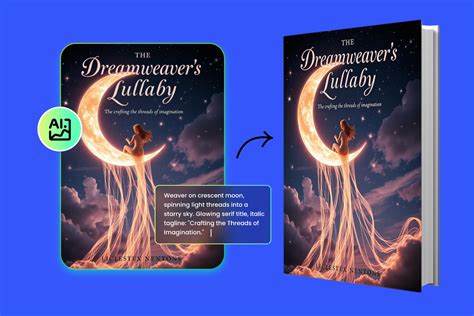
AI book cover generators harness the power of artificial intelligence, primarily through machine learning algorithms. They analyze vast datasets of existing book covers, design principles, and current visual trends. When an author provides input-such as the book's title, genre, a brief synopsis, or desired mood-the AI processes this information to suggest layouts, imagery, and typography that align with the book's theme and target audience. This process often involves:
- Input Specification: Authors provide details about their book, including genre, themes, desired style, specific imagery, and color preferences.
- AI Analysis and Generation: The AI interprets the input, drawing on its training data to generate multiple design options.
- Customization: Most platforms allow users to further refine the AI-generated designs, adjusting colors, fonts, images, and layout to perfectly match their vision.
- Output: The final cover is exported in formats suitable for both digital and print publishing.
Key Features and Considerations When Choosing an AI Tool
The landscape of AI book cover generators is rapidly evolving, with numerous platforms offering distinct features and pricing models. When selecting a tool, consider the following:
- Ease of Use: Is the interface intuitive for a non-designer?
- Customization Options: How much control do you have over the generated design?
- Template Library: Does it offer genre-specific templates to guide the design process?
- Output Quality: Does it provide high-resolution files suitable for both print and digital use?
- Pricing Model: Does it offer a free tier, a one-time purchase, or a subscription? What are the limitations of each?

Top AI Book Cover Generators to Explore
The market offers a diverse range of AI-powered tools, each with its unique strengths. Here's a closer look at some prominent platforms:
1. Fotor AI Book Cover Maker
Fotor stands out for its user-friendly, template-driven approach, making it highly accessible for authors. It combines a straightforward text-to-image AI generator with a substantial library of customizable layouts. This makes it ideal for quickly generating initial concepts or mockups. While it may not offer the granular control of more specialized software, its speed and simplicity are significant advantages. Fotor operates on a freemium model; free usage includes watermarks, while paid subscriptions (Fotor Pro, Fotor Pro+) unlock premium features and high-resolution downloads.
2. Visme AI Book Cover Generator
Visme integrates AI-powered generation with a comprehensive suite of graphic design tools. It excels at producing professional, ready-to-use covers with extensive customization options, making it suitable for authors who desire both speed and fine-tuning capabilities. Visme's ability to maintain brand consistency across various marketing materials is a notable advantage. It offers a free plan with limited access and paid subscriptions for premium features and high-resolution files.
3. VEED.IO AI Book Cover Generator
VEED.IO uniquely blends an AI image generator with powerful video editing tools. This makes it an excellent choice for self-published authors who want to create a cohesive promotional package, using the cover design as a foundation for video content. It offers a free tier with watermarks and paid plans for watermark-free outputs and advanced features.
4. BookBrush AI
BookBrush is specifically designed for authors and publishers, offering a suite of tools that simplify the cover design process. It leverages AI to generate cover concepts and provides features for creating social media graphics and mockups, aiding in marketing efforts.
5. Designs.ai
Designs.ai offers a comprehensive suite of AI-powered design tools, including a book cover maker. It focuses on speed and ease of use, allowing users to generate designs based on simple text prompts. Its platform aims to streamline the entire branding process for authors.
6. Adobe Express (with Firefly AI)
Leveraging Adobe's powerful Firefly AI, Adobe Express provides a robust platform for creating book covers. It integrates AI-generated imagery with Adobe's extensive design assets and editing capabilities, offering a high degree of creative control and professional output. This platform is particularly appealing for those already within the Adobe ecosystem.
7. Midjourney / NightCafe
These platforms are renowned for their artistic image generation capabilities. Midjourney, accessed via Discord, is celebrated for producing highly detailed and often surreal artwork from text prompts, making it ideal for fantasy, sci-fi, and literary fiction. NightCafe offers a more accessible interface with various AI art algorithms and a strong community aspect. Both excel at generating unique core artwork that can then be integrated into a cover design using other tools. They typically operate on a credit-based or subscription model.
8. Canva (with Magic Design AI)
Canva, a long-standing leader in user-friendly graphic design, has integrated AI features like Magic Media. This allows users to generate images and design elements directly within the familiar Canva interface. Canva's strength lies in its vast template library and intuitive editing tools, which complement AI-generated content, providing a balanced approach to design.
9. Snappa AI
Snappa offers a straightforward and efficient way to create graphics, including book covers. Its AI features assist in generating design elements and concepts, while its user-friendly editor allows for quick customization. It's a good option for those seeking a no-fuss design experience.
10. Recraft
Recraft distinguishes itself by focusing on vector art generation. This means users can create scalable, editable graphics from text prompts, offering unparalleled flexibility for high-resolution, print-ready assets that can be easily modified in professional design software. This is a significant advantage for maintaining brand consistency.
11. Kittl
Kittl combines AI image generation with a powerful, collaborative design editor. It moves beyond simple image creation, allowing for intricate design work with AI assistance, making it suitable for complex cover designs.
12. Postcrest
Postcrest offers specialized AI tools for authors, focusing on generating professional, genre-tailored covers. It aims to simplify the design process, providing high-resolution outputs ready for digital and print, with options for text layout and font choices.
Mastering the Art of AI Book Cover Design: Best Practices
While AI tools provide the engine for design, achieving professional, impactful results requires strategic application and refinement.
Crafting Effective AI Prompts
The success of an AI-generated cover hinges on the quality of the text prompt. Vague descriptions yield generic results, while specific, well-crafted prompts lead to targeted and compelling designs.
- Define Your Core Message: Start by understanding the emotional core of your book, its target audience, and the genre. What feeling or idea should the cover evoke?
- Be Specific with Imagery: Detail the central image, characters, objects, or landscapes you envision.
- Incorporate Genre Conventions: Use genre indicators (e.g., "sci-fi fantasy," "cozy mystery") to guide the AI.
- Consider Color Psychology: Understand how colors influence mood and perception. Warm colors might suit romance, while cool tones could be appropriate for thrillers.
- Leverage Style References: Use phrases like "in the style of vintage illustrations" or "reminiscent of cinematic composition" to direct the artistic aesthetic.
- Utilize Negative Prompts: Tell the AI what to avoid (e.g., "avoid bright colors," "no modern fonts") to refine the output.
- Iterate and Layer: Build complexity gradually. Start with basic elements, generate options, and then add more specific details in subsequent prompts.
Editing and Refining AI-Generated Covers
AI generators rarely produce perfect covers on the first attempt. Treat the output as a sophisticated draft that requires human touch.
- Typography is Key: Most AI tools struggle with text integration. Plan to adjust fonts, sizing, and placement using integrated editors or separate design software. Ensure the title is legible even at small thumbnail sizes.
- Color Correction: Adjust saturation, contrast, and color balance to ensure the cover looks good across various devices and printing methods.
- Compositional Tweaks: Minor adjustments to image cropping, title placement, or visual hierarchy can significantly elevate a design.
- Resolution and File Formats: Always ensure you are exporting in high resolution (e.g., 300 DPI for print) and in appropriate file formats (PNG, JPG, PDF) for your target publishing platforms (like Amazon KDP or IngramSpark).
Avoiding Common Pitfalls
- Over-Complication: Avoid packing too many elements into a single prompt. Focus on 3-5 key aspects.
- Ignoring Genre: While creativity is encouraged, ensure the cover aligns with reader expectations for the genre.
- Thumbnail Testing: Always check how your cover appears as a small thumbnail on mobile devices. If the title is illegible or the image is unclear, it won't perform well online.
- Copyright Concerns: Be mindful of AI models trained on copyrighted material. Opt for generators with clear commercial use policies.
The Future of Book Cover Design
AI book cover generators are poised for continued evolution. We can anticipate deeper integration with publishing platforms, enabling a seamless transition from design to distribution. Personalization features may allow covers to adapt to different marketing contexts, and AI models will continue to improve in understanding commercial design principles and reader preferences. This ongoing advancement ensures that professional, captivating book cover design will become increasingly accessible, empowering authors to present their stories in the most compelling way possible.