Halftones have played a significant role in shaping the visual aesthetic of comic books, blending artistry with practicality. This technique, which involves the use of dots to simulate gradients and tones, has been a cornerstone of comic book production for decades. The halftone technique originated in the late 19th century as a method for reproducing photographs in print. By breaking an image into tiny dots of varying sizes and spacing, printers could create the illusion of continuous tones using a limited color palette. When comic books emerged in the 1930s, publishers needed a method to produce visually engaging content on a budget. Halftones became a practical solution.
The Genesis of Tone: From Engraving to Halftone
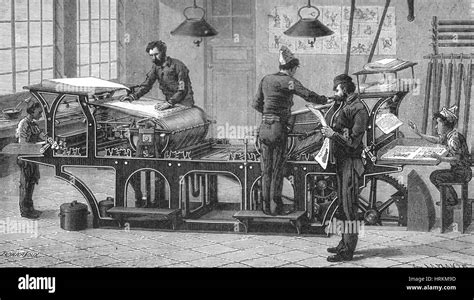
Prior to the 19th century, images in print were not common. They took a lot of extra effort, requiring the engraving of metal plates by hand. These plates were typically made of copper. With the development of the use of end-grain wood blocks by Thomas Bewick in England at the start of the 19th century, the wood engraving became the preferred method throughout the 19th century. With the wood engraving, the print is produced under low pressure. The ink is applied to the surface. The flat areas carry ink, while the incised or engraved or recessed lines do not. As with any engraving, if the artist wanted to produce a gray tone, they were left with the choice of hatching and crosshatching lines - a time-consuming process. The addition of tone wasn’t simply an aesthetic choice but also practical. Of course, time is money. Commercial artists were under immense pressure to deliver a quality product as quickly as possible. If you’ve ever attempted a pen and ink drawing featuring cross-hatching, you can lose hours during the process as you painstakingly scratch away at your work.
However, capitalism to the rescue! The halftone process that evolved slowly through the mid to late 1900s involved exposing images onto a metal photo plate through a course screen, resulting in an image consisting of dots of various sizes. The development of the halftone allowed for the reproduction of photographs. Goodbye, wood engraving! The wood engraving was thrown over in favor of photographically shooting black and white artwork or photographs and pouring lead plates.
Halftones in the Golden Age of Comics
Early comic artists and colorists relied on halftone dots to add depth and shading to their characters and backgrounds. This was not merely an artistic choice but a necessity driven by the limitations of printing technology and budget constraints. Comic books, aiming for mass appeal and affordability, embraced the halftone process. The inherent characteristics of halftone printing, such as dot gain where ink dots spread as they dried, often resulted in images appearing darker and more filled-in. This often fell to the commercial artists to manage, adding tone to their drawings knowing the line screen of the art’s destination.
One notable use of halftones was in "zip-a-tone," a pre-printed adhesive sheet with halftone patterns that artists could cut and apply directly to their illustrations. These sheets provided a quick and relatively easy way to introduce tonal variations and textures without resorting to laborious cross-hatching. Another product that served a similar purpose was CraftTone, a specially prepared art board printed with invisible cross-hatching. The artist would draw on the board and then “paint” in the gray tone with a clear liquid. This liquid would chemically interact with the invisible lines on the board, making them appear. One liquid summoned the lines in one direction, and another made visible the lines in the other direction. Of course, like all magic, it comes at a great cost. The downside to CraftTone was that eventually the board would yellow and ALL the lines would begin to appear, heedless of the artists’ original intentions.

Eventually, self-adhesive plastic sheets appeared on the market. Artists could simply cut the sheet to the desired shape and stick it on their art. As most manga was printed in black and white, adding tone to the artwork was essential to build reader engagement. Some of these sheets even had images printed on them. The following two images are details from the original art from a late 1980s Japanese Manga.
The Visual Language of Dots
Beyond their practical advantages, halftones possess a unique visual appeal. The dotted patterns, when viewed up close, reveal an intricate mosaic, while from a distance, they blend seamlessly into smooth gradients. This duality is central to their charm. Artists often leverage halftones to convey mood and atmosphere. For instance, darker, denser halftones can evoke tension or drama, while lighter patterns create a sense of openness and lightness. This deliberate use of dot density and size allows artists to sculpt form, suggest light sources, and imbue their work with emotional resonance, all through the subtle manipulation of ink dots.
Printed images, unlike digital images, do not have as wide a color gamut with which to work. Commercial printing typically uses only four ink colors - Cyan, Magenta, Yellow, and Black - for producing full-color printing. Though these four ink colors can combine to produce thousands and thousands of different colors, it is still far less than the amount of colors that can be produced digitally. When a printer lays down these inks, they use the halftone technique. This involves breaking down the image into a series of dots. The size and spacing of these dots determine the perceived color and shade. For example, in lighter areas of an image, the dots will be smaller and more spread out, allowing more of the paper’s white to show through. Conversely, in darker areas, the dots will be larger and closer together, creating a denser appearance. This manipulation of dot size is how printers simulate continuous tone images - like photographs - using a pattern of ink dots.
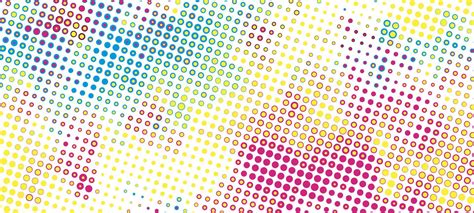
While digital images on screens, such as cell phone screens, are composed of tiny illuminated squares called pixels, printed images rely on these ink dots. The halftone technique is essential for simulating the smooth gradient color transitions between multiple shades of gray and for producing full-color printing by layering the CMYK dots. The dots are strategically placed so that from a normal viewing distance, our eyes blend them together, creating the illusion of a continuous tone image. Viewing a magnified section of a printed magazine cover shows the distinct halftone dots in cyan, magenta, yellow, and black, all working in concert to reproduce the colors within the file.
Evolving Techniques: From Analog to Digital
With the advent of digital tools, the use of halftones has evolved significantly. Modern software like Adobe Photoshop and Clip Studio Paint allows artists to create precise halftone effects digitally, offering greater control over size, spacing, and placement. This digital approach simplifies the process and opens up new creative possibilities. Artists can now generate complex halftone patterns with ease, influencing cell density using gradient noise and scale properties, and dictating dot size with precision. Parameters such as UVs, dot size, scale, randomness, noise scale, noise strength, and rotation all contribute to creating a dynamic and configurable dots pattern.
Halftone Effect in Unity (from Kirby Star Allies)
The process often involves converting RGB color values to CMYK values because a printer uses these four colors as ink to generate an image. This conversion is typically performed using custom functions within the software. The CMYK outputs are then multiplied with a "Dot Size" property, influencing the size of the dots for each color channel. This results in four different patterns, one for each of the CMYK colors. These individual patterns are then combined using blend nodes, with each color’s dot pattern layered on top of each other. To avoid Moiré pattern artifacts, which can occur when overlapping similar patterns, the individual CMYK patterns can be rotated in relation to each other. This is achieved by having separate rotation properties for each print color.
Moreover, the nostalgic appeal of halftones has led to their resurgence in indie and alternative comics. This effect drags your visuals straight into the world of old-school print, where halftone dots define every shadow and highlight. Inspired by classic comic books, vintage newspapers, and punk zines, it transforms an image into a high-contrast halftone composition. The exaggerated dot pattern enhances textures, making it perfect for posters, editorial designs, album covers, and merchandise.
Modern Applications and Artistic Expression
Halftone printing is not just for printing full-color images; black and white images are commonly printed using halftones as well, creating a gradient color transition between multiple shades of gray. This technique remains an integral part of comic book art, bridging the gap between functionality and artistry. From their origins as a cost-saving measure to their modern digital incarnations, halftones have continuously evolved while retaining their core essence.
Christopher Sperandio, an artist, writer, and university professor, notes that commercial art is forever at the mercy of the axiom “Fast, Cheap, Good: Pick Two.” Halftone printing, in its various forms, has historically been a way to achieve a balance between these competing demands. He highlights tools like the DupliTone halftone brush pack, which allows artists to add complex tone and variety to their art without the need for expensive boards or physical cutting and gluing of printed plastic. The advice is to have a plan and add tone a little at a time, as a modest amount of DupliTone can go a long way. It has never been cheaper or faster to add halftones.
Artists like Brian Fies have published lengthy tutorials on using Photoshop for creating halftone images, successfully recreating the halftone style of vintage comics up to the point of printing. The veteran artist Eddie Campbell uses halftone sheets very expressively within his analog drawing process, demonstrating the technique's continued relevance in traditional art.
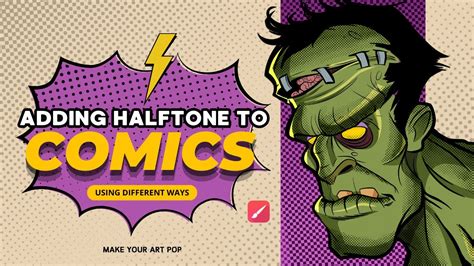
Halftone printing is the foundation of commercial printing, enabling the reproduction of photographs with intricate details and gradients. While the digital age has introduced new ways to create and simulate these effects, the fundamental principle of using dots to create the illusion of continuous tone remains a powerful tool in the artist's arsenal. Whether achieved through traditional methods or sophisticated digital software, the charm and expressive potential of the halftone dot continue to captivate creators and audiences alike, offering a tangible connection to the rich history of printed imagery.