Bolted joints are the unsung heroes of countless structures and machines, holding together everything from bridges and skyscrapers to intricate automotive engines and aerospace components. However, the integrity of these critical connections can be compromised by a variety of factors, including shock loads, extreme thermal fluctuations, and persistent vibrations. These forces can lead to the gradual loosening of bolts, a phenomenon that, if left unchecked, can have severe consequences, ranging from operational inefficiencies to catastrophic failures. Fortunately, a robust solution exists to combat this pervasive problem: HEICO-LOCK® wedge lock washers. These innovative fasteners are specifically engineered to provide an unshakeable grip, ensuring that bolted joints remain secure even under the most demanding conditions.
The Science Behind the Secure Connection: How HEICO-LOCK® Washers Function
At the core of the HEICO-LOCK® system lies a deceptively simple yet highly effective wedge locking principle. Each HEICO-LOCK® washer is supplied as a pre-assembled pair, with a unique cam-shaped surface on one washer and corresponding radial serrations on the other. When the bolt is tightened, the wedge-shaped top of the inner washer is pressed against the serrated surface of the outer washer. This action creates a tension between the two halves, forcing the radial serrations to embed themselves into the mating surfaces of the bolt and the clamped material.
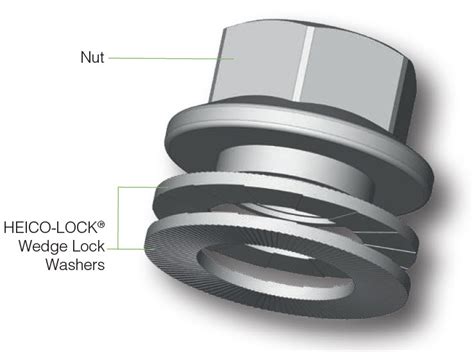
This embedding process is crucial for the washer's performance. For the HEICO-LOCK® washers to function properly, the serrations must imbed in the top and bottom mating surfaces. This means the serrated surface must be harder than the mating surface. HEICO-LOCK® carbon steel washers, for instance, possess a minimum hardness of HRC 46, making them suitable for use with bolts up to grade 12.9. When subjected to external forces such as vibration or shock, the wedge lock system works to prevent loosening. Any tendency for the bolt to rotate in a loosening direction is immediately counteracted by the wedging action, which effectively "locks" the bolt in place. This internal tension generated by the HEICO-LOCK® system is significantly greater than the forces that could cause self-loosening, providing a reliable and enduring connection.
Critical Considerations for Optimal HEICO-LOCK® Washer Performance
While the inherent design of HEICO-LOCK® washers is robust, their effective implementation relies on adherence to specific guidelines. These guidelines ensure that the system's full potential is realized and that the integrity of the bolted joint is maintained.
Material Selection and Compatibility
The choice of HEICO-LOCK® washer material is paramount, especially in environments with extreme temperature variations or when dealing with high-strength bolts. For high-tensile bolts and nuts, HEICO-LOCK® washers are suitable for Grades 5 and 8, as well as Class 8.8, 10.9, and 12.9.
Specifically, for applications involving 12.9 bolts, it is imperative to use carbon steel HEICO-LOCK® washers. This material compatibility ensures the necessary strength and hardness to effectively engage with the bolt threads and prevent loosening.
In high-temperature applications, typically above 180°C, the use of stainless steel HEICO-LOCK®s is essential. This is particularly relevant for components in systems like gas turbines and turbochargers, where extreme heat is a constant factor. For even higher temperature requirements, it is advisable to consult with a HEICO-LOCK® representative to explore specialized solutions.
HEICO-LOCK® washers are available in a range of materials to suit diverse applications, including zinc-flake coated steel (C45E), stainless steel (316L), INCONEL® 718, and 254 SMO®. This broad selection ensures that the optimal material can be chosen for specific environmental and operational demands.
Lubrication: A Delicate Balance
Proper lubrication plays a vital role in achieving the correct clamping force and ensuring the longevity of the bolted joint. For HEICO-LOCK® systems, the recommendation is to apply a high-quality moly or graphite-based lubricant, such as Molykote 1000, to 100% of the surface area of the bolt threads and 100% of the bearing surface under the bolt head.
It is important to note that it is not necessary to coat the HEICO-LOCK® washers themselves with lubricant. The lubricant facilitates smooth tightening, allowing for a more accurate application of torque and preventing galling or seizing of the threads. However, excessive or improper lubrication can lead to over-tightening and compromise the effectiveness of the locking mechanism. Therefore, a consistent and accurate application is key.
Installation Best Practices
The installation of HEICO-LOCK® washers requires attention to detail to guarantee their functionality.
Pre-assembled Pairs: HEICO-LOCK®s are supplied glued together as a pair. This glue is a convenience feature applied at the factory to assist in the proper orientation of both washer halves during installation. It is crucial not to remove the glue or separate the washers. The glue is a soft, flexible, non-toxic formulation that does not affect the mechanics of the wedge lock system and will disperse during assembly.
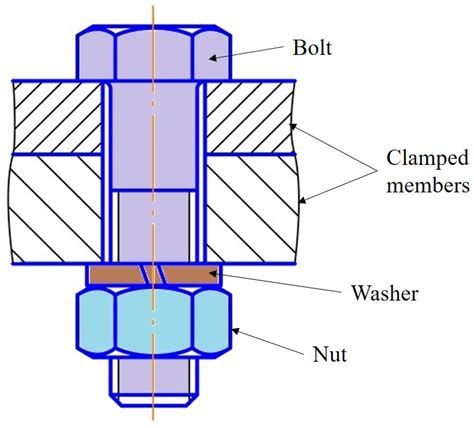
Through-Bolt Applications: In through-bolt applications, it is imperative that locks are used on both the nut and the bolt. This ensures that the locking mechanism is engaged on both ends of the connection, providing comprehensive security.
Surface Hardness: As previously mentioned, for the HEICO-LOCK® washers to function properly, the serrations must imbed in the top and bottom mating surfaces. This requires that the serrated surface of the washer is harder than the mating surface.
Torque Application: Applying consistent and accurate torque is fundamental to the success of any bolted joint, and HEICO-LOCK® systems are no exception. When possible, impact wrenches and tightening by hand should be avoided. Impact wrenches can lead to inconsistent and excessive torque, while hand tightening may not provide sufficient or uniform clamping force.
Multi-Bolt Flanges: For multi-bolt flanges, a systematic approach to tightening is essential to ensure an even clamp load across the entire flange. Flanges should be torqued in steps and in the appropriate star pattern. While it is common to tighten only one bolt at a time, this practice can result in point loading and load scatter, compromising the overall integrity of the joint. A staged tightening sequence, often in a star or crisscross pattern, distributes the load more evenly and prevents premature stress on specific bolts or flange sections.
how to calculate bolt tightening torque
Installation Verification Without Torque Devices
In situations where a torque device is not available or practical, it can be challenging to ascertain if the HEICO-LOCK® washers have been installed correctly. While a torque device is the preferred method for achieving accurate torque values, a simple visual check can serve as a minimum verification. After tightening the joint, it is recommended to disassemble the nut and bolt and confirm that the serrations of the washers have made a visible imprint on both the top and bottom mating surfaces. This imprint indicates that the wedge lock mechanism has engaged sufficiently. The joint can then be reassembled. However, this method should be considered a last resort, and efforts should always be made to employ proper torque control for critical applications.
Durability and Reusability of HEICO-LOCK® Washers
The question of reusability is a common concern when evaluating fastening solutions. HEICO-LOCK® carbon steel washers offer good reusability and can be reused multiple times. The exact number of reuses depends on factors such as the hardness of the bolt and the specific application. With a typical 10.9 grade bolt, HEICO-LOCK® washers can often be reused more than 20 times.
However, it is crucial to monitor the condition of the washers. With harder bolts, washers may need to be replaced more frequently to maintain optimal locking performance. Stainless steel HEICO-LOCK® washers, due to their material properties and the nature of high-temperature applications they are often used in, should generally be replaced after a single use to ensure continued reliability. When reusing HEICO-LOCK® washers, it is important to ensure that the cam surfaces face each other, maintaining the correct orientation for the wedge lock system.
Surface Integrity: Protecting Your Equipment
A common apprehension regarding the use of serrated washers is the potential for damage to the mating surfaces of the equipment. HEICO-LOCK® washers are specifically designed to mitigate this concern. They feature unidirectional serrations that are engineered to avoid scoring the mating surfaces. Instead of creating deep gouges, the serrations produce a relatively smooth imprint in the substrate. This minimizes the formation of sharp edges and stress risers, thus preserving the structural integrity of the clamped components.
Material Variety and Application Scope
HEICO-LOCK® washers are designed to be versatile, catering to a wide spectrum of industrial needs. They are available in both standard and enlarged diameter configurations, allowing for compatibility with various bolt sizes and load distribution requirements. The system is certified for securing bolts and functions effectively across a range of preload levels, from low to high.
The availability in both metric and inch sizes, spanning from M3 to M76 and ¼” to 3”, further underscores their broad applicability. This comprehensive range ensures that HEICO-LOCK® solutions can be deployed in virtually any bolted joint scenario, from small precision assemblies to heavy-duty industrial machinery. Furthermore, performance testing is available to replicate specific application conditions, allowing users to validate the effectiveness of HEICO-LOCK® washers in their unique environments.
HEICO-LOCK® wedge lock washers represent a significant advancement in securing bolted joints against loosening. By understanding their unique mechanism, adhering to proper installation procedures, and selecting the appropriate materials, users can confidently employ these washers to ensure the safety, reliability, and longevity of their critical connections across a multitude of demanding applications.