The reproductive strategies of lizards are as diverse and fascinating as the creatures themselves. While the "birds and the bees" analogy might be a common starting point, understanding how lizards procreate delves into a complex biological landscape, encompassing a variety of methods from egg-laying to live birth, and even the remarkable phenomenon of asexual reproduction. As reptiles gain popularity and owners become more invested in their care, interest in breeding these unique animals is naturally growing, leading to a greater appreciation for their reproductive cycles.
Understanding the Basics: Male and Female Reproductive Anatomy
Distinguishing between male and female reptiles can be a challenge for the uninitiated, as they lack the external genitalia commonly seen in mammals. Both sexes possess internal reproductive organs. The male lizard has two testicles housed within the body. Crucially, the male reproductive organ, be it a single penis or paired hemipenes (in lizards and snakes), is not connected to the urinary tract and serves solely for reproduction.
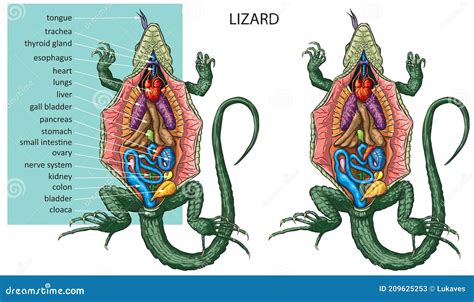
For owners seeking to sex their pets, a probe can be inserted into the cloaca - a shared opening for urinary, defecatory, and reproductive tracts - and directed towards the tail, off the midline. The presence or absence of certain structures can indicate sex. Beyond this internal anatomy, several secondary sexual characteristics can aid in differentiation.
Sexing Lizards: Beyond the Cloacal Probe
While internal anatomy is key, external features often provide further clues. In chelonians (turtles and tortoises), males often have a concave plastron (the bottom shell) and a proportionally longer tail. Generally, male reptiles may exhibit larger heads and overall body size compared to females.
Specific groups, like many male iguanids and geckos, possess distinctive femoral or pre-anal pores. These pores secrete a waxy substance, making them more prominent in males than in females. Another common, though not universal, indicator is tail length; males of many lizard species tend to have proportionally longer tails than their female counterparts.
For more definitive sex determination, owners and breeders can turn to advanced techniques such as ultrasound, surgical sexing, or radiographs. These methods provide precise insights into the reproductive anatomy, ensuring accurate sex identification.
The Reproductive Cycle: From Courtship to Fertilization
Reproduction in lizards, while often appearing as a natural event, is highly dependent on specific environmental conditions. A balanced diet and a suitable environment for egg-laying are crucial for normal egg development and timely oviposition. Owners may be surprised to discover that a single female lizard can develop eggs even without the presence of a male. This phenomenon is linked to the female's reproductive physiology.
Before copulation, male and female reptiles typically engage in ritualized courtship behaviors. These displays can vary significantly between species, involving visual cues, vocalizations, or specific movements designed to signal readiness and attract a mate.
For fertilization to occur, the male inserts either his single penis or one of his hemipenes into the female’s cloaca. Following copulation, a remarkable biological adaptation allows sperm to be stored within the female's reproductive tract for extended periods, sometimes up to six years. This sperm storage mechanism ensures that fertilization can occur even if mating opportunities are infrequent.
Gravid Females and Egg Development
A female reptile is considered gravid when she is carrying developing eggs internally. This state is often colloquially referred to as pregnancy. In species like the green iguana, a healthy adult female can initiate egg development even if she has not mated. This process begins in the ovaries, where eggs are stored. For instance, female green iguanas typically reach sexual maturity between two and four years of age. At this stage, follicles begin to develop within the ovaries. Each follicle contains a tiny egg surrounded by a sac filled with yolk, providing essential nourishment for the developing embryo.
A gravid female will often cease eating for a period of three to six weeks prior to laying her eggs. This cessation of feeding is a physiological response to the energy demands of egg development and the physical space occupied by the developing clutch, which can make digestion difficult.
Oviparity: The Predominant Mode of Reproduction
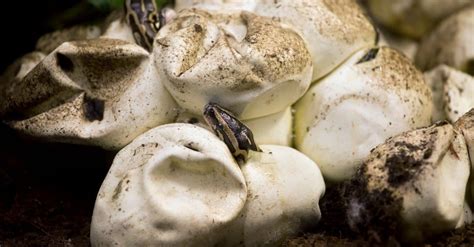
The vast majority of lizards reproduce by laying eggs, a process known as oviparity. The act of laying eggs is termed oviposition. The number of eggs laid in a clutch can be remarkably uniform in some smaller species. For example, anoles (Anolis species) typically lay only a single egg at a time, many geckos lay one or two eggs depending on the species, and some skinks produce clutches of two eggs.
However, a more general rule dictates that clutch size is influenced by the mother's size, age, and overall condition. A clutch of four to eight eggs can be considered typical for many species. Larger lizards, such as iguanas, can lay significantly more eggs, sometimes exceeding 50 at a time.
Lizard eggs are commonly characterized by their leathery, porous shells. These shells are designed to absorb moisture from the environment, allowing the eggs to expand as the embryos grow. This moisture absorption is critical for maintaining the correct humidity levels necessary for embryonic development.
An interesting exception to this rule is found in the majority of egg-laying geckos. Their eggs possess shells that harden shortly after being deposited, and their size and shape typically do not change thereafter. This hardening of the eggshell might offer increased protection against desiccation or physical damage.
Viviparity: Giving Birth to Live Young
While oviparity is common, some lizard species exhibit viviparity, the bearing of live young. This reproductive strategy is particularly prevalent in certain groups, such as skinks, where approximately one-third of species are viviparous. Viviparity is also observed in species that inhabit colder climates, whether at high altitudes or extreme latitudes. For instance, all geckos native to New Zealand give birth to live young, a stark contrast to most other gecko species that lay eggs.
The mechanisms by which viviparity occurs in lizards are diverse. In some species, the only distinction between oviparity and viviparity is that shells never fully form around the "eggs." The female retains these developing embryos within her oviduct until development is complete. In these cases, the yolk within the egg provides all the necessary energy for development, with no additional nutrients transferred from the mother. This is known as lecithotrophy.
In other viviparous lizards, the eggs released from the ovary contain most, but not all, of the energy required for development. These species often develop various forms of placentae, structures that facilitate the transfer of nutrients from the mother to the offspring during gestation. This maternal provisioning is termed matrotrophy.
A highly advanced and complex form of viviparity is seen in species like Mabuya heathi. Here, tiny eggs with minimal yolk are released from the ovary. A sophisticated placenta develops, enabling the transfer of over 99 percent of the nutrients needed for embryonic development from the mother to the offspring. These species typically have very long gestation periods, ranging from 8 to 12 months.
Embryonic Development and Sex Determination
The determination of sex in most lizard species is genetically fixed, meaning a hatchling will inherently possess either male or female reproductive structures. In many iguanian lizard families, as well as some species of whiptails, tegus, geckos, and skinks, males have dissimilar sex chromosomes, similar to the XY system found in mammals. Conversely, some female geckos and wall lizards, and all monitor lizards, exhibit sex-chromosome differences analogous to those found in snakes.
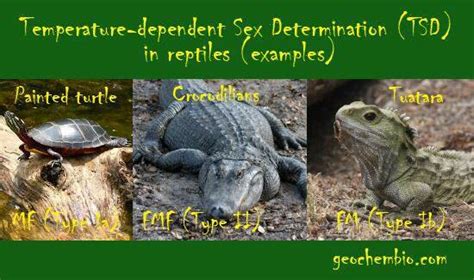
However, a fascinating variation exists in a few lizard species, including some iguanids, geckos, and wall lizards, which lack distinct sex chromosomes. In these species, sex determination is influenced by environmental factors, specifically temperature. This phenomenon is known as temperature-dependent sex determination (TSD). The temperatures experienced within the nest during egg incubation play a crucial role in dictating whether the hatchlings will develop as males or females.
Parthenogenesis: Reproduction Without a Mate
Beyond sexual reproduction, a remarkable number of lizard species exhibit parthenogenesis, a form of asexual reproduction where females produce offspring from unfertilized eggs. This process results in daughters that are genetically identical, or nearly identical, to their mothers.
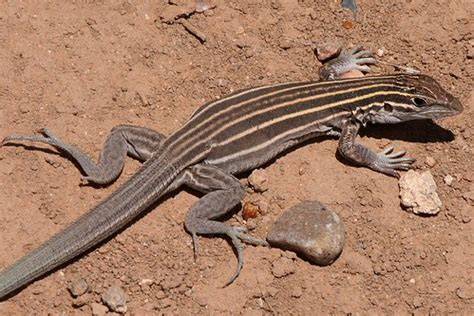
Obligate parthenogenesis, where reproduction is solely asexual, is known in approximately 80 unisexual vertebrate species, with lizards forming the majority. Notable examples include the whiptail lizards of the genus Aspidoscelis (formerly Cnemidophorus), where 12 out of over 40 described species are unisexual. Similarly, rock lizards of the Caucasus Mountains (Darevskia species) include seven unisexual species. These unisexual species are often hybrid clones, arising from past matings between related species. They possess an increased number of chromosome sets (triploid or tetraploid) which is believed to compensate for the lack of genetic variation through hybrid vigor.
Facultative parthenogenesis (FP) is a more complex phenomenon, where females can reproduce sexually but are also capable of reproducing asexually if necessary. Detecting FP can be challenging, especially in wild populations, due to the ability of some females to store sperm for long periods. The most compelling evidence for FP comes from captive females maintained in the absence of males.
Recent scientific reports have highlighted instances of FP in species not previously known to exhibit it. For example, the first known case of facultative parthenogenesis in a crocodile was documented in an 18-year-old American crocodile (Crocodylus acutus) kept in isolation. Similarly, FP has been reported in captive Komodo dragons (Varanus komodoensis). These discoveries challenge previous assumptions about reproductive strategies in these species.
The mechanisms underlying parthenogenesis are intricate. Normally, the entry of sperm into an egg triggers development. In parthenogenesis, this trigger is absent, raising questions about how embryonic development is initiated. Furthermore, the normal chromosomal reduction divisions of meiosis must be circumvented or modified to produce viable offspring from unfertilized eggs.
The Evolutionary Advantages and Disadvantages of Different Reproductive Strategies
Sexual reproduction, the most common method, involves the shuffling of genetic material from two parents, creating offspring with diverse gene combinations. This genetic diversity is believed to enhance an organism's ability to adapt to changing environments and resist diseases.
Asexual reproduction, while seemingly simpler, presents both advantages and disadvantages. A significant advantage is the potential for rapid population growth, as every individual is capable of reproducing, and no energy is "wasted" on males. This can be particularly beneficial for colonizing new habitats. The brahminy blind snake (Ramphotyphlops braminus), a parthenogenetic species, has successfully colonized six continents due to this reproductive efficiency.
However, the lack of genetic recombination in asexual reproduction can lead to genetic monotony. Offspring are essentially clones of the mother, meaning any genetic weakness, such as susceptibility to a specific disease or a detrimental mutation, can be passed down to all subsequent generations, potentially leading to the demise of an entire population if faced with a new threat.
The unisexual whiptail lizards, despite reproducing asexually, have evolved mechanisms to maintain genetic richness. Researchers have found that these species initiate reproduction with twice the usual number of chromosomes. This doubling is thought to stem from ancient hybridization events between different species, providing a broad genetic base. By combining sister chromosomes rather than homologous chromosomes during reproduction, these lizards manage to maintain heterozygosity, a level of genetic variation comparable to sexually reproducing species. This sophisticated mechanism allows them to overcome some of the inherent disadvantages of asexual reproduction.
Top 10 Animals with Unusual Reproductive Strategies
Parental Care: A Variable Trait
Parental care in lizards varies greatly across species. In most oviparous species, there is little to no parental care after the eggs are laid. The eggs are left to incubate in suitable environments, such as under rocks, in rotting logs, or buried in the ground. However, some exceptions exist. Females of certain species, like the five-lined skink and glass lizard, will remain with their eggs, brooding them until they hatch. This brooding behavior helps maintain optimal temperature and humidity and can offer some protection against predators.
Hatchlings typically emerge from their eggs using a specialized structure on their snout called an egg tooth, which they use to cut through the eggshell. Once hatched, they are fully independent, resembling miniature adults.
In viviparous species, parental care can extend beyond birth. Females of some live-bearing species assist their neonates in freeing themselves from embryonic membranes after birth, sometimes consuming the membranes. While extended parental care is rare, some species, like the large Australian sleepy lizard, provide a degree of care that does not involve direct feeding or grooming, unlike that seen in birds and mammals.
Conclusion: A Spectrum of Reproductive Ingenuity
The reproductive biology of lizards showcases a remarkable spectrum of evolutionary adaptations. From the common practice of egg-laying to the more specialized live-bearing strategies, and the extraordinary phenomenon of parthenogenesis, these reptiles demonstrate an impressive array of methods to ensure the continuation of their species. Understanding these diverse reproductive strategies not only deepens our appreciation for lizard biology but also provides valuable insights into the broader principles of evolution and adaptation in the animal kingdom.