Sharks, ancient mariners of the ocean, possess reproductive strategies as diverse and fascinating as their forms. While often perceived as fearsome predators, their methods of perpetuating their species are a testament to millions of years of evolutionary adaptation. Unlike many other marine animals that broadcast their genetic material into the water, sharks engage in internal fertilization, a more deliberate and energy-intensive approach. This complexity extends to the development and birth of their young, encompassing a range of methods from laying leathery egg cases to nurturing live pups within the mother's body. Understanding these reproductive nuances is crucial for comprehending their life cycles and, consequently, for effective conservation efforts.
The Foundation of Reproduction: Internal Fertilization and Mating Rituals
At the core of all shark reproduction lies internal fertilization. This means that the male shark must physically transfer sperm to the female. The specialized organ responsible for this is the clasper, an external appendage found on male sharks, stingrays, skates, and chimaeras. The clasper is not an independent structure but rather an extension of the pelvic fin, designed to be inserted into the female's cloaca to deliver sperm for fertilization of her eggs.
The process of finding a mate can involve sophisticated chemical signaling. It is believed that when a female shark is ready to reproduce, she releases pheromones, chemical signals that alert males in the vicinity. Once a male has located a receptive female, the mating process itself can be quite vigorous. Accounts suggest that mating often involves considerable biting, thrashing, and rolling. The male may need to bite the female's back, flanks, and fins to achieve the correct positioning for successful insemination. This often leads to bite marks on the female, a testament to the intensity of the act. To cope with this, some female sharks have evolved skin that is significantly thicker, sometimes nearly twice as thick as that of males in these specific areas, providing a degree of protection.
Despite the intensity, direct observation of shark mating in the wild is rare. However, research has revealed some remarkable adaptations. Not all of the male's sperm is used in a single mating event. Some female sharks, such as the brownbanded bamboo shark, possess the ability to store sperm for extended periods, potentially for years, allowing them to fertilize eggs at a later date even without immediate access to a male. Furthermore, females may mate with multiple males, and the sperm from different fathers can be used to fertilize the eggs within the same litter, resulting in pups with different paternal lineages.
Diverse Strategies for Embryonic Development: From Yolk Sacs to Uterine Milk
Following fertilization, the embryo begins its development, receiving nutrients through various mechanisms. Sharks exhibit a spectrum of developmental strategies, broadly categorized by how the embryo is nourished. Embryos that rely solely on the yolk sac for sustenance are termed ‘lecithotrophic’. In contrast, those that receive nourishment from both the yolk and the mother are classified as ‘matrotrophic’.
A particularly interesting form of matrotrophic development is seen in some elasmobranchs, like certain stingrays, where the embryo initially feeds on yolk and then transitions to being nourished by a substance called ‘histotroph’, often referred to as ‘uterine milk’, produced by the mother. The precise composition and importance of this uterine milk are still areas of active research.
The Spectrum of Birth: Oviparity, Viviparity, and Beyond
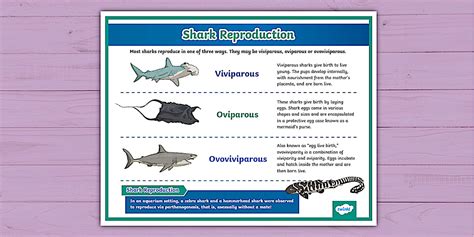
The methods by which shark pups enter the world are remarkably varied, broadly falling into two main categories: oviparity (egg-laying) and viviparity (live-bearing). Within these, there are further distinctions that highlight the evolutionary ingenuity of these creatures.
Oviparity: The 'Mermaid's Purse' Strategy
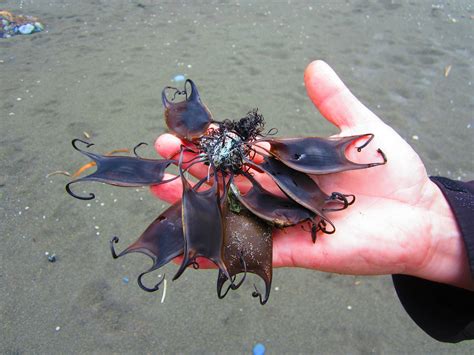
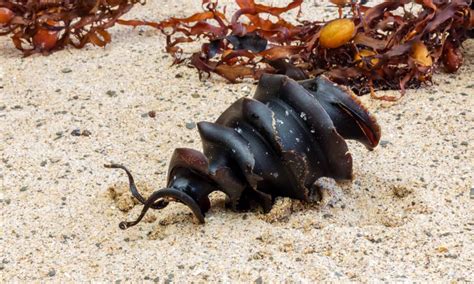
Oviparous sharks, those that lay eggs, deposit their fertilized eggs in protective casings, often referred to as 'mermaid's purses'. These egg cases are typically made of a tough, leathery material composed of fibrous protein, collagen. They are designed to withstand the harsh marine environment and are often anchored securely to substrates like rocks, coral, or kelp stalks using specialized tendrils or horns, depending on the species. Some egg cases can even house multiple embryos, though many contain a single developing pup.
The porous nature of the egg case allows for the exchange of gases and nutrients with the surrounding water. Oxygen can penetrate, supporting the embryo's respiration, while waste products can also diffuse out. The nourishment available to oviparous pups is primarily derived from the yolk sac within the egg. Consequently, these pups tend to be relatively small at the time of hatching. Once the yolk is depleted, the pup must break free from the egg case to begin its independent life. A fascinating behavior observed in shark pups within their egg cases is their ability to cease movement to avoid detection by potential predators. Species like zebra sharks and horn sharks are examples of oviparous sharks.
Viviparity: Live Birth with Mammalian Parallels
Viviparous sharks give birth to fully formed, live young. This strategy mirrors that of mammals in many ways and is further divided into two main categories: placental and aplacental viviparity.
Placental Viviparity: A Direct Connection
In placental viviparity, a true placenta forms, establishing a direct connection between the maternal and embryonic tissues. This allows for the efficient transfer of nutrients and oxygen from the mother's bloodstream to the developing pup via an umbilical cord. Sharks employing this method, such as bonnethead sharks, exhibit a development process strikingly similar to that of mammals. The pups live off the placenta until they are ready for birth. Upon delivery, they may bear a small scar where the umbilical cord was attached, which quickly heals. The birth process involves the pup moving into the cloacal chamber and exiting the mother's body through her cloaca. While most pups are born tail-first, some may emerge head-first.
Aplacental Viviparity (Ovoviviparity): Nourishment from Within
Aplacental viviparity, often termed ovoviviparity, involves the development of eggs inside the mother's body, but without the formation of a true placenta. In this mode, the eggs hatch within the mother's uterus, and the developing embryos are initially sustained by their yolk sacs. However, many aplacentally viviparous sharks provide additional nourishment to their young. This can take the form of unfertilized eggs that are continuously released into the uterus, a practice known as oophagy or 'egg eating'.
This strategy is particularly pronounced in species like the shortfin mako and bigeye thresher sharks. The developing pups may not only consume these unfertilized eggs but also, in some extreme cases, their smaller, unhatched siblings. This phenomenon, known as intrauterine cannibalism, ensures that only the strongest and most developed pups survive to be born. The ragged-tooth shark is a well-known example of a species exhibiting this behavior. The pups may also have the ability to move between the mother's multiple uteruses, further enhancing their opportunities to feed.
Cannibalistic Siblings? The Sandtiger Shark
Parthenogenesis: Reproduction Without a Mate
A less common, yet remarkable, reproductive strategy observed in sharks is parthenogenesis, or 'virgin birth'. This occurs when a female shark reproduces without the fertilization of her eggs by male sperm. While not an ideal method for introducing genetic diversity, parthenogenesis can serve as a crucial survival mechanism when males are absent. Confirmed cases of parthenogenesis have primarily been documented in captive sharks, where environmental conditions can be controlled. In such instances, the resulting pups are essentially clones of their mother, carrying only her genetic material.
Shark Nurseries: Safe Havens for Young Sharks
To enhance the survival prospects of their offspring, many shark species utilize designated 'nursery areas'. These are typically shallow, warm, and food-rich environments, often found in coastal regions, mangroves, or seamounts, with a relatively low predator density. These areas provide a safe haven for young sharks, or pups, to grow and develop without the constant threat of becoming prey. For example, the Gili Islands are known for their whitetip reef shark nursery, where young sharks can feed and hide in shallow waters inaccessible to larger predators. Young sharks remain in these nurseries, learning to hunt and evade danger, until they reach a size and maturity that allows them to venture into more open ocean environments.
Conservation Implications: The Slow Pace of Shark Reproduction
The reproductive strategies of sharks, characterized by slow growth, late maturation, long gestation periods, and a limited number of offspring, make them particularly vulnerable to human pressures. Unlike many fish species that produce vast numbers of eggs, sharks invest significant energy into producing a few, well-developed young, each with a naturally higher chance of survival. However, this K-selected reproductive strategy means that populations are slow to recover from depletion.
The average gestation period for sharks can range from nine to 12 months, but in some species, like the spiny dogfish, it can extend up to two years, and for the Greenland shark, it is an astonishing 150 years to reach sexual maturity. Many shark species do not reproduce annually, opting to rest between litters. The number of pups per litter varies greatly, from a few, like the two pups of the bigeye thresher, to as many as 135 in a single litter for the blue shark.
This slow reproductive rate, coupled with threats such as overfishing (an estimated 100 million sharks are killed annually, primarily for their fins), habitat degradation, and pollution, has led to significant declines in shark populations worldwide. Some experts estimate that up to 90% of shark populations have decreased in recent decades, and without strong conservation measures, many species face extinction within the next decade. The vulnerability of shark nurseries to human development further exacerbates these challenges.
The unique reproductive adaptations of sharks, from their elaborate mating rituals and internal fertilization to their diverse methods of gestation and birth, underscore their evolutionary success over millions of years. However, these very strategies also render them susceptible to the rapid environmental changes and pressures imposed by human activities. Protecting these ancient and vital components of marine ecosystems hinges on a deeper understanding and appreciation of their reproductive biology and the implementation of robust conservation initiatives.