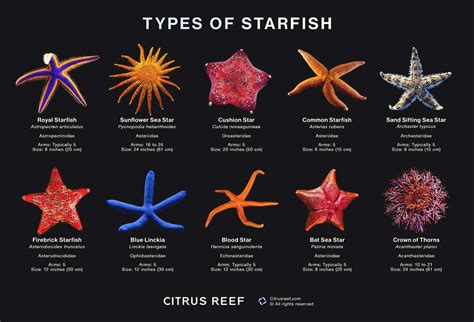
Starfish, also known as sea stars, are fascinating marine invertebrates that exhibit a remarkable diversity in their reproductive strategies. These echinoderms, belonging to the class Asteroidea, are found in all the world's oceans, from warm tropical zones to frigid polar regions, and play significant ecological roles. Their ability to reproduce both sexually and asexually, coupled with their unique developmental pathways and physical characteristics, makes them a subject of continuous scientific interest.
Sexual Reproduction: A Symphony of Gametes
Starfish are typically gonochorous, meaning individual starfish are either male or female. This sexual reproduction involves the external release of gametes - sperm from males and eggs from females - into the surrounding water column. This process, known as broadcast spawning, requires precise environmental cues to ensure successful fertilization. Factors such as tides, water temperature, and food availability can influence the timing of spawning events.
The Dance of Spawning
When ready to reproduce, male and female starfish may adopt a distinctive posture. As described by researchers, they "get up on all fives and twist their middle back and forth." This behavior allows them to elevate their bodies above the "boundary layer," a zone near the seafloor where water movement is minimal, thus facilitating the dispersal of gametes into more dynamic currents.
For fertilization to occur, synchronicity between males and females of the same species is crucial. While the parents themselves may never meet, they rely on an intricate chemical communication system. Eggs release species-specific proteins, such as bindin, which act as a signal to attract sperm. This ensures that sperm recognize and are attracted to eggs of their own species, increasing the chances of successful fertilization. "In nature, starfish and brittlestars just throw off their eggs and sperm into the water, so Mom and Dad actually never even see each other," explains a researcher.
A single reproductive female starfish can produce an astonishing number of eggs. For instance, large species found on the West Coast might release up to 50 million eggs per year. This immense reproductive output is a strategy to overcome the low survival rates of offspring in the harsh marine environment.
Microworlds: Shapeshifters of the Sea
Embryonic Development: From Bilateral to Radial Symmetry
Starfish embryos, like those of other echinoderms, are classified as deuterostomes. This embryonic classification indicates a shared evolutionary ancestry with chordates, including fish, as their early embryos develop bilateral symmetry. However, this symmetry is transient. As the developing starfish larva drifts in the zooplankton, it undergoes a profound metamorphosis. Upon settling on the seabed, the organism transforms, developing the characteristic five-point radial symmetry that defines adult starfish.
The larval stages of starfish are also remarkable. Typically, they hatch as blastulas and progress through distinct phases, such as the bipinnaria larva, which develops a band of cilia for movement, and the brachiolaria larva, characterized by three short, adhesive arms. These larval forms are bilaterally symmetrical and drift in the plankton before undergoing metamorphosis into the radially symmetrical adult form.
Asexual Reproduction: The Power of Regeneration
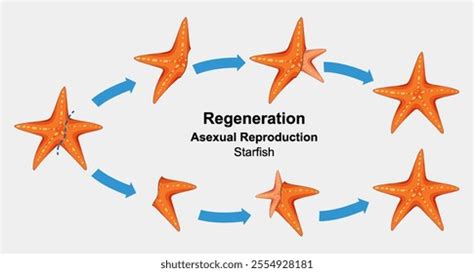
Beyond sexual reproduction, many starfish species possess an extraordinary ability to reproduce asexually through fragmentation. This process, also known as fissiparity, allows a single starfish to create genetically identical copies of itself.
Fragmentation and Regeneration
In asexual reproduction by fragmentation, a portion of an arm can detach from the parent starfish. Under favorable conditions, this detached arm can regenerate into a complete, independent individual. Some species are particularly adept at this, with a single arm, sometimes even without a significant portion of the central disc, capable of growing into a new starfish. This regenerative capacity is a remarkable biological feat, though it can take several months to complete and leaves the regenerating starfish vulnerable to infection.
This ability has led to some notoriety, particularly in the context of human interaction. Historically, fishermen who found starfish preying on their valuable catches of clams and mollusks would sometimes chop up the starfish and discard them at sea, believing they were eliminating the pests. Ironically, this practice often resulted in an increase in starfish numbers, as each fragmented piece could regenerate into a new individual, a phenomenon that was only better understood over time.
Fission in Certain Species
Certain species, like some Aquilonastra stars, are known to reproduce asexually by fission, essentially splitting themselves into two or more parts, each capable of developing into a new starfish. This method is particularly observed in aquarium settings. Similarly, some species, such as Asterina gibbosa, can reproduce asexually by splitting, where a large female may divide into two, with the resulting offspring developing as males.
Life Histories and Ecological Roles
The reproductive strategies of starfish are closely linked to their life histories and ecological roles. The sheer number of eggs produced in sexual reproduction, combined with the regenerative capabilities of asexual reproduction, ensures the continuation of starfish populations despite high mortality rates among larvae and juveniles.
Starfish as Keystone Species
Many starfish species are considered keystone species, meaning they have a disproportionately large impact on their ecosystems relative to their abundance. For example, the ochre sea star (Pisaster ochraceus) and the reef sea star (Stichaster australis) are crucial in maintaining biodiversity in intertidal zones. By preying on dominant species like mussels, they prevent these competitors from monopolizing resources, thereby allowing a wider array of species to coexist.
Challenges in Captivity and Research
Studying starfish reproduction in controlled environments, such as laboratories, can present unique challenges. Researchers have noted that inducing spawning in captivity can be a laborious process. For instance, brittlestars, a close relative of starfish, require specific conditions and often a multi-step approach involving physical manipulation and environmental changes to encourage them to release their gametes. This highlights the complex interplay of internal and external factors that regulate reproductive cycles in these marine animals.

The Fascinating Chemistry of Reproduction
The communication between starfish eggs and sperm is a testament to the sophisticated biochemical processes at play. The presence of species-specific proteins like bindin on sperm ensures selective fertilization. Furthermore, eggs are highly attuned to certain qualities in sperm, demonstrating a level of selectivity that goes beyond simple chance encounters. This intricate molecular dialogue is essential for successful reproduction in the vastness of the ocean.
Environmental Cues and Spawning Rhythms
The timing of spawning is often finely tuned to environmental conditions. For example, arctic species of brittlestars may enter a spawning condition when the water temperature rises to a certain level, often around mid-February. These environmental cues act as signals for females to begin releasing their eggs, initiating the reproductive cycle.
Starfish Anatomy and Reproduction
The reproductive organs of a starfish, known as gonads, are typically located within each arm. These gonads release gametes through openings called gonoducts, situated on the central disc between the arms. The internal anatomy of a starfish is complex, featuring a water vascular system for locomotion and feeding, a digestive system with an eversible stomach, and a well-developed nervous system. Gas exchange primarily occurs through papulae, thin-walled projections on the aboral surface.
Chemical Defenses and Communication
Starfish produce a variety of secondary metabolites, including lipids and complex steroid derivatives known as asterosaponins. These chemicals can serve multiple functions, such as deterring predators, acting as antifoulants to prevent other organisms from settling on their bodies, and potentially playing roles in communication during reproduction.
Life Cycle and Larval Stages
The life cycle of a starfish is a journey from a tiny, bilaterally symmetrical larva to a radially symmetrical adult. The bipinnaria and brachiolaria larval stages are planktonic, drifting with ocean currents. After a period of development, the larva settles on the seabed and undergoes metamorphosis, transforming into a juvenile starfish. This transformation involves a radical reorganization of tissues, establishing the characteristic radial body plan.
Asexual Reproduction and Fisherman's Bane
The phenomenon of asexual reproduction through fragmentation has historically presented challenges for those who harvest mollusks. The practice of dismembering starfish, intended to eradicate them, inadvertently promoted their propagation. This illustrates how a lack of understanding of an organism's biology can lead to unintended ecological consequences. The problem was eventually mitigated as the reproductive strategies of starfish became better understood.
Extreme Examples of Regeneration
While many species can regenerate a lost arm, some starfish exhibit even more extreme regenerative capabilities. A few species can regrow an entire new central disc from a single detached arm, demonstrating an incredible capacity for self-renewal. This ability is a testament to the complex cellular processes that govern regeneration in these animals.
Diverse Feeding Strategies
Starfish employ a variety of feeding strategies, from preying on benthic invertebrates and consuming coral polyps to acting as detritivores or suspension feeders. Their feeding mechanisms, such as the eversion of their stomachs to digest prey externally, are as diverse as their reproductive methods. This adaptability in feeding contributes to their widespread distribution and ecological significance.
The study of starfish reproduction continues to reveal the intricate adaptations and evolutionary strategies that allow these animals to thrive in diverse marine environments. From the chemical signals that guide fertilization to the remarkable regenerative powers of asexual reproduction, starfish offer a compelling glimpse into the complexities of life in the ocean.