Fotor, a platform once primarily known for its playful AI-powered image tools, now empowers creators to bridge the gap between cartoonish charm and cinematic realism with just a few precise steps. Transforming flat, stylized cartoon drawings into vivid, lifelike AI-generated portraits demands more than basic uploads-it requires strategic use of Fotor’s advanced AI features, a clear vision, and an understanding of key techniques that elevate simple designs into photorealistic masterpieces. This article reveals the exact workflow behind this powerful transformation, turning creative sketches into compelling, photo-quality visuals that captivate audiences across digital platforms.
The Foundation: Preparing Your Cartoon for Realism
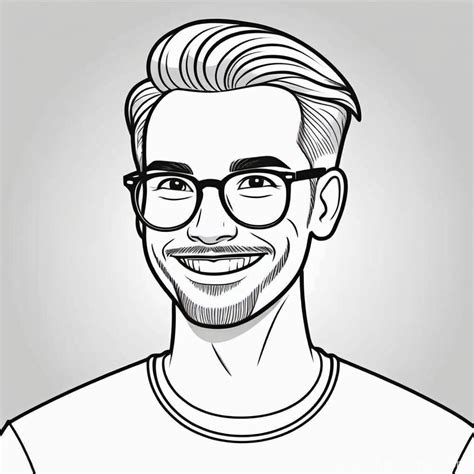
Creating realistic portraitures from cartoons begins with preparing a clean, well-defined base drawing. Fotor’s AI excels when presented with sharp lines, consistent shading, and minimal clutter-conditions easier to achieve with clean line art or clean scans of original pencil sketches. "The clearer your source, the more accurate the AI rendition," explains industry consultant Linnea Cole, AI creativity lead at Visual Fusion Lab. "Precision in outline and contrast gives the AI focal points to work from." A rough or heavily shaded cartoon may confuse the neural networks, resulting in uneven textures or distorted proportions. Always refine the source image: use vector tools or high-resolution scans to ensure outlining is tight, gradients smooth, and edges crisp.
Unleashing Fotor's AI: From Pixels to Photorealism
Once the planning phase is complete, uploading the cartoon file into Fotor’s interface launches a process calibrated for realism. Unlike casual image editing, Fotor’s AI rendering engine leverages deep learning models trained on millions of human facial datasets. This allows it to interpret cartoon features-eyes, noses, mouths-not as flat blocks but as three-dimensional forms capable of subtle volume and realistic lighting effects.
The key steps involve careful model selection and parameter tuning. Fotor offers specialized presets such as “Realistic Portrait Realness” and “High-Resolution Refined,” which adjust detail sensitivity, texture depth, and shadow blending to simulate lifelike surface realism. Understanding Fotor’s parameter controls is essential. Users must balance factors like Edge Sharpness, Shadow Depth, and Texture Precision-each influences how faithfully the cartoon translates into photorealism. For instance, increasing shadow depth helps anchor facial features in three-dimensional space, preventing them from looking flat and synthetic. Similarly, fine-tuning texture smoothness ensures skin tones appear porous and believable, avoiding the “plastic” effect common in lesser models. "A subtle 10% edge enhancement often makes the biggest difference," notes Fotor’s product team.
The Nuances of Realism: Refining Details and Lighting
Step-by-step guidance includes highlighting facial contours, adjusting skin tone seamlessly, and applying global lighting to match a realistic environment. Beyond base rendering, Fotor’s strength lies in its post-processing suite, which elevates AI outputs with cinematic polish. Applying depth-of-field effects blurs backgrounds subtly, mimicking real camera focus. Supplementary tools simulate natural skin imperfections-imperceptible pores, gentle blemishes, or soft lights and shadows-to prevent over-processing. These nuances are critical; photorealism isn’t just about high resolution, but trustworthy realism that feels authentic. Adding context bolsters credibility: embedding artificial lighting like soft studio lights or natural window illumination reinforces material believability, anchoring the portrait in a tangible space.
Beyond the Portrait: Expanding the Applications of AI Realism
The practical benefits of converting cartoons to realistic AI art through Fotor extend far beyond artistic expression. For content creators, marketers, and animators, this capability transforms stylized characters into marketable assets-social media avatars, product personas, or narrative illustrations with immediate visual impact. A children’s app designer, for example, might convert a hand-drawn mascot into a richly textured, photo-realistic version that enhances brand realism and emotional connection. Filmmakers and game developers similarly leverage this workflow to rapidly prototype believable characters without lengthy green-screen shoots.
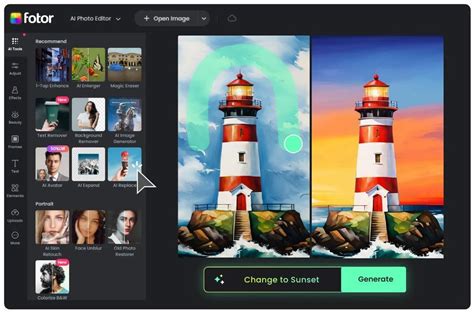
The Fotor platform itself offers a comprehensive suite of AI-powered tools designed to cater to a wide range of creative needs. Its AI cartoon maker, for instance, can transform photos into various cartoon styles with a single click, utilizing advanced AI models for natural and precise results. This includes methods like AI cartoon filters, text-to-image generation, and image-to-image transformations, all designed for fast, high-quality, and watermark-free output across any device.
Diverse Cartoonization Methods: From Photos to Text
Fotor's capabilities extend to various forms of cartoonization. Users can convert existing photos into cartoon art, with the AI intelligently recognizing details to create refined, layered cartoon visuals. For those with ideas but no source image, the AI cartoon image generator transforms text prompts into creative cartoon pictures. The platform also provides examples of AI cartoon creations with prompts, serving as inspiration and a starting point for users.
Beyond character portraits, Fotor's background changer allows users to replace photo backgrounds with AI-generated cartoon settings, infusing scenes with lively cartoon details. For social media, the AI cartoon avatar maker helps create fun and creative avatars from photos and text prompts. The platform even extends to AI cartoon videos, allowing users to add dynamic cartoon filters to images, creating eye-catching animated content.
Customization and Enhancement: The Final Polish
Creativity with Fotor's AI cartoon generator is not limited to the initial generation. Users can head over to the photo editor to further customize their AI cartoon images, adding text, stickers, emojis, and other elements to achieve the best visual effect. This blend of AI generation and traditional editing tools provides a powerful workflow for creators.
Understanding the Spectrum of Cartoon Styles
The process of transforming images into cartoons, whether from photos or text, encompasses a variety of styles, each with its unique characteristics and applications. Understanding these types is crucial for leveraging tools like Fotor effectively and achieving the desired artistic outcome.
Photo-Like Cartoons
These transformations aim to retain a significant portion of the original photo's realism while introducing a stylized, often brighter, "animated" appearance. The key is to balance the preservation of photographic texture with subtle enhancements. If outlines are introduced, they are typically kept at low to moderate levels to avoid a harsh, overly graphic look. Saturation is often increased to achieve that vibrant, animated feel, but care must be taken not to overdo it, which can lead to an artificial appearance. Higher detail settings can reveal finer features like pores or subtle skin textures, contributing to a more believable realism within the cartoon aesthetic. Advanced editing software, like Adobe Photoshop, allows for layering these cartoon effects non-destructively over the original image, offering granular control. Crucially, balanced lighting and simple backgrounds are recommended to keep the focus squarely on the subject.
Caricature-Style Cartoons
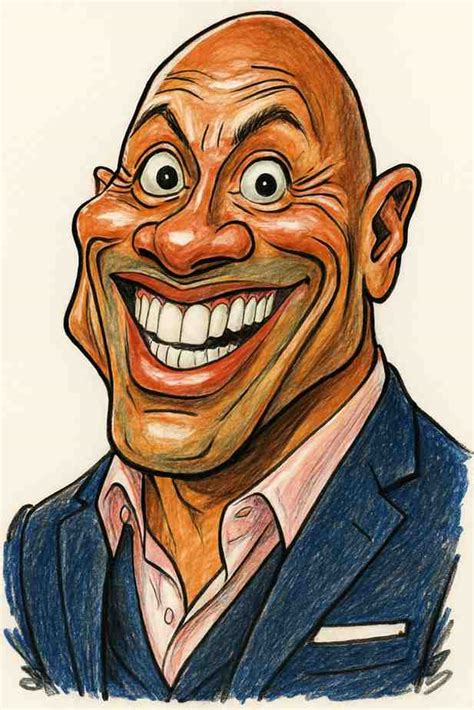
In stark contrast to photo-like cartoons, caricatures accentuate unique facial features for comedic or dramatic impact. The goal here is not strict realism but a heightened, often exaggerated, version of reality. The process involves identifying the most distinctive features of a person's face-such as large eyes, a prominent nose, or a unique jawline-and amplifying them. Starting with a high-resolution source image is essential, as more pixels allow the AI to better detect and exaggerate these key features. The result is a humorous and whimsical cartoon effect that clearly resembles the original subject but with a playful twist.
Comic and Manga Styles
These styles draw inspiration from the world of print comics and Japanese manga. Comic styles often feature bold line work and flat blocks of color, emulating the dramatic aesthetic of vintage comic books. This can involve strong outlines and high contrast. Manga styles, on the other hand, are characterized by detailed linework, expressive eyes, and often utilize screentones for shading and texture. Many AI tools offer dedicated manga or anime modes that automatically adjust facial proportions, commonly enlarging eyes and refining noses to match popular anime aesthetics. Customization options might include tweaking hair color, background style, and the overall "cuteness" factor to capture the diverse range within anime genres, from shojo to shonen. Simple or no backgrounds are frequently used in manga and anime to keep the focus on the characters. Experimentation with color schemes is also important, as some filters can heavily alter the original colors.
3D Avatars and Models
The transformation can also extend to creating vivid 3D avatars and characters. This involves converting 2D cartoon or anime characters into more lifelike, realistic 3D representations. AI tools can convert rendered 3D models, game characters, virtual idols, and VTubers into realistic versions, with highly detailed restoration and refined rendering that imbues them with a true sense of presence. This capability is particularly valuable for game development, virtual reality applications, and the creation of digital humans for the metaverse.
Artistic Filters and Overlays
Beyond specific styles, many platforms offer a range of artistic filters that can transform photos into painterly or abstract artworks. These filters, powered by unique model algorithms and machine learning techniques, can turn ordinary photos into pieces resembling the works of master artists like Van Gogh, Monet, or Picasso. This allows for a broad spectrum of creative expression, turning images into unique visual art.
Text-to-Cartoon Creations
A significant advancement in AI image generation is the ability to create cartoon images directly from text prompts. Instead of relying on an existing photo, users describe their desired image in text, and the AI model interprets these instructions to produce a cartoon image. This functionality, found in tools like Stable Diffusion and Midjourney, allows for the creation of entirely original characters, scenes, or concepts from scratch. The specificity and detail of the text prompt directly influence the final output, offering immense creative freedom. Advanced settings, such as "Sampling Steps" and "CFG Scale," can be adjusted to balance creativity with adherence to the prompt.
7 BEST Free & Paid AI Image Generators
Choosing the Right Tool: A Comparative Look at AI Cartoon Generators
While many platforms offer cartoonization features, each brings its own unique filters and specialized capabilities. The choice of tool can significantly impact the authenticity and quality of the final result.
Fotor: A Versatile All-in-One Solution
Fotor stands out as a powerful all-in-one AI photo editor. Its AI cartoon maker is built on advanced AI models, enabling natural and precise cartoon image generation. It supports multiple methods, including AI cartoon filters, text-to-image, image-to-image, and reference-based generation, all with fast processing times and high-quality, watermark-free results. Fotor offers various unique cartoon styles, such as 3D, comic, and Simpson-esque filters, and even a "cartoon pet filter" for animal photos. Its "cartoon-to-real-life" converter is also noteworthy, allowing users to transform cartoon images into realistic photos with minimal effort, preserving key features like physical traits, expressions, and emotions. This tool is particularly useful for converting full-body cartoon images into lifelike representations, accurately interpreting character proportions, clothing textures, and skin tones.
CreateVision AI: Prioritizing Authentic Artistic Styles
CreateVision AI distinguishes itself by focusing on "authentic artistic rendering" rather than generic filters. It offers over 25 distinct cartoon art styles, including detailed emulations of Disney 3D animation, Studio Ghibli watercolor, Pixar character design, American comic book art, Japanese manga, claymation, and vintage rubber hose animation. Unlike competitors that apply simplified effects, CreateVision AI uses style-specific AI models trained on actual artistic traditions, ensuring that each style adheres to its genuine artistic conventions-characteristic line work, shading techniques, and color palettes. This approach ensures that results look like genuine art rather than simply "filtered" photos. A key feature is its identity preservation technology, which ensures that the user's recognizable facial structure and features are translated appropriately into each cartoon style. Furthermore, CreateVision AI offers dual input capabilities: users can upload a photo for conversion or generate cartoon portraits from text descriptions, a flexibility not commonly found in other tools. It also provides watermark-free results with full commercial rights, even on its free tier, making it an attractive option for creators and businesses.
Other Notable Tools
- Canva Cartoonify: Offers a few basic cartoon filters integrated within its broader design ecosystem. While convenient for quick edits, the results are generally considered generic and lack artistic authenticity. Commercial use typically requires a Pro subscription.
- VanceAI Toongineer Cartoonizer: Provides specific styles like Disney and Ghibli, utilizing stable diffusion-based processing. However, it can be expensive for regular use, with slower processing times and a more technical interface.
- PhotoDirector: Offers a suite of editing tools beyond cartoonification, including mobile app convenience. While good for casual users, its cartoon effects are often generic, prioritizing ease of use over artistic depth.
- Vidnoz AI Cartoon Generator: A free option with daily limits, it claims "intelligent filter selection" but often produces generic results lacking professional quality and artistic authenticity.
The choice between these tools often boils down to a trade-off between speed and simplicity versus artistic authenticity and control. For creators seeking genuine artistic styles and identity preservation, platforms like CreateVision AI offer a more sophisticated solution, while tools like Fotor provide a balance of versatility and ease of use for a broader range of applications.
The Future of Cartoon to Realism Transformation
The journey from a flat cartoon sketch to a photorealistic AI creation is a testament to the rapid advancements in artificial intelligence. Tools like Fotor are continually evolving, offering more sophisticated algorithms and intuitive interfaces. As AI models become even more adept at understanding and replicating the nuances of human features, lighting, and textures, the line between digital art and reality will continue to blur. This opens up exciting new avenues for storytelling, character design, and visual expression, making the transformation of simple drawings into compelling, lifelike visuals an increasingly accessible and powerful creative endeavor.
The ability to seamlessly translate stylized art into realistic representations allows for a richer engagement with digital content, fostering deeper emotional connections and enhancing the perceived credibility of characters and scenes. Whether for personal projects, professional marketing, or artistic exploration, the techniques and tools discussed here provide a pathway to unlocking a new dimension of visual creativity.