Collage, an art form that thrives on the juxtaposition and layering of diverse materials, offers a unique and accessible avenue for creative expression. It is an art form that is made up of overlapping pieces of material, such as photographs, fabric, coloured and textured paper and other types of mixed media. The process focuses on the act of selecting materials and cutting them into the desired shape, before arranging them and pasting them onto the chosen surface. Unlike other art forms that may rely on proficient technical skills which may require more time to master, such as painting and sculpture, the artistic expertise of collage lies in the choosing, arranging and affixing. As such, the term ‘collage’ comes from the French term coller, meaning ‘to glue’. This guide introduces you to the fascinating world of collage, exploring its origins, various forms, and practical approaches to creating your own compelling artworks.
The Genesis of Collage: Cubism and Beyond
The term "collage" was coined around 1910 by the two pioneers of the Cubist movement, Georges Braque and Pablo Picasso. While exploring their new pictorial language, which sought to fragment and distort their subject matters, Braque and Picasso began to experiment with assorted materials, such as printed oilcloth, newspaper cut-outs, and patterned paper. By pasting these elements onto flat surfaces, they were able to evoke multiple dimensionality and further explore the fragmentation and destruction of objects.
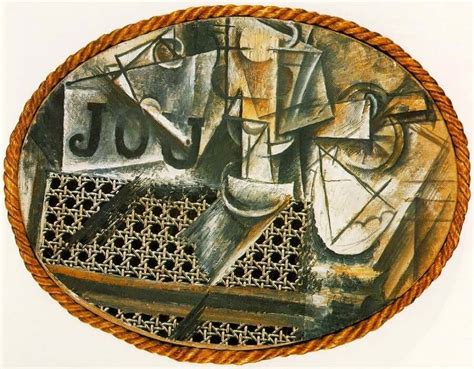
One of the very first examples of collage is Picasso’s Still Life with Chair Caning (1912). In this collage, Picasso incorporated painted elements, oilcloth printed with a chair caning pattern, and a piece of rope as a frame. Using these everyday items in a work of art signalled a dramatic move away from the traditional confinements of fine art practice, towards the blurring of art and everyday culture. This move came to define the preceding avant-garde movements and, in turn, transformed the art world.
The artistic expertise of collage lies in the choosing, arranging and affixing of materials. This focus on selection and composition, rather than solely on technical rendering, made collage a powerful tool for artists seeking to challenge established artistic norms. The inherent accessibility of collage, utilizing readily available materials, also democratized art-making, inviting a broader audience into the creative process.
Exploring the Diverse Landscape of Collage Techniques
Collage is not a monolithic practice; it encompasses a variety of distinct art forms and techniques, each with its own characteristics and potential for artistic exploration. Despite their differences, a recurring theme runs through each style - anti-aestheticism and a sense of elevating the everyday into the realm of high art, which defined many avant-garde movements of the early 20th century. Collage, in all of its forms, acted as a revolutionary medium which defied high art standards and rejected bourgeoisie culture.
Papier Collé: The Purity of Paper
Papier collé, translating to ‘pasted paper,’ refers to the exclusive use of paper stuck onto a flat surface. This distinguishes it from broader collage practices that employ a wider range of materials. Picasso and Braque were both making papiers collés at the end of 1912 and beginning of 1913, often incorporating newspaper clippings as a way of blurring the distinction between high art and the everyday. This technique emphasizes the inherent qualities of paper - its texture, color, and the information it carries - as the primary expressive elements.
Assemblages: Three-Dimensional Explorations
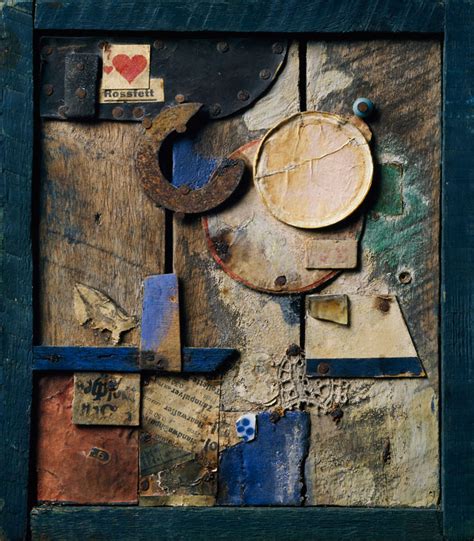
Assemblages take the principles of collage into the third dimension, incorporating found objects into 3D compositions. This process was originally inspired by the Surrealists who made absurd objects based on Sigmund Freud’s writings on dreams and the unconscious. The first example of this method is Picasso’s Still Life, which extended the tradition of still life painting into 3D space. The method of assemblage went on to inspire Dada artists such as Kurt Schwitters, who created large-scale compositions out of found objects and materials in non-hierarchical and nonsensical arrangements. Assemblages invite viewers to interact with art on a more tactile and spatial level, transforming everyday objects into elements of an artistic statement.
Décollage: Unveiling Hidden Layers
Décollage, a French word meaning to unstick, involves tearing away built-up layers, often from advertisement posters, to reveal images and words beneath. This term is largely associated with the nouveau réalisme movement founded in 1960. Décollage is essentially the opposite of collage, where a material or object is deconstructed, perhaps by peeling away its layers, to expose its otherwise unseen characteristics. This technique offers a powerful commentary on urban decay, consumerism, and the ephemeral nature of visual information in public spaces.
Montage and Photomontage: Assembling Narratives
The terms montage and photomontage refer to the act of assembling images that are related to one another in a composition. Photomontage is the same process but specifically with photographs. Photomontage can be a powerful tool for social commentary as artists manipulate and edit images from mass media to play with or recreate their meaning. This technique allows for the creation of new narratives and meanings by recontextualizing familiar images, often with a critical or satirical edge.
Cases for Political Art | The Art Assignment | PBS Digital Studios
Contemporary Collage: Innovation and Personal Vision
Today, collage continues to be a vibrant and evolving art form, with contemporary artists pushing its boundaries and exploring new thematic and material possibilities. Many accomplished collage artists are working in the photomontage style, infusing their work with personal perspectives and social commentary.
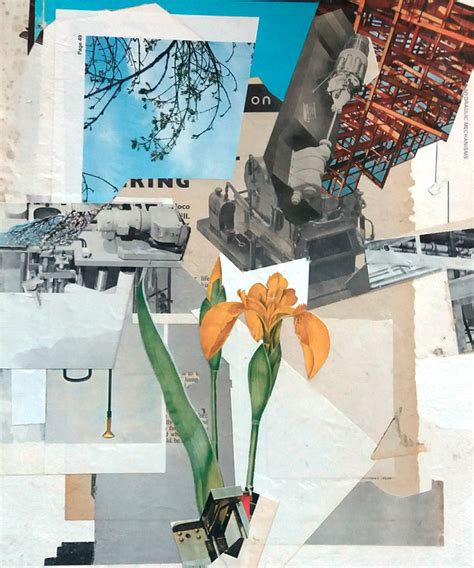
Benjamin West, for instance, is inspired by the relationship between human activity and nature. He uses photomontages to demonstrate how natural and man-made elements interact and often juxtapose. In West’s Processed series, he intersects natural elements such as a flower with mechanical or industrial parts. This process pays tribute to John Hartfield, a Berlin Dada artist who founded the photomontage process. Hartfield was nicknamed Dada Monteur - Dada Mechanic - to reflect his use of scissors and glue to create collage, assemblages, and photomontages, instead of painting with brushes, as an act of rebellion.
The nostalgic work of Australian-born Kareem Rizk is also noteworthy. Rizk is internationally recognized for his highly distinct style of collage as a mixed-media artist. Nostalgia plays a key role in his beautifully warm-toned works, which feature vintage materials, such as postcards and book clippings, to transport viewers back in time.
David Hockney, while perhaps more widely known for his paintings, also famously pioneered using photography to create artworks. For example, Pearblossom Hwy. 11-18th April 1986 is an avant-gardiste collage that represents a beautiful Californian countryside. However, David Hockney is also inspired by urban landscapes, notably New York City, as is visible in Graffiti Palace, NY 1982.
Robert Pereira Hind's unique works change in appearance as they mature with time, adding another layer of dynamism to the collage medium.
Crafting Your Own Collage: Materials and Techniques
Embarking on your own collage journey requires understanding the fundamental materials and techniques that can elevate your creations. The freedom inherent in collage allows for experimentation, but a few key considerations can significantly enhance the quality and longevity of your artwork.
Essential Tools for Collage Creation
To begin making collages, you'll need a few essential tools. A scalpel or craft knife is essential for intricate cutting, while a utility knife is best for straight edges and thicker papers. A metal ruler is better than a plastic one as its edge is much more hard-wearing. Scissors are usually the most effective tool for cutting, although the direction they go in is not always as easy to control as using a knife.
When it comes to adhesives, the choice can significantly impact your collage. For sticking medium and lightweight papers, a Tombow Glue stick is great for minimizing wrinkles and preventing excess glue from seeping out. If you are concerned about the longevity of your collage, bear in mind that any papers or materials such as paints or adhesives may not be archival unless they are artist-grade. Newspapers and magazines will yellow unless kept away from natural light. Craft glue may become brittle and also yellow. If you want to avoid these issues and your work is going to be framed and hung in natural light, it is worth sticking to artist papers and paints and gluing with an archival adhesive such as acrylic gel, or a pH-neutral or acid-free PVA glue. Mod Podge is a popular decoupage glue that can be used for collage, as an adhesive and as a sealant coating. Some artists advocate for spray adhesive for its even application, but caution is advised to avoid oversaturation of delicate materials.
The surface on which you glue your collage, also known as your support, needs to be sturdy and robust enough to take the amount of glue and paper you intend to adhere to it. If it is too thin or flexible, it may curl or warp once the glue is dry. For very heavy collages, you might need to use a support as sturdy as a wooden panel. Any of the cradled boards available at art suppliers could be ideal as they are relatively lightweight and very sturdy. For lighter collages, you could try using foam board, Corri-cor, or mountboard. If you apply colour to your support, it could become part of the composition and not just the backing.
Sourcing Your Materials: A World of Possibilities
The range of possible papers and other materials for collages includes newspapers, magazines, tissue paper, wrapping paper, wallpaper, and different handmade and art papers, as well as other textured, coloured, and interesting surfaces such as corrugated paper, foil paper, and fabrics. To find these materials, get really thrifty. A surprising amount of time goes towards sourcing magazines. Many artists love National Geographics for their pieces, and older issues can offer a unique aesthetic. Life magazines and optical illusion books are also great sources. Craigslist or eBay might have some, but thrift shops and flea markets are often treasure troves for vintage materials, and the materials tend to be cheaper there.
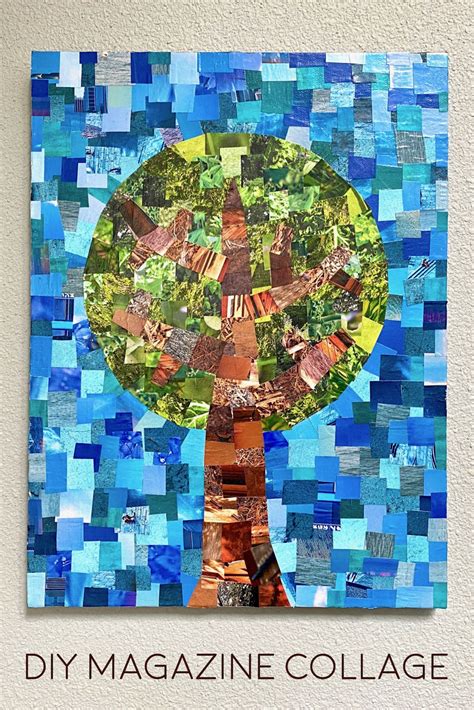
Old calendars can be a great source of images and inspiration for a collage. Asking neighbors or friends if they have any materials heading for recycling is also an environmentally friendly approach. When choosing images, don't overthink it. Sit down with your stack of books and magazines, take a few breaths, clear your mind, and quickly flip through them, pulling out anything that your mind is drawn to. This is akin to the Marie Kondo method of sparking joy - if a photo sparks joy, rip it out fast and make a pile.
Techniques for Engaging Compositions
When creating collages, consider varying your cutting methods to create a variety of textures that are pleasing to the eye and make the artwork more interesting. Tearing and ripping around images creates a softer, rugged texture, ideal for elements like hair, fur, or soft flower petals. Using scissors can provide smoother edges for objects like tables, doors, or body parts. For intricate details such as flower stems or lace, an Exacto knife and mat are invaluable.
Some artists prefer to position all the torn and cut paper shapes on the backing sheet before gluing any in place. This allows them to consider the relationship between different shapes and make alterations if necessary, before committing to a particular arrangement. Others prefer a more intuitive, direct approach, gluing elements in place as they go, which can lead to spontaneous and expressive compositions.
When cutting out shapes, don’t cut exactly on the edges - cut off a little of the line that separates a shape from its background. That way, when you add the shape into a new environment, the new composition will naturally create an edge to that shape, allowing it to blend better.
Layering and Compositional Strategies
When you have a composition you love, you can start gluing layer by layer. Taking pictures as you go can give you the freedom to try out all the possibilities of arranging your pictures without worrying about forgetting what looked good. This also allows you to step away from your project if needed.
Incorporating drawn, printed, or painted elements can help accentuate shapes or add detail. Some media, such as watercolor or ink, are best applied to a surface with a degree of absorbency, so it’s best to use these colors before sealing or varnishing your work. If you know you’re going to work with such media, it’s more important to try to avoid using too much glue when making your collage, as the glue may not take the watercolor or ink if it has bled out from under the pieces of paper you have stuck.
To create a sense of unity and balance, repeat colors and lines or forms. If the color of a subject’s shirt is reflected in the background visuals, or if similar curved shapes are used throughout the piece, it can create a cohesive and immersive experience for the viewer. Applying the rule of thirds, by breaking the image down into thirds both horizontally and vertically to have 9 sections, can also help create a more balanced composition, enabling a viewer to interact with the image more naturally.
Sealing and Protecting Your Collage
To seal your collages, a matte medium can be used, but it only takes a small amount to do the job. An artist spray varnish offers a thin layer of protection that will not wrinkle your collage on application. Mod Podge, as previously mentioned, offers a durable coating, is water-based, and non-toxic, making it easy to apply. Alternatively, a few layers of acrylic varnish, available in matt, gloss, and satin finishes, will provide a durable and archival layer of varnish.
If you are concerned about the longevity of your collage, consider using archival quality papers, paints, and adhesives. This will help prevent yellowing and fading over time, ensuring your artwork remains vibrant for years to come. For those concerned about bumps and wrinkles, laying a sheet of parchment paper over the completed collage and using a smoothing tool can help achieve a sharp, smooth finish.
The Enduring Appeal of Collage
There are so many reasons to love the art of collage, from the freedom it allows to the powerful stories that can be told through it. In educational settings, collage is particularly valuable because students can mix personal items and traditional materials to create something new and uniquely meaningful. The medium is often less intimidating than others, encouraging experimentation and a deep dive into composition and visual storytelling.
The act of creating a collage is a process of discovery, a journey of selecting, arranging, and affixing elements to form a cohesive whole. As artists continue to explore its possibilities, collage remains a dynamic and relevant art form, capable of challenging perceptions, sparking dialogue, and revealing the extraordinary within the ordinary. The more collages you make, the better you’ll get at your process of choosing, cutting, tearing, piecing, layering, and gluing. And as you hone your process, you’ll learn how each person has a different process, a different style, and you will develop your own!