The DirectDraw Surface (DDS) file format is a specialized image file type commonly used in video games and other graphics-intensive applications. Its primary advantage lies in its ability to store textures in a compressed format, significantly reducing file sizes and improving loading times. However, opening and editing DDS files in widely used image manipulation software like Adobe Photoshop can present a unique set of challenges. This guide aims to demystify the process, providing a thorough understanding of why these files can be tricky and offering practical solutions for successful integration into your workflow.
Understanding the DDS File Format and Its Challenges
DDS files are not your standard image formats like JPG or PNG. They are designed for efficiency within game engines and often contain specific types of texture data, including mipmaps and alpha channels, which can be interpreted differently by various software. The core of the difficulty in opening DDS files in Photoshop stems from its native inability to directly interpret this specialized format without the aid of external tools or plugins.
Historically, the process involved relying on plugins developed by graphics card manufacturers, such as NVIDIA. These plugins were designed to bridge the gap between the game-centric DDS format and Photoshop's versatile image editing capabilities. However, the landscape of DDS formats has evolved, with newer compression methods and variations emerging over time. This evolution means that older plugins might not support these newer DXT (DirectX Texture) formats, leading to issues where files either fail to open or appear corrupted, with significant portions of the image seemingly "missing."
The user experience shared in the provided information highlights this very issue: "It's been months, and I've literally never encountered this problem before. Are the files that you're trying to open in one of the newer DXT formats? I don't use Photoshop, so I could be wrong on this, but I think that plugin is old and might not support the newer formats." This sentiment is echoed by others who have encountered similar problems after setting up new PCs or updating their software. The reliance on outdated plugins becomes a critical bottleneck, preventing access to essential game assets or textures for modding and customization.
The Role of Graphics Card and Plugin Compatibility
A crucial factor influencing DDS file compatibility in Photoshop is the type of graphics card installed on your system. The NVIDIA Texture Tools Exporter plugin, for instance, is designed to work specifically with NVIDIA graphics cards. If you are using an AMD graphics card, this plugin will not function correctly, necessitating alternative solutions. This hardware dependency can be a source of confusion and frustration for users who assume a plugin will work universally.
The information provided emphasizes this point: "First/foremst - do you have an Nvidia graphics card? Pretty sure Nvidia plugin will not work on AMD card." This direct question points to a fundamental compatibility issue that must be addressed before attempting to open DDS files. Without the correct hardware or a compatible plugin, the visual output in Photoshop can be severely distorted, appearing as a "jumbled mess" rather than the intended image.
Step-by-Step Solutions for Opening DDS Files in Photoshop
Overcoming the challenges of opening DDS files in Photoshop requires a methodical approach, focusing on obtaining and configuring the correct tools. Here's a breakdown of the recommended steps:
1. Identifying Your Needs and System Specifications
Before diving into plugin installations, it's essential to understand what you're trying to achieve. Are you a game modder looking to create custom decals for games like Rocket League? Or are you a developer analyzing game assets? Knowing your objective will guide your choice of tools. Equally important is identifying your graphics card (NVIDIA or AMD) and your Photoshop version.
2. The NVIDIA Texture Tools Exporter Plugin
For users with NVIDIA graphics cards, the NVIDIA Texture Tools Exporter plugin is often the go-to solution. This plugin allows Photoshop to recognize and import DDS files.
- Installation: Download the plugin from the official NVIDIA Developer website. Ensure you download the version compatible with your Photoshop version.
- Opening DDS Files:
- In Photoshop, navigate to
File > Open As.... - Browse to the DDS file you wish to open.
- In the "Format" dropdown menu, select 'DDS - NVIDIA Texture Tools Exporter'.
- Click 'OK'.
- An importer popup window will appear. Here, it's crucial to configure the settings correctly. It's generally recommended to:
- Check 'Load Alpha as channel instead of Transparency'.
- Uncheck 'Mip Maps' and 'Flip' options unless you have a specific reason to enable them.
- Consider keeping 'Show popup' checked for future reference.
- In Photoshop, navigate to
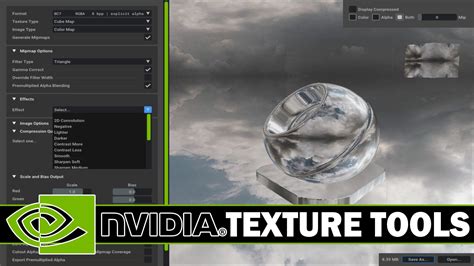
This process should help Photoshop associate the DDS file extension with the NVIDIA plugin. Once this is done once, subsequent DDS files might open directly.
3. Alternative Plugins and Converters
If you have an AMD graphics card, or if the NVIDIA plugin doesn't resolve your issues, alternative solutions are available.
- Intel Plugin: As hinted at in the provided text, there's a mention of a "newer Intel plugin that people use." While specific details are scarce in the user input, exploring Intel's texture tools or plugins for Photoshop might yield results for users with Intel integrated graphics or those seeking a cross-platform solution.
- Third-Party DDS Converters: Several standalone DDS converter tools exist that can transform DDS files into more universally compatible formats like PNG or TGA, which Photoshop can open without plugins. The user mentions having "another dds converter. It's used for another game called Dungeon Siege 2 as well for converting files to DDS. That one would sound more useful if you still have it." Such converters can be invaluable. You would convert the DDS file to a TGA or PNG, then open that converted file in Photoshop. This approach bypasses the need for direct DDS support within Photoshop.
Convert DDS to PNG | Transform Game Textures Online
4. Troubleshooting Common Issues
Even with the correct plugin, you might encounter problems. The user who stated, "I am currently using adobe cc 2017. Am i doing something wrong? If so, what can I do to make it work?" describes a scenario where the image doesn't load correctly.
- Corrupted Files: Ensure the DDS file itself is not corrupted. Try opening it with a different viewer or converter.
- Incorrect Plugin Version: Double-check that the plugin version is compatible with your specific Photoshop version.
- Newer DXT Formats: As previously mentioned, older plugins may not support newer DXT compression formats. If you suspect this is the case, you'll need to find a plugin or converter that explicitly supports the DXT format of your file.
- "Jumbled Mess" or "Missing" Image Sections: This often points to an incorrect interpretation of the DDS data by the plugin or converter. Experiment with different import settings in the plugin, or try a different converter tool. The "jumbled mess" described when trying to view an Axeman DDS file in CS2, which was "just the texture for the the Axeman model," highlights that DDS files often contain only the visual texture data, not the 3D model itself.
Beyond Basic Opening: Editing DDS Files
Once you can successfully open a DDS file, you can edit it like any other image in Photoshop. However, keep in mind the specific nature of game textures.
- Alpha Channels: DDS files often utilize alpha channels for transparency. Ensure you're correctly loading and editing these channels if transparency is a key element of your texture. The option to 'Load Alpha as channel instead of Transparency' in the NVIDIA plugin is specifically for this.
- Mipmaps: Mipmaps are pre-calculated, lower-resolution versions of a texture used to improve performance at different distances in games. While you might want to disable loading mipmaps for editing the highest-resolution version, be aware of their purpose if you're exporting back to DDS for use in a game.
- Compression: When saving back to DDS format, you'll likely encounter options for various DXT compression types (e.g., DXT1, DXT3, DXT5). Understanding which compression type is appropriate for your texture (e.g., DXT1 for opaque textures, DXT5 for textures with alpha) is crucial for maintaining quality and performance in the target application.
The "Suddenly It Works" Phenomenon
It's not uncommon for users to report that after struggling with DDS files, they suddenly start working. This can occur for several reasons:
- Automatic Updates: Photoshop or operating system updates might include improved file handling capabilities or updated drivers that indirectly resolve the issue.
- Plugin Reinstallation: Sometimes, simply reinstalling a plugin can fix corrupted installation files.
- System Reconfiguration: As one user noted, "I recall having similar issue, after building my new PC last year, and then setting everything up. Photoshop 2022 would initially not recognize .dds files even with Nvidia plugin installed." This suggests that the initial setup of a new system might involve overlooked dependencies or configuration steps that, once corrected, allow the plugins to function as intended.
Conclusion: A Path to DDS Mastery
Opening and editing DDS files in Photoshop, while initially daunting, is achievable with the right approach. By understanding the technical underpinnings of the DDS format, identifying the compatibility requirements of plugins, and employing the step-by-step solutions outlined above, users can effectively integrate DDS files into their creative and development workflows. Whether you're a seasoned game developer or a budding modder, mastering the DDS format will unlock a new level of control over game assets and digital art.