The digital age has ushered in an era where information, including criminal records, is readily accessible. For individuals seeking to move past past mistakes, this accessibility can present significant hurdles in securing employment, housing, educational opportunities, and even restoring civil rights. Understanding the processes available to remove or seal criminal records is crucial for rebuilding a future free from the shadow of past legal entanglements. This guide will delve into the intricacies of how to initiate the process of removing entries from your criminal record, focusing on the legal pathways and practical steps involved, particularly within the context of New Hampshire law, while also touching upon broader implications.
Understanding the Landscape of Criminal Records and Background Checks
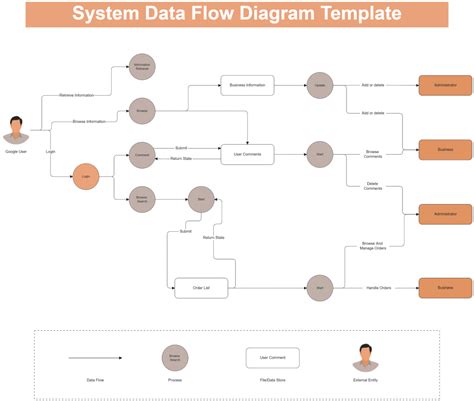
Criminal records are stored in various databases, broadly categorized as public and private. Public databases, maintained by entities like the Department of Justice (DOJ), Department of Public Safety (DPS), courthouses, and police stations, are typically updated automatically upon receiving a court order for sealing or expungement. Background check companies primarily source their information from these public records. Conversely, private databases, which include many online background check services, update their records at their own discretion, often in waves that can range from six months to a year. This disparity in update cycles means that even after a court grants a record-clearing request, information may persist in private databases, potentially continuing to impact an individual's opportunities.
The goal of removing or sealing a criminal record is often to ensure that past offenses are no longer accessible to potential employers, landlords, educational institutions, or loan providers. While legal processes exist to make it appear as though an offense never occurred, the persistence of data in private databases can undermine these efforts. Therefore, a comprehensive approach involves not only obtaining a court order but also ensuring that this order is reflected across both public and private data repositories.
Who to Ask and Where to File Your Petition
The primary entity to approach for the removal of an entry from your criminal record is a court. The specific court you need to petition depends on the nature of the record you wish to expunge or seal. Generally, you must petition the court where the conviction occurred. If no conviction resulted from a charge, you must approach the court where the case was resolved. For an arrest or charge that was dismissed or not prosecuted, the court that dismissed the charge is the correct venue. Similarly, if an arrest or charge resulted in a "not guilty" finding, you must file with the court that issued that finding. For a conviction coupled with a sentence, the court that imposed both the conviction and the sentence is where you must file your petition.
Navigating the Legal Process: The Petition to Annul Record
The formal request to remove your criminal record is made by submitting a document to the court. This document is commonly referred to as a "Petition to Annul Record." It is highly advisable to consult with an attorney before initiating this process. An attorney can meticulously review your case to ascertain your eligibility for an annulment and guide you through the necessary legal procedures and paperwork.
The "Petition to Annul Record" form is designed for charges resolved prior to 2019. For more recent resolutions or specific types of charges, separate annulment petitions may be available. For instance, distinct petitions exist for marijuana charges, non-convictions post-January 1, 2019, and convictions post-January 1, 2019. It is imperative to review the relevant petition form carefully to understand all the required information and to also consult any accompanying checklists, such as the "Annulment of Criminal Record Checklist," to ensure completeness.
Filing Petitions for Multiple Offenses
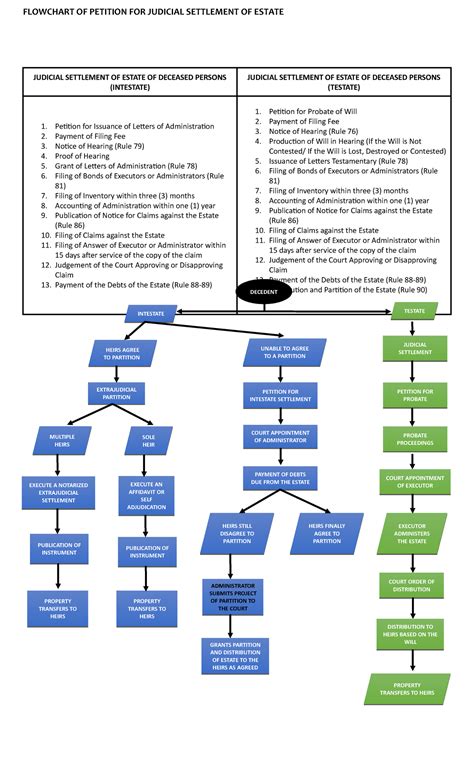
The process for filing petitions becomes more complex when an individual has multiple convictions or arrests. If all offenses occurred in the same court, you must file a separate "Petition to Annul" for each individual conviction you wish to have removed. This holds true even if these convictions occurred simultaneously. The same rule applies to arrests that did not result in a conviction; each arrest requires its own petition, unless it is directly associated with a conviction for which you are already seeking annulment.
Should your criminal record reflect convictions or arrests from different courts, the filing procedure requires separate petitions to be submitted to each respective court. Again, each conviction necessitates its own petition, even if multiple convictions are from the same court. This means you may end up filing multiple petitions within a single court and potentially across several different courts.
Addressing Out-of-State, Federal, and Military Convictions
New Hampshire courts can only process requests to remove arrests, charges, or convictions that occurred within the state of New Hampshire. If your criminal record includes offenses from another state, you must pursue relief through the legal system of that specific state. However, it is important to note that out-of-state convictions can still be considered by a New Hampshire judge when reviewing your annulment request. The judge will assess whether granting the removal is consistent with the public welfare.
Similarly, federal and military convictions are not within the jurisdiction of New Hampshire courts. To address these types of records, you should seek legal counsel from an attorney specializing in federal or military law. While there isn't a federal annulment process, individuals may be eligible to apply for a Presidential Pardon through the appropriate federal channels.
During the annulment investigation phase in New Hampshire, the Department of Corrections (DOC) will document any federal or military convictions. These out-of-state or federal offenses can influence the DOC's recommendation to the court and may be considered by the judge when determining if the annulment aligns with the public welfare.
Eligibility Criteria and Waiting Periods
Eligibility to have your criminal record removed is contingent upon several factors, most notably the waiting periods established by New Hampshire law. These waiting periods are not universal and apply primarily to requests for conviction annulments. The duration of the waiting period is often determined by the seriousness of the offense, categorized by its "class" or "level."
- Violation Level Offenses: These are the least serious and are considered non-criminal. Most minor traffic offenses fall into this category.
- Misdemeanors: These are further divided into Class A and Class B, with Class A being more severe.
- Felonies: These are the most serious offenses, also categorized as Class A or Class B, with Class A felonies being more serious.
A longer waiting period is generally required for more serious offenses like felonies compared to misdemeanors. The waiting periods typically commence after the completion of all terms of the original sentence, including any suspended portions.
Specific Waiting Periods and Eligible Offenses
The following outlines general waiting periods, but exceptions may apply:
- Violation Level Offenses: 1 year from sentence completion (with exceptions for certain motor vehicle offenses).
- Class B Misdemeanors: 2 years from sentence completion.
- Class A Misdemeanors: 3 years from sentence completion.
- Misdemeanors with Family/Household Victim: 3 years from sentence completion if the victim was a family, household member, or intimate partner at the time of the offense.
- Class B Felonies: 5 years from sentence completion.
- Class A Felonies: 10 years from sentence completion.
Criminal Record FAQ: Arrested but not Convicted?
Driving Offenses with Extended Waiting Periods:
Certain driving offenses, even if classified as violations, fall under the Habitual Offender law and carry extended waiting periods of at least 7 years from the conviction date. These include:
- False statements (RSA 261:73)
- Forged Certificate of Title (RSA 262:1,1)
- Concealing Identity of Vehicle (RSA 262:8)
- Taking Without Ownerâs Consent (RSA 262:12)
- Possession of Master Keys (RSA 262:13)
- False Name in Application for Driverâs License (RSA 263:12)
- Driving After Revocation or Suspension (RSA 263:64)
- Conduct After an Accident (RSA 264:25)
- Disobeying a Police Officer (RSA 265:4)
- Reckless Driving (RSA 265:79)
- Racing on Highways (RSA 265:75)
- Overtaking and Passing School Bus (RSA 265:75)
- Driving as a Habitual Offender (RSA 262:23)
- Possession of Drugs in a Motor Vehicle (RSA 265-A:43)
- Negligent Driving (RSA 265:79-b)
- Improper Passing (RSA 265:22)
- Speeding (RSA 265:60)
- Driving Without Valid License (RSA 263:1)
- Driving Without Proof of Financial Responsibility (RSA 263:63)
These offenses then also need to comply with the general waiting periods based on their classification (violation, misdemeanor, felony).
Driving Under the Influence (DUI) Offenses:
Convictions for driving or attempting to drive a vehicle, Off-Highway Recreational Vehicle (OHRV), or boat while under the influence of alcohol or controlled substances, or with a blood alcohol concentration of 0.08 or more, carry a 10-year waiting period from the date of conviction before an annulment can be sought. These also require adherence to the standard waiting periods based on offense classification.
Controlled Drug Act Felonies:
Any felony under the controlled drug act (NH RSA 318-B) has a special restriction, requiring a 7-year waiting period from the date of conviction, in addition to complying with the general waiting periods for Class B and Class A felonies.
Timing of Petitions for Non-Convictions
For arrests that resulted in a "not guilty" finding or were dismissed/not prosecuted, you can petition the court as soon as the case is officially closed. There are no waiting periods for these types of records.
Consequences of Errors and Incomplete Waiting Periods
Filing a petition before completing the required waiting periods will likely result in its rejection. If your petition is rejected due to incomplete waiting periods, you may have to wait three years before reapplying for an annulment on the same conviction. Similarly, errors in the filing or preparation of the petition can lead to rejection, potentially imposing a three-year waiting period before you can refile.
Costs and Fees Associated with Record Removal
The process of removing a criminal record involves several fees:
- Court Filing Fee: $125.00. This fee can cover multiple petitions filed concurrently in the same court.
- Department of Corrections (DOC) Investigation Fee: $100.00, paid directly to the DOC. The DOC will notify you when this fee is due. This fee may cover multiple petitions, even if filed in different courts. It is advisable to contact the DOC after filing to inform them of multiple petitions and request a single report.
- Department of Safety/State Police Fee: $100.00 per conviction for research and correction if the Petition to Annul is granted. This fee is paid to the Department of Safety. If multiple convictions are annulled from the same court, this fee covers all of them. For annulled convictions from different courts, the fee is assessed per court. This fee does not apply to charges that did not result in a conviction.
Financial Hardship and Fee Waivers
Individuals with limited income may be eligible for waivers of some fees. By submitting a financial affidavit to the court, you can demonstrate your financial situation. The court may waive its filing fee. However, the DOC investigation fee and the Department of Safety correction fee generally cannot be waived.
Preparing for Legal Advocacy: Gathering Information
To effectively work with a legal advocate or to prepare your own petition accurately, it is essential to gather comprehensive documentation and information:
- Obtain a Recent Copy of Your Criminal Record: A current criminal record from the State of New Hampshire is a crucial starting point. Organizations like 603 Legal Aid may assist in this process.
- Collect Case-Related Documents: Gather all documents pertaining to your criminal cases, including arrest records, charge details, conviction information, and sentencing documents.
- Obtain Your Driving Record: If applicable, locate any copies of your driving record. If records are old or unavailable, consider obtaining official copies.
Once documents are gathered, meticulously record the details for each arrest, charge, or record entry:
- The police department involved.
- The name of the charge.
- The statutory reference (RSA number).
- The class of offense (felony A/B, misdemeanor A/B, or violation).
- The disposition of the case (dismissed, nol prossed (not prosecuted), placed on file without a finding, not guilty, no contest, or guilty).
If you were convicted, also document:
- The full sentence details (jail time, suspended time, probation, parole, no-contact orders, fines, community service).
- The date the sentence was issued.
- The name of the court that issued the sentence.
- The date all sentence requirements were completed.
- How the conviction has negatively impacted your life.
- Evidence of your rehabilitation since the conviction.
- Why an annulment will aid in your future progress.
The Role of Technology in Record Clearing
The advent of technology has significantly impacted how criminal records are managed and accessed. While court records were once the primary source of an individual's criminal history, the reliance on sophisticated database systems has changed this landscape. Data platforms now create their own pipelines for information, often bypassing the need to navigate numerous legal jurisdictions individually.
Technology has also enabled the development of tools and services that assist in the record-clearing process. Some firms offer services to expedite the update of granted court orders across a wide range of private background check companies. This is crucial because even after a record is legally sealed or expunged, private databases may not update automatically, potentially leaving the cleared record searchable.
Realistic Expectations and the Ongoing Process
It is vital to approach record clearance with realistic expectations. While legal processes aim to remove or seal records, complete eradication from all background checks can be a complex and ongoing endeavor. The initial steps of obtaining a court order are critical, but ensuring that this order is reflected in both public and private databases is equally important.
Understanding the legal procedures, eligibility criteria, and the specific requirements of your jurisdiction is the first step. While "Clean Slate" legislation and automatic expungements are becoming more common in some states, offering significant relief, the process is not always fully automated.
A Word of Caution Regarding Erasing Records
Be wary of services that promise to "erase" you from all systems, including consumer, legal, public, and private databases. The sheer number of databases and data systems in existence makes such a comprehensive erasure practically impossible. Focus on the legal avenues available for record sealing and expungement, and then on ensuring that these legal actions are recognized by the most influential data aggregators that impact employment and personal reputation. The legal document granting relief, such as a court dismissal order, expungement petition, or non-prosecution letter, plays a crucial role in this process.
By understanding the legal framework, diligently preparing your case, and managing expectations, individuals can effectively navigate the process of removing their criminal records and move forward with greater confidence and opportunity.