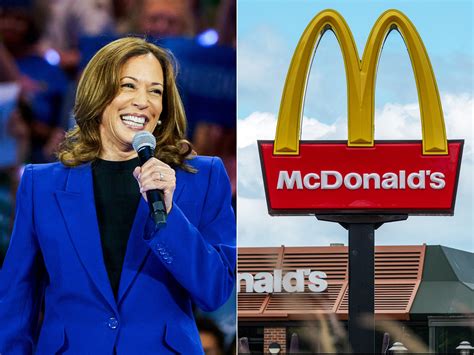
A digitally altered image depicting Vice President Kamala Harris in a McDonald's uniform recently spread across social media platforms, igniting a debate about its origins, authenticity, and the broader implications of manipulated media in political discourse. The image, which purports to show a young Kamala Harris in the fast-food giant's attire, gained significant traction, prompting scrutiny and fact-checking efforts.
The Genesis of the Fake Image
The controversy gained momentum when an X user, identified as "The Infinite Dude," claimed on Monday to be the creator of the viral image. The user stated that they had posted the image on Thursday with the explicit caption "this is fake" as a form of self-fact-checking. According to "The Infinite Dude," their Thursday tweet represents "the first instance of this Kamala photo on the internet." The user further questioned the subsequent spread of the image, asking, "Who removed the context and shared it among democrats?" This assertion suggests a deliberate act of removing the original context to misrepresent the image's falsity.
Tracing the Visual Roots
Further investigation into the image's origins revealed a striking similarity to a photograph found on a Canadian web page. This page, presented as a memorial for an individual who passed away in 2007, features a picture of a woman in a McDonald's uniform. The visual parallels between this memorial photograph and the manipulated image of Harris are significant. The stances of the women in both photos, as well as the surrounding furniture and background elements, appear to be identical, strongly suggesting that the memorial image served as the base for the doctored photograph. This finding reinforces the claim that the image of Harris was a composite, with her face superimposed onto another person's body.
The Virality and its Aftermath
The fabricated image temporarily went viral on social media, with numerous prominent accounts amplifying its reach. The rapid dissemination of the image highlights the ease with which misinformation can spread in the digital age. One individual, upon realizing the potential for misinterpretation or having shared the image themselves, reportedly touted their decision to remove their post as an act of "accountability," urging Republicans to follow suit. This reaction underscores the growing awareness and concern regarding the spread of fake news and the ethical responsibility of social media users.
The "McDonald's Employee" Narrative and Political Scrutiny
The controversy is intertwined with Vice President Kamala Harris's own statements about her past employment. Harris has stated that she worked at McDonald's during her college years. This claim has become a point of contention, particularly with former President Donald Trump. Trump has publicly challenged Harris's assertion, even preparing orders at a Pennsylvania McDonald's location and telling customers that he worked there longer than his opponent. When asked why Harris might lie about working at McDonald's, Trump responded, "She’s ‘Lying Kamala.’ That’s why. She shouldn’t lie about it." This exchange demonstrates how personal narratives and past experiences can become fodder for political attacks, especially when amplified by visual or digital manipulation.
The SHOCKING True Story of McDonald's
Implications of Manipulated Media in Politics
The Kamala Harris McDonald's image controversy serves as a potent example of the challenges posed by manipulated media in contemporary politics. The ability to digitally alter photographs and disseminate them rapidly creates fertile ground for disinformation campaigns. Such tactics can be used to:
- Discredit political opponents: By creating false narratives or visually misrepresenting individuals, fabricated images can damage reputations and sow doubt among voters.
- Influence public opinion: Viral misinformation can shape perceptions and sway public sentiment, particularly if it plays into existing biases or political leanings.
- Erode trust in institutions and media: The proliferation of fake images makes it increasingly difficult for the public to discern truth from falsehood, potentially leading to a broader distrust of news sources and public figures.
- Exploit existing political divisions: Manipulated content can be weaponized to exacerbate partisan divides, as seen in the reactions and counter-reactions surrounding the Harris image.
The Role of Fact-Checking and Digital Literacy
The incident underscores the critical importance of robust fact-checking mechanisms and enhanced digital literacy among the public. "The Infinite Dude's" claim of self-fact-checking, while potentially a genuine attempt to preempt misinformation, also highlights the complex ecosystem of content creation and dissemination online. It raises questions about the responsibility of platforms in moderating content and the proactive measures individuals can take to verify information before sharing.
The ease with which the image was altered and spread, coupled with its connection to a real person's past statements, demonstrates the sophisticated nature of modern disinformation. The original context of the image-a memorial photograph-was stripped away, and a new, politically charged narrative was constructed around it. This process of decontextualization and recontextualization is a common tactic in the creation and spread of fake news.
The Broader Context of Political Discourse
The controversy surrounding the Kamala Harris McDonald's image is not an isolated incident but rather part of a larger trend of digitally manipulated content being used in political campaigns and discourse. As technology advances, so too do the methods of creating and distributing convincing fake imagery, including deepfakes. This necessitates a continuous effort to adapt fact-checking strategies and to educate the public on how to critically evaluate the visual information they encounter online.
The incident also touches upon the broader theme of authenticity in politics. Candidates and public figures often craft narratives about their backgrounds and experiences. When these narratives are challenged, whether through genuine scrutiny or manufactured controversy, the public's perception can be significantly influenced. The debate over whether Kamala Harris "worked" at McDonald's, as opposed to merely having been associated with it in some capacity, becomes amplified by the visual evidence, even if that evidence is fabricated.
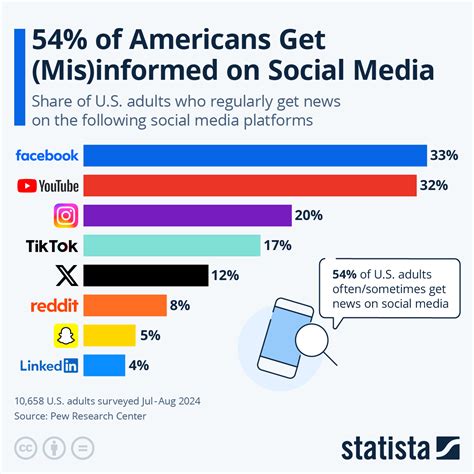
The speed at which the image circulated and the subsequent attempts to debunk it highlight the dynamic and often chaotic nature of online information flow. The initial spread was rapid, driven by algorithms and user engagement, while the correction and contextualization often lag behind, reaching a smaller audience. This asymmetry in dissemination means that even when fake images are debunked, the initial impact can be lasting.
The Challenge of Accountability
The claim by "The Infinite Dude" that they created the image and then "fact-checked" it themselves introduces a layer of complexity to the issue of accountability. While the user's stated intention was to label it as fake, the act of creating and sharing the image, even with a disclaimer, contributed to its initial visibility. The subsequent removal of context by others further complicates the attribution of responsibility for the misinformation. This situation underscores the difficulty in pinpointing accountability in the decentralized landscape of social media, where content can be remixed, re-shared, and stripped of its original context with relative ease.
The fact that prominent accounts shared the image without adequate verification raises questions about the editorial standards of social media users, particularly those with large followings. The pressure to be the first to break news or share viral content can sometimes override the imperative of accuracy. This dynamic incentivizes the spread of unverified or even fabricated information, creating a challenging environment for maintaining an informed public discourse.
The response from some individuals, such as the one who removed their post and called for "accountability," suggests a growing recognition of the ethical implications of sharing potentially misleading content. However, the call for Republicans to follow suit indicates the partisan nature of the debate, where accusations of misinformation are often weaponized against opposing political factions.
The lack of a comment from Harris's campaign team, as noted in the initial reports, is not uncommon in such situations, as campaigns often choose to avoid amplifying unverified or politically motivated attacks. However, this silence can also be interpreted in various ways by the public and political opponents.
Ultimately, the Kamala Harris McDonald's controversy is a microcosm of the broader challenges facing digital communication and political integrity. It highlights the need for a multi-faceted approach involving technological solutions, platform responsibility, user education, and a commitment to critical thinking to navigate the increasingly complex landscape of online information. The ability to discern fact from fiction, especially in politically charged environments, is more crucial than ever.
The incident also brings to the forefront the concept of "liar's dividend," where the mere existence of sophisticated manipulation techniques can be used to cast doubt on genuine information. Even if an image is demonstrably fake, the controversy it generates can create an atmosphere of suspicion, making it harder for the public to trust any visual evidence presented. This can be a powerful tool for those seeking to obscure the truth or delegitimize opponents.
The specific claim by Harris about working at McDonald's during college is a detail that, while seemingly minor, has been seized upon and amplified. This suggests that in the highly polarized political climate, even seemingly innocuous personal anecdotes can become subjects of intense scrutiny and potential attack. The visual component, the doctored image, serves to make this narrative more visceral and shareable, bypassing more nuanced discussions about employment history and its relevance.
Furthermore, the underlying technology used to create such images, while not explicitly detailed in the provided information, is constantly evolving. Image editing software and AI-powered tools are becoming more accessible and sophisticated, lowering the barrier to entry for creating convincing fakes. This technological arms race between creators of misinformation and those seeking to detect it is an ongoing challenge.
The speed at which information travels online means that a fabricated image can reach millions of people before fact-checkers can even begin to address it. The initial impression created by a viral image can be difficult to undo, even with subsequent corrections. This emphasizes the importance of preventative measures, such as promoting media literacy from an early age and encouraging responsible sharing habits among all internet users. The "first instance" claim made by "The Infinite Dude" is particularly telling, as it points to a deliberate act of creation that was then potentially exploited for broader dissemination without its original cautionary context. The question of "who removed the context" becomes central to understanding the mechanics of how misinformation gains traction and influence.