Kelly green is a vibrant, attention-grabbing color that has surged in popularity, offering a natural appeal while remaining on-trend. This strong, pure green, positioned between yellow and blue on the color wheel, is both lively and confident, evoking a sense of energy, growth, and freshness. Whether you're a graphic designer, a fashion enthusiast, or an interior decorator, understanding the nuances of Kelly green, particularly its CMYK values, is crucial for successful application.
What is Kelly Green?
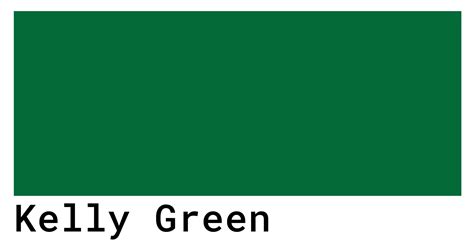
Kelly green is characterized by its vividness and purity, striking a balance that is easily recognizable. Its hex code, #4cbb17, is a common identifier for this specific shade in digital design. In the RGB color space, which is fundamental for web and screen graphics, Kelly green is composed of 29.8% red, 73.3% green, and 9% blue. This combination results in a bright, clean green that is reminiscent of fresh grass under strong daylight. For those working with print and physical media, the CMYK color space is paramount. Here, Kelly green is represented by a specific mix of cyan, magenta, yellow, and black inks.
The CMYK values for Kelly green (#4cbb17) are approximately 59% cyan, 0% magenta, 88% yellow, and 27% black. This breakdown is essential for printers to accurately reproduce the color, ensuring that the intended vibrancy is maintained on paper or other printed materials. The hexadecimal color #4cbb17 can also be achieved by blending the colors #98ff2e and #007700.
Understanding Color Models: RGB vs. CMYK
The distinction between RGB and CMYK is fundamental to color management. RGB (Red, Green, Blue) is an additive color model used for digital displays like monitors and phone screens. When these colored lights combine, they create white. CMYK (Cyan, Magenta, Yellow, Key/Black) is a subtractive color model used in printing. In this model, inks absorb certain wavelengths of light and reflect others. Combining all CMYK inks theoretically produces black, though in practice, a separate black ink is used for deeper tones and to save on colored ink. Understanding these differences ensures that a color perceived on a screen is translated accurately to print.
HSL and Color Perception
Beyond RGB and CMYK, Kelly green can also be described using the HSL (Hue, Saturation, Lightness) color model. It has a hue angle of 100.6 degrees, indicating its position on the color wheel. Its saturation is 78.1%, meaning it's a rich, intense color, and its lightness is 41.2%, placing it in the mid-dark range. This information is particularly useful for designers looking to create variations of Kelly green, such as tints (adding white), shades (adding black), or tones (adding gray).
A Brief History of Kelly Green
The color green has a long history, with early pigments derived from minerals, some of which were quite toxic. Synthetic pigment production later made greens more accessible. The specific designation of "Kelly green" is a more recent development, with its first documented use in the early 20th century. The name is widely believed to originate from Ireland, a country famously characterized by its lush, rolling green hills and the prevalent Irish surname, Kelly. This association makes Kelly green a natural fit for Irish cultural celebrations, most notably St. Patrick's Day, where it features prominently.
The Meaning and Symbolism of Kelly Green
Across various cultures and contexts, shades of green, including Kelly green, are consistently associated with renewal, growth, vitality, youth, and the natural world. It can symbolize health, healing, and evoke a sense of relaxation and tranquility. However, the boldness of Kelly green also lends itself to interpretations of ambition, money, and even greed. Its strong presence can be seen as representing unrestrained energy and rebelliousness, yet it can also embody independence and confidence.
Green Color Psychology and How It Changes Your Brain 🌱
Exploring Shades of Kelly Green
While Kelly green is a distinct hue, it's helpful to understand its relation to similar shades to appreciate its unique character and to make informed design choices.
Kelly Green vs. Hunter Green
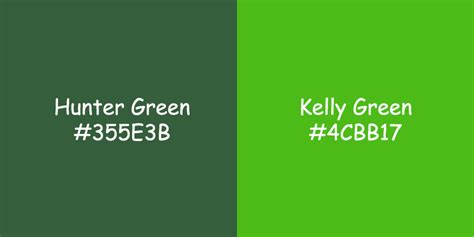
Hunter green is a deeper, more desaturated, and often more yellow-toned green compared to Kelly green. Historically, it was used for camouflage by hunters in the 19th century due to its ability to blend into natural environments. Today, it's often perceived as an olive or darker green.
- Kelly Green: Hex #4cbb17, CMYK 59, 0, 88, 27, RGB 76, 187, 23
- Hunter Green: Hex #355e3b, CMYK 44, 0, 37, 63, RGB 53, 94, 59
Kelly Green vs. Forest Green
Forest green is another dark green, often associated with the deep hues of wooded areas. It is frequently paired with bright red during the Christmas season, so care must be taken to avoid an unintended festive theme if that is not the desired aesthetic.
- Kelly Green: Hex #4cbb17, CMYK 59, 0, 88, 27, RGB 76, 187, 23
- Forest Green: Hex #228b22, CMYK 76, 0, 76, 45, RGB 34, 139, 34
Kelly Green vs. Lime Green
Lime green, named after the citrus fruit, is a vibrant green with a strong yellow component, typically found between yellow and green on the color wheel. It's an energetic and fresh color, often associated with nature and radiating confidence and creativity. While both are bright, Kelly green leans more towards a pure green, whereas lime green has a more pronounced yellow undertone.
- Kelly Green: Hex #4cbb17, CMYK 59, 0, 88, 27, RGB 76, 187, 23
- Lime Green: Hex #32cd32, CMYK 76, 0, 76, 20, RGB 50, 205, 50
Kelly Green vs. Emerald Green
Emerald green, named after the precious gemstone, is a deeper, clearer, and often cooler green than Kelly green. Kelly green is a brighter, yellow-leaning green, while emerald green possesses a richer, more jewel-like quality.
- Kelly Green: Hex #4cbb17, CMYK 59, 0, 88, 27, RGB 76, 187, 23
- Emerald Green: Hex #50c878, CMYK 60, 0, 40, 22, RGB 80, 200, 120
Color Combinations with Kelly Green
Kelly green's vibrancy makes it a powerful accent color. When pairing it, consider contrast, harmony, and the overall mood you wish to achieve.
Complementary Colors
Complementary colors create the highest contrast when placed next to each other. On the color wheel, the hue directly opposite Kelly green is a strong violet. This pairing creates a visually striking and energetic combination. Various shades of violet, purple, and even pink can be explored for complementary effects.
- Kelly Green: Hex #4cbb17, CMYK 59, 0, 88, 27, RGB 76, 187, 23
- Strong Violet: Hex #8617bb, CMYK 28, 88, 0, 27, RGB 134, 23, 187
Analogous Complementary Colors
Analogous colors are those that are adjacent to each other on the color wheel, sharing similar characteristics. For Kelly green, this includes other shades of green and hues of yellow. The combination of yellow and Kelly green can evoke a tropical, welcoming, and warm feeling. Given Kelly green's yellow undertone, shades of orange also work well in analogous schemes.
- Kelly Green: Hex #4cbb17, CMYK 59, 0, 88, 27, RGB 76, 187, 23
- Strong Yellow: Hex #9ebb17, CMYK 16, 0, 88, 27, RGB 158, 187, 23
- Strong Lime Green: Hex #17bb34, CMYK 88, 0, 72, 27, RGB 23, 187, 52
Monochromatic Kelly Green Palettes
A monochromatic scheme uses variations of a single color, including its tints, shades, and tones. This approach is highly pleasing to the eye, creating a harmonious and balanced appeal. By using darker and lighter versions of Kelly green, a sophisticated and cohesive palette can be developed.
- Kelly Green: Hex #4cbb17, CMYK 59, 0, 88, 27, RGB 76, 187, 23
- Dark Green (Shade): Hex #30770f, CMYK 60, 0, 87, 53, RGB 48, 119, 15
- Bright Green (Tint/Lighter Shade): Hex #70e738, CMYK 52, 0, 76, 9, RGB 112, 231, 56
Triadic Color Schemes
A triadic color scheme involves three colors that are evenly spaced around the color wheel, forming a triangle. This creates a vibrant and dynamic combination. For Kelly green, potential triadic partners include shades of pink and blue. For instance, pairing Kelly green with a strong pink and a strong blue offers a bold and energetic palette.
- Kelly Green: Hex #4cbb17, CMYK 59, 0, 88, 27, RGB 76, 187, 23
- Strong Pink: Hex #bb174c, CMYK 0, 88, 59, 27, RGB 187, 23, 76
- Strong Blue: Hex #174cbb, CMYK 88, 59, 0, 27, RGB 23, 76, 187
Working with Kelly Green in Design
Kelly green's intensity means it's often most effective when used strategically. While it can be used as a dominant color, it's frequently employed as an accent to add a burst of energy and visual interest.
Mixing Kelly Green Acrylic Paint
Green is a secondary color, created by mixing blue and yellow. However, achieving a precise shade like Kelly green requires understanding the nuances of paint biases. Different blues and yellows have distinct undertones (color biases) that affect the final mixture. Blues are generally considered cool, while yellows are warm. Kelly green, with its distinct yellow undertone, is often described as a warm green.
When mixing, be mindful of color bias to avoid muddy results. Mixing a blue with a red bias with yellow can result in a muddy brown because all primary colors are being combined. The more red pigment present, the less saturated the green will become. To mix a color similar to Kelly green, consider using a greenish-blue like cerulean blue with a bright, cool yellow like lemon yellow. Experimentation with proportions and potentially adding a touch of white to brighten the mix is often necessary.
- Cerulean Blue: Hex #2a52be, CMYK 78, 57, 0, 25, RGB 42, 82, 190
- Lemon Yellow: Hex #fff44f, CMYK 0, 4, 69, 0, RGB 255, 244, 79
Kelly Green in Fashion
In fashion, Kelly green can add a dramatic punch to an outfit. It's commonly seen in sweaters, blouses, jackets, and dresses, as well as accessories like handbags and shoes. For those hesitant to adopt such a bold color, starting with a Kelly green accessory against a backdrop of neutral colors like gray, white, black, or muted greens is an excellent way to experiment.

Kelly Green in Interior Design
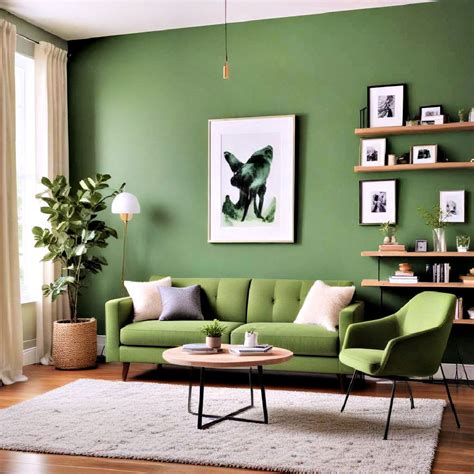
Kelly green can bring life and vibrancy into interior spaces. While it can be used boldly, a more subtle approach involves incorporating it through accessories such as cushions, rugs, curtains, vases, or decorative throws. Art pieces featuring Kelly green can also serve as focal points.
For a more daring statement, consider painting an accent wall, a door, or even a ceiling in Kelly green. Furniture pieces like couches or chairs in this color can stand out dramatically against neutral backgrounds. In kitchens, Kelly green cabinets can offer a refreshing contrast against white backsplashes or walls. When using Kelly green extensively, pairing it with colors like white and blue can create a bold yet calming combination.
Frequently Asked Questions About Kelly Green
What Color is Kelly Green?
Kelly green is a strong, vibrant, and pure green hue, often described as a greenish-yellow or a vivid green. Its hex code is #4cbb17. It is widely recognized and associated with Irish culture and St. Patrick's Day.
Is Kelly Green a Popular Color?
Yes, Kelly green has gained significant popularity in recent years. Its fresh, vibrant, and appealing nature has made it a favorite among celebrities and designers alike, conveying a sense of health, youth, and independence.
Is Kelly Green a Warm or Cool Color?
While green is generally considered a cool color, Kelly green has a distinct yellow bias. This yellow undertone makes Kelly green lean towards the warmer side of the color spectrum, contributing to its lively and energetic feel.
Practical Applications in Digital and Print Design
Kelly green (#4cbb17) is a vivid and confident green that feels fresh and energetic without being neon. This makes it ideal for accents, highlights, and attention-driving elements in branding, UI design, and visual communication. When building designs around Kelly green, pairing it with calm neutrals or deeper supporting tones ensures clarity and readability. Complementary purples and structured palettes like triads can add intentional contrast.
For digital applications, the hex code #4cbb17 is the most common way to specify Kelly green. For print, understanding its CMYK values (C: 59%, M: 0%, Y: 88%, K: 27%) is crucial. When translating colors from screen to print, it's always recommended to request a physical proof, as paper type and printer profiles can subtly alter the appearance of saturated greens.
Enhancing Kelly Green Designs
Tools like Media.io's AI Image tools can assist in refining photography projects that incorporate Kelly green, helping to achieve more polished results. When generating images or posters featuring Kelly green, its inherent brightness is best used with intention.
Variations of Kelly Green
Beyond the standard Kelly green, several related variations offer different moods and applications:
- Pale Kelly Tint (#C9F2B5): A soft, airy tint that retains the green identity while feeling gentle and modern, suitable for backgrounds.
- Light Kelly Green (#7FE24B): A brighter, more luminous version that reads as energetic without being neon.
- Kelly Green (#4CBB17): The classic, vivid mid-green that appears crisp, clean, and highly noticeable.
- Muted Kelly Green (#5A8F3F): A toned-down option that feels more natural and is easier on the eyes, offering a subtler presence.
- Deep Kelly Green (#2F7A10): A darker, weightier shade that adds stability and improves contrast, useful for text or more grounded elements.
These variations demonstrate the versatility of Kelly green, from subtle accents to bold statements, all while maintaining its core essence of freshness and vitality.