CorelDRAW stands as a prominent vector graphics editor, meticulously developed and marketed by Corel Corporation. It is not merely a standalone application but the namesake of a comprehensive graphics suite that encompasses a range of powerful tools, including the sophisticated bitmap-image editor, Corel Photo-Paint. This multifaceted software serves a wide array of creative and production needs, functioning as a robust digital painting platform, a comprehensive desktop publishing suite, and a critical tool for various industry processes such as signmaking, vinyl and laser cutting and engraving, and print-on-demand services.
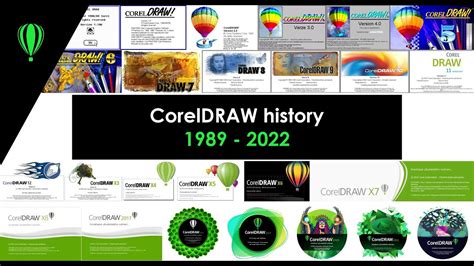
The genesis of CorelDRAW can be traced back to 1987, when Corel engineers Michel Bouillan and Pat Beirne embarked on a mission to create a vector-based illustration program. Their ambition was to bundle this innovative software with their existing desktop publishing systems. This endeavor culminated in the initial release of CorelDRAW in 1989. The early iterations, CorelDraw 1.x and 2.x, were designed to operate within the Windows 2.x and 3.0 environments. A significant leap forward occurred with CorelDraw 3.0, which gained full traction and capability with the release of Microsoft's Windows 3.1.
The evolution of CorelDRAW has been marked by a consistent introduction of groundbreaking features that have expanded its capabilities and solidified its position in the graphic design landscape. Early versions introduced instrumental tools like the Envelope tool, which allowed for the distortion of text or objects using a primary shape, and the Blend tool, enabling the morphing of shapes. The Extrusion tool simulated perspective and volume in objects, while the Perspective tool provided distortion along X and Y axes.
The accompanying suite of applications evolved alongside CorelDRAW itself. Early bundles included Corel Photo-Paint (for bitmap editing), CorelSHOW (for creating on-screen presentations), CorelCHART (for generating graphic charts), Mosaic, and CorelTRACE (for vectorizing bitmaps). Later iterations saw the inclusion of CorelMOVE for animation, further diversifying the creative potential within the suite.
CorelDRAW 3.0 marked a significant milestone as the last version designed for Windows 3.x. Subsequently, the release of a 32-bit version for Windows and its first iteration for Macintosh signaled a broader platform accessibility. This period introduced new, user-centric features such as a customizable interface, and essential tools like the Polygon, Spiral, Knife, and Eraser tools.
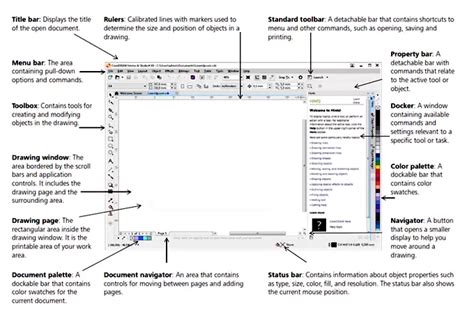
The user experience continued to be refined with the introduction of the context-sensitive Property bar, offering immediate access to relevant settings. Print Preview with Zoom and Pan options enhanced the pre-print workflow, while the Scrapbook provided a convenient way to view and drag-and-drop graphic objects. The ability to Publish to HTML and improved display options (Draft and Enhanced) catered to web design needs. Interactive Fill and Blend tools, along with Transparency tools, empowered users with more sophisticated visual effects. The Natural Pen tool offered a more intuitive drawing experience, and a Find & Replace wizard streamlined content management. The Convert Vector to Bitmap option within Draw, alongside a comprehensive suite of text tools including a spell checker, thesaurus, and grammar checker, further augmented the software's utility.
Subsequent versions introduced an array of advanced functionalities. Digger selection, Docker windows for organized tool management, and interactive distortion, 3D, Envelope, and Perspective tools offered unparalleled control over object manipulation. The Realistic Dropshadow tool added depth and realism, while interactive color mixing and a color palette editor provided sophisticated color control. Guidelines as objects and custom-sized pages enhanced layout precision, and duotone support expanded color capabilities.
The Mesh fill tool, introduced in later versions, revolutionized complex color filling, allowing for intricate gradients and color transitions within vector objects. The Artistic Media tool provided a vast array of brush and stroke options, while robust Publish to PDF features and embedded ICC color profiles ensured professional print output. Multiple On-screen Color Palettes offered convenient access to color schemes, and support for Microsoft Visual Basic for Applications 6 (VBA 6) opened doors for script-based automation.
The suite continued to expand its offerings, including Canto Cumulus LE for media management. Corel R.A.V.E. was introduced for vector animation, alongside Perfect Shapes and specialized Web graphics tools for creating interactive elements like buttons. The Page sorter and multilingual document support facilitated complex projects, and the navigator window offered efficient document navigation.
The Double-click Crop tool was a groundbreaking addition, being the first vector software capable of cropping both vector groups and bitmap images simultaneously. The Smart fill tool simplified color application, and the Chamfer/Fillet/Scallop/Emboss tool provided advanced edge manipulation. The Image Adjustment Lab offered a comprehensive suite of photo editing tools within the vector environment.
A significant enhancement in font management came with the inclusion of OpenType versions of popular font families from the Linotype foundry, replacing their Bitstream counterparts. This move ensured broader typographic compatibility and higher quality.
The advent of 64-bit and multi-core processor native support marked a substantial performance upgrade, allowing CorelDRAW to leverage modern hardware for faster processing and handling of larger, more complex files. Support for 64-bit Adobe Photoshop plugins further integrated CorelDRAW into professional workflows. Enhanced import and export capabilities for Adobe Creative Suite and Publisher bridged the gap between different industry-standard software.
User interface and workflow were further streamlined with the consolidation of object properties, styles, and color styling into dedicated docking toolbars (Dockers). A new Unicode OpenType-based text engine modernized text handling, providing comprehensive international language support while retaining the legacy text mode for backward compatibility. Dynamic alignment guides offered intuitive and flexible object positioning without the need for static guidelines.
The CorelConnect content organizer became an invaluable asset, allowing for in-app access to online resources such as Flickr for image and clip art assets, streamlining the search for supplementary materials. New tools for pushing, pulling, smearing, and other direct manipulation of vector objects provided a more tactile and expressive drawing experience. The introduction of new default workspaces tailored for illustrators, beginners, and other user roles, along with new training videos, improved accessibility and learning curves.
Tabbed documents, which could be detached from the main window, significantly improved multi-screen work efficiency. Additional retouching and fill tools, along with enhanced color harmony and QR code generating tools, further expanded the creative toolkit.
CorelDRAW X7 introduced flexible purchasing options with 30-day and 365-day rental (subscription) models as an alternative to the traditional perpetual license. The Font List selection filtering system was enhanced, and Corel Font Manager replaced Bitstream Font Navigator, offering a more streamlined font management experience. The ability to hide objects and groups, not just entire layers, provided greater control over complex compositions. The functionality to copy and paste portions of curve segments and the selection of adjacent nodes improved precision editing.
Improvements to the Knife tool, the introduction of the photo retouching Healing tool, an enhanced perspective correction tool, and improved (Gaussian) feathering on drop shadows contributed to more refined image manipulation. Automated camera effects such as bokeh and sepia added creative post-processing options. Startup and feature tours, along with enhanced Hints, continued to support user onboarding and skill development.
For large format and commercial print applications, the Border and Grommet and Canvas Prep and Stretch tools were introduced. Support for high-resolution displays became official, with scalable icons and UI elements ensuring a crisp and clear interface on modern monitors.
CorelDRAW Graphics Suite also embraced collaboration with a suite of tools including Copy editing, a Comments Docker, Annotation tools, and Cloud client sharing. This facilitated seamless teamwork and feedback integration. The suite incorporated more non-destructive photo editing and filters, combined photo editing features with presets, introduced new templates, a new multipage tool, and expanded multiple-format export options.
New curve-editing tools, updated Pantone support, and numerous bug fixes contributed to a more stable and robust user experience. The Advanced PDF Printing feature, improvements to the Paintbrush tool, and overall stability and security enhancements further solidified CorelDRAW's professional standing.
Historically, CorelDRAW was developed for Microsoft Windows 2.1, with versions also existing for Windows 3.1x, CTOS, OS/2, and Power Macintosh. Hewlett-Packard notably announced a version of CorelDRAW for its HP 9000 Series workstations running HP-UX. With the release of Corel Linux, CorelDRAW 9 became available with package support for Debian and Red Hat-based Linux distributions. While Version 11 was released for Mac OS X in 2001, its support on both Linux and Mac was later discontinued. As of recent times, CorelDRAW Graphics Suite supports Windows 10, Windows 11, and macOS, including a new release optimized for Apple silicon. A complementary web app and iPad app further extend collaboration and markup capabilities online.
The integration of scripting and automation has been a key aspect of CorelDRAW's development. With version 6, Corel introduced task automation using its proprietary scripting language, Corel SCRIPT. Support for VBA (Visual Basic for Applications) macros was added in version 9, and Corel SCRIPT was eventually deprecated in favor of VBA.
The CorelDRAW file format, CDR, has undergone significant evolution. In its early versions, CDR was a proprietary format primarily used for vector graphic drawings, identifiable by the first two bytes of the file being "WL". Starting with CorelDraw 3, the file format transitioned to a Resource Interchange File Format (RIFF) envelope, recognizable by the first four bytes being "RIFF" and a "CDR*vrsn" signature. Beginning with CorelDraw 4, the file format incorporated the version number of the writing program in hexadecimal. From version X4 (14) onwards, the CDR file became a ZIP-compressed directory containing various files, including XML files and the RIFF-structured riffdata.cdr. The version signature evolved, with X6 introducing a root.dat file.
The open-source community has actively worked towards understanding and supporting the CDR format. In December 2006, the sK1 open-source project began reverse-engineering the CDR format, presenting their findings and a working snapshot of a CDR importer at the Libre Graphics Meeting 2007. The sK1 project, through its UniConvertor tool, offered conversion capabilities from CorelDraw versions 7 to X4 formats to other formats. In 2012, the LibreOffice/re-lab team implemented libcdr, a library for reading CDR files from version 7 to X3 and CMX files, with support for shapes, properties, color management, and spot colors.
CorelDRAW's adaptability extends to its accessibility across platforms and its integration with other tools. CorelDRAW.app provides a web-based version, enabling users to create, edit, and collaborate on designs directly from a web browser, preserving the powerful features of the desktop version and ensuring seamless transitions. This online offering opens up new workflows, allowing for access to design tools at client visits or from any location with a compatible browser.
The software's commitment to professional print output is evident in features like "Print to PDF," which offers settings comparable to the "Publish to PDF" option, including a Separations tab for detailed color plate management. In Print Preview, separate tabs can display color plates for front and back, allowing for precise control over multi-page print jobs.
The Natural-Media® brushes in CorelDRAW offer a realistic painting experience. When applying a brushstroke, the Media Tray displays the selected brush and recently used brushes. The Break Apart command can separate a brushstroke into a curve and a bitmap, offering further editing flexibility. Brush size can be adjusted on the fly, and several brushes feature Tilt Angle and Tilt Direction settings, mimicking the behavior of traditional art tools.
CorelDRAW and Corel PHOTO-PAINT provide free access to cutting-edge and timeless Pantone color palettes, crucial for branding, fashion, and interior design projects, ensuring color consistency and accuracy.
The Creative Software Wars: How Adobe Ruthlessly Crushed Corel & Apple
CorelDRAW's journey from its inception in 1989 to its current iteration as a comprehensive graphics suite underscores its importance in the creative world. It is considered an essential tool for graphic designers, catering to diverse needs with offerings like the full-featured CorelDRAW Graphics Suite for professionals, CorelDRAW Standard for enthusiasts, and CorelDRAW Essentials for beginners.
Corel Font Manager, an integral component, streamlines font organization and discovery with features like filtering, searching, and tagging. AfterShot HDR, a feature within Corel's AfterShot Pro, enables users to create High Dynamic Range (HDR) images by merging multiple exposures. Corel PHOTO-PAINT, a robust raster graphics editor, complements CorelDRAW with its comprehensive toolset for intricate adjustments and creative transformations.
The Shape tool in CorelDRAW is a powerful feature for manipulating vector objects, facilitating precise customization by adjusting nodes, curves, and segments. The Crop tool allows for efficient refinement and framing of images and designs, enabling users to focus on specific details and enhance composition. The zoom functionality allows for close examination and intricate editing.
CorelDRAW's role in graphic design is pivotal, offering a dynamic suite of tools for both professionals and beginners. Alongside other vector graphics software, its features enable precise and scalable designs. Its adaptability to diverse projects, regular updates, and accessibility make it indispensable in shaping the visual industry.
The ability to convert bitmap images into vector images with CorelDRAW is transformative, resulting in resolution-independent images that can be enlarged without pixelation. CorelDRAW is also instrumental in crafting engaging visuals for social media, designing eye-catching posts with its intuitive tools. The software excels in enhancing image perspective and quality, with advanced tools for correcting distortions and refining details for optimal visual impact. Its layout and design tools empower users to create visually compelling brochures, posters, and more.
CorelDRAW Graphics Suite 2021 introduced several key enhancements to streamline the design workflow. The Multipage View allows users to see all pages in a document simultaneously, eliminating the need to click through tabs. Real-time collaboration is facilitated through a new feature where stakeholders can comment and annotate documents in CorelDRAW.app, with feedback appearing instantly in the working file. A new dashboard serves as a collaboration hub, displaying Cloud drawings, previews, comments, and project status, and allowing for direct sharing of designs.
Perspective drawing has been simplified with presets and customizable perspective fields, enabling the creation of multiple perspective groups within the same page or document for adding depth and realism. The new Export docker allows for customized lists of assets to be exported with one click in various industry-standard formats, with options to export the same design element with different settings or multiple items simultaneously.
Corel PHOTO-PAINT 2021 features an Adjustments docker for quick, non-destructive filter access and a Local Adjustment Mode for targeting specific image areas. The Replace Colors filter has been rebuilt for improved color pickers and eyedropper tools, with a new interactive control for fine-tuning hue and saturation. A slider ensures smoother color transitions between selected and unselected pixels.
Support for High Efficiency Image File (HEIF) format in CorelDRAW Graphics Suite 2021 allows users to work with photos captured on mobile phones, which often use HEIF for smaller file sizes without compromising quality. The new Pages docker simplifies multipage document management, offering scalable thumbnail previews, easy reordering, and options to add, delete, and rename pages. The Autofit Page feature resizes a page to fit its content with a single click, with customizable margins.
Guidelines can now be switched between world scale and page dimensions. CorelDRAW Graphics Suite 2021 is optimized to leverage the system's GPU for smoother panning and zooming.
CorelDRAW Graphics Suite is positioned as a professional design toolkit for vector illustration, layout, photo editing, and typography. It offers dedicated web and print tools for commerce professionals and is trusted by engineering, manufacturing, and construction firms. Companies like Bitsy & Company use CorelDRAW for character creation and layout in graphic novels, and industry leaders in custom signage solutions rely on it for serving large corporations.
The suite offers an all-in-one design and layout experience, a native OS experience, flexible purchasing options, free integrated Pantone Colors, and is noted as a powerful alternative to comparable graphic design software. Subscription options provide access to the latest features, apps, and content, while perpetual licenses offer one-time ownership. Maintenance plans ensure users receive the most up-to-date versions.
CorelDRAW® Graphics Suite 2026 introduces intelligent, AI-powered tools in CorelDRAW and Corel PHOTO-PAINT to accelerate ideation and improve workflows. It features a refreshed interface, improved stability, and significantly faster app launch times. The suite offers flawless publishing and output, with free access to Pantone color palettes. Non-destructive editing of bitmaps and vectors is a key feature, allowing for the creation of block shadows, symmetrical illustrations, and perspective drawings without harming original assets. A digital asset manager provides a centralized view for managing project assets. Color application is facilitated through color swatches and color harmonies. Native support for the latest technologies on Windows and Mac, including Windows 11, macOS, and Apple silicon, ensures optimal performance. The in-product Store offers free and premium content to expand creative capabilities.
The AI Generate feature in CorelDRAW and Corel PHOTO-PAINT allows users to turn text descriptions into custom visuals using AI credits. These credits power generative AI features like creating images from scratch, generating variations, and modifying existing content. Subscribers and maintenance customers receive a monthly AI credit allowance, while one-time purchase customers receive a fixed allotment. Additional AI credits can be purchased through various subscription or pack options. Importantly, user creative work is never used to train AI features or third-party AI models. The Painterly Brush tool requires AVX2 support.
CorelDRAW Graphics Suite offers flexible purchasing options, including subscriptions and one-time purchases, catering to different budgets and needs. A 15-day obligation-free trial is available. While not free, the trial allows users to explore its capabilities before committing. Perpetual licenses provide long-term use but do not include ongoing support for future operating systems or technologies, whereas subscriptions offer continuous updates and access to new features. Maintenance plans for perpetual licenses ensure eligibility for the latest versions and exclusive content.
The evolution of CorelDRAW reflects a continuous commitment to innovation, user experience, and professional-grade design capabilities, making it an enduring force in the graphic design industry.