Reproducing colors accurately in print can be a complex endeavor, with certain hues presenting unique challenges. While exact color matching remains elusive, understanding the underlying principles of color mixing, particularly within the CMYK (Cyan, Magenta, Yellow, Key/Black) color model, allows for the creation of effective and visually appealing designs. This article delves into the specific nuances of light grey in CMYK, exploring its values, the difficulties in its reproduction, and offering recommendations for achieving desired results.
The Foundations of CMYK Color
The CMYK color model is subtractive, meaning that inks absorb certain wavelengths of light and reflect others. When designing for print, it's crucial to understand how these inks interact.
Black and Rich Black: Standard black, the "K" in CMYK, is fundamental. However, for deeper, more impactful blacks, a "rich black" can be created by blending all the CMYK colors. This results in a richer, more saturated tone than black alone. The user's provided information highlights that "We make Standard Black (the K in CMYK) from shades of grey." This implies that even the base black ink has some depth and isn't a simple one-dimensional color.
Primary Color Interactions: Understanding basic color mixing is key. "Cyan and yellow will produce a green color. Set the values to equal parts and make them dense for vibrant results." This principle extends to other color combinations. For instance, red's appearance is heavily influenced by magenta and yellow. "Red can often appear orange or rusty when printing. When this happens, you need to look at your levels of magenta and yellow. If your red looks too pinkish, you have mixed in too much magenta."
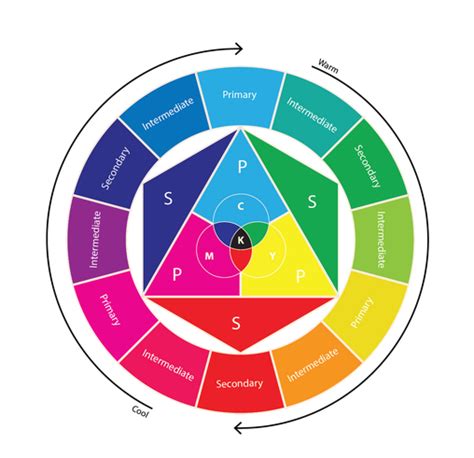
Challenging Hues: Some colors are inherently more difficult to reproduce faithfully in CMYK. Blue is cited as a particularly challenging color, with the suggestion to "use even and balanced mixtures, like 100-50-0-0" for its reproduction. Similarly, achieving vibrant pinks relies heavily on magenta. "Pinks in CMYK printing are all about the magenta. For stand out pink colors - the magenta levels should be high, and the yellow, cyan, and black low." Yellow, too, requires careful handling: "As for yellow, be careful when making it darker. It can become easily more of a sage or mustard color." Metallic finishes, such as gold and silver, are also beyond the capabilities of standard CMYK printing, with designers able to achieve only flat or non-metallic representations.
Defining Light Grey: Hexadecimal and RGB
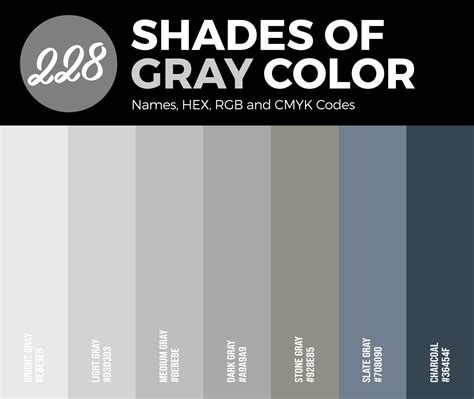
Before delving into CMYK, it's helpful to understand light grey in other color spaces. In the digital realm, the hexadecimal color code #d3d3d3 is recognized as Light Grey. In the RGB (Red, Green, Blue) color space, this translates to a balanced composition: "In a RGB color space, hex #d3d3d3 (also known as Light gray) is composed of 82.7% red, 82.7% green and 82.7% blue." This equal percentage of red, green, and blue is what creates the perception of a neutral grey. The RGB values for #d3d3d3 are R:211, G:211, B:211.
The hue angle of #d3d3d3 is 0 degrees, indicating no discernible hue, with a saturation of 0% and a lightness of 82.7%. This lightness value signifies that it is a pale, desaturated color. The user's data further illustrates how #d3d3d3 can be conceptualized: "#d3d3d3 color hex could be obtained by blending #ffffff with #a7a7a7." This suggests it's a midpoint between pure white and a darker grey.
Light Grey in CMYK: The Specifics
Translating #d3d3d3 into the CMYK color model reveals its composition in terms of printing inks. The user's data provides a clear breakdown: "Whereas in a CMYK color space, it is composed of 0% cyan, 0% magenta, 0% yellow and 17.3% black." This is a crucial piece of information for designers.
The CMYK values for #d3d3d3 are C:0, M:0, Y:0, K:0.17. This composition indicates that light grey, as defined by #d3d3d3, is achieved solely through the use of black ink. The absence of cyan, magenta, and yellow means that no color is being introduced; only a light application of black ink is used to create the grey tone. The low percentage of black (17.3% or 0.17) is what prevents it from becoming a dark grey and maintains its light appearance.
Achieving Light Grey Tones in Print
The straightforward CMYK breakdown for #d3d3d3 suggests that reproducing this specific light grey should be relatively simple. However, the general challenges of color reproduction in print still apply. "Some colors are more challenging to reproduce than others. While we cannot offer exact color matching, we can recommend these options for your designs."
The provided data also offers general advice on modifying color values: "As you progress to the right, the color values gradually decrease." This implies that to achieve lighter shades of grey, one would reduce the percentage of black ink. Conversely, to create darker greys, the percentage of black ink would increase.
It's important to remember that "your monitor settings may affect what you see on your screen compared to your physical prints." This means that the on-screen representation of light grey might not perfectly match the printed output. Therefore, relying on calibrated monitors and, more importantly, physical color swatches or proofs is essential for accurate color judgment.
Understanding Shades, Tints, and Tones
The user's information touches upon related color modification concepts: "A shade is achieved by adding black to any pure hue, while a tint is created by mixing white to any pure color. A tone is produced by adding gray to any pure hue."
While light grey itself is not a "pure hue" in the traditional sense, these concepts help understand how variations of grey can be achieved. For instance, a darker shade of grey would involve adding more black ink to a base grey. A lighter tint might be conceptually achieved by reducing the black ink significantly, approaching white. However, in CMYK, a pure white is represented by 0% of all inks.
When thinking about "tones," adding grey to a pure hue changes that hue's saturation and lightness. In the context of light grey, it's more about the level of black ink applied.
Considerations for Color Vision Deficiency
The article also acknowledges the importance of accessibility in design. "Below, you can see how #d3d3d3 is perceived by people affected by a color vision deficiency." While the specific visual representation isn't provided here, this point underscores the need for designers to consider how their color choices might be perceived by a wider audience. In the case of light grey, its desaturated and neutral nature generally makes it more accessible than highly saturated or contrasting colors. However, ensuring sufficient contrast between text and background, even with neutral colors, is always a best practice.
What is the difference between RGB and CMYK?
Advanced Considerations and Potential Pitfalls
While the CMYK values for #d3d3d3 are straightforward (0, 0, 0, 0.17), achieving consistent results in print can still be influenced by several factors. The quality of the ink, the paper stock, and the printing press calibration all play a role. A slight variation in any of these can lead to a noticeable difference in the final printed output.
For example, some paper stocks have a natural color cast (e.g., a slight yellow or blue tint), which can subtly alter the perceived lightness or neutrality of the grey. Similarly, the dot gain of the printing process can cause the light grey to appear slightly darker than intended. Designers should be aware of these potential variables and communicate with their print provider to understand the expected outcomes.
The user's initial statement, "Some colors are more challenging to reproduce than others," is particularly relevant. While light grey is not as inherently problematic as certain vibrant blues or reds, its subtlety means that even minor printing inconsistencies can be more apparent. The goal is to achieve a clean, neutral grey without any unwanted color cast. This can sometimes require fine-tuning the black ink percentage based on test prints.
The concept of "Rich black" also provides a contrast to how simple greys are formed. While Rich black adds complexity for depth, achieving a pure, neutral grey relies on the absence of such complex mixtures. It's about precision in applying a single ink.
Furthermore, the user's note about decreasing color values to the right is a generalized observation. For light grey, this would translate to decreasing the black ink percentage. If one were aiming for a lighter shade, say 10% black, the values would be C:0, M:0, Y:0, K:0.10. This demonstrates a clear linear relationship between the black ink percentage and the perceived lightness of the grey.
The blending of #ffffff (white) with #a7a7a7 (a darker grey) to conceptualize #d3d3d3 is a useful analogy. In CMYK terms, this would be like taking a base of 0% ink (white) and adding a very small percentage of black ink. The effectiveness of this depends on the printing press's ability to accurately lay down such a small dot percentage.
Conclusion
Reproducing light grey in CMYK, specifically the color #d3d3d3, boils down to a precise application of black ink. With values of 0% Cyan, 0% Magenta, 0% Yellow, and approximately 17.3% Black, this shade of light grey is achieved by desaturating white with a minimal amount of black. While the core values are straightforward, designers must remain cognizant of the inherent challenges in print reproduction, including monitor calibration, paper stock, and printing process variables. By understanding the interplay of CMYK inks and considering these external factors, designers can effectively achieve their desired light grey tones and ensure their printed designs meet expectations.