Photoshop, the industry-standard software for image manipulation, is a treasure trove of features and functionalities. Its intricate workings often find their way into crossword puzzles, testing the knowledge of even seasoned solvers. This article aims to demystify common Photoshop-related clues, exploring the underlying concepts and tools they represent, and providing a comprehensive understanding that extends beyond mere wordplay.
The Art of Selection: Precision and Power
Photoshop's ability to isolate and manipulate specific areas of an image is fundamental to its power. Several tools and techniques are dedicated to this purpose, often forming the basis of crossword clues.
One such selection method allows you to paint an area of an image, and the tool automatically finds edges. This intelligent selection is often referred to as the Magic Wand tool, which, by sampling the color of the pixels you click on and adjacent pixels with similar colors, creates a selection based on color and tonal similarity. Another sophisticated selection tool is the Quick Selection tool, which works by "painting" a selection. As you drag, Photoshop intelligently finds edges based on texture and color, making it highly efficient for complex selections.
For more manual control, the Lasso Tool makes freehand selections, allowing users to draw an outline around an object. Its variations, the Polygonal Lasso Tool and Magnetic Lasso Tool, offer more structured or edge-adhering freehand selections, respectively.
Smoothing the Edges: Anti-aliasing
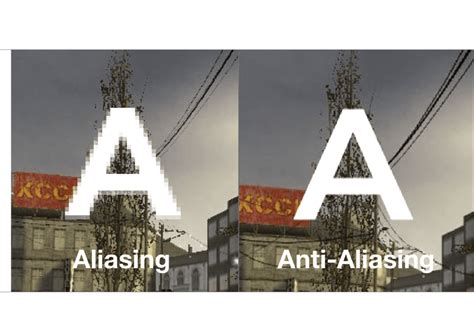
When making selections, especially with tools like the Lasso, jagged edges can appear due to the pixelated nature of digital images. Anti-aliasing is a crucial technique that smooths these jagged edges by softening the color transition between edge pixels and background pixels. This process creates a more natural and visually pleasing appearance, preventing the "stair-step" effect often seen in low-resolution images or poorly rendered selections.
Layers: The Foundation of Digital Artistry
The concept of layers is perhaps one of the most revolutionary aspects of Photoshop. Layers are like stacked, transparent sheets of glass on which you can create images. You can see through the transparent areas of a layer to the layers below, allowing for non-destructive editing and complex compositing. The ability to work on each layer independently is paramount, as it prevents accidental modifications to other parts of the image.
The Layers Panel is where all these transparent sheets are managed. A tool to organize layers into a logical order and reduce clutter in the Layers panel is essential for complex projects. This can involve grouping layers into Layer Sets or Folders, allowing users to collapse or expand groups of related layers, keeping the workspace tidy and manageable.
The backmost image in the layers panel refers to the foundational layer, often the original image or a solid background color, upon which all other layers are built. This layer is typically at the bottom of the stack.
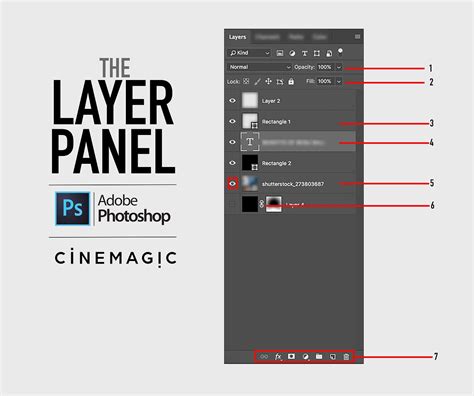
Image Enhancement and Manipulation
Photoshop offers a vast array of Actions that enhance or modify an image with special effects. These include filters like Blur, sharpen, artistic, distort, noise, stylize, and texture, each designed to alter the visual characteristics of an image in specific ways.
Focus and Emphasis
Placing the subject of an image into focus or changing contrast, brightness, and cropping an image to highlight the subject are core principles of photographic composition and editing. This process, often referred to as dodging and burning (in traditional darkroom terms) or simply adjusting exposure and contrast, aims to draw the viewer's eye to the most important elements of the photograph. Cropping is a powerful tool for refining composition, removing distractions, and improving the overall impact of an image.
Color Models and Modes
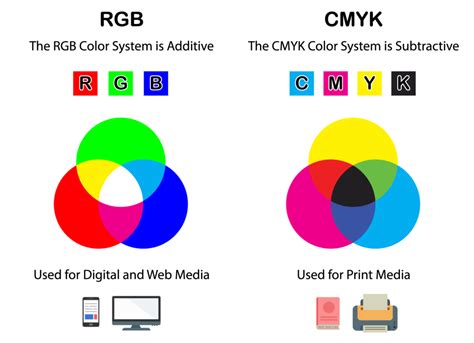
Understanding color models is crucial for both digital display and print. The CMYK color model is a subtractive color model used in printing that uses Cyan, Magenta, Yellow, and Black for color channels. In this model, colors are created by subtracting light from a white surface. Conversely, the RGB color model is best for digital documents (not printed) using Red, Green, and Blue. This additive color model creates colors by mixing light, with white being the combination of all colors and black being the absence of light.
File Formats and Image Properties
The way an image is saved significantly impacts its quality, file size, and usability.
A bitmap image format that supports animations is commonly known as GIF (Graphics Interchange Format). GIFs are characterized by their support for transparency and animation, though they are limited to 256 colors.
The JPEG (Joint Photographic Experts Group) format is a commonly used format with lossy compression for digital photography. Lossy compression means that some image data is discarded to reduce file size, which can lead to a slight loss of quality, especially with repeated saving.
A raster graphics file format that supports lossless data compression is PNG (Portable Network Graphics). PNGs are excellent for web graphics, especially those with transparency, as they retain image quality without the file size penalty of uncompressed formats.
Images represented by pixels in a grid layout and cannot be resized without loss of quality are known as raster images. These images are composed of a fixed number of pixels, and scaling them up will result in a loss of detail and a pixelated appearance.
The process of converting a vector image into pixels so more special effects/filters can be applied is called rasterization. This is often necessary because many Photoshop filters and effects are designed to work with pixel-based imagery.
Resolution and Scalability
The measurement of an image by the number of dots that make it up is known as its resolution, often expressed in pixels per inch (PPI) or dots per inch (DPI). Higher resolution generally means more detail and better quality, especially for printing.
In contrast, images created with mathematical calculations, can be resized without loss of quality are vector images. These are based on mathematical equations that define points, lines, and curves, allowing them to be scaled infinitely without any degradation in quality. Adobe Illustrator is a prime example of software that works with vector graphics.
Vector vs Raster Data - GIS Explained
Design Principles and Photoshop's Interface
Beyond specific tools, Photoshop embodies broader design principles. Creating difference between elements on a page is a fundamental aspect of visual design, and this can be achieved with color, or by varying size, fonts, and font styles. This principle is known as contrast.
The software's interface itself is designed for efficiency. The toolbar contains all the tools used when working with images, including selection tools, painting tools, retouching tools, and more.
Creating visual consistency across a project is another key design goal, ensuring that all elements feel cohesive and part of a unified whole.
Photoshop in the Crossword Landscape
The LA Times Crossword, in particular, has featured clues related to Photoshop. For instance, a 6-letter clue for "Photoshop tool" has been identified as ERASER. The Eraser tool, fundamental for removing pixels, is a direct counterpart to the painting and selection tools.
Another intriguing clue, "Photoshop?", with a length of 16 letters, points to the phrase PRETTYASAPICTURE. This phrase speaks to the ultimate goal of much Photoshop work: transforming images into visually appealing and aesthetically pleasing compositions. It highlights the aspirational nature of image editing, where the aim is to create an image that is as beautiful as a picture.
The existence of such clues underscores the ubiquity of Photoshop in modern visual culture and the need for a comprehensive understanding of its terminology and capabilities. Whether you're a professional designer, a hobbyist photographer, or a crossword enthusiast, exploring the world of Photoshop terminology offers a rewarding journey into the art and science of digital image manipulation.