The narrative of education in Fillmore is a rich tapestry woven with threads of perseverance, community spirit, and a deep-seated belief in the transformative power of learning. This journey, from the earliest log schoolhouses to the modern accolades of a California Distinguished School, reflects the broader evolution of educational practices and the unwavering commitment of settlers and educators to nurture the rising generation.
Early Educational Endeavors: The Foundation of Learning
The establishment of schools in new settlements was a priority that often coincided with the building of homes. This was certainly true in the nascent communities that would eventually form Fillmore. The first efforts in these new settlements were to prepare to educate the children. The government's role, while important, was often secondary to the immediate, hands-on initiatives of the settlers themselves. They set to work at once to establish schools, recognizing their crucial importance.
In the broader context of Minnesota, where early Fillmore County history is intertwined, the establishment of educational institutions was a significant undertaking. Professor Oscar Carlson's edited work, compiled by Franklin Curtiss-Wedge in 1912, details the educational history of the era. This history notes that the first efforts in new settlements were to prepare to educate the children. The Mississippi River served as a vital artery, and educational aspirations were practically always found side by side with the building of homes. Even in remote areas, each congressional township was designated for educational purposes, and each congressional district was also allocated resources for such endeavors.
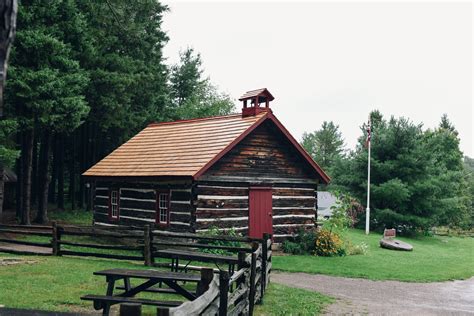
Dr. T. S. Williamson, a key figure in Minnesota's educational landscape, organized a school for the education of white children at the present site of the city of St. Paul. This initiative aimed to provide a learning environment for children within the settlement. Similarly, in the context of Fillmore County, the earliest educational structures were often simple, makeshift spaces. The log structure was the earliest type of a rural schoolhouse. This primitive structure, born out of necessity, was a testament to the settlers' dedication to their children's education. When a proper building was not immediately feasible, an annex to a house would serve the purpose in summer, and in winter, the dwelling itself would be adapted. The goal was always to accommodate the greatest number of children possible.
The initial organization of these early schools was often rudimentary. The management of a district would be arranged, and a chairman, such as Hon. Martin McLeod, would lead the efforts. The first day of the session, November 1, 1849, marked a significant step in formalizing education. In Minnesota Territory, Rev. E. D. Neill served as a territorial superintendent of schools until 1853, demonstrating a commitment to the rising generation in spite of all difficulties.
The Emergence of Formal School Districts and Buildings
As communities grew, the need for more structured educational facilities became apparent. The concept of school lands, typically sections 16 and 36 in each township, was established to provide a financial basis for education. This system allowed for the creation of organized districts, which were then subdivided according to local necessities. While early legislative acts might have been repealed, the present method of district organization eventually adopted proved more effective.
The process of establishing a school district involved formal requests and designations. For instance, District 1 was created, and later, specific sections of land were added to village districts, such as Chatfield. By 1854, the first districts began to be formally created. District 2 was established at the request of W. E. District 104-11, later part of Chatfield, was also added to the Chatfield village district. The attendance in the regularly organized district schools of the county became a metric for the success and growth of these institutions. District 12 had 33 pupils, and District 27 had 27 pupils, indicating a growing student population.
The physical construction of schoolhouses was a community effort. The first schoolhouse in the county was a significant undertaking. The log structure, measuring twenty feet wide by twenty-six feet long, was a collaborative effort. The number of logs, their size, and length were meticulously planned, with each man tasked with delivering specific materials. The construction involved more than just logs; nails, lumber for the ceiling and door, and other materials were essential. A day was appointed for the "raising," a communal event where the community came together to assemble the timbers for the building. A frow was used for the roof, and notches were cut into the sides of the buildings for windows.
The lumber for the door, floor, and ceiling was often sawed by a local mill, such as the one operated by Mr. J. M. B. S. Iowa. The work was pushed forward rapidly, with individuals like Ethan P. serving as the architect. Once the structure was complete, the interior was furnished with the necessary accoutrements, such as writing desks and seats. The placement of windows was strategic, allowing light to illuminate the interior. Desks were often designed with the inner edge about three inches lower than the outer edge, facilitating comfortable writing. Even simple items like water buckets and tin dippers were essential, providing for the basic needs of the students.
The Evolution of School Architecture and Facilities
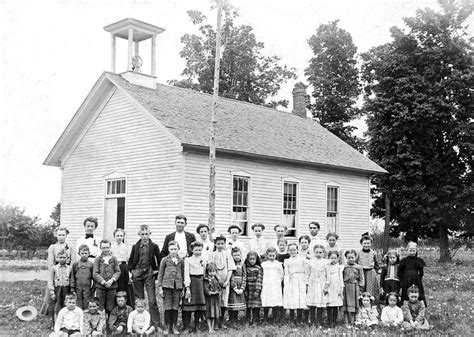
Over time, the rudimentary log schoolhouses gave way to more conventional frame buildings. This architectural shift reflected a growing prosperity and a desire for more comfortable and functional learning environments. The conventional form of frame buildings often featured a raised platform on one end of the room for the teacher and her desk. Windows were typically placed on one or both ends of the building to provide adequate light.
By the late 19th century, a more modern approach to school architecture began to emerge. In 1896, a specific district sought assistance from the county superintendent in drawing plans for a new schoolhouse. This marked a departure from the purely utilitarian designs of the past, with a focus on creating a "modern building." The result was a "light" school, a significant advancement in design and comfort. This modern school was warmed and ventilated by a suitable furnace in the basement, a far cry from the pot-bellied stoves of earlier years. The school board, recognizing the importance of proper design, consisted of individuals like N. S. Nelson, A. G. Austin, and P. P. The town of Lanesboro was also building an addition to its main building, indicating ongoing investment in educational infrastructure.
The development of graded school buildings became a marker of progress. Buildings were styled as graded school buildings, signifying a more organized and structured approach to education. The size of the student body also influenced the scale of these buildings, with some districts accommodating a significant number of pupils. The smallest district might have only two students, while larger districts would have multiple departments.
Teacher Training and Professional Development
The quality of education is intrinsically linked to the quality of its teachers. Recognizing this, efforts were made to provide teachers with special training for their work. This focus on preparation was a significant step forward from earlier times when teaching often relied on informal apprenticeships.
Emma Allen, later Mrs. John C., played a pivotal role in advancing teacher training. In July 1889, she organized the first training school for teachers ever held in the county. This intensive four-week program, held in Spring Valley, provided aspiring educators with valuable instruction. Notable figures like J. T. McCleary, who later became a congressman, and Mrs. Almira S. contributed to the curriculum, offering their expertise and insights. These initiatives were crucial in elevating the standards of teaching and ensuring a more robust preparation for those entering the profession. Professional associations also emerged, providing a platform for teachers to share best practices and collaborate, further enhancing their skills and knowledge.
Beyond Fences and Fields : Teaching in Rural America - Documentary
The Fillmore Experience: A Microcosm of Educational Growth
The history of education in Fillmore, California, offers a compelling case study of this broader developmental arc. The arrival of settlers in the 1870s along the Santa Clara and Sespe rivers marked the beginning of a new chapter. These families, seeking new opportunities, placed a high value on education for their children.
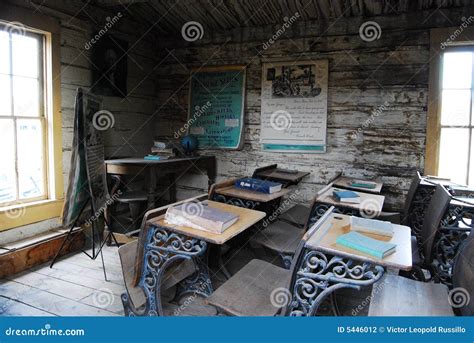
Frederic Sprague's family, upon their arrival in 1871, exemplified this commitment. Despite facing hardships, including the tragic loss of two daughters to typhoid fever, the Spragues prioritized education. In 1874, Frederic, along with his teenage children Iva and Hartley, traveled to Ventura to procure wood for building a school. The school they constructed was a humble, one-room structure, 20â x 30â, located on the north side of the Santa Clara River. Like many schools of its time, it featured a raised platform for the teacher's desk. A water bucket and tin dipper were essential items, and a bookcase held approximately 150 volumes, some of which were beyond the comprehension of the younger students. Hygiene instruction was limited, with a manikin serving as the primary visual aid.
This pioneering school building underwent several relocations. In 1879, it was moved to the east bank of the Sespe, serving dual purposes as both a church and a school. By late 1888, the growing student population necessitated a division of the district. The original school building was moved again, this time to serve as an office for the Fillmore School District.
The Fillmore district, while waiting for its new building, utilized the Cactus Flat School. This temporary structure was built using boards loaned by parents, who meticulously numbered them for return. The building itself was irregular, reflecting its makeshift nature.
The educational landscape continued to evolve. In 1890, a brand-new school was erected on the northwest corner of Sespe and Mountain View. This building served until 1909, when a larger Mountain View School was constructed. The original Sprague school building found new life when Dr. John Hinckley purchased it, remodeling it into his office and Fillmore's first drug store. It later transitioned into a restaurant before being destroyed by fire in 1936, marking the end of a building that had witnessed 40 years of Fillmore's pioneer history.
The Birth of Fillmore High School
The establishment of higher education facilities was a natural progression. Before the opening of Fillmore High School, students seeking secondary education had to travel to Santa Paula. The first high school in Fillmore opened in 1909 in a house built by Hattie (Mrs. George N.) King on the southwest corner of 2nd and Saratoga. This building, however, was used for only one year.
Fillmore High School, as a comprehensive public high school serving grades 9â12, officially opened its doors in 1912. The school's athletic teams are known as the Flashes, with Flash Man as their mascot. Fillmore High School is a charter member of the Citrus Coast League, a conference within the CIF Southern Section. A significant aspect of Fillmore High's identity is its long-standing rivalry with Santa Paula High School. This rivalry in the Santa Clara River Valley is one of the oldest continuous high school football rivalries in California, with games dating back to 1924.
Modern Achievements and Distinctions
In recent times, Fillmore High School has achieved significant recognition for its commitment to student success. In 2024, the school was honored with the prestigious California Distinguished Schools Award, a testament to its exemplary efforts in increasing student achievement, particularly in the aftermath of the COVID-19 pandemic.
The award highlights the school's focus on creating opportunities for students, expanding counseling and social-emotional support, and developing the capacity of its staff. With a significant percentage of its students from socioeconomically disadvantaged families, Fillmore High School's success demonstrates that all students can achieve great things when provided with the necessary tools and support.
A key factor in this success has been the school's recent implementation of a Professional Learning Community (PLC) model. This collaborative approach, where staff at all levels regularly work together to set goals, address challenges, and assess progress, has been described as "monumental." The recognition as a California Distinguished School is a source of great pride for the Fillmore Unified School District, acknowledging the profound impact of its administration, teachers, and classified staff on student lives.
The journey of education in Fillmore, from the solitary log schoolhouses to the celebrated halls of Fillmore High School, is a powerful narrative of community dedication, adaptation, and the enduring pursuit of knowledge.