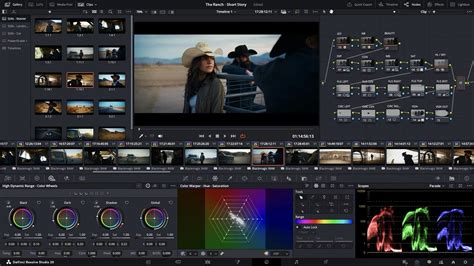
DaVinci Resolve is a proprietary application renowned for its comprehensive suite of tools for non-linear video editing, color correction, color grading, visual effects, and audio post-production. Developed by the Australian company Blackmagic Design, it is available for macOS, Windows, iPadOS, and Linux. This powerful software has a rich history, tracing its origins back to the American company da Vinci Systems, which originally released it as "da Vinci Resolve." The software's architecture is built around task-specific workspaces known as "pages," each meticulously designed for a distinct phase of the post-production workflow. These include the Cut and Edit pages for video editing, the Fusion page for visual effects and motion graphics, the Color page for color grading, and the Fairlight page for audio editing and mixing. Media management and final export are handled through the Media and Deliver pages, respectively. This integrated approach stands in contrast to many other software suites where these functions are typically distributed across separate applications, necessitating a more fragmented workflow for users.
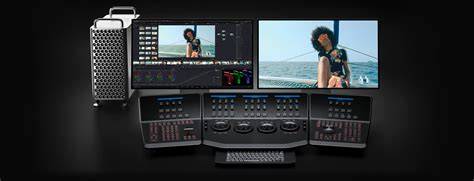
Blackmagic Design, which is primarily recognized as a hardware manufacturer, strategically markets DaVinci Resolve as a central component of a broader ecosystem of professional peripherals. The company offers seamless integration with its proprietary hardware, including specialized editing keyboards, sophisticated color grading panels, and advanced audio consoles, further enhancing the user's tactile control and efficiency.
The Genesis and Early Years of DaVinci Resolve
The journey of DaVinci Resolve as a commercially available product began with its acquisition by Blackmagic Design. Prior to this, da Vinci Systems had developed sophisticated color grading systems that were considered the industry standard, but they came with a significant price tag, often in the six-figure range. The landscape shifted dramatically in April 2010 when Blackmagic Design announced new pricing models at NAB in Las Vegas. This marked a pivotal moment, introducing a software-only macOS version for $995. This move democratized access to high-end color grading capabilities, making them attainable for a much broader range of post-production professionals, including smaller studios and independent creators.
The initial announcement at NAB 2010 also included a macOS version bundled with the Advanced Control Surface (formerly known as Impresario by da Vinci Systems) for $29,995, and licenses for the Linux version, which supported multiple GPUs for enhanced performance, retailing at $19,995. The most advanced configuration available at the time was priced under $150,000. This was a stark contrast to the pre-existing, pre-built versions of Resolve, which were the only options and typically sold for between $200,000 and $800,000, a common industry practice then.
The first version released by Blackmagic Design under this new pricing model was version 7, which was also restyled as "DaVinci Resolve." This release, in September 2010, was significant as it marked the first release for macOS. The introduction of a software-only option was revolutionary, allowing users to leverage their existing hardware, such as a Mac Pro, with a Blackmagic Decklink card, a Tangent Wave control surface, and a suitable grading monitor, to create a professional color grading suite that was previously out of reach for many. This shift was seen as a direct challenge to existing solutions, with predictions that the Mac Resolve would become a common sight in post-production houses and potentially replace many Apple Color installations, especially as Apple was perceived to be slow in updating its own Final Cut Studio and Apple Color software.
Expansion and Integration: A Multi-Platform Evolution
Blackmagic Design's commitment to expanding DaVinci Resolve's reach and capabilities became evident with its progressive rollout across different operating systems and the integration of advanced functionalities. While the initial focus was on macOS, the platform's evolution saw its eventual availability on Windows and Linux.
The first version of Resolve for standard editions of Linux (version 12.5.5) was made available in 2017. This was a landmark release not only for its platform expansion but also because it introduced the first free version of Resolve for Linux users. This further solidified Blackmagic Design's strategy of offering a powerful, accessible toolset to a wider audience.
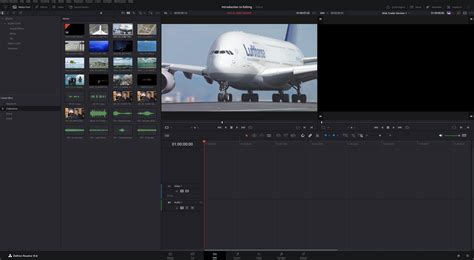
The integration of other core post-production disciplines into a single application was a key driver of Resolve's growth. Since version 15, released in 2018, DaVinci Resolve has included an integrated version of the Fusion application. Fusion, also developed by Blackmagic Design, is a powerful tool for compositing and visual effects. Its core functionality is built upon a modular, node-based interface, where each node represents a specific aspect of the effects being implemented. This node-based approach is particularly beneficial for visualizing the connections and dependencies between different layers within a Fusion Composition, offering a flexible and powerful way to create complex visual effects and motion graphics.
The development continued with major announcements and releases that consistently added new features and refined existing ones. Blackmagic Design officially announced DaVinci Resolve version 16 at NAB 2019, in April 2019. This version introduced a dedicated 'Cut' page, offering a more streamlined and faster alternative to the traditional 'Edit' page, catering to editors who needed to work at a quicker pace. Version 16 also brought machine learning functionality, exclusively available in the Studio edition, to automate repetitive tasks.
The Rise of AI and Modern Capabilities
The trajectory of DaVinci Resolve has been marked by a continuous embrace of emerging technologies, most notably artificial intelligence (AI). The integration of AI has become a cornerstone of the software's development, aiming to streamline workflows, enhance creativity, and improve overall efficiency for users.
Blackmagic Design officially announced DaVinci Resolve version 16 at NAB 2019, in April 2019. New features included a dedicated 'Cut' page (a streamlined alternative to the 'Edit' page), machine learning functionality (Studio edition only) to handle repetitive tasks.
On October 20, 2022, Blackmagic Design announced that DaVinci Resolve was also coming to iPadOS for the first time. This expansion to the tablet platform was designed to leverage the capabilities of devices like the 12.9-inch iPad Pro, offering a "true professional editor that’s focused on introducing new innovations in speed." While the iPad application focuses primarily on editing and color-related functionalities, it maintains compatibility with DaVinci Resolve 18 project files and supports real-time collaboration via Blackmagic Cloud, extending the power of Resolve to a mobile environment. The official release of DaVinci Resolve for iPad occurred in December 2022.
The evolution continued with DaVinci Resolve 20, announced on April 4, 2025. This release promised over 100 new features and a significant expansion of AI tools. Among these were AI IntelliScript, designed to generate timelines directly from scripts, making the initial editing process more intuitive; AI Animated Subtitles, which automatically animate words in sync with spoken dialogue to enhance accessibility and engagement; and AI Multicam SmartSwitch, utilizing speaker detection to switch angles in multicam timelines, a considerable time-saver for projects involving interviews or events.
10 BEST AI Updates in Davinci Resolve Studio
The Cut and Edit pages in Resolve 20 received practical enhancements with the addition of a dedicated keyframe editor and updated voiceover palettes, aiming for greater responsiveness and precision in dynamic projects. In the Fairlight page, Blackmagic introduced AI Fairlight IntelliCut, a feature designed to identify and remove silence while intelligently switching between speakers, which could significantly streamline dialogue editing for podcasts, interviews, and narrative content. The Fusion page saw new developments in multi-layer compositing workflows, expanding creative possibilities for VFX artists and motion designers. The Color page also received important refinements, including an updated Color Warper with Chroma Warp, and significant upgrades to Magic Mask and Depth Map, which now offer improved speed and accuracy, crucial for high-end color grading.
Beyond these specific AI-driven features, DaVinci Resolve 20 also focused on workflow maturity for motion graphics artists working in Fusion. This included enhanced support for layered compositions, better GPU performance, and expanded node functionality, demonstrating Blackmagic Design's ongoing commitment to professional motion graphics work. The final release of DaVinci Resolve 20 was presented not as a radical reinvention but as a refined and thoughtfully integrated evolution of a platform that continues to meet the diverse needs of professionals across editing, color grading, audio engineering, and motion design.
DaVinci Resolve Studio: The Professional Edge
While DaVinci Resolve offers a robust free version, the commercial edition, DaVinci Resolve Studio, provides advanced capabilities essential for high-end professional workflows. Unlike the free edition, DaVinci Resolve Studio supports resolutions greater than ultra-high-definition (4K), extending up to 32K, and higher frame rates, exceeding 60 FPS and reaching up to 120 FPS. These advanced specifications are critical for demanding cinematic productions, high-resolution content creation, and projects requiring exceptionally smooth motion.
The distinction between the free and Studio versions underscores Blackmagic Design's strategy of providing accessible tools while catering to the specialized needs of top-tier professionals. This tiered approach ensures that a wide spectrum of users can benefit from DaVinci Resolve's power, from aspiring filmmakers and content creators to established Hollywood studios.
The continuous development of DaVinci Resolve, from its origins as a specialized color grading system to its current status as an all-encompassing post-production suite, highlights a consistent vision: to empower creators with professional-grade tools that are both powerful and increasingly accessible. The ongoing integration of cutting-edge technologies, such as artificial intelligence, alongside a commitment to platform expansion and hardware integration, positions DaVinci Resolve as a leading force in the ever-evolving landscape of digital media production.