The digital landscape is constantly evolving, and with it, the demands placed upon the technologies that underpin it. Images, a fundamental component of the visual web, have long been a bottleneck for performance and efficiency. Recognizing this, Google embarked on a mission to create a next-generation image format that could address the shortcomings of its predecessors. This endeavor culminated in the development of WebP, a versatile and powerful raster graphics file format designed to revolutionize how images are handled on the internet.
The Imperative for a New Image Format
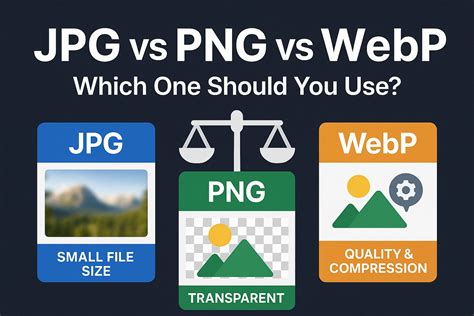
For years, web developers and designers relied on a limited set of image formats, each with its own set of strengths and weaknesses. JPEG dominated the scene for photographic images due to its efficient lossy compression, but it struggled with sharp edges and transparency. PNG, on the other hand, excelled at lossless compression and offered excellent support for transparency, albeit at the cost of larger file sizes. GIF, while capable of animation and transparency, was limited to a mere 256 colors and suffered from patent issues in its early days. This fragmentation meant that achieving optimal balance between image quality, file size, and features often required complex workarounds and compromises.
The need for a unified solution became increasingly apparent as the web grew more dynamic and visually rich. The sheer volume of image data being transferred across the internet placed a significant strain on bandwidth, leading to slower loading times, increased data consumption, and a poorer user experience. This was particularly problematic for mobile users and in regions with limited internet access. Google, a company deeply invested in the performance and accessibility of the web, identified this as a critical area for improvement.
Birth of WebP: Google's Vision for Image Compression
In September 2010, Google announced the WebP format, a project born out of the company's extensive research into image compression and web performance. The core of WebP's innovation lies in its sophisticated compression algorithms, developed by Google engineers. These algorithms are applied to digital image files to achieve significantly smaller file sizes without a commensurate loss in visual quality.

The WebP format was conceived to offer a compelling alternative to the established JPEG, PNG, and GIF formats. It was designed to be a replacement for these legacy formats on the web, providing a single, efficient solution for a wide range of imaging needs. The underlying technology for lossy WebP compression is based on the VP8 video compression standard, adapted for still images. This approach allows WebP to achieve remarkable compression ratios by leveraging predictive coding techniques.
The Dual Nature of WebP: Lossy and Lossless Compression
A key differentiator of WebP is its support for both lossy and lossless compression methods, mirroring the capabilities of JPEG and PNG, respectively, but with enhanced efficiency.
Lossy Compression: Striking a Balance Between Size and Quality
Lossy compression in WebP employs advanced approximation techniques to discard less important image data. This process is carefully orchestrated to minimize perceptible degradation in visual quality. The result is a file size that is, on average, about one-third smaller than comparable JPEG images. This significant reduction in file size translates directly to faster loading times and reduced bandwidth usage, making it ideal for photographic content where subtle details might be sacrificed for substantial file size savings.
The lossy compression in WebP is based on block prediction. This method involves predicting the values of pixels within a block based on the values of surrounding blocks. Specifically, it leverages data from three blocks above and one block to the left of the current block. The decoding process occurs in a raster-scan order, moving from left to right and top to bottom. There are four primary modes of block prediction: horizontal, vertical, DC (a single color prediction), and TrueMotion. Any data that is mispredicted or not predicted at all is then compressed using a 4x4 pixel sub-block with either a discrete cosine transform (DCT) or a Walsh-Hadamard transform. Crucially, these transforms are performed using fixed-point arithmetic to prevent rounding errors that could compromise image integrity.
Lossless Compression: Preserving Every Pixel
For images where absolute fidelity is paramount, such as graphics, logos, or images with sharp lines and text, WebP's lossless compression comes into play. Unlike lossy compression, lossless WebP does not discard any image data. Instead, it employs sophisticated algorithms to identify and eliminate redundancy within the image data itself. This ensures that the reconstructed image is an exact replica of the original.
The lossless compression algorithm in WebP, developed by Google software engineer Jyrki Alakuijala, is a newer innovation distinct from the VP8-based lossy method. It utilizes advanced techniques such as dedicated entropy codes for different color channels, exploiting the two-dimensional locality of backward reference distances, and a color cache that remembers recently used colors. This allows lossless WebP images to be generally about one-quarter smaller than their PNG counterparts, offering a substantial improvement in file size for visually identical images.
Expanding Capabilities: Animation, Transparency, and Metadata
Beyond basic image compression, WebP was designed with a comprehensive feature set to cater to a wider range of web design needs.
Animation Support: A Modern Alternative to GIF
Recognizing the popularity of animated GIFs, Google proposed using WebP as a modern alternative. WebP animation offers several significant advantages. It supports 24-bit color with transparency, a vast improvement over GIF's limited 256-color palette. Furthermore, WebP animations can combine frames that use both lossy and lossless compression within the same animation, allowing for optimized file sizes. It also introduces the ability to seek to specific frames, a feature not present in GIF. This makes WebP animations more efficient, visually superior, and functionally richer.
Alpha Compositing and Transparency
WebP fully supports alpha compositing, which is crucial for creating images with transparent backgrounds. This capability allows WebP to effectively replace PNG for many use cases, providing transparency at a significantly smaller file size. The inclusion of alpha channel support in both lossy and lossless modes makes WebP a versatile tool for web designers needing to overlay images or create complex visual compositions.
Extended File Format and Metadata
In October 2011, Google introduced an "Extended File Format" for WebP. This enhancement significantly broadened the format's capabilities. It enabled support for animated images, as previously mentioned, but also incorporated the ability to embed ICC profiles, XMP and Exif metadata, and support for tiling. Tiling allows for the compositing of very large images by breaking them down into a maximum of 16384 × 16384 tiles, which can then be reassembled. This feature is particularly useful for high-resolution imagery that might otherwise be unwieldy to handle.
The WebP container itself, based on the RIFF (Resource Interchange File Format) container, is designed to be flexible and extensible. This means that the container can accommodate features beyond the basic encoding of a single image as a VP8 key frame, paving the way for future enhancements and specialized uses.
Animated GIFs and Space vs Time - Computerphile
The Road to Adoption: Challenges and Triumphs
Despite its compelling advantages, the adoption of WebP was not immediate. When the format was first announced in 2010, support from software and web browsers was initially limited. WebP was not well-supported at first, presenting a hurdle for developers eager to leverage its benefits. Content management systems (CMS) often lacked native support, requiring extensions for automated conversion and delivery of WebP images.
However, Google actively promoted WebP, and its integration into its own ecosystem, particularly Google Chrome and other Chromium-based browsers, provided a significant boost. Microsoft Edge, which transitioned to the Chromium engine, also gained native WebP support in versions released after January 2020. Over time, other major web browsers began to adopt the format. Firefox added support in version 65, and Apple's Safari introduced support starting with version 14. The release of the first stable version of WebP's supporting library in April 2018 further solidified its presence.
By July 2016, Apple had added WebP support to early beta versions of macOS Sierra and iOS 10, though it was later removed in the final releases. However, subsequent versions of Apple's operating systems and browsers have since integrated robust WebP support. This gradual but steady increase in browser compatibility has been crucial for WebP's widespread acceptance.
Technical Underpinnings: Block Prediction and Transforms
At its core, WebP's efficiency stems from its sophisticated predictive coding techniques. As detailed earlier, the lossy compression relies heavily on block prediction, where the values of pixels in a block are estimated from neighboring blocks. This predictive approach is fundamental to reducing redundancy in image data.
The application of discrete cosine transform (DCT) or Walsh-Hadamard transform on mispredicted or non-predicted blocks is another critical component. These transforms are mathematical operations that convert spatial domain data (pixel values) into a frequency domain, allowing for more efficient representation and compression. The use of fixed-point arithmetic in these transforms is a deliberate choice to avoid the accumulation of rounding errors that could degrade image quality.
Considerations and Future Directions
While WebP offers substantial benefits, it's important to acknowledge certain technical considerations. The lossy WebP format, like its VP8 predecessor, primarily supports the 8-bit YUV 4:2:0 color format. This can lead to color loss in images with very fine contrast elements, such as pixel art or certain types of computer graphics, and may manifest as ghosting in anaglyph images.
The complexity of WebP's compression methods also means that creating WebP files can take more time than generating other web image formats. However, this processing overhead is typically a one-time cost during image creation or conversion, and the resulting file size savings often outweigh this initial investment.
In September 2023, security researchers discovered critical vulnerabilities in the libwebp library, which is widely used for WebP image processing. These vulnerabilities, such as CVE-2023-4863, posed significant risks, including denial of service and remote code execution, due to potential out-of-bounds write conditions in maliciously crafted lossless WebP files. The widespread use of libwebp across numerous applications, from web browsers to mobile apps, highlighted the challenge of patching such vulnerabilities across a diverse software ecosystem.
Despite these challenges, Google has continued to develop and refine the WebP format. In June 2021, the company began developing a second version of WebP, signaling a commitment to its ongoing evolution. The landscape of image formats is also continuously evolving, with formats like FLIF (Free Lossless Image Format) and JPEG XL emerging with their own claims of improved compression ratios and features, particularly for responsive web environments. However, WebP's established support and ongoing development position it as a strong contender for the foreseeable future.
Given its significant advantages in file size reduction, support for both lossy and lossless compression, animation capabilities, and widespread browser adoption, WebP has firmly established itself as a valuable and often preferred image file format for the modern web. Its creation represents a significant step forward in optimizing web performance and delivering richer visual experiences to users worldwide.